



Login
Get Instant Pricing On 23,000+ Aircraft

>
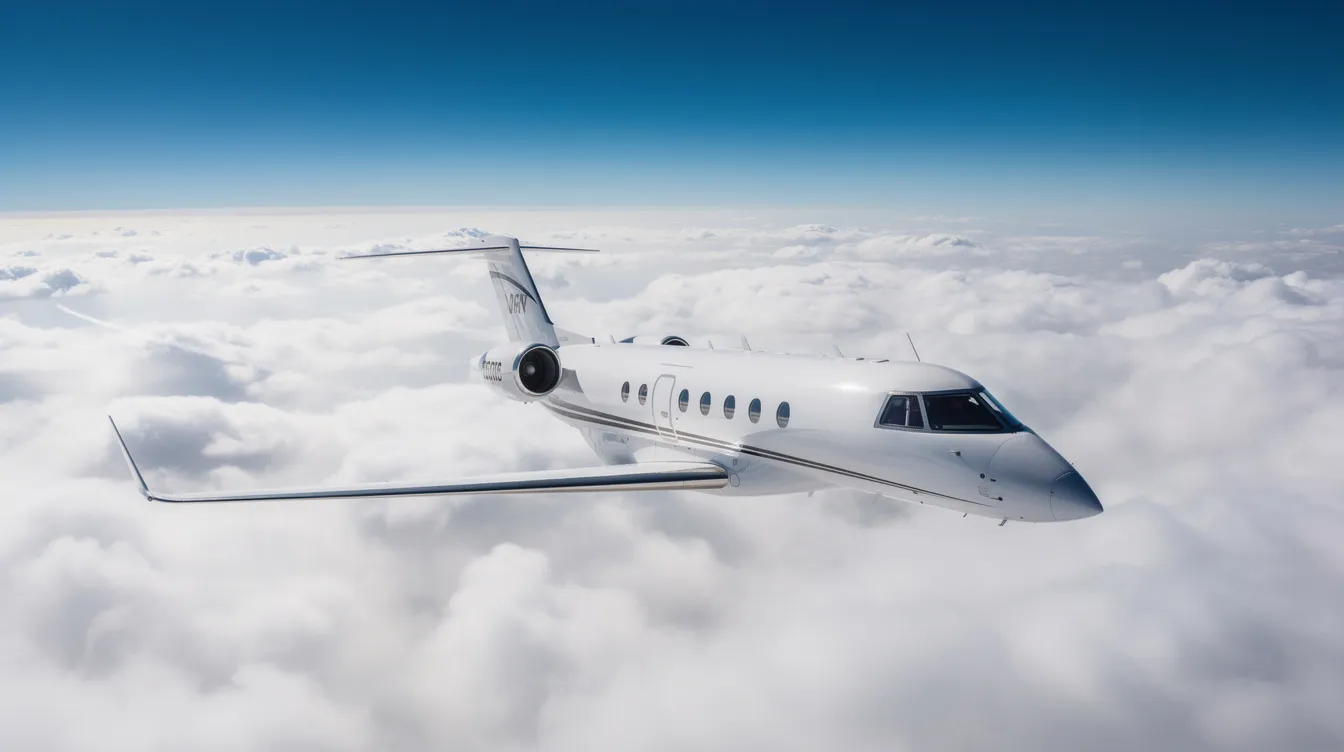
At sea level on a standard day, Mach 1 is approximately 761 mph (1,225 km/h). At typical cruise altitude around 36,000 feet, it drops to about 660 mph (1,062 km/h) due to colder air.
Mach 1 is not a fixed speed. It represents the local speed of sound, which changes with air temperature and altitude.
Mach number defines flight regimes—subsonic, transonic, supersonic, and hypersonic—and determines when shock waves, compressibility effects, and drag rise begin to affect an aircraft.
Modern airliners cruise around Mach 0.78–0.85, while many private jets on Jettly's platform operate in the Mach 0.75–0.90 range to balance speed, comfort, and fuel efficiency.
Understanding how fast Mach 1 is helps private flyers interpret aircraft performance data, compare flight times, and make smarter booking decisions through Jettly's marketplace.
How fast is Mach 1? Most people assume it is a single number—often quoted as roughly 767 mph. In reality, that figure is only an approximation tied to specific conditions. Mach 1 is the local speed of sound, and it shifts depending on air temperature and altitude.
The Mach number itself is a ratio: an aircraft's true airspeed divided by the speed of sound at its current location. Named after the Austrian physicist Ernst Mach, this dimensionless number tells pilots and engineers far more than miles per hour ever could. It reveals when compressibility effects kick in, when shock waves form, and when an aircraft moves from one flight regime to another.
For private jet travelers booking through Jettly, this is more than academic detail. Cruise Mach numbers influence flight time, fuel burn, and cost—all factors that shape a charter decision and help distinguish among the best private jet charter companies competing for their business.
The direct answer depends on where the aircraft is flying.
At sea level on a standard day (15 °C / 59 °F), Mach 1 is approximately 761 mph (1,225 km/h, about 661 knots). This is the figure most commonly cited, though some sources round it to roughly 767 mph depending on the reference temperature used.
At cruise altitudes where commercial and business jets typically operate—around 35,000 to 40,000 feet—the air is much colder (about −56.5 °C in the standard atmosphere). The speed of sound falls to roughly 660 mph (1,062 km/h, about 574 knots). That is about 13% lower than the sea-level value.
Key points to keep in mind:
These figures come from the International Standard Atmosphere (ISA) model. Real-world temperature can vary by season, latitude, and weather patterns.
Mach 1 at cruise altitude is roughly the speed of a rifle bullet—fast, but measurably slower in miles per hour than at ground level.
Mach number is defined as a dimensionless ratio: M = V / a, where V is the true airspeed and a is the local speed of sound. When M = 1, the aircraft is traveling exactly at the speed of sound for that particular pocket of atmosphere.
The speed of sound in air depends primarily on temperature, not air pressure. In dry air at 20 °C (68 °F), sound travels at about 343 m/s (roughly 767 mph). The underlying relationship is straightforward: the speed of sound is proportional to the square root of absolute temperature. Warmer air means faster sound speed; colder air means slower.
Because Mach number is dimensionless, it works regardless of whether speed is measured in knots, mph, or km/h. The Mach value stays the same. This is why pilots and engineers rely on Mach number rather than ground speed or air speed alone when assessing high-altitude performance—it captures the relationship between the aircraft and the elastic medium it flies through.
As an aircraft climbs through the troposphere, temperature drops and so does the speed of sound. In the standard atmosphere, temperature decreases by about 2 °C for every 1,000 feet of altitude gain until the tropopause near 36,000 feet, where it stabilizes around −56.5 °C. Above that, through much of the lower stratosphere, temperature holds roughly constant—meaning Mach 1 holds steady at about 659 mph until conditions change again.
Real-world conditions produce large differences. Over extremely cold polar regions, Mach 1 can dip to around 609–620 mph. Over a desert surface on a scorching day, it can exceed 800 mph. Sound travels slower in colder air and faster in warmer air, and Mach 1 follows the same pattern.
Think of it this way: a winter morning at 30,000 feet and a summer afternoon on a runway in Phoenix represent two speeds for the same Mach number. Any single quoted value for Mach 1 only makes sense when tied to a specific temperature or altitude. The speed of sound varies constantly, and so does the true speed that Mach 1 represents.
Mach classifications help pilots and engineers understand airflow, pressure, heat, and shock waves around an aircraft. Aviation divides speed into four main flight regimes:
|
Regime |
Mach Range |
Characteristics |
|---|---|---|
|
Subsonic |
Below ~Mach 0.8 |
Smooth airflow, no shock waves, where most civil aircraft operate |
|
Transonic |
Mach 0.8–1.2 |
Local flow velocity on wing surfaces can reach Mach 1 even when overall speed is below it; shock waves begin forming, drag rises sharply |
|
Supersonic |
Mach 1–5 |
Entire airflow exceeds the speed of sound; strong shock waves; domain of military and experimental supersonic aircraft |
|
Hypersonic |
Above Mach 5 |
Extreme aerodynamic heating, ionization effects; speeds greater than five times the speed of sound, reached by vehicles like the Space Shuttle during reentry |
Transonic flight includes speeds from Mach 0.8 to 1.2—the transonic range where radical differences in drag and handling emerge. Supersonic speeds are defined as Mach numbers between 1 and 5. Hypersonic speeds exceed Mach 5 and remain the territory of spacecraft and experimental platforms.
For context, the SR-71 Blackbird set a speed record of 2,193.167 mph—over Mach 3—while most private and commercial jets stay firmly in the high-subsonic band.
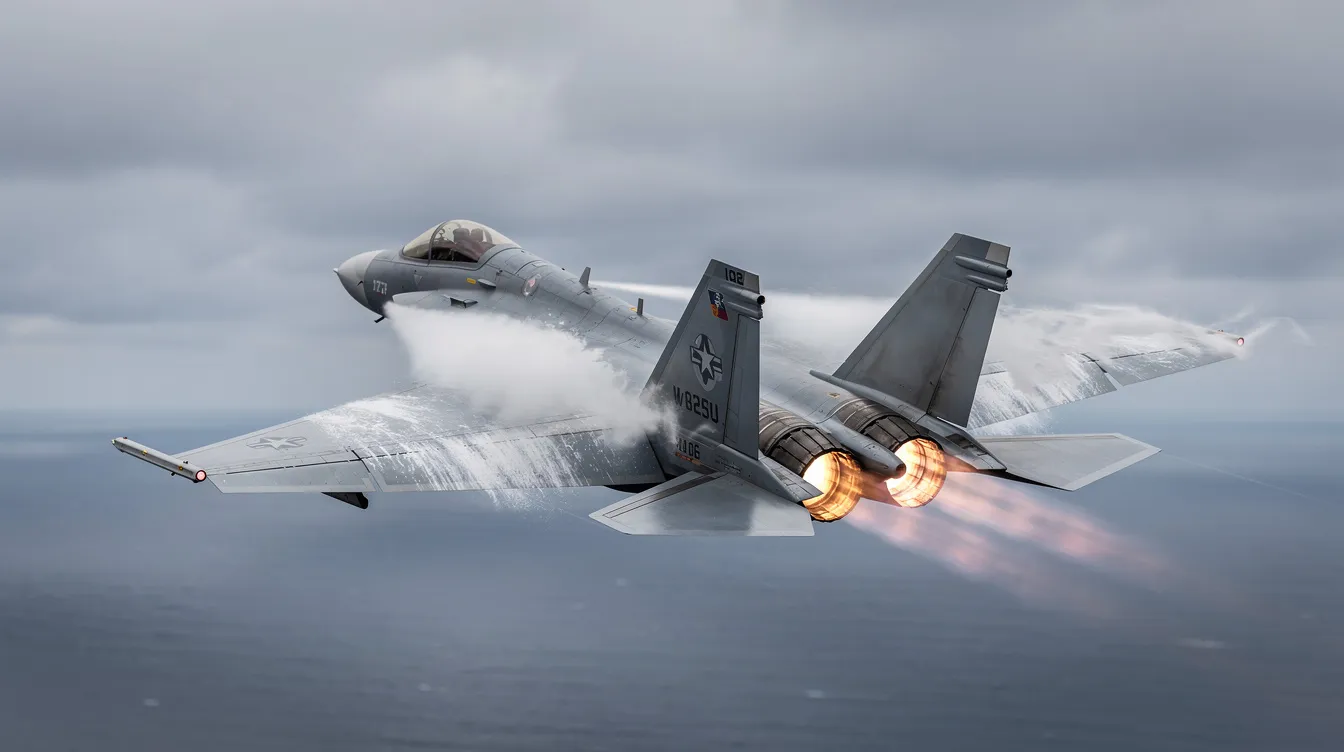
The critical Mach number is the lowest free-stream Mach at which airflow over any part of the wing first reaches Mach 1. Air accelerates as it flows over curved or thick wing sections. This means portions of the local flow velocity can go supersonic even when the aircraft itself is still subsonic.
As the Mach number increases beyond this critical point, compressibility effects intensify. Air can no longer be treated as an incompressible fluid. Pressure effects change lift distribution, drag divergence kicks in, and the aircraft's control feel shifts. Mach tuck—a nose-down pitching tendency—occurs as aircraft approach Mach 1 in some designs.
Shock waves form when supersonic flow abruptly decelerates back to subsonic. These are sharp edges of pressure, temperature, and density change. Breaking the sound barrier creates a shock wave known as a sonic boom. Even below Mach 1, localized shock waves on wings cause buffeting and increased drag.
Aircraft designed to fly faster in this regime use several strategies:
Swept wings reduce the effective airflow component hitting the leading edges, delaying shock formation.
Supercritical airfoils with rounded features manage pressure distribution to push the critical Mach number higher.
Thin wing profiles and careful aerodynamic design minimize drag divergence.
High aspect ratio wings, common on slower propeller-driven aircraft, are less effective at these speeds compared to the swept configurations found on heavy jets and airliners.
Pilots use different speed references depending on altitude and flight phase. At lower altitudes, indicated airspeed—measured through a pitot tube that captures dynamic pressure from ram air—is the primary reference. IAS relates closely to aerodynamic forces like lift and stall margins.
As altitude increases and air density drops, IAS becomes less representative of the aircraft's true speed through the atmosphere. A jet climbing through 30,000 feet might show a declining indicated airspeed on its instruments even as its true airspeed remains constant or increases. This is where pilots switch to Mach number as the governing reference, typically around FL280 to FL300.
Pilots use Mach numbers instead of miles per hour for flight management at these altitudes because Mach directly reflects proximity to compressibility limits. Modern air data computers calculate Mach from pitot-static pressure ratios, providing a real-time measure of how close the aircraft is to its maximum operating Mach (MMO) or the Mach limit set by certification.
A typical climb profile looks like this: the crew climbs at a constant IAS (say, 300 knots), then transitions to a constant Mach (perhaps Mach 0.80) for cruise. This keeps the aircraft safely below its critical Mach number while maintaining efficient flight time, especially on long legs where choosing the best cross-country aircraft for the mission can significantly affect speed and comfort.
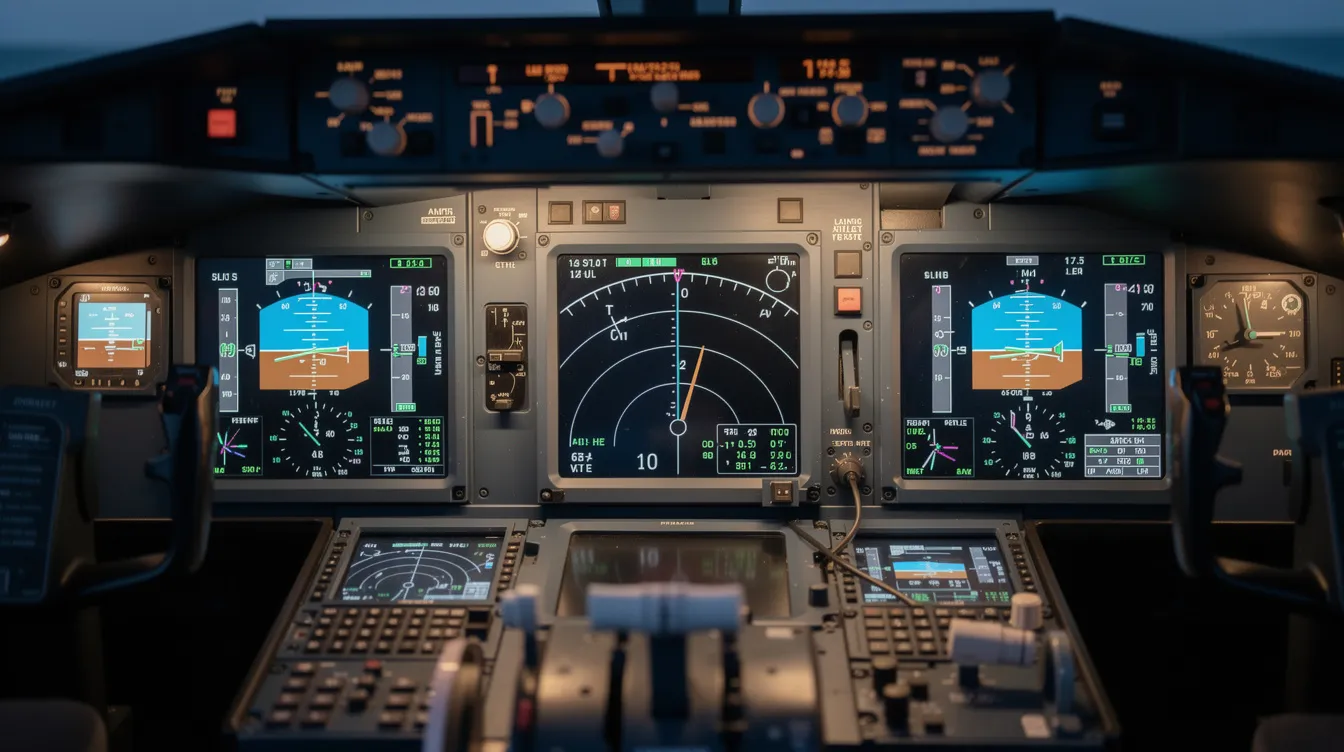
On October 14, 1947, Chuck Yeager broke the sound barrier flying the Bell X-1 at Mach 1.06. The first sonic boom created by Yeager's flight proved that controlled supersonic flight was possible. But here is what many people miss: the same true speed can be supersonic at one altitude and comfortably subsonic at another.
Consider 700 mph. At sea level on a standard day, the speed of sound is about 761 mph, making 700 mph roughly Mach 0.92—subsonic, no sonic boom. Now take that same 700 mph up to 36,000 feet, where the speed of sound drops to around 660 mph. Suddenly, 700 mph equals about Mach 1.06—supersonic. Shock waves form. A sonic boom trails behind the aircraft.
The sound wave propagation speed depends on the local temperature, not some universal constant. This is why the popular claim that "Mach 1 is always 767 mph" is misleading. The speed of sound changes with every shift in temperature, and sound depends on nothing else at a fundamental level. Two speeds that look identical in miles per hour can sit on opposite sides of the sound barrier depending on altitude.
Commercial jets typically cruise around Mach 0.78 to Mach 0.85. Airlines pick a cruise Mach that sits below the aircraft's critical Mach number while still keeping schedules tight. Pushing beyond drag divergence speed burns disproportionately more fuel for marginal time savings.
Private jets span a wider range. Light jets may cruise around Mach 0.70–0.78. Midsize jets often sit near Mach 0.78–0.82. Long-range heavy jets like the Gulfstream G650 or Bombardier Global series—flagship models from leading private jet manufacturers such as Gulfstream and Bombardier—regularly cruise between Mach 0.85 and Mach 0.90—close to their MMO.
|
Aircraft Category |
Typical Cruise Mach |
Best Suited For |
|---|---|---|
|
Light jet |
Mach 0.70–0.78 |
Regional trips, 2–4 passengers |
|
Midsize jet |
Mach 0.78–0.82 |
Cross-country, 4–7 passengers |
|
Heavy / long-range jet |
Mach 0.85–0.90 |
Transcontinental and international, 8–16 passengers |
Pilots and dispatchers use Mach number in flight planning to balance fuel burn, time en route, and passenger comfort, selecting from a wide range of private charter aircraft whose performance varies with cruise Mach and altitude. Even a difference of 0.02 Mach on a transatlantic leg can shift fuel costs meaningfully. Customers booking through Jettly who need to minimize flight time on long sectors—New York to London or Los Angeles to Honolulu—may prefer aircraft with higher efficient cruise Mach numbers and the altitude capability to fly faster in thinner atmosphere, especially when planning international private jet flights that cross oceans or multiple regions.
Knowing what Mach 1 represents turns aircraft spec sheets from jargon into useful decision data. Cruise Mach, maximum operating Mach, and altitude ceiling are not abstract numbers—they translate directly into how long a flight takes and what it costs, especially when you compare them across different private jet membership programs.
Higher cruise Mach numbers reduce block time on long itineraries but increase fuel burn per mile. An executive needing a same-day round-trip from New York to Chicago benefits from an aircraft that can fly at Mach 0.85 or above, especially when choosing among charter airlines and private operators that specialize in time-sensitive business travel. A family heading to the Caribbean on vacation might prefer a slightly slower, more economical jet cruising at Mach 0.78, which lowers the charter cost without adding much travel time on a shorter route, especially when they understand how private jet charter pricing works and how to save.
Jettly, as a charter broker, connects customers with certified operators whose aircraft performance—including cruise Mach and altitude capabilities—can be compared through the platform's instant-quote and airport locator tools. Travelers can weigh whether a faster, higher-Mach option or a more fuel-efficient jet better matches their priorities and budget. The same Mach number on two different aircraft does not always mean the same experience; cabin size, range, and operating economics all factor in.
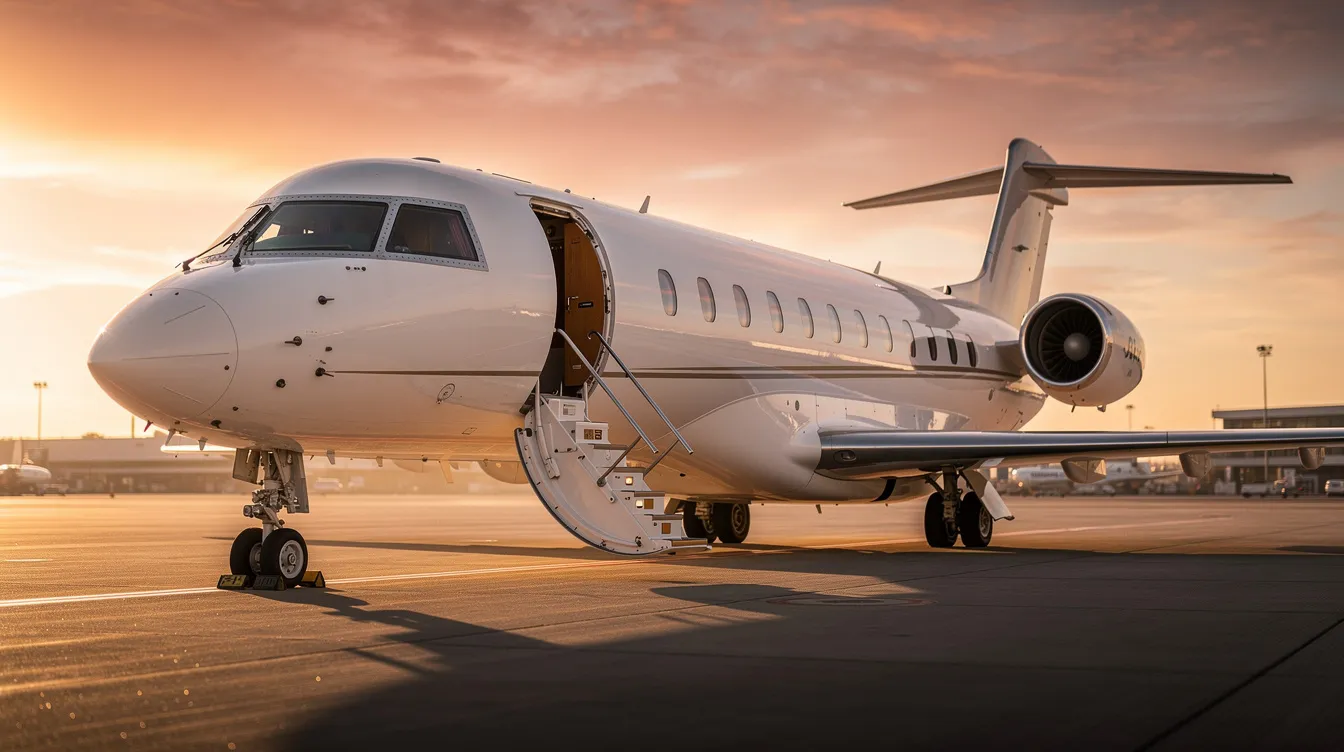
Mach 1 is the local speed of sound—not a single fixed value. It shifts with every change in temperature and altitude, from roughly 761 mph at sea level to about 660 mph at 36,000 feet. This concept underpins the flight regimes that define modern aviation: subsonic, transonic, and supersonic. It explains why shock waves form, why compressibility effects matter, and why aircraft designers use swept wings and supercritical airfoils.
For private jet travelers, understanding cruise Mach ranges explains why different aircraft cover routes at different speeds and costs. Whether the goal is speed or savings, Mach-informed choices lead to better outcomes.
Ready to experience private travel on your terms? Explore flight options or request a quote at https://www.jettly.com or compare how Jettly stacks up as a flexible alternative to fractional programs like NetJets.
The questions below address common curiosities about Mach 1 and high-speed flight that go beyond the main sections of this article.
Yes. Mach 1 is always tied to the local speed of sound, so its mph value is identical for any aircraft at a given altitude and temperature. What differs between aircraft is how close they can safely operate to Mach 1. Each type has its own MMO and critical Mach number, which define its safe speed envelope—not the underlying speed of sound itself.
The vast majority of private jets available through Jettly operate in the subsonic regime, certified to cruise well below Mach 1. While supersonic business jets are under development across the industry, current charter fleets prioritize high-subsonic efficiency, cabin comfort, and compliance with noise regulations that restrict supersonic flight over land.
In well-designed business jets and airliners, passengers typically do not feel Mach number directly. The cabin experience remains smooth as long as the aircraft stays within its certified flight envelope. Pilots actively avoid operating near the coffin corner or close to Mach limits where buffeting from shock waves might occur, keeping everyone within a comfortable and safe range.
As the aircraft climbs and density decreases, indicated airspeed becomes less representative of how the aircraft interacts with the air near the speed of sound. Managing speed by Mach number at higher altitudes helps pilots stay clear of compressibility effects, critical Mach boundaries, and MMO while still cruising efficiently.
Higher cruise Mach generally burns more fuel per mile, which raises operating cost. However, the time saved on long sectors can justify the expense for business-critical trips. Travelers using Jettly can compare aircraft profiles and flight times through the platform's cost estimator and draw on insights about how much a private jet really costs to decide whether a faster jet or a slightly slower, more economical option better fits their schedule and budget.
Mach 1 is the local speed of sound, not a fixed number. It is about 761 mph (1,225 km/h) at sea level on a standard day and roughly 660 mph (1,062 km/h) at 36,000 feet, where colder air reduces the speed of sound. Temperature and altitude therefore determine how fast Mach 1 is at any given point.
For private jet travelers, Mach numbers help explain how aircraft speed affects flight time, fuel use, and charter cost. Most private jets cruise below Mach 1, balancing speed with efficiency, range, and comfort. Jettly lets travelers compare available aircraft and request instant quotes based on their route and priorities, or lock in predictable access and pricing through its jet card programs. Jettly is a charter broker; flights are operated by properly certified third-party carriers.
Ready to plan a private flight? Explore aircraft options or request a quote at https://www.jettly.com.
Share this post:
Jay Franco Serevilla
Nov 9, 2026
|
5
min read
Discover tips and trends in the industry.
5
min read
Turboprop Charter: Cost‑Effective Private Aircraft for Regional Trips
Turboprop charter prices in North America and Europe range from $1,200 to $3,000 per hour, making them a cost-effective choice for regional flights under 1,000 miles. Premium models can reach up to $5,000 per hour during peak demand. Jettly's platform allows users to compare rates transparently, ensuring travelers find the best options for their needs.
Read More
5
min read
What Is the Cheapest Day to Buy Airline Tickets?
Finding the cheapest day to buy airline tickets is more complex than simply booking on a Tuesday. Dynamic pricing means fares fluctuate based on demand, making timing and flexibility key factors. This guide explores effective strategies for securing the best flight prices, whether for commercial airlines or private jet charters.
Read MoreStay updated with our latest insights and tips to elevate your journey with us.
MEMBERSHIPS AND ASSOCIATIONS



© 2026 Jettly Inc. All rights reserved.
Disclaimer: Jettly operates as a charter broker, offering access to a global digital jet charter marketplace. Jettly is not a direct air carrier and does not own or operate aircraft. All advertised flights are conducted by third-party air carriers that are fully licensed and hold the appropriate Part 135 or Part 121 certifications issued by the Federal Aviation Administration (FAA) or equivalent regulatory authorities under U.S. or foreign law. Jettly complies fully with the U.S. Department of Transportation's Part 295 and Part 298 Charter Broker regulations. Jettly does not carry additional liability insurance. Passengers are covered by aircraft operator insurance. TICO: 50023770


