



Login
Get Instant Pricing On 23,000+ Aircraft

>
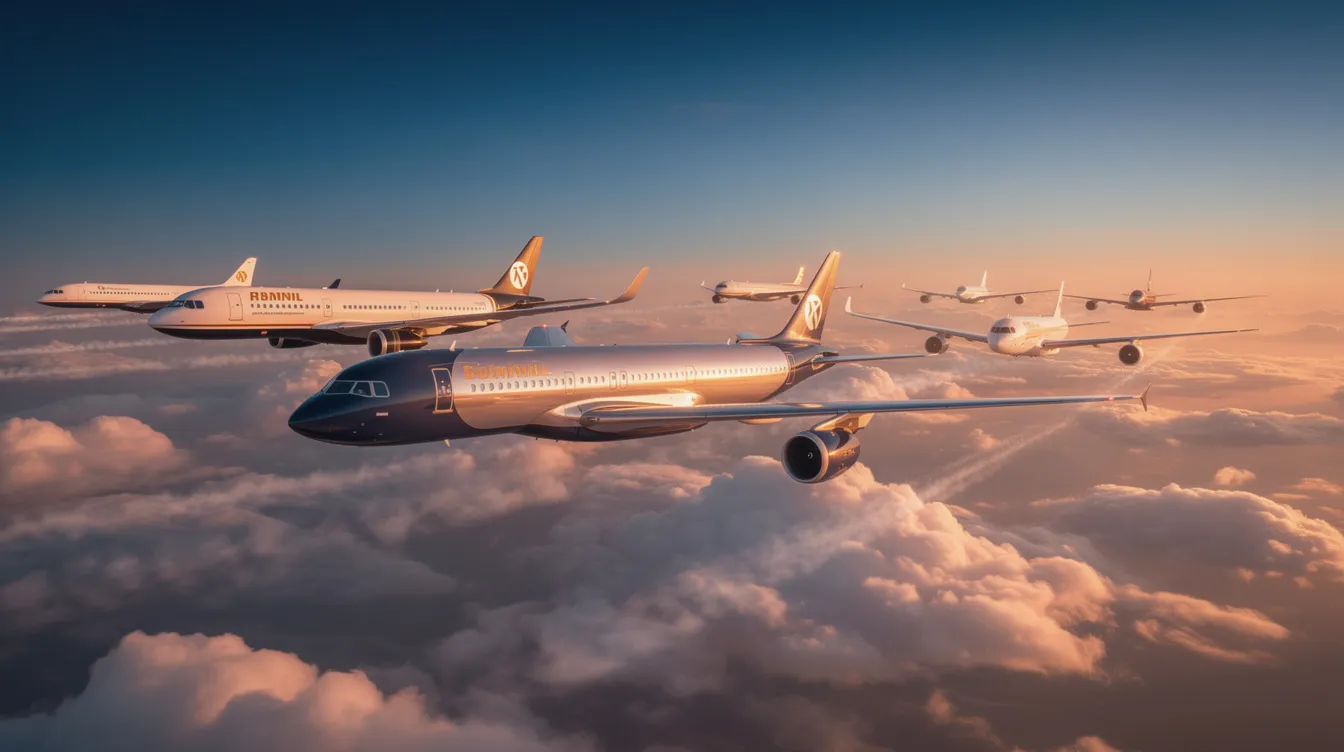
Jet airliners changed how people move across the planet. From the first commercial jet flights in the 1950s to the twin-engine widebodies connecting continents today, these aircraft turned days-long journeys into hours-long flights and made global air travel accessible to billions. This article traces that arc—from the de Havilland Comet and Boeing 707 through the jumbo jet era and into present-day models—and explores what it means for travelers choosing between commercial aviation and private charter.
Jet airliners can carry hundreds of passengers on transcontinental and transoceanic flights, reshaping tourism, business, and cargo operations from the late 1950s onward. The Boeing 707, Boeing 747, and modern aircraft like the Airbus A350 and Boeing 787 each marked a new era of speed, efficiency, and passenger comfort.
Jet aircraft enabled faster, safer, and more affordable air travel on a global scale, with cruising speeds roughly three times those of earlier propeller-driven planes.
Key milestones include the de Havilland Comet, the world's first commercial jet airliner; Boeing and McDonnell Douglas becoming major manufacturers; and the ongoing shift from four-engine to more efficient twin-engine designs.
Scheduled commercial airliners serve fixed routes through major hubs, while on-demand private jet travel through platforms like Jettly lets travelers bypass crowded airports and rigid schedules.
Later sections cover iconic models, safety and technology advances, and how travelers compare commercial aviation with private charter.
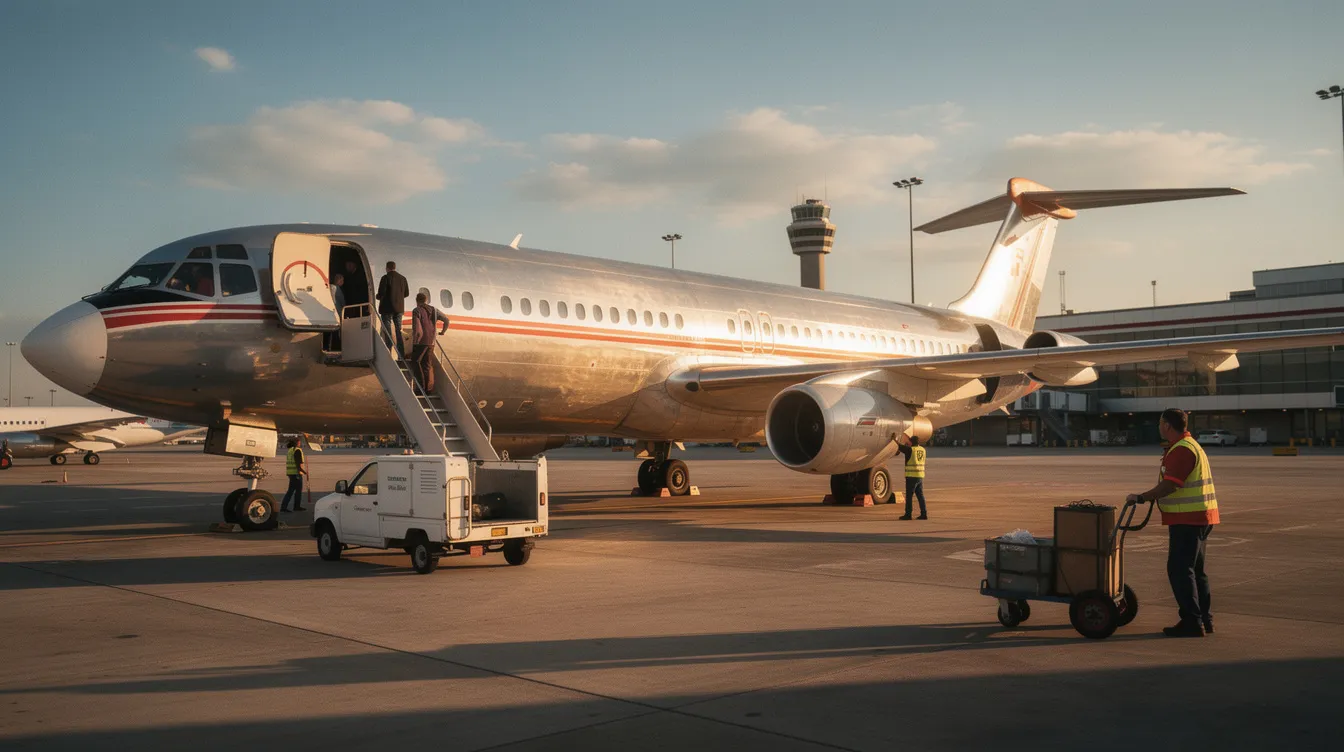
A jet airliner is a large fixed-wing aircraft designed for passenger transport. Jet airliners are designed to efficiently transport large numbers of passengers over long distances. These aircraft typically seat from around 30 passengers in small regional jets to well over 500 in the largest wide-body configurations. Their purpose is to transport large numbers of passengers efficiently over long distances.
Jet airliners are powered by turbofan engines that produce thrust by accelerating air. This differs from piston-powered and turboprop aircraft, which use propellers.
Jet engines have far fewer moving parts than piston engines, contributing to efficiency and reliability.
Jet airliners typically cruise at Mach 0.78 to 0.85, or about 500 to 650 mph, and operate at altitudes of 30,000 to 43,000 feet, where thinner air helps engines operate efficiently.
Advanced pressurization and smoother rides improve cabin comfort. Jet airliners also generally have less cabin noise and vibration than propeller-driven planes.
Commercial aircraft today are almost universally jet-powered on medium- and long-haul routes. Turboprops remain common on shorter regional sectors, often under roughly 500 miles.
Airliners carry passengers and belly cargo, while some retired passenger aircraft are converted into dedicated freighters.
The jet age in commercial aviation began when the de Havilland Comet entered service with BOAC in 1952. It was the world's first commercial jet airliner and the first to provide routine jet-powered passenger flight at speeds and altitudes beyond those of propeller airliners. As the first airliner designed for this new era, it introduced technological advancements that influenced the aviation industry, even as early structural failures prompted investigations and redesigns.
A total of 114 Comets were built. The program suffered catastrophic setbacks in 1954 when metal fatigue caused structural failures in flight. Pressurization cycles contributed to cracks around the squared-corner cabin windows. The subsequent investigations and redesigns influenced aircraft engineering and safety standards across the industry.
The Rolls-Royce Dart turboprop, introduced in 1948, powered regional airliners, but turbojets and turbofans drove the jet age. The Pratt & Whitney JT3 turbojet revolutionized air transportation in 1958, powering Boeing's breakthrough jetliner. Jet engines provide thrust by accelerating air, allowing aircraft to fly faster than earlier piston-powered designs while operating with greater efficiency at high altitudes.
The Boeing 707 entered commercial service on October 26, 1958, with Pan American (Pan Am) operating the first flight. Its commercial version drew on experience with military aircraft, though the passenger airliner was designed for airline needs. It helped establish routine transatlantic jet travel and became a familiar sight on global routes. The Douglas DC-8 was first introduced in September 1959 and could reach speeds over 600 mph, making it a capable long-haul competitor.
European and Soviet manufacturers also shaped the era. The Sud Aviation Caravelle, an early jet airliner with engines mounted near the rear fuselage, marked a European milestone on short-haul routes. This layout helped support quiet operation in the cabin. The Tupolev Tu-104 entered service in the Soviet Union, demonstrating that commercial jet development was a global effort, not limited to the United States and Western Europe.
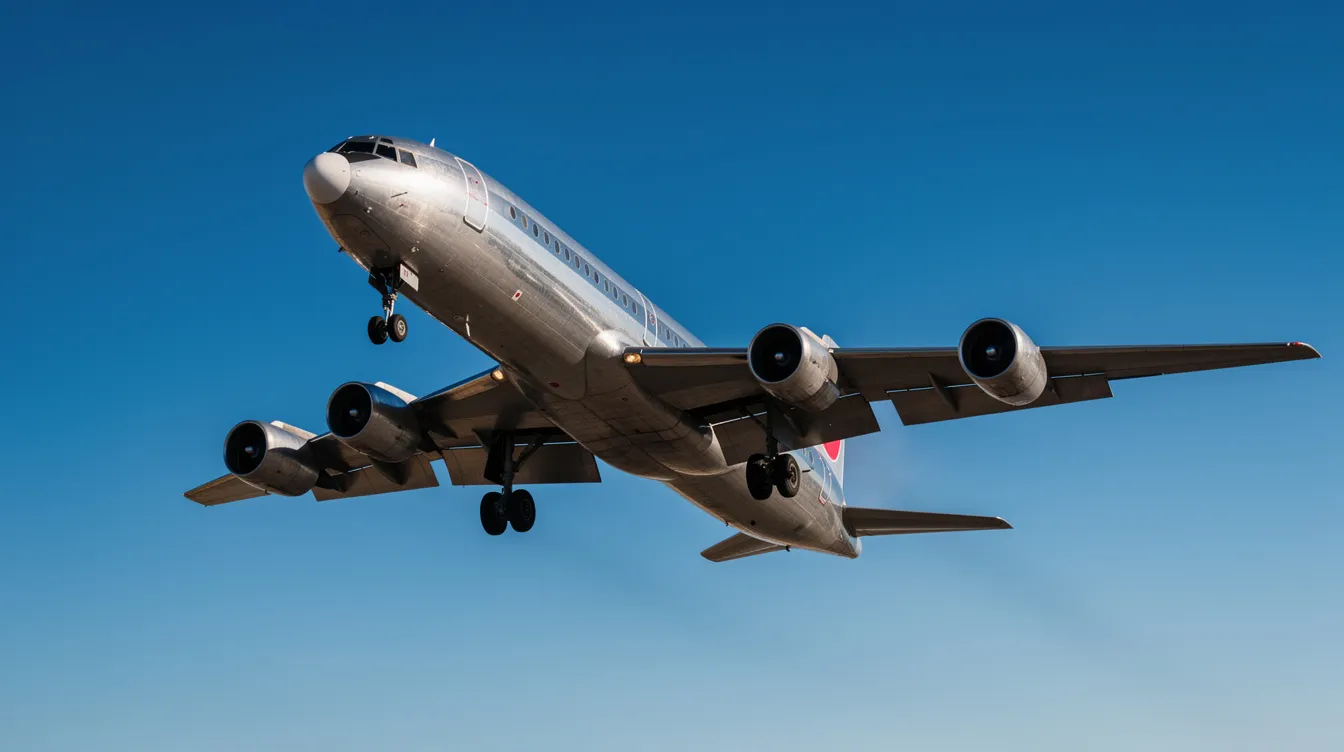
Several milestone commercial airliners defined their eras and shaped how airlines operate worldwide. Each manufacturer modified designs to suit different ranges, passenger loads, and airport requirements.
|
Jet airliner |
Manufacturer or origin |
Notable role or feature |
|---|---|---|
|
de Havilland Comet |
United Kingdom |
World's first commercial jet airliner; entered service in 1952 |
|
Boeing 707 |
United States |
Helped establish routine transatlantic jet travel; entered commercial service in 1958 |
|
Douglas DC-8 |
United States |
Long-haul competitor capable of speeds over 600 mph |
|
Boeing 747-400 |
United States |
Widebody jumbo jet that can carry 416 passengers over 13,450 km |
|
Airbus A350 and Boeing 787 |
Europe and United States |
Modern twin-engine widebodies designed for long-range efficiency |
The Boeing 707 brought routine jet travel to transatlantic routes. The Boeing 727, with rear-mounted engines and a T-tail, was designed for U.S. domestic routes and airports with shorter runways.
McDonnell Douglas jets served different markets. The DC-9 handled short-haul, high-frequency service, while the DC-10 and MD-11 widebody tri-jets served long-range routes for airlines including United Airlines, KLM, and Swissair.
After the Comet, de Havilland shifted toward regional aircraft, including the Dash 8 turboprop series, which connected smaller markets to major jet-airliner hubs.
Airbus entered the market with the A300 and A310, early wide-body twin-engine aircraft that gave European airlines competitive medium- and long-haul options. Their twin-engine configuration foreshadowed the later move away from four-engine designs.
Soviet and Russian designs also saw broad use. The Tupolev Tu-134 and Tu-154 served as workhorses across the Eastern bloc, while 292 Ilyushin Il-62 aircraft were produced for long-haul routes.
The British and French Concorde entered service in 1976 and flew until 2003. As a supersonic transport, it remains the only sustained commercial supersonic passenger program and a landmark in aviation speed.
The Boeing 747's first commercial flight took place in 1970 with Pan Am. Known as the “Queen of the Skies,” it launched a new era of mass long-haul travel as the world's first jumbo jet.
The 747 features a twin-aisle wide-body layout and partial upper deck. Seating varies by model and cabin configuration, typically ranging from around 366 to 467 passengers.
The Boeing 747-400 can carry 416 passengers over 13,450 kilometers, making it capable of nonstop ocean crossings. The later 747-8 entered service in the 2010s and has a range of about 14,800 km.
National airlines and other major carriers, including American Airlines, United Airlines, British Airways, and Japan Airlines, operated 747 fleets for decades. On high-demand intercontinental routes, the aircraft helped spread operating costs across many seats. Learn more about aircraft operating costs.
Other four-engine widebodies included the Airbus A340 and Airbus A380. The A380 was the world's largest passenger plane, though production has ended.
Modern twin-engine aircraft such as the Boeing 777 and 787 and Airbus A330 and A350 now handle most long-haul services, reflecting a shift toward more fuel-efficient designs than many earlier airliners.
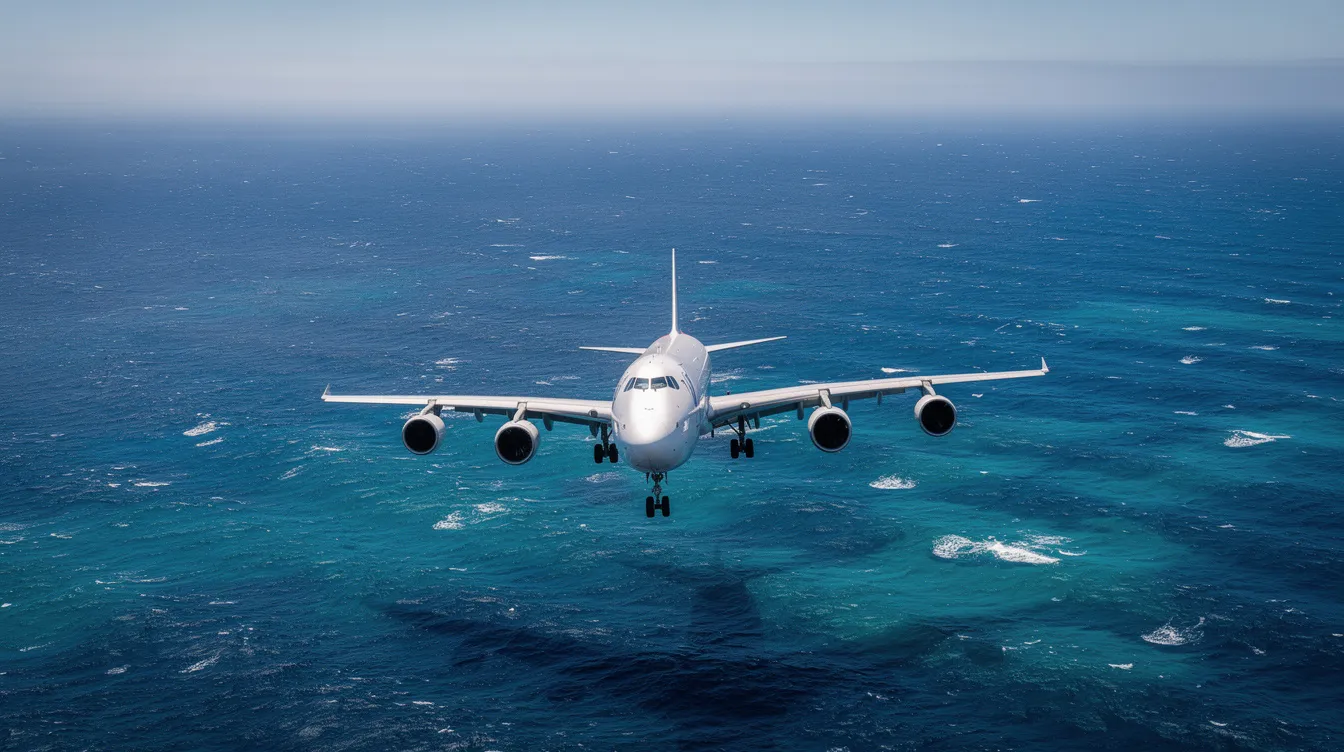
The rise of commercial jet airliners in the 1960s and 1970s drove growth in tourism, business travel, and international trade. By reducing travel times significantly, jet airliners changed how people and goods move between countries.
Higher speed and range made nonstop routes such as New York–London, Los Angeles–Tokyo, and Sydney–Singapore routine, cutting journeys that once took days down to hours.
Economies of scale and increased competition—accelerated by U.S. airline deregulation in 1978—gradually reduced fares. By the 1980s and 1990s, flying had become accessible to more middle-class travelers worldwide.
Hub-and-spoke networks developed around airports such as Chicago O'Hare, London Heathrow, Dallas/Fort Worth, and Dubai International. Regional jets carried passengers to and from these hubs.
Cargo operations expanded alongside passenger service. Converted passenger jets and dedicated freighters such as the 747-400F supported express shipping and e-commerce logistics.
These changes made air travel a backbone of global transportation, linking cities and economies at a scale few other modes can match.
Present-day jet aircraft designs prioritize fuel efficiency, lower emissions, and passenger comfort—goals that received less attention in the early jet age. Continued technological advancements focus on engines, materials, cabin systems, and operating efficiency.
New-generation twin-engine widebodies such as the Boeing 787 Dreamliner and Airbus A350 use composite airframes that reduce weight and resist corrosion. Depending on the comparison, they can deliver around 20–25% better fuel burn than older models. Their engines include the GEnx and Rolls-Royce Trent families.
Boeing 737 variants and the Airbus A320neo family remain common narrowbody aircraft for short- and medium-haul routes.
Cabin improvements include LED lighting, higher humidity, larger dimmable windows such as the 787's electrochromic panels, and quieter engines.
High-speed satellite-based Wi-Fi is increasingly available, particularly on long-haul flights.
Environmental pressures are encouraging stricter noise controls, lower CO₂ emissions per seat-kilometer, and greater use of sustainable aviation fuel. ICAO standards and airline commitments are part of this shift.
Early long-range jets such as the Boeing 707, Boeing 747, and Airbus A340 were built with four engines partly because engine reliability and regulations limited how far twin-engine aircraft could operate from diversion airports. Safety rules, including the FAA's 60-minute rule introduced in 1953, restricted some twin-engine operations.
As engine reliability improved, regulators expanded ETOPS (Extended Twin-Engine Operations) approvals. By the 2000s, aircraft such as the Boeing 767, 777, and 787 and Airbus A330 and A350 could fly routes more than 180 minutes from a diversion airport, subject to aircraft and operator approvals.
Four engines provide redundancy but generally require more fuel and maintenance than two. As a result, twin-engine aircraft offer lower operating costs on many routes. By the mid-2020s, four-engine passenger aircraft such as the Airbus A380 and Boeing 747 were being retired or assigned to more limited services, while twin-engine widebodies handled most long-haul flying. The Boeing 767 helped demonstrate that twin-engine aircraft could serve intercontinental routes, followed by the 777.
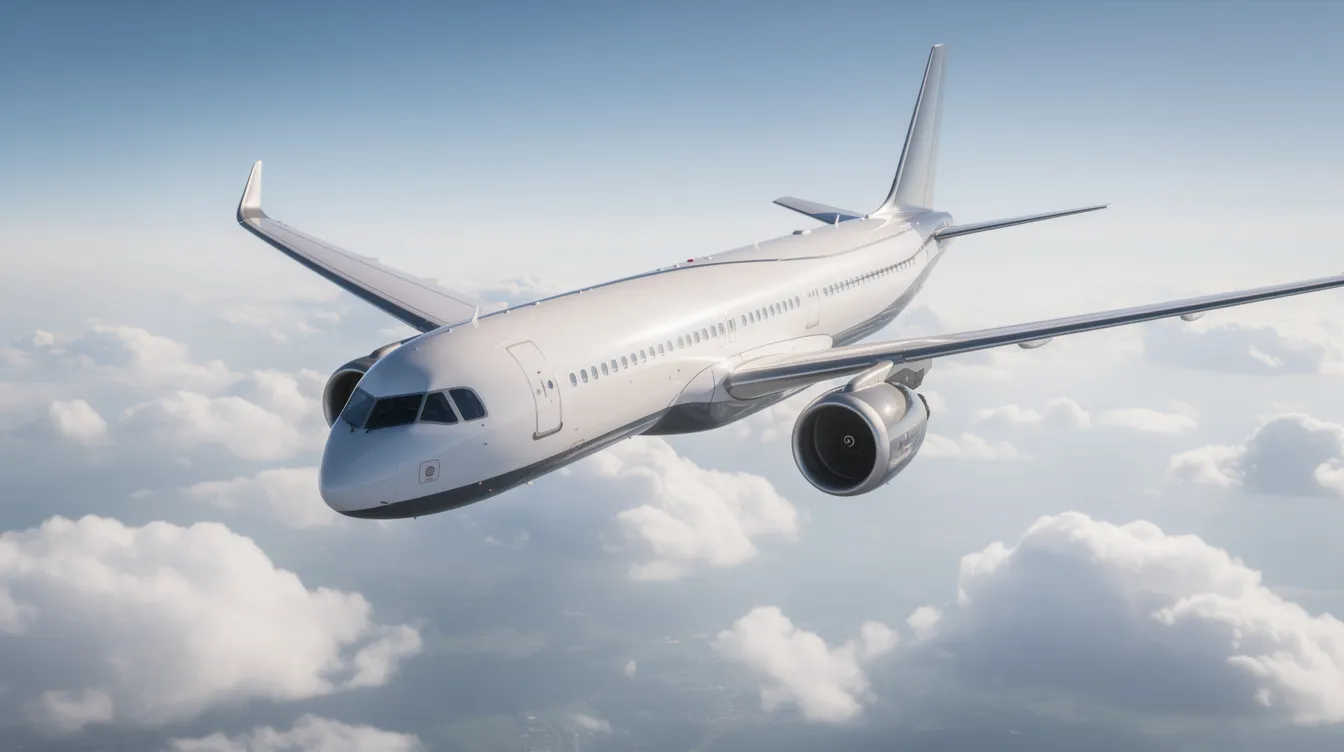
Scheduled commercial aviation uses large jet airliners on fixed routes and timetables. Private jet charter platforms like Jettly provide flights arranged around a traveler's itinerary.
Private jets often use smaller FBOs and secondary airports closer to travelers' destinations. This can reduce terminal crowds and ground time and is one reason many travelers compare the best private jet charter companies before booking. Learn how to book a private jet.
Commercial airlines offer several cabin classes, while private aircraft provide a private cabin where passengers can work, meet, or rest together.
Digital platforms like Jettly act as charter brokers, connecting customers with a global inventory of more than 20,000 private charter aircraft, including light, midsize, and heavy jets, turboprops, and helicopters. Jettly does not own or operate aircraft; flights are operated by properly certified third-party carriers.
Private charter may suit multi-city business trips, same-day travel when scheduled services are full, urgent family trips, or routes without direct commercial service, and there are now many ways to get a seat on a private jet more easily than in the past.
For solo travelers on well-served routes, a commercial ticket is usually the lower-cost choice. Private charter may save substantial total travel time for groups or time-sensitive trips, and travelers can weigh shared charter flights versus full private charters to balance cost and privacy.
Jettly is a digital private jet charter marketplace that complements commercial airliners operated by airlines such as American Airlines, Lufthansa, and Emirates. It offers an alternative where fixed schedules and routes do not fit a traveler's plans.
Jettly's instant-quote tools and airport locator tools let travelers compare aircraft categories by range, passenger count, baggage needs, and runway requirements. Compare aircraft options to match the aircraft to the trip.
As a charter broker, Jettly arranges flights operated by properly certified third-party air carriers that meet applicable safety and regulatory requirements, similar to the standards applied to Part 135 charter companies.
Private jet membership options can help frequent flyers seek more predictable pricing. Occasional travelers can request one-off quotes without a membership commitment.
Coordinated ground transportation, in-flight catering through services such as Jettly Eats, and access to smaller airports can make a private itinerary more direct than a commercial connection.
Explore aircraft options and request live pricing at https://www.jettly.com.
The history of jet airliners points toward a future shaped by efficiency, sustainability, and digital tools—trends that affect commercial and private aviation alike.
Ultra-long-range twin-engine aircraft can already fly nonstop routes such as Perth–London and New York–Singapore, extending the reach of twin-engine operations, while tools like Jettly's jet card flight cost estimator help travelers understand pricing on these long sectors.
Research into hybrid-electric propulsion, hydrogen concepts, and sustainable aviation fuel is advancing, although large-scale use in big airliners remains a longer-term prospect.
Predictive maintenance, improved weather routing, and AI-assisted flight planning can help reduce delays and fuel burn for airliners and charter fleets, while structured jet card programs for frequent private flyers evolve alongside these technologies.
Charter platforms may offer more sustainability choices, including carbon offset programs and guides to affordable aircraft rental options, plus pricing tools that help customers compare options.
These answers address common questions about commercial jet airliners and private charter, while Jettly's ULTRA high-ticket affiliate program speaks to those interested in promoting these services.
Modern jet airliners operate under strict safety regulations and use redundant systems, advanced avionics, and rigorous maintenance programs. Improvements in aviation safety reflect operational standards and regulations as well as aircraft technology. Certified turboprops also operate safely under regulatory oversight. The relevant factors include the aircraft's condition, operator compliance, and safety procedures—not propulsion type alone.
Modern business jets and large commercial aircraft have broadly similar cruise speeds. Private travel's main time savings often come from avoiding connections, shorter airport processing, and using airports closer to the destination. A traveler facing a full day of commercial connections may be able to complete the same journey in a few hours on a suitable nonstop charter route.
Yes. Private jets can use major commercial airports, but they often use nearby reliever or regional airports with less congestion. Many business jets can use shorter runways, giving travelers access to more airports than large jet airliners can typically serve, including dedicated private jet hubs in regions such as Kolkata and the rest of West Bengal.
Private charter pricing is usually calculated by flight hour or trip, not by seat. A light jet might cost roughly $3,000–$6,000 per flight hour, while heavy jets generally cost more. Business-class tickets can range from a few thousand dollars to much more, depending on route and date. For groups, the per-passenger cost of a charter can compare more favorably with several business-class tickets. Use a private jet cost calculator to estimate a specific route.
Start with the route, dates, passenger count, and baggage requirements. Then use a digital marketplace such as Jettly to request instant quotes and compare aircraft types. This makes it easier to weigh charter pricing and timing against a usual commercial itinerary. Ready to compare options? Visit Jettly to request a quote, review detailed private jet charter cost breakdowns, and see how private charter could complement regular commercial air travel.
Jet airliners transformed long-distance travel by making fast, high-capacity passenger service practical across continents. From the de Havilland Comet, the first jet airliner, to the Boeing 707 and today’s efficient twin-engine aircraft, each generation has improved speed, range, comfort, and operating efficiency. These aircraft are manufactured for scheduled routes and large passenger loads, while turbofan engines propel them across long distances.
For most solo travelers on established routes, scheduled airline service remains the practical, lower-cost option. Private charter can be a better fit when travelers need flexible timing, access to smaller airports, or a tailored group itinerary. Jettly’s marketplace helps travelers compare aircraft and request pricing; properly certified third-party carriers operate the flights. Explore jet airliners and private travel options, or request a private jet quote.
Share this post:
Jay Franco Serevilla
Nov 6, 2026
|
5
min read
Discover tips and trends in the industry.
5
min read
Recent Plane Crashes: What Happened, Why It Matters, and How Private Flyers Stay Safe
Recent plane crashes in the U.S. have raised concerns about aviation safety, particularly for private flyers. This guide reviews notable incidents, the roles of the FAA and NTSB in investigations, and offers practical safety tips for travelers considering private flights.
Read More
5
min read
Jackson Air Charter: Private Jet Charter to Jackson, Mississippi with Jettly
Jackson Air Charter offers convenient private jet services to Jackson, Mississippi, allowing travelers to bypass commercial airline hassles. With access to multiple airports and a global fleet, Jettly provides flexible scheduling and transparent pricing for both business and leisure travelers.
Read MoreStay updated with our latest insights and tips to elevate your journey with us.
MEMBERSHIPS AND ASSOCIATIONS



© 2026 Jettly Inc. All rights reserved.
Disclaimer: Jettly operates as a charter broker, offering access to a global digital jet charter marketplace. Jettly is not a direct air carrier and does not own or operate aircraft. All advertised flights are conducted by third-party air carriers that are fully licensed and hold the appropriate Part 135 or Part 121 certifications issued by the Federal Aviation Administration (FAA) or equivalent regulatory authorities under U.S. or foreign law. Jettly complies fully with the U.S. Department of Transportation's Part 295 and Part 298 Charter Broker regulations. Jettly does not carry additional liability insurance. Passengers are covered by aircraft operator insurance. TICO: 50023770


