


Login
Get Instant Pricing On 23,000+ Aircraft

>

According to the FAA, there are over 19,600 airports in the United States alone. With so many locations, it's easier than ever to get where you need to be with a jet.
Still, deciding between leasing and owning a private jet is a significant choice for anyone interested in the luxury of private aviation. To make the right decision, it's important to understand the advantages, responsibilities, and costs associated with each.
Are you a frequent traveler or a company executive exploring business jet options? Either way, read on to parse the differences between leasing and owning a private jet.
When someone buys a private jet, they're investing in complete control over their travel experience. Private jet ownership allows the buyer to customize the aircraft's interior, choose the flight crew, and schedule flights based on personal or business demands. For high-frequency travelers flying more than 200 hours per year, ownership can provide consistent access and convenience.
However, the financial commitment is steep. A new light jet can cost anywhere from a few million to almost 10 million dollars, while larger, long-range jets may reach almost seven times that range. Such figures don't include the ongoing operational costs that come with owning an aircraft.
Owners are responsible for annual maintenance, which can cost a significant sum. They also have to do the following:
Altogether, the total annual operating cost often reaches two to three million dollars, even before factoring in depreciation.
Depreciation is another major consideration. Like luxury vehicles, private jets lose value over time, especially as new models with better fuel efficiency and upgraded technology become available. Owners need to think about resale value and the long-term viability of their aircraft as part of the overall financial picture.
Leasing a private jet offers a more flexible and financially manageable option, particularly for those who don't fly enough to justify full ownership. A lease agreement lets a client use an aircraft without taking on the responsibilities of owning it.
The biggest financial benefit of leasing is the lower upfront cost. Instead of spending millions on a jet, lessees make monthly payments or pay per flight.
Leasing also makes budgeting easier with predictable monthly expenses. Since the lessee doesn't own the aircraft, they're not affected by depreciation or long-term maintenance issues.
Another major perk of leasing is the ability to choose the right aircraft for each specific trip. A midsize jet might be perfect for a quick domestic business meeting, while a larger, long-range model could be better suited for international travel. Leasing gives travelers the flexibility to make these choices without being locked into a single jet.
The financial contrast between owning and leasing a private jet is clear. Ownership requires a significant capital investment and comes with ongoing costs, while leasing provides access to private aviation with fewer financial commitments.
Annual expenses after a purchase can easily reach two to three million dollars. Aspects include the following:
Depreciation could add another half-million in lost value every year.
In comparison, leasing a similar aircraft might cost between three hundred and seven hundred thousand dollars annually, depending on the type of lease. Additional expenses, like fuel and optional services, could bring the total to around one million dollars or less per year. For individuals or companies that don't fly as frequently, leasing is the more cost-effective solution.
For companies with multiple executives or global operations, private aviation can play a vital role in improving productivity and expanding reach.
If a business has regular, predictable travel needs and can manage the logistics, ownership may be a logical investment. However, for most companies, leasing offers more agility. It lets businesses adjust their access to different aircraft as needed.
While finances are important, lifestyle and convenience also play a big role in the decision between ownership and leasing. Jet ownership appeals to people who want total control, a personalized onboard experience, and access to their aircraft at all times. It's an undeniable symbol of status and is often viewed as a long-term luxury investment.
That said, many travelers prefer the ease and flexibility that come with leasing. There's no need to worry about the following:
Leasing allows travelers to enjoy the perks of private aviation without the headaches that often come with full ownership. It's a great option for people who want luxury air travel on their own terms without taking on long-term responsibilities.
Jettly is changing how people experience private air travel by offering a tech-driven, membership-based model that simplifies access to jets around the world.
Jettly connects travelers directly to a global network of aircraft. It's done through a transparent and user-friendly platform.
One of Jettly's biggest strengths is its commitment to upfront, honest pricing. Clients always know what they're paying for, with no hidden fees or surprise costs.
Choosing between leasing and owning a private jet comes down to a few aspects. You need to consider the following:
If you fly frequently, want total control, and are prepared for the financial responsibilities, ownership might make sense.
If you prefer flexibility, lower upfront costs, and other jet leasing benefits, then leasing through Jettly is the smarter choice.
Once you make a choice between leasing and owning a private jet, you can travel in style and convenience at any time.
Jettly makes it easier than ever to book the exact jet you need. Whether you're looking for a VIP airliner or a super midsize jet, you can count on our robust connections. Last year, Jettly customers flew over a million miles across more than 190 countries.
Don't wait to reach out with questions or download the convenient Jettly app to get started.
Share this post:
Justin Crabbe
Jul 21, 2025
|
5
min read
Discover tips and trends in the industry.
5
min read
Robinson R66: A Comprehensive Overview of the Light Turbine Helicopter
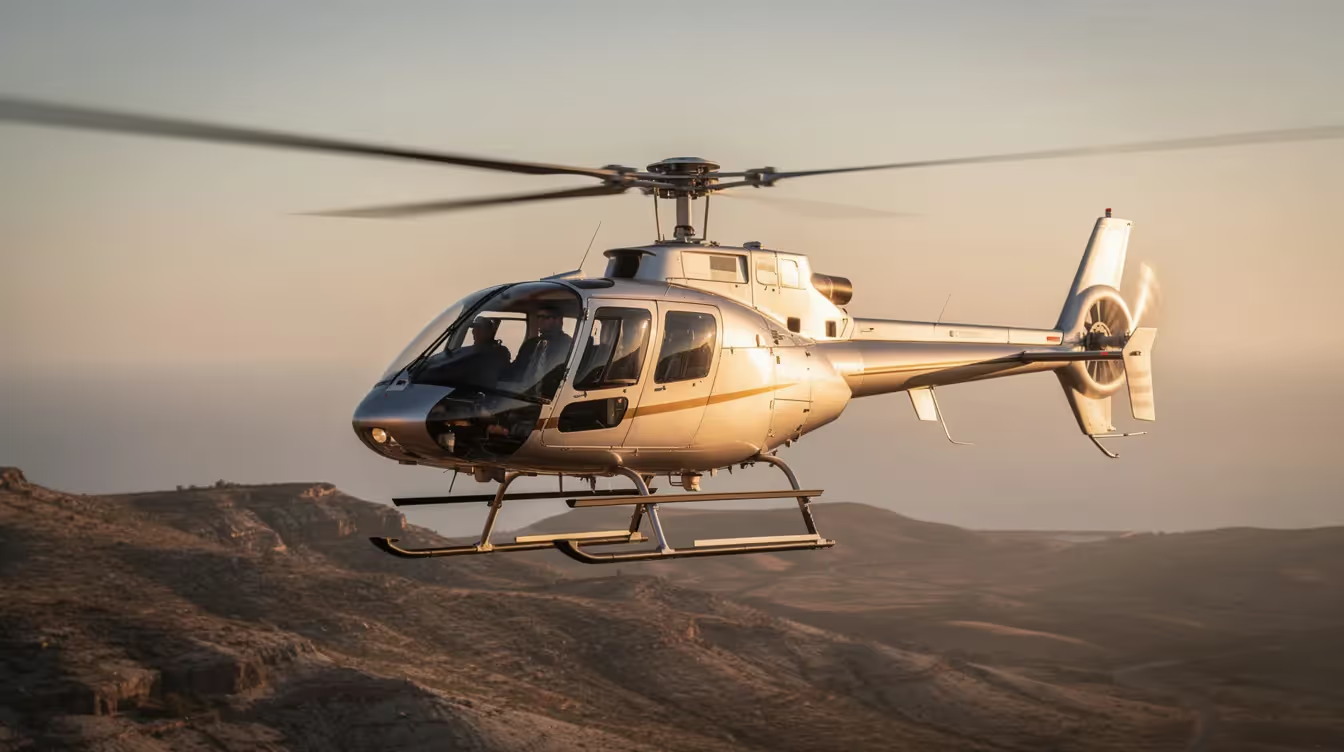
The Robinson R66 is a light turbine helicopter designed for private travelers, commercial operators, and public safety agencies, marking Robinson Helicopter Company's first foray into turbine technology. With a capacity of five seats, powered by a Rolls-Royce RR300 engine, the R66 offers impressive performance metrics, including cruise speeds up to 125 knots and a range of approximately 350 nautical miles, all at lower operating costs compared to competitors. Its versatile design accommodates various missions, from private transport to law enforcement, and it features a dedicated cargo compartment for added utility. For those interested in accessing R66-class helicopters without ownership, Jettly provides a digital platform for on-demand charters, ensuring flexible and transparent pricing.
Read More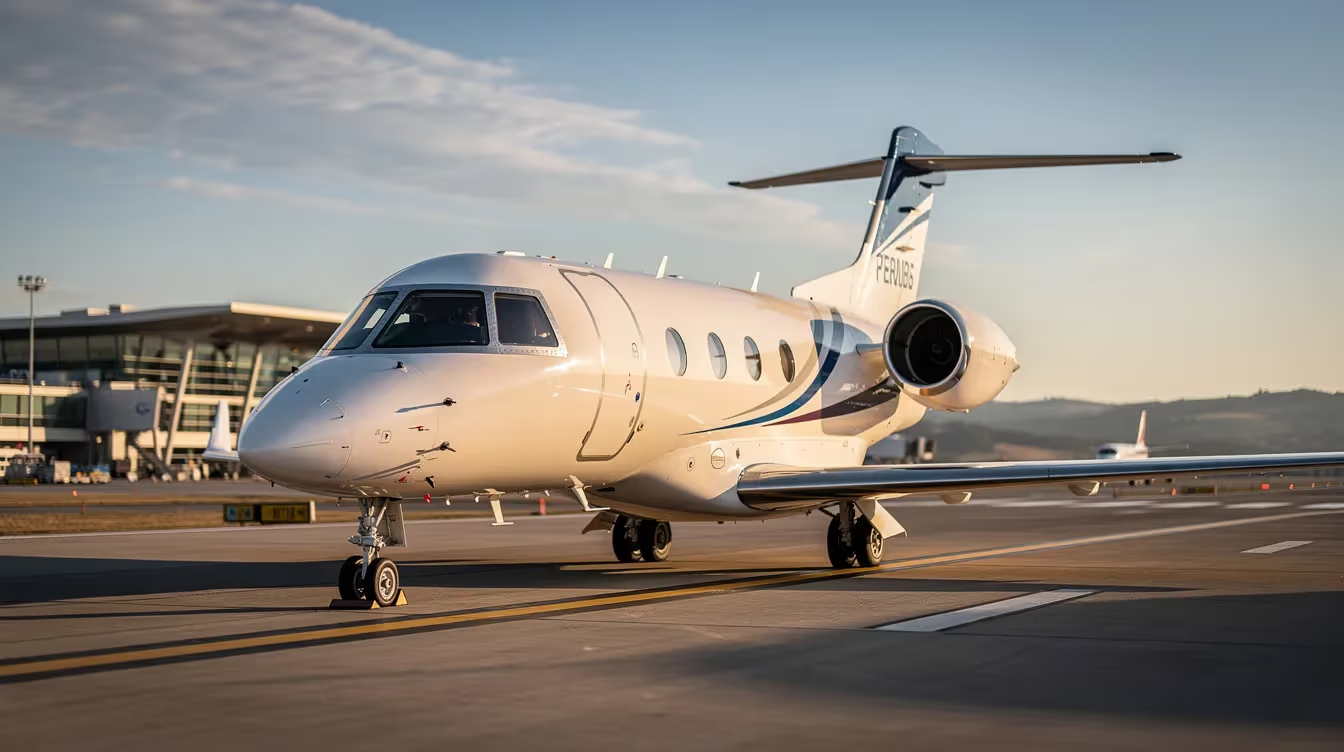
5
min read
Learjet 35: A Comprehensive Guide to the Iconic Light Jet in Private Aviation
The Learjet 35, introduced in 1973, is a highly regarded twin-engine light jet known for its speed and operational flexibility, making it a popular choice in the private jet charter market. With a capacity for six to eight passengers and a range of approximately 2,056 to 2,857 nautical miles, it remains in active service for various missions, including private charters and medevac operations. The aircraft features efficient Honeywell TFE731 engines, allowing for lower fuel consumption and the ability to operate from shorter runways. Despite being over 50 years old, the Learjet 35 continues to deliver value and performance, appealing to both travelers and corporate jet investors.
Read MoreStay updated with our latest insights and tips to elevate your journey with us.
MEMBERSHIPS AND ASSOCIATIONS



Disclaimer: Jettly operates as a charter broker, offering access to a global digital jet charter marketplace. Jettly is not a direct air carrier and does not own or operate aircraft. All advertised flights are conducted by third-party air carriers that are fully licensed and hold the appropriate Part 135 or Part 121 certifications issued by the Federal Aviation Administration (FAA) or equivalent regulatory authorities under U.S. or foreign law. Jettly complies fully with the U.S. Department of Transportation's Part 295 and Part 298 Charter Broker regulations. Jettly does not carry additional liability insurance. Passengers are covered by aircraft operator insurance. TICO: 50023770


