


Login
Get Instant Pricing On 23,000+ Aircraft

>

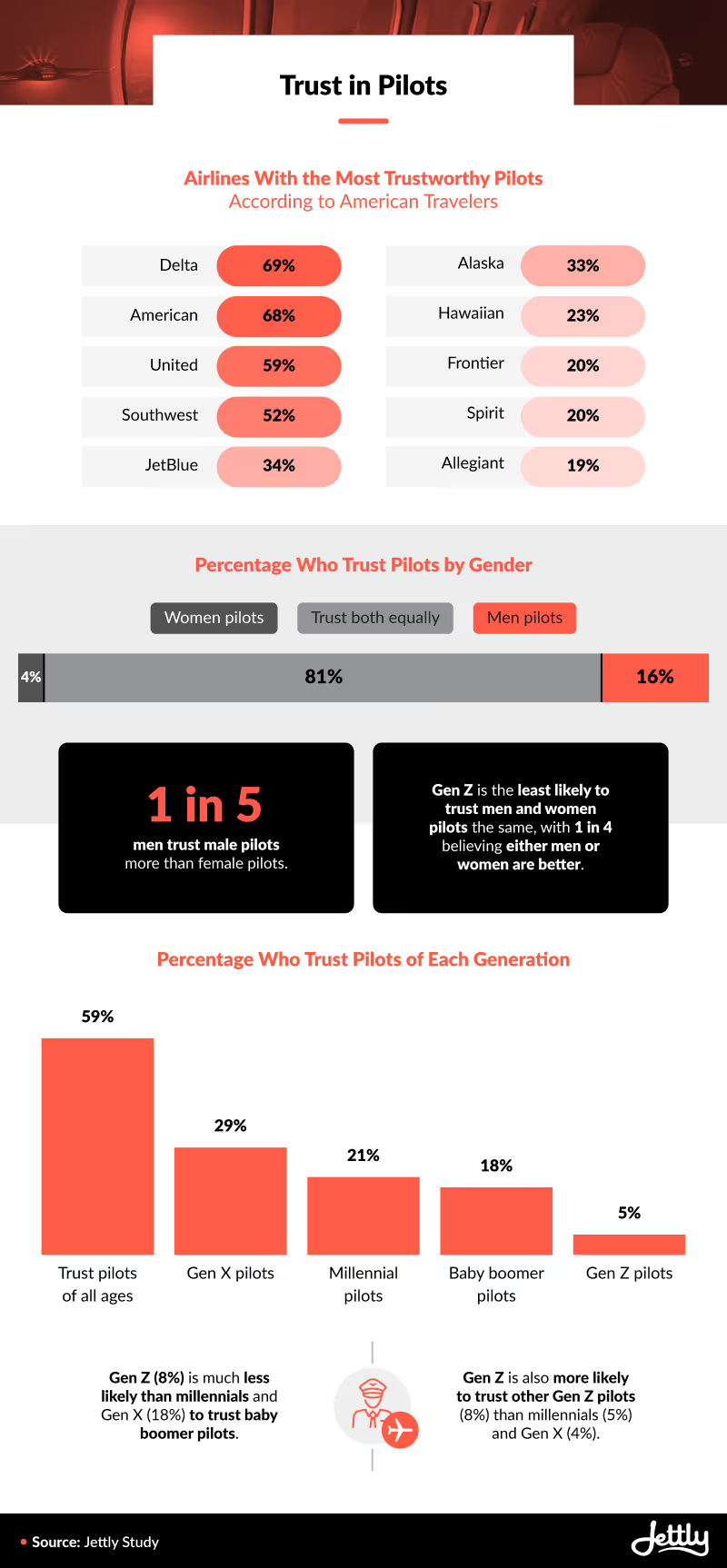
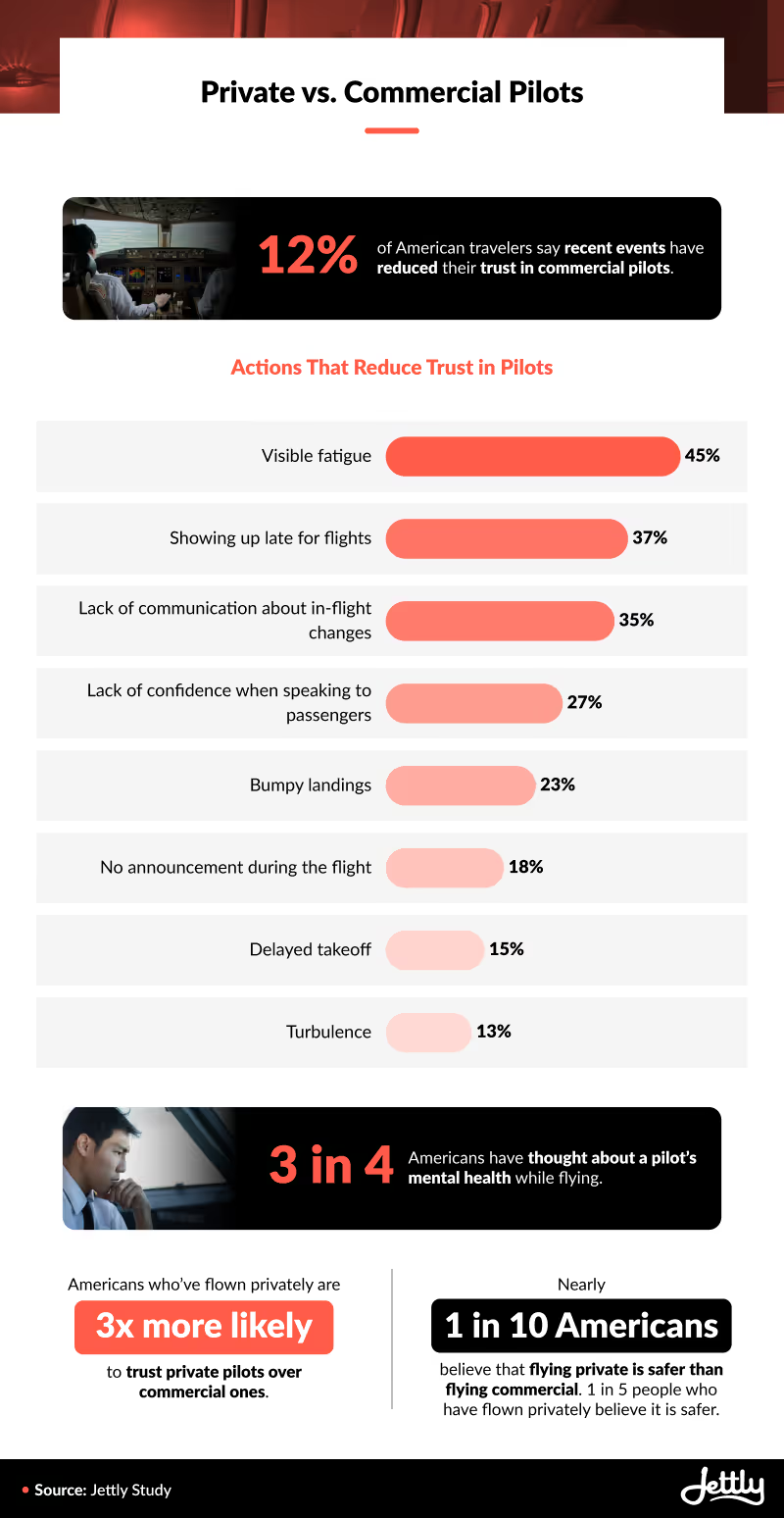
As recent events involving commercial pilots raise questions about their mental health and passenger safety, travelers are reevaluating their confidence in commercial aviation. Jettly surveyed over 1,000 Americans to uncover how trust in commercial and private pilots compares. Our findings reveal not only the public's current perceptions but also the factors that decrease their trust in pilots across both private and commercial flights.
Select an Image
Select an Image
"While private flights may seem limited, the growing network of private airports and aircraft options is making them more accessible than ever," shared Justin Crabbe, CEO at Jettly. "Today's online platforms and concierge services are also closing the booking information gap by offering real-time availability, instant pricing, and aircraft details."
"Private aviation offers unmatched convenience, flexibility, and luxury — benefits many travelers find worth the cost," Crabbe went on to say. "New options like jet card programs, fractional ownership, and per-seat bookings have also expanded access to a wider range of people, from business professionals to vacationers seeking a better travel experience. Whether it's a small jet for a quick trip or a larger aircraft for international travel, there's a solution to fit almost any need or budget."
On environmental concerns,Crabbe added that "Sustainability is an important focus for the private aviation industry, with efforts underway to explore eco-friendly solutions like carbon offset programs and more fuel-efficient aircraft."
We surveyed 1,016 Americans about their travel habits and trust in pilots. Among them, 8% were baby boomers, 25% were Gen Xers, 52% were millennials, and 15% were Gen Zers. Additionally, 45% were men, 53% were women, and 2% were nonbinary or nonconforming. For travel frequency analysis, 57% were casual travelers (traveling no more than once a year), and 43% were frequent travelers (traveling more than once a year); 18% were "private flyers" (those who had flown private before), while 82% were commercial flyers. Any percentages in this study not totaling 100% exactly are due to rounding.
Jettly is redefining luxury travel by providing seamless private aviation services tailored to meet the needs of discerning travelers. With a commitment to safety, professionalism, and convenience, we offer access to a wide range of private aircraft, making exclusive travel more accessible. As perceptions of pilot trust evolve, Jettly provides a trusted alternative for those seeking comfort, privacy, and peace of mind in the skies.
We welcome noncommercial sharing of this article about trust in private and commercial pilots, but please include a link to this source.
Share this post:
Justin Crabbe
May 6, 2025
|
5 minutes
min read
Discover tips and trends in the industry.
5
min read
N823KD – Bombardier Challenger 604 Accident and Charter Safety Guide
The N823KD, a Bombardier Challenger 604, was involved in a fatal accident on February 9, 2024, near Naples, Florida, due to dual engine failure during landing, resulting in the deaths of both pilots. The National Transportation Safety Board's investigation revealed maintenance deficiencies, including corrosion in the engines and gaps in documentation, which contributed to the incident. This accident has prompted discussions about improving safety practices and aligning maintenance standards for business jets with those of commercial airlines. Jettly offers vetted charter options for travelers, emphasizing the importance of rigorous maintenance and safety protocols in private aviation.
Read More
5
min read
Range of Cessna 172: How Far a Skyhawk Can Really Fly
The Cessna 172 Skyhawk, the most-produced airplane in history, has a maximum range of 600-800 nautical miles under ideal conditions, with practical endurance of 4-5 hours. Its range can decrease significantly with increased payload and varying conditions, making careful planning essential for cross-country flights. While the Cessna 172 is excellent for training and regional trips, private jet charter is often preferred for longer distances due to faster speeds and fewer stops. Pilots should consider factors like fuel management, weight, and altitude to optimize range, while recognizing that for time-sensitive travel, charter options may provide significant advantages.
Read MoreStay updated with our latest insights and tips to elevate your journey with us.
MEMBERSHIPS AND ASSOCIATIONS



Disclaimer: Jettly operates as a charter broker, offering access to a global digital jet charter marketplace. Jettly is not a direct air carrier and does not own or operate aircraft. All advertised flights are conducted by third-party air carriers that are fully licensed and hold the appropriate Part 135 or Part 121 certifications issued by the Federal Aviation Administration (FAA) or equivalent regulatory authorities under U.S. or foreign law. Jettly complies fully with the U.S. Department of Transportation's Part 295 and Part 298 Charter Broker regulations. Jettly does not carry additional liability insurance. Passengers are covered by aircraft operator insurance. TICO: 50023770


