


Login
Get Instant Pricing On 23,000+ Aircraft

>
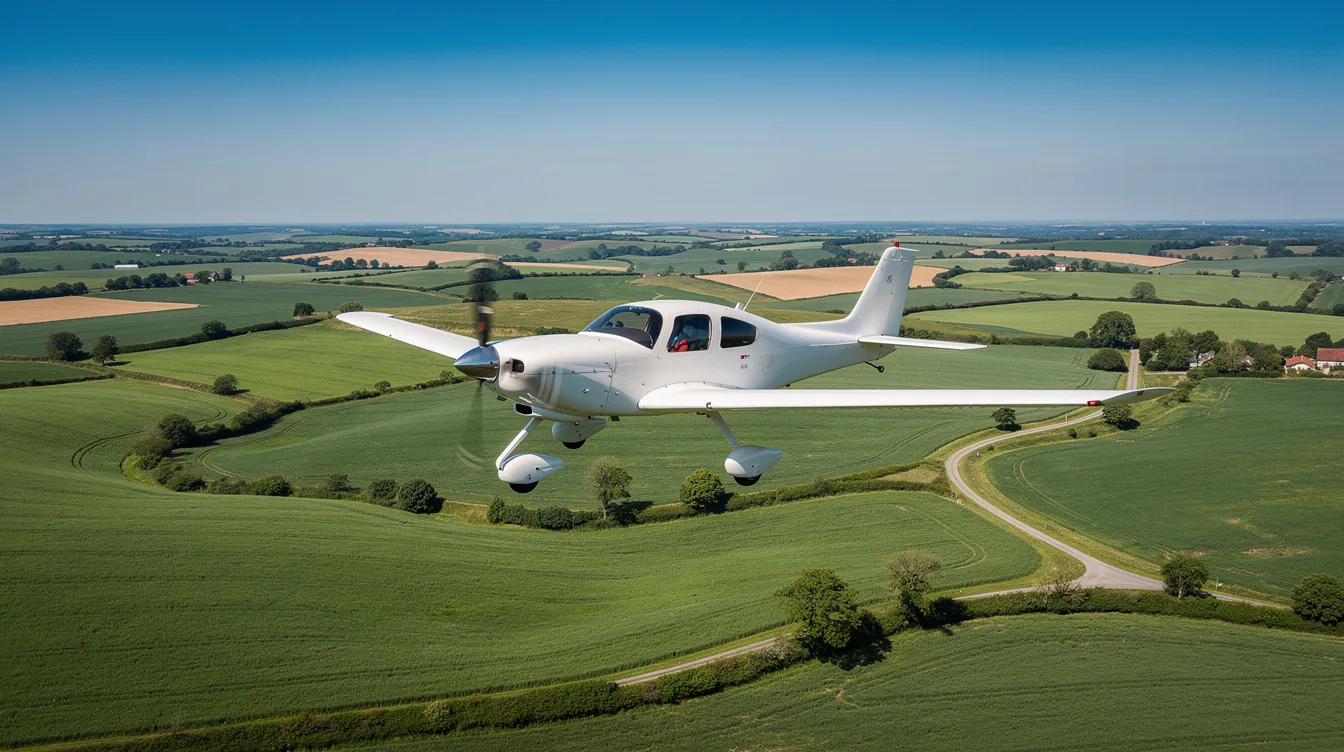
The Piper Arrow is a single-engine complex aircraft in Piper’s PA-28R family, best known for combining retractable landing gear, a constant-speed propeller, and IFR-capable avionics in a platform widely used for advanced flight training and personal cross-country travel. Built on the proven PA-28 Cherokee airframe, the Arrow adds more speed and systems depth than its fixed-gear siblings without becoming difficult to own or operate.
Whether you're a pilot building complex time, a flight student evaluating step-up trainers, a prospective aircraft buyer, or an aviation enthusiast comparing Piper models, this guide focuses on the details that shape real-world decisions: performance, model variants, handling, engine and systems, operating costs, upgrades, and buying considerations. It also shows where the Arrow fits against other Piper aircraft—and when a mission may call for charter options like Jettly instead of ownership or flying an Arrow yourself.
The Piper Arrow is a widely recognized single-engine complex aircraft within the PA 28R family, featuring retractable gear, a constant-speed propeller, and IFR-capable avionics options. It is commonly used for advanced flight training and personal travel.
Piper Arrow variants include the PA-28R-200 (Arrow II) and PA-28R-201 (Arrow III), along with the turbocharged Piper Turbo Arrow III and the T-tail Arrow IV. Over 32,000 PA-28 aircraft have been delivered since production began, and Piper produced the Arrow series from 1967 to the present.
Cruise speeds for the Piper Arrow generally range from 130 to 145 knots for normally aspirated models, while turbo Arrow variants can reach the mid-160s KTAS at altitude. Typical useful load falls between 1,000 and 1,200 lb, with gross weight ranging from roughly 2,500 to 2,900 lb depending on variant.
The tapered wing introduced on the Arrow III improved stall behavior and crosswind handling, and modern avionics upgrades significantly affect both performance perception and market value.
For missions beyond the Arrow's comfortable range or payload, on-demand charter platforms like Jettly offer access to faster aircraft and larger cabins without the fixed costs of ownership.
The Piper Arrow is the retractable-gear, constant-speed-propeller member of the Piper Cherokee family, carrying the PA 28R designation. While the base PA 28 line includes fixed-gear trainers and travelers like the Warrior, Archer II, and Archer LX, the Arrow adds mechanical complexity and meaningful cruise speed gains. The aircraft was designed as a step up from trainer aircraft, giving pilots exposure to systems management without the leap to high-performance singles or light twins like the Twin Comanche.
The first Arrow appeared in 1967 as the PA-28R-180, derived directly from the fixed-gear Cherokee 180. Piper aircraft evolved the line through the Arrow II, Piper Arrow III, and Turbo Arrow III, producing thousands of airframes that remain active today. Despite the fact that Piper Aircraft declared bankruptcy in 1991 and reformed in 1995, production and support for the Arrow family continued, and the type remains a staple at flight schools and on owner-flown ramps worldwide.
The Arrow's typical roles include:
Personal cross-country platform for owners who want more speed than a fixed-gear Archer or Warrior
Complex trainer for commercial and instrument students at flight schools and training programs
Cost-effective step-up airplane before transitioning to higher-performance singles or light twins
IFR-capable traveler for pilots transitioning from VFR-only flying who may occasionally supplement with private charter aircraft on longer or more demanding trips
Compared to the Warrior (roughly 110–120 KTAS cruise) or the Archer II and Archer LX (around 120–130 KTAS), the Arrow delivers noticeably more speed for a moderate increase in operating complexity and cost.
The terms "Arrow," "Arrow II," "Arrow III," and "Turbo Arrow III" all sit within the PA 28R series, but each generation brought distinct changes to the airframe, with variants powered by different engine options across the series, as well as handling.
Here is the evolution at a glance:
|
Model |
Designation |
Era |
Wing Style |
Engine |
Key Change |
|---|---|---|---|---|---|
|
First Arrow |
PA-28R-180 |
Late 1960s |
Hershey Bar (rectangular) |
Lycoming IO-360, 180 hp |
Introduced retractable gear to PA-28 line |
|
Arrow II |
PA-28R-200 |
Early 1970s |
Hershey Bar |
Lycoming IO-360, 200 hp |
More power, increased gross weight |
|
Arrow III |
PA-28R-201 |
Mid-1970s |
Semi-tapered wing |
Lycoming IO-360, 200 hp |
Longer fuselage, larger fuel capacity |
|
Turbo Arrow III |
PA-28R-201T |
Late 1970s |
Semi-tapered wing |
Continental TSIO-360 (turbo) |
Turbocharged for high-altitude cruise |
|
Arrow IV / Turbo Arrow IV |
PA-28RT-201/201T |
Late 1970s–1980s |
Semi-tapered wing |
Lycoming IO-360-C1C6 (200 hp) or TSIO-360 |
T-tail design, aerodynamic changes |
The Piper Arrow IV uses a Lycoming IO-360-C1C6 engine producing 200 hp in its normally aspirated version. Across these generations, cabin space grew slightly, empty weight increased, and fuel capacity expanded from roughly 50 USG in early models to 72+ USG in the Arrow III and later variants.
The normally aspirated Arrow III and the Piper Turbo Arrow III share the same basic airframe, but the turbo variant's Continental TSIO-360 engine maintains higher manifold pressure at altitude. This translates to better climb performance above 8,000 feet and true airspeeds in the 150–165 KTAS range where the normally aspirated engine begins losing power. Real-world numbers depend heavily on engine condition, propeller choice, and how well the turbo system is maintained.
The T-tail (Arrow IV) introduced a T-tail configuration that changed pitch behavior during stalls and low-speed flight. Many pilots find the conventional tail Arrow III more predictable, though both versions remain capable cross-country machines.
The Arrow's fuselage traces directly to the original Piper Cherokee design. The cabin layout, single door entry on the right side, and basic structural approach are shared across the Cherokee, Archer, and Arrow families. What changed over time was the wing, the tail, and the details that affect handling and speed.
Early PA-28 and PA-28R models used the constant-chord "Hershey Bar" wing. It was simple to manufacture and structurally robust, but its aerodynamic efficiency left room for improvement. In the mid-1970s, Piper added a semi-tapered wing to the Warrior and subsequently to the Arrow III. This tapered wing delivers better stall characteristics, improved roll response at lower speeds, and more forgiving crosswind behavior in the traffic pattern.
Key dimensions for the Arrow line:
The Piper Arrow IV has a wingspan of 35 ft 5 in
The Piper Arrow IV has a wing area of 170 sq ft
Typical length runs approximately 27 ft; height around 8 ft 3 in
Cabin width sits around 41–42 inches, similar to the Archer II
On the weight side, the Piper Arrow IV has a maximum takeoff weight of 2,500 lb, while the Arrow III normally aspirated version reaches approximately 2,750 lb gross weight and turbo versions approach 2,900 lb. Empty weight for an Arrow III typically runs around 1,627 lb, yielding a useful load near 1,123 lb. The Piper Arrow typically seats four people comfortably for cross-country flying, though full fuel plus four adults plus baggage routinely tests the limits of useful load-careful weight-and-balance planning is a standard part of Arrow ownership.
The cabin features four seats, a baggage area behind the rear seats (typically limited to about 200 lb), and a single door on the right side of the fuselage. The right seat offers decent room, and overall ergonomics feel familiar to anyone who has flown a Piper Cherokee or any common four-seat single-engine plane.
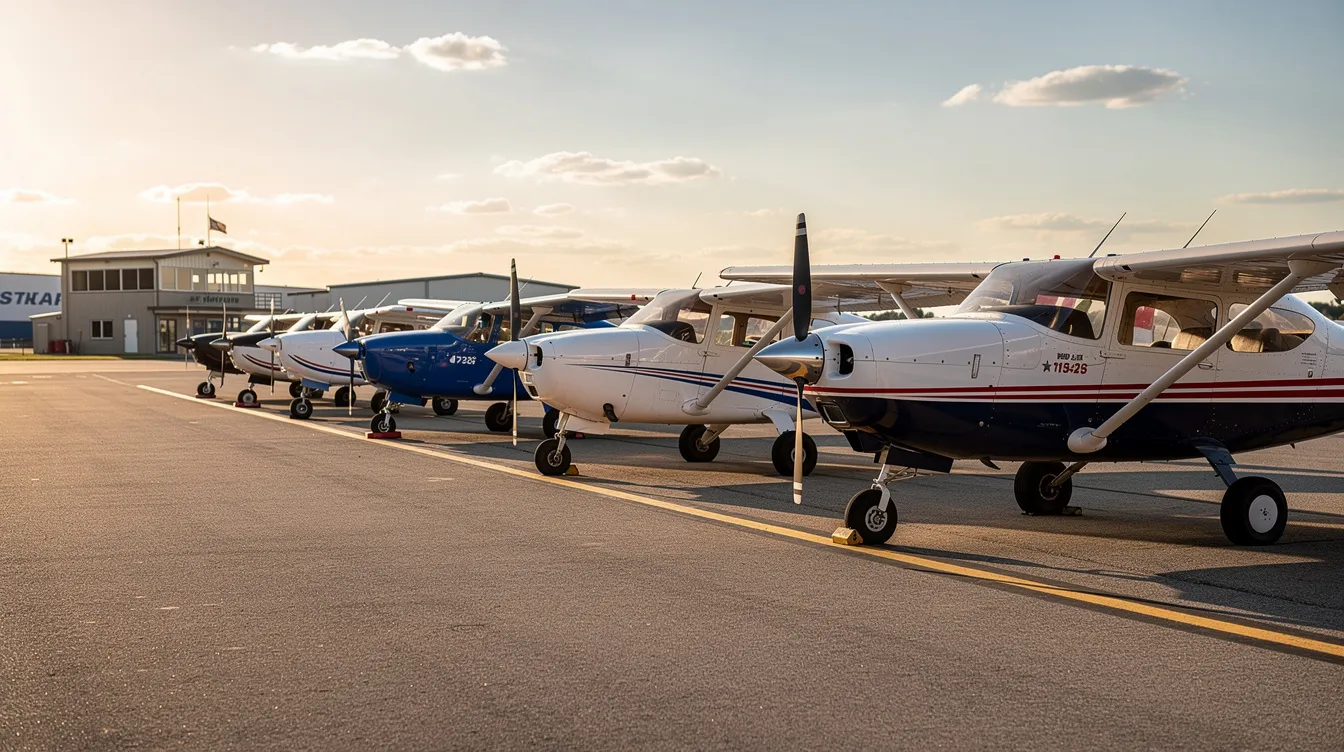
The Arrow's powerplant story splits into two camps: normally aspirated Lycoming IO-360 variants delivering 200 hp, and turbocharged Continental TSIO-360 engines in the Turbo Arrow models. Both are proven six-cylinder engine designs with decades of field history.
The constant speed prop and retractable landing gear are what make the Arrow a "complex" airplane under FAA definitions. Pilots need a complex endorsement to fly it, covering management of the throttle quadrant (throttle, propeller, and mixture controls), gear extension and retraction, and propeller pitch changes. Compared to a fixed-gear, fixed-pitch PA 28, the Arrow requires more cockpit awareness but rewards it with higher cruise speed and better climb efficiency.
The aircraft features an electro-hydraulic landing gear system with emergency backup, giving pilots a manual override if the primary system fails. Depending on equipment and model year, other systems may also rely on air and vacuum-driven components. Gear warning horns and, on many models, an automatic gear extension system provide additional protection against gear-up landings-though neither replaces proper checklist discipline.
For the Turbo Arrow III, turbocharging maintains higher manifold pressure at altitude, which is the key advantage over normally aspirated versions. Many pilots find that adding a Merlyn Black Magic controller maintains 80% power up to 19,000 feet, significantly extending the turbo's effective performance envelope. Managing a turbocharged engine requires discipline around mixture, temperatures, and power settings that normally aspirated models don't demand.
One popular engine modification is the Electroair electronic ignition system, which has improved hot start reliability for owners who struggled with vapor lock and rough starts on warm days. This is a relatively affordable upgrade compared to major engine work.
Avionics across the Arrow fleet vary enormously. Early airframes came with analog "six-pack" gauges and basic NAV/COM radios. Today, many owners have installed a new panel featuring modern GPS units, ads b transponders, and glass primary flight displays. The Avidyne 540 GPS, for example, is compatible with an Aspen PFD and S-TEC autopilot, forming a capable IFR stack in an older airframe. Engine TBO for the IO-360 typically sits around 1,600 hours; the TSIO-360 can run to roughly 1,800 hours under certain overhaul programs.
The Arrow sits in a performance band that makes it a practical step up from basic trainers without the operating costs of turboprops or light twins, while serious business travelers may instead compare the best private jet charter companies when evaluating premium options. The Piper Arrow is known for stable and predictable flight characteristics-docile handling that many pilots describe as "Cherokee-like but faster."
Typical performance bands by variant—and how they compare with private jets flying internationally on longer routes:
Arrow II / early Arrow III: Cruise speed generally in the mid-130s to low-140s KTAS at 75% power. Rate of climb around 900 fpm at sea level. Service ceiling near 15,000–17,000 ft.
Late Arrow III (clean rigging, modern prop): Can touch the mid-140s KTAS with careful leaning and a well-maintained airframe.
Piper Turbo Arrow III: The Piper Arrow cruises at 165 knots at 19,000 feet when turbocharged systems are in good condition. It climbs at a rate of 831 feet per minute. The normally aspirated Arrow has a maximum altitude of 16,200 feet, while the turbo extends well above that.
Arrow IV: The Piper Arrow IV has a usable fuel capacity of 77 gallons, giving it solid endurance for cross-country work. It operates at 80% power up to 19,000 feet with appropriate turbo management equipment.
Fuel efficiency ranges from 12 to 15 nautical miles per gallon depending on power setting, altitude, and weight, and it can remain respectable even when the airplane is flown slow in training, climb, or pattern work. Normally aspirated models burn roughly 9–10 GPH at cruise; turbocharged airplanes consume 12–13 GPH at 75% power. Gap seals and clean rigging can recover a few knots of lost speed on older airframes.
The tapered wing on Arrow III and later variants makes a noticeable difference in the pattern. Stalls break more gently, aileron authority stays strong at lower speeds, and crosswind handling feels more confident. Earlier Hershey Bar wings still work fine but require a bit more attention near the stall.
Typical Arrow missions include (often using smaller regional fields you can easily find with an airport locator tool):
300–500 nm personal trips carrying two or three people with baggage
Business hops between regional cities at altitudes in the mid-teens
IFR training flights where the Arrow's stable platform and complex systems build real-world skills
Weekend getaway flights where a pilot wants flexibility without airline schedules
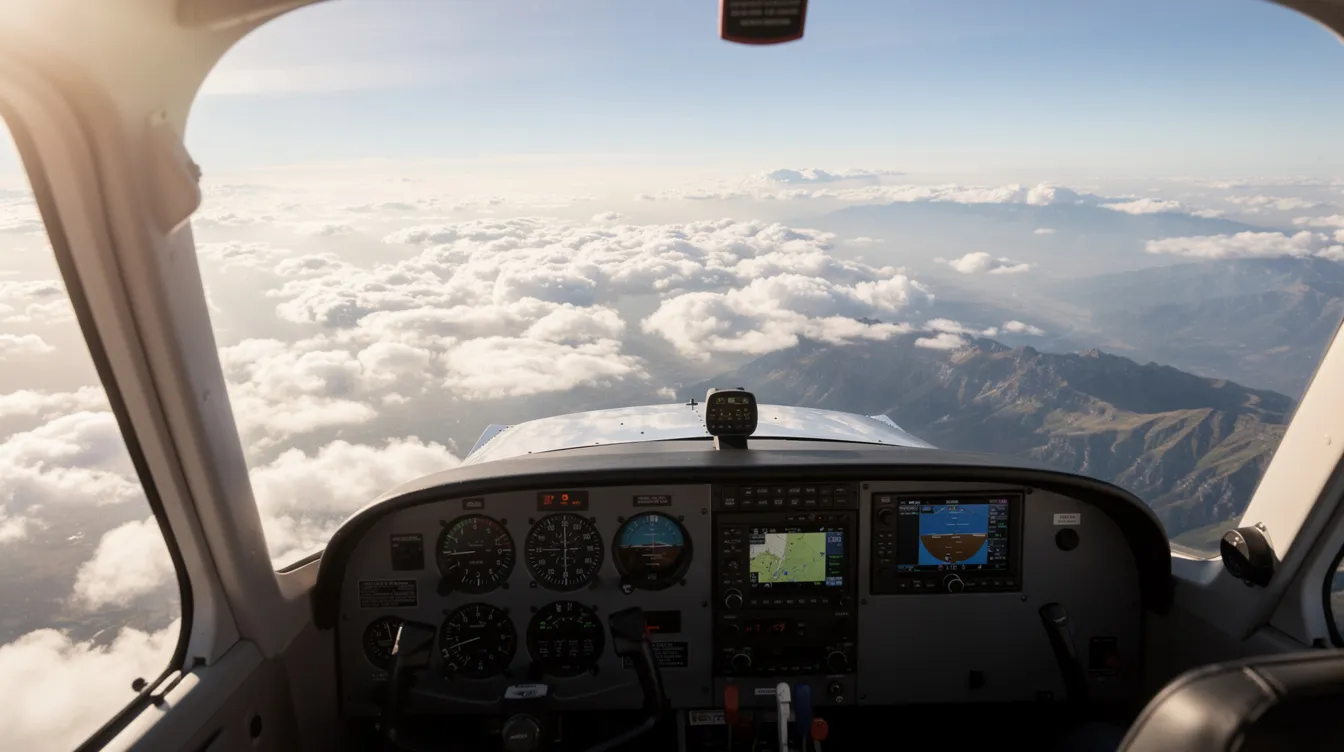
The Arrow's appeal on the used market comes down to value: a well-supported airframe with broad parts availability, a large community of owners, and maintenance shops across North America familiar with the PA-28/PA-28R family. Many pilots consider it one of the most reliable aircraft in its class for the price point.
A thorough pre-purchase inspection is essential. Key items to evaluate include:
Airframe total time and corrosion history
Engine and propeller hours since overhaul
Complete logbooks without gaps
Compliance with wing spar airworthiness directives-the FAA finalized spar inspection ADs after a fatal 2018 wing separation, and unmodified Group 2 spars face life limits near 12,000 factored service hours. Reinforcement kits run roughly $20,000 installed per wing.
Condition of the retractable gear system, seals, and hydraulic lines
Market values in 2025–2026 range from roughly $80,000–$100,000 for older, higher-time airframes to $280,000+ for low-time examples with modern avionics. Asking prices typically run 15–20% above closed sale prices, so a new owner should budget negotiation room.
Many Arrow owners invest in bringing older airframes up to modern standards. Over $50,000 was spent on new avionics upgrades in one well-documented refurbishment that included a glass panel, GPS, and autopilot integration. A one-piece windshield was installed from LP Aero Plastics on that same airplane, improving visibility and reducing drafts. A custom Airtex interior kit was installed for noise attenuation and a refreshed cabin feel.
Other common upgrades include ads b transponders, modern autopilots, and interior refurbishments that bring the cabin close to the comfort level of recent Archer and Archer LX models.
Fuel is the highest variable cost. Normally aspirated models running 9–10 GPH at today's avgas prices keep hourly fuel cost manageable, especially when compared with estimates from a private jet charter cost estimator. Turbo variants at 12–13 GPH cost noticeably more per hour but deliver more speed and altitude capability. Annual inspections, insurance (higher for complex vs. fixed gear aircraft), and hangar fees represent the fixed cost side. Many pilots who fly 100+ hours annually find that ownership costs less per hour than renting-but only if utilization stays high, whereas lower-utilization travelers might instead rely on providers from the ultimate list of charter airlines.
Almost every Piper aircraft fills a specific niche in general aviation. The Arrow's niche is the affordable complex trainer and regional traveler, sitting between the simpler fixed-gear Archer line and faster aircraft like high-performance singles or turboprops.
Arrow vs. Archer II / Archer LX: Similar cabin feel, same wing lineage (in the tapered-wing versions), and comparable fuselage dimensions. The Archer trades roughly 20–35 knots of cruise speed for simpler systems, lower insurance, and zero gear-related maintenance. For a pilot who doesn't need a complex endorsement or the extra speed, the Archer is the easier airplane to own.
Turbo Arrow III vs. faster singles or turboprops: The Turbo Arrow III handles serious cross-country work up to 600–700 nm, but it can't match a Cessna TTx or Cirrus SR22T in cruise speed, and it's in a different universe from even a light turboprop—let alone NetJets alternatives like Jettly and similar private jet platforms. For longer trips, larger groups, or tight business schedules, chartered light jets or turboprops cover the mission more efficiently.
When to fly vs. when to charter: Many pilots maintain an Arrow for regional trips under roughly 500 nm with flexible timing, then book charter for multi-city itineraries or time-critical flights. Platforms like Jettly provide access to aircraft categories that a single-engine aircraft simply can't match-pressurized cabins, jet speeds, and the ability to carry six or more passengers through an extensive network of private charter aircraft.
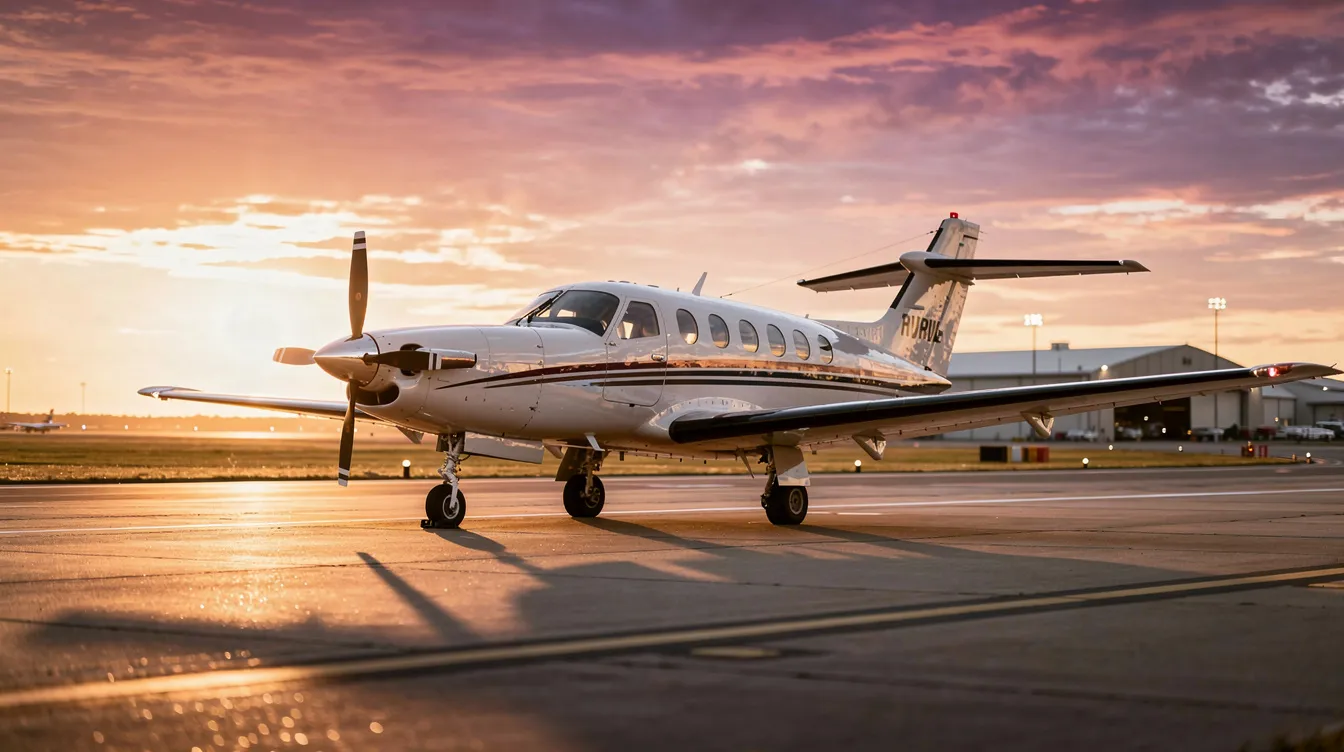
Jettly is a global private jet charter platform connecting travelers to over 20,000 aircraft for on-demand booking, with private jet memberships that suit frequent flyers who also own or rent piston singles like the Arrow. It fills the gap that Arrow owners inevitably encounter: the trip that's too long, too time-sensitive, or too passenger-heavy for a four-seat piston single.
Arrow owners and pilots regularly use charter services when they need to move larger teams, fly in challenging winter weather where a pressurized cabin matters, or cover long-range routes where light jets and turboprops are simply more efficient, and understanding how much to rent a private jet costs helps budget those trips. Jettly's key advantages include transparent and instant pricing, digital booking without phone tag, and access to everything from turboprops and light jets to midsize and heavy jets—making it a useful comparison point if you're also researching how much a private jet costs overall.
For anyone evaluating an Arrow purchase, a blended strategy often makes the most sense: own a Piper Arrow or similar PA-28 for regular local and regional flying, and use Jettly for time-critical business travel or family trips that exceed the Arrow's comfortable range and payload, applying tips for booking the cheapest private jet flights to keep charter costs under control. Empty leg flights through Jettly can also reduce charter costs for flexible travelers, especially when combined with options to crowdsource private jet flights and share empty seats.
Ready to experience private travel on your terms? Explore flight options or request a quote at jettly.com.
The following questions cover common topics not fully addressed above, focusing on training suitability, licensing, and practical ownership issues.
The Arrow is widely regarded as an ideal first complex aircraft. Its Cherokee-style handling, moderate cruise speed, and straightforward retractable gear and propeller systems make the transition from fixed-gear trainers manageable. Many flight schools use PA-28R Arrows specifically for commercial and instrument students, which means instructor experience and transition support are easy to find at most training airports. The airplane's docile handling and predictable stall characteristics reduce the learning curve while still exposing pilots to throttle quadrant management, gear procedures, and constant-speed propeller operations.
In the United States, a pilot needs a private pilot certificate (or higher) with single-engine land category and class, plus a complex endorsement covering retractable gear and constant-speed propeller operations. An instrument rating is strongly recommended for IFR flying, though not legally required for VFR operations. The Piper Turbo Arrow III does not require a separate type rating, but pilots should seek dedicated training in turbo engine management-particularly around manifold pressure limits, mixture leaning at altitude, and temperature monitoring during climb and descent.
Arrow hourly direct costs-fuel at 9–13 GPH and routine maintenance-are generally lower than chartering on a per-hour basis, but comparing them with detailed jet card costs and pricing structures can help high-utilization travelers choose the right mix of ownership and charter. However, ownership adds fixed costs like hangar rental, hull and liability insurance, annual inspections, and reserve funds for engine overhaul that must be spread across many flight hours to make economic sense. For occasional long-distance or business travel, on-demand charter via Jettly can be more cost-effective and time-efficient, especially when multiple passengers or tight schedules are involved, and some pilots pair aircraft ownership with jet cards offering fixed hourly rates for predictable charter budgeting. Jettly's charter cost tools help travelers compare options quickly, and a dedicated jet card flight cost estimator can clarify pricing for frequent travelers considering prepaid hours.
The Archer II and Archer LX are fixed-gear PA-28s with simpler systems and slightly lower cruise speed, making them strong all-round trainers and short-range travelers with lower complexity and insurance requirements. The Arrow III adds retractable gear and a constant-speed prop, qualifying it for complex endorsements and delivering higher cruise speed-roughly 20–35 knots faster than a comparable Archer. The trade-off is more system management, higher insurance premiums, and additional inspection items like gear system maintenance and wing spar compliance.
The semi-tapered wing on the Arrow III provides improved climb performance and gentler stall behavior compared to the early Hershey Bar wings, which many pilots find more forgiving in the traffic pattern and during crosswinds. That said, buyers should focus first on overall airframe condition, avionics fit, engine time, and mission needs. The wing style matters, but a well-maintained Arrow II with modern avionics and a mid-time engine can be a better buy than a neglected Arrow III with a tapered wing but deferred maintenance. Use wing design as one of several decision factors-not the only criterion.
The Piper Arrow remains a versatile and practical choice for pilots seeking a complex, single-engine aircraft that balances performance, handling, and operating costs. Its legacy within the PA-28 family, combined with options like the turbocharged variants and modern avionics upgrades, makes it suitable for advanced training and personal cross-country travel. While ownership suits those flying regularly within the Arrow’s range and payload limits, platforms like Jettly offer flexible charter alternatives for longer trips or larger groups. Whether purchasing an Arrow or exploring private jet charter, pilots and travelers benefit from understanding their mission requirements and leveraging the right aircraft solutions for convenience, efficiency, and safety.
Ready to experience private travel on your terms? Explore flight options or request a quote at https://www.jettly.com
Share this post:
Jay Franco Serevilla
Jul 1, 2026
|
5
min read
Discover tips and trends in the industry.

5
min read
Private Jet Charter Colorado Springs: Fly Smarter with Jettly
Private jet charter in Colorado Springs offers a convenient and flexible travel solution for business and leisure travelers. With access to over 20,000 aircraft through Jettly, booking a flight is quick and hassle-free, allowing you to bypass commercial airline delays and enjoy tailored services. Experience the benefits of private aviation, including direct airport access and personalized itineraries.
Read More
5
min read
Boise Charter Flights with Jettly: Private Jets, Pricing & Top Routes
Boise charter flights with Jettly offer travelers a flexible and efficient way to fly in and out of Idaho's capital. With access to over 20,000 aircraft, Jettly provides personalized scheduling, enhanced privacy, and direct routing to numerous destinations, making it ideal for both business and leisure travel.
Read MoreStay updated with our latest insights and tips to elevate your journey with us.
MEMBERSHIPS AND ASSOCIATIONS



Disclaimer: Jettly operates as a charter broker, offering access to a global digital jet charter marketplace. Jettly is not a direct air carrier and does not own or operate aircraft. All advertised flights are conducted by third-party air carriers that are fully licensed and hold the appropriate Part 135 or Part 121 certifications issued by the Federal Aviation Administration (FAA) or equivalent regulatory authorities under U.S. or foreign law. Jettly complies fully with the U.S. Department of Transportation's Part 295 and Part 298 Charter Broker regulations. Jettly does not carry additional liability insurance. Passengers are covered by aircraft operator insurance. TICO: 50023770


