



Login
Get Instant Pricing On 23,000+ Aircraft

>
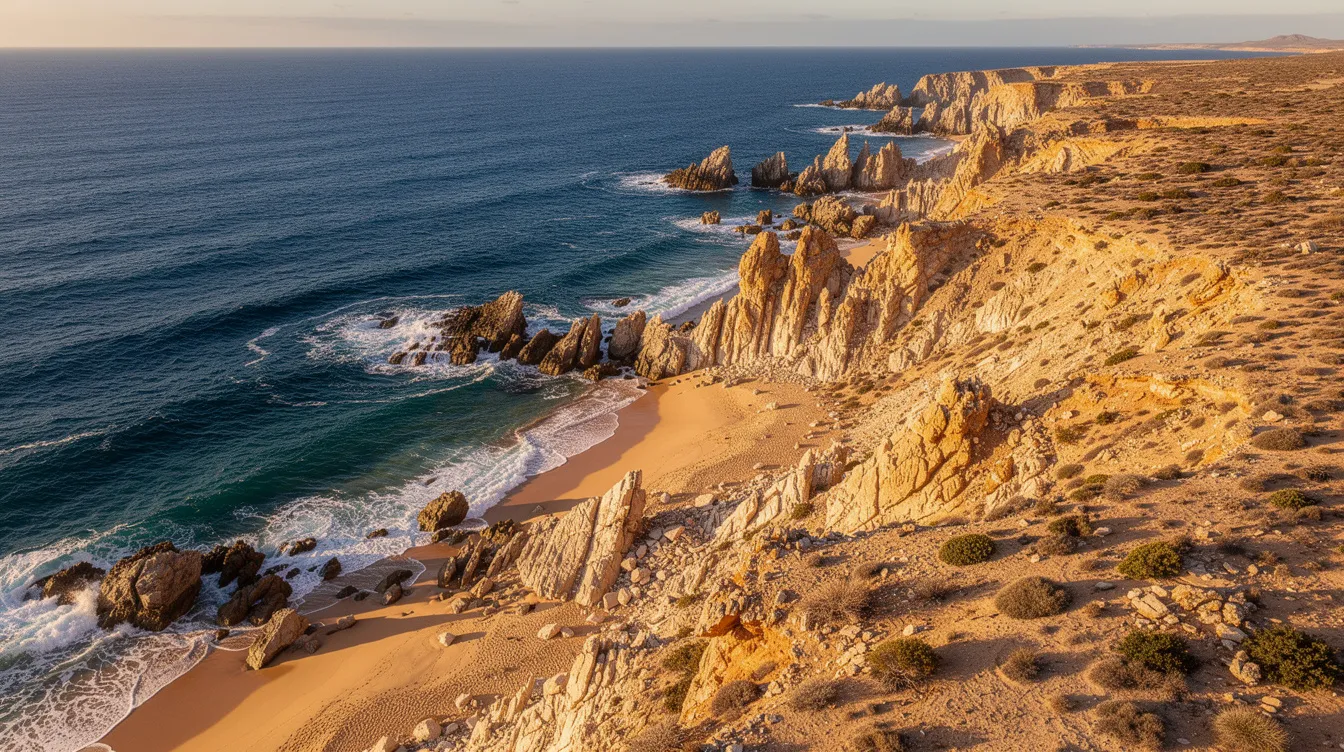
For readers searching for a US military base in Oman, the short answer is no: there are no sovereign American bases there. However, Oman became the first Gulf state to allow U.S. military access in 1980. The U.S. has access to Omani airfields and port facilities, including Thumrait Air Base, supporting U.S. military logistics and reconnaissance. The U.S. military maintains a persistent presence at Thumrait Air Base. Oman sits at the southeastern edge of the Arabian Peninsula, flanking the Strait of Hormuz and facing Iran across the Gulf of Oman. The U.S. has long operated under formal access agreements, in place since 1980, that allow it to use Omani facilities such as RAFO Thumrait, Masirah Island Airbase, and Duqm Port while they remain under Omani sovereignty.
That distinction matters for executives, government and NGO travelers, defense-related personnel, and high-net-worth flyers planning movement in or around the region, because military access affects security conditions, airport availability, and route planning. This introduction examines the access framework itself, the main sites the U.S. can use, their strategic role in joint operations and regional logistics, the limits on civilian access near those facilities, and the practical private-aviation alternatives through nearby civil airports, including charter planning with Jettly. This guide is intended for executives, government and NGO travelers, defense-related personnel, and high-net-worth individuals seeking information on U.S. military access and travel options in Oman.
Oman became the first Gulf state to sign a Facilities Access Agreement with the U.S. military in 1980. The arrangement covers airfields like RAFO Thumrait and Masirah Island, plus Duqm Port on the Arabian Sea.
The U.S. has access to Omani airfields and port facilities. Unlike US bases in Qatar or Bahrain, Oman's facilities remain under Omani military sovereignty. The U.S. maintains a rotational, low-profile military presence focused on logistics, war reserve materiel, and joint exercises.
Thumrait Air Base, Masirah Island Airbase, and Duqm Port are key nodes for U.S. logistics and Iran war contingency planning across the Gulf states.
Oman allows U.S. military access to specific airfields and ports. Civilians and private jets generally cannot land at these military sites. Travelers instead use Muscat or Salalah civil airports, where Jettly can arrange private jet charter and onward ground or helicopter transfers.
Oman's position near the Strait of Hormuz, a passage handling roughly 20% of global oil and gas shipments, makes it valuable for maritime security. The U.S.-Oman military partnership relies on a Facilities Access Agreement—a formal arrangement that allows U.S. forces to use Omani military facilities without establishing sovereign U.S. bases—first signed in 1980, after the Iranian Revolution and the Soviet invasion of Afghanistan. Oman was the first Gulf state to allow U.S. military access, providing staging and pre-positioning sites for the newly created U.S. Central Command. Oman's facilities enable the U.S. to monitor vital waterways and shipping lanes stretching from the Gulf to the Arabian Sea and Indian Ocean.
Contrast this with Bahrain, Iraq, or Qatar, where the broader U.S. military network is more visible through sites like the U.S. 5th Fleet headquarters in Bahrain and Al Udeid Air Base in Qatar, where thousands of American forces operate openly. In Oman, there are no named, permanent US bases. Instead, U.S. forces use Omani military installations under host-nation agreements, keeping the footprint deliberately low-profile for diplomatic reasons.
Oman's independent foreign policy and geographic position make it a critical partner for U.S. contingency planning and regional security. The U.S. military presence in Oman helps deter attacks and protect shipping through these waterways.
With this strategic context in mind, let's examine the specific Omani facilities used by the U.S. military.
Oman allows U.S. military access to specific airfields and ports without branding them as formal US military bases. All installations remain under Omani sovereignty. Three main locations anchor the partnership:
RAFO Thumrait in Dhofar Governorate: a military air base supporting air operations, logistics, and reconnaissance.
Masirah Island Airbase off Oman's eastern coast: a legacy facility used for transit, staging, and support operations.
Duqm Port on the central Arabian Sea coast: a deep-water port capable of servicing aircraft carriers and nuclear submarines.
Smaller Omani airfields may also be available in contingency scenarios, though details remain classified. Oman stores U.S. war reserve materials for Central Command operations. U.S. war reserve materiel stockpiles, including:
munitions
medical supplies
aerospace ground equipment
air base operability equipment
mobility support equipment
modular personnel tents
electrical generators
bare base systems
associated spares
other consumables
are stored across these facilities to support rapid deployment.
These key facilities form the backbone of U.S. operational flexibility in the region. Next, we’ll look in detail at each major site, starting with RAFO Thumrait.
Thumrait Air Base is a Royal Air Force of Oman installation located in Dhofar Governorate, approximately 70 to 80 km north of Salalah. Classified as a medium military airport with approximately 237 operational structures, it was established to secure southern Omani airspace and has grown into a key logistics hub.
The base hosts a runway (designated 17/35) with a length of approximately 4,000 m of asphalt, at about 500 m elevation. That length accommodates heavy aircraft such as the C-17 Globemaster III, KC-10 tankers, and large cargo jets used in U.S. military operations. The base hosts various military aircraft, including two squadrons of F-16 Fighting Falcons operated by RAFO.
Thumrait Air Base supports U.S. military logistics and reconnaissance across the region. The U.S. military maintains a persistent presence at RAFO Thumrait, with DynCorp Technical Services holding contracts for maintaining war reserve materiel stored there. The base played roles during Operations Desert Shield, Desert Storm, Desert Fox, and post-9/11 Afghanistan missions, serving as a forward headquarters for the Air Force's transportable system deployments.
RAFO Thumrait is military-only, with no scheduled commercial flights. Travelers needing access to the Dhofar region use Salalah International Airport, where platforms like Jettly can arrange private charters and ground transfers.
This critical air base is just one part of the U.S.-Oman partnership. Next, let’s explore Masirah Island Airbase and its legacy role.
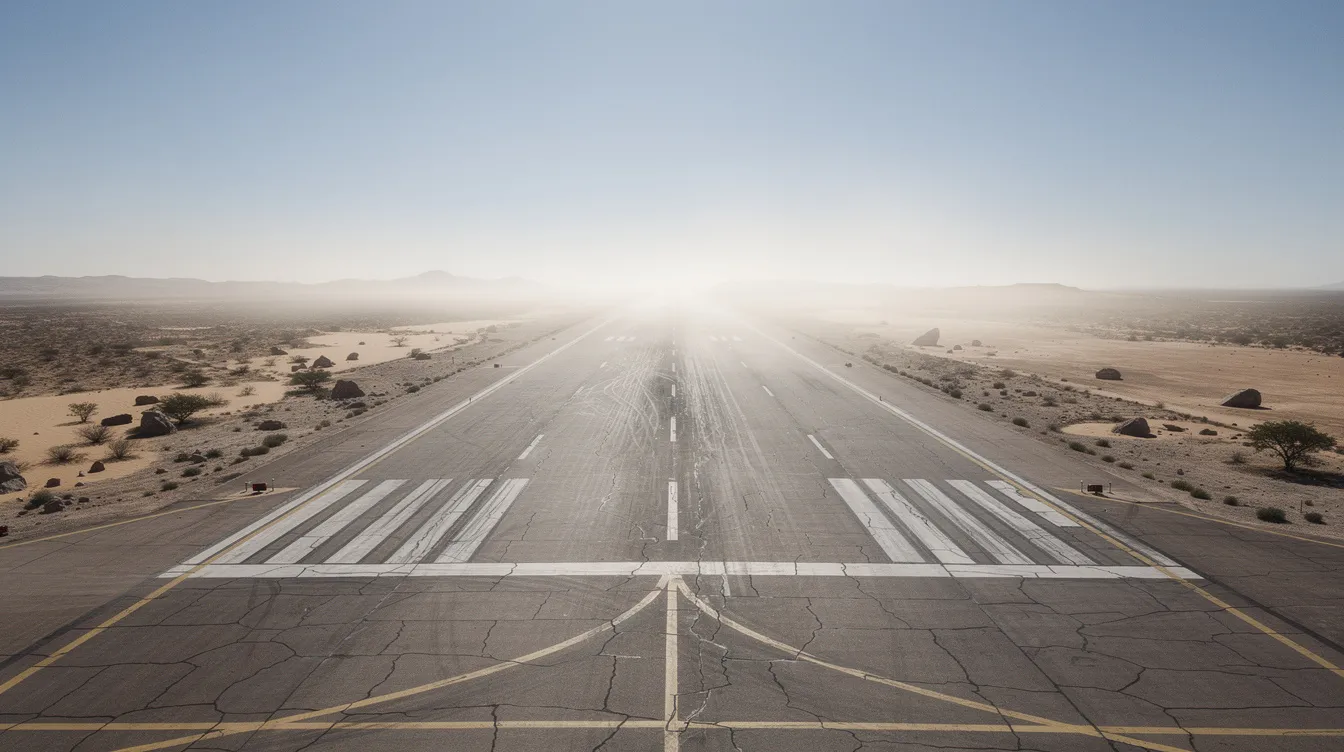
Masirah Island sits off Oman's eastern coast, facing the mouth of the Gulf of Oman and, beyond it, Iran. That position made it a focus of U.S. interest during the Cold War and the aftermath of the 1979 Iranian Revolution.
The British Royal Air Force established the airfield during World War II for anti-submarine patrols and refueling between Aden and India. After the UK withdrawal, Oman's Royal Air Force took control. By 1975, Washington and Muscat were already discussing American use of Masirah; the 1980 access agreement formalized the arrangement.
Today, Masirah operates as a RAFO facility with two runways (the longest at roughly 3,050 m). U.S. forces rotate through for transit and logistics under bilateral agreements, though American military personnel numbers and specific aircraft deployments are not publicly disclosed. Many countries in the region maintain similar quiet arrangements, but Masirah's location across from Iran gives it particular contingency value. As with Thumrait, civilians and private jets cannot operate there; travelers route through mainland airports instead.
Masirah’s strategic location complements the air and naval capabilities at Thumrait and Duqm. Next, we’ll examine Duqm Port and its growing role in regional naval operations.
Duqm Port, on Oman's central Arabian Sea coast, is a deep-water facility positioned outside the Strait of Hormuz chokepoint. This geographic advantage means naval operations can continue even if the strait is contested or closed.
Foreign investment from the UK, India, and other countries has built Duqm into a dual-use hub. The Oman Drydock Company facility can service large container ships and aircraft carriers.
In 2014, the USS George H.W. Bush tested Duqm's ability to handle a carrier strike group. Since then, the Nimitz and Eisenhower carrier strike groups have also called at Duqm. The U.S. conducts approximately 80 port calls in Oman each year, with Duqm and Salalah handling a substantial share.
The UK maintains a Joint Logistics Support Base near Duqm under a long-term agreement, giving the Royal Navy replenishment options east of Suez.
For private travelers and cargo clients, Duqm is an emerging logistics gateway. Private jet passengers typically route via Muscat International Airport or Duqm Airport, depending on handling capabilities.
Duqm’s dual-use nature highlights the flexibility of Omani facilities. Now, let’s look at the broader defense agreements and contingency planning that underpin U.S. access.
The defense relationship has evolved across decades. The 1980 agreement was renewed and supplemented multiple times; a 2010 implementing arrangement defined cost-sharing for maintenance and utilities at RAFO stations. In March 2019, a Strategic Framework Agreement expanded U.S. facility access to include Salalah and Duqm ports.
Oman stores U.S. war reserve materials for Central Command operations. These include equipment, munitions, medical kits, and modular structures that allow American forces to scale up without shipping everything from the USA. As of early 2025, Oman held 63 active foreign military sales cases valued at USD 2.72 billion, covering F-16 upgrades, air-to-air missiles, and anti-tank systems.
Oman's independent foreign policy allows it to serve as a diplomatic intermediary. The sultanate maintains cordial relations with Iran while cooperating with the U.S., a balance that reduces escalation risks around American use of Omani installations. Oman emphasizes sovereignty and neutrality in its military policies, which is why US troops operate under Omani oversight rather than from sovereign US bases.
RAFO Thumrait, Masirah, and Duqm would all play roles in Iran war contingency scenarios, supporting air refueling, surveillance, maritime security, and logistics for operations spanning the Gulf, Arabian Sea, and Red Sea. Media outlets, including Al Jazeera, have reported on how Iranian attacks on shipping have reinforced the value of these access points away from the Hormuz chokepoint.
With these agreements and contingency plans in place, Omani facilities are also used for joint training and exercises. The next section explores these cooperative efforts.
Omani facilities are used for training, exercises, and military cooperation with multiple partners. Joint U.S.-Omani military exercises promote maritime security and crisis response readiness across the Gulf states. Countries like Kuwait, Egypt, and Abu Dhabi-based forces also participate in regional drills.
In 1996, the U.S. Air Force's 16th Special Operations Wing and 823rd RED HORSE Squadron joined Exercise "Eastern Castle" at RAFO Thumrait. U.S. soldiers and Omani counterparts built apron extensions, expanded runway capacity, and installed overhead lighting in hangars, addressing infrastructure limitations that had constrained night operations.
Exercise Saif Sareea, known in English as Swift Sword, is a major UK-Oman series launched in 1987. Held roughly every four years, it tests rapid reaction and war-fighting capability at strategic distance, with ground, air, and fleet components staged from bases including RAFO Thumrait. Saif Sareea 3 in 2018 saw RAF Typhoon FGR4 jets flying alongside RAFO F-16s in what British officials called the largest UK-Oman tri-service exercise in nearly two decades.
These drills show how Omani military installations, while not formal US military bases, are tightly integrated into NATO-partner training cycles for any future Middle East contingency.
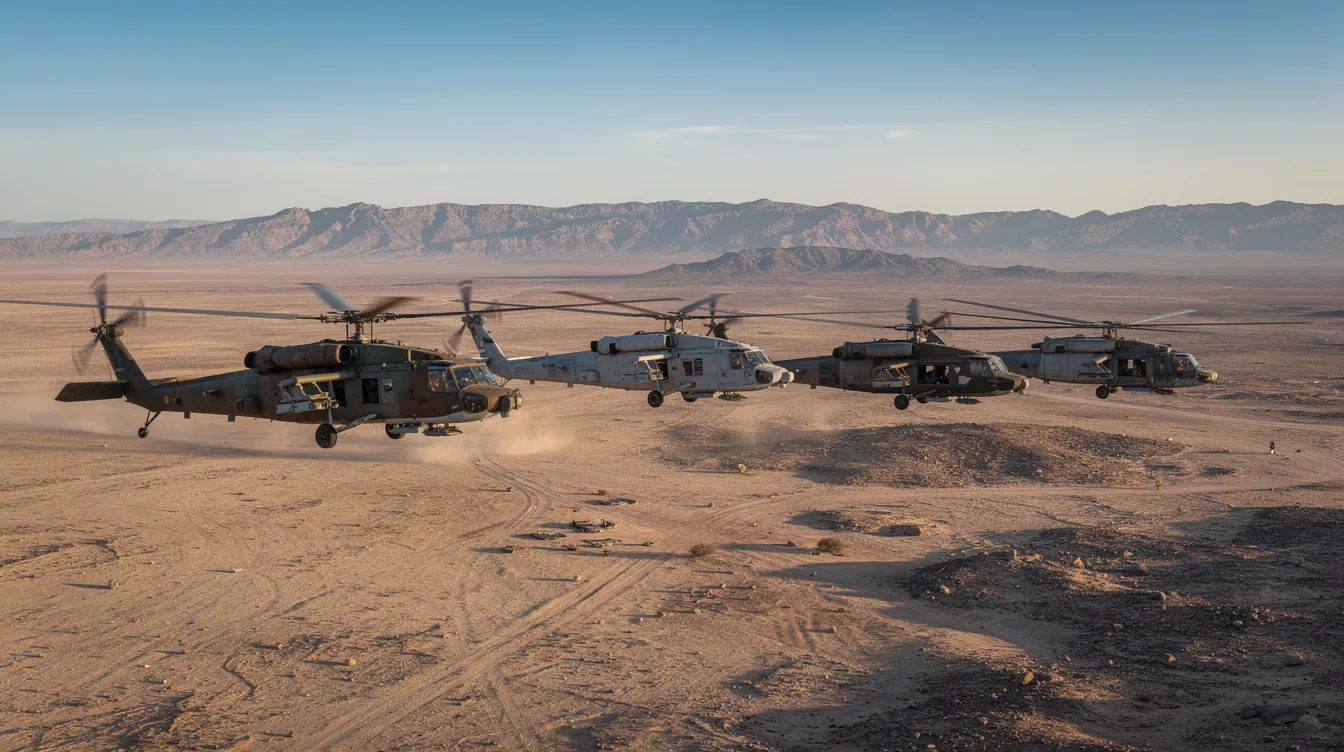
With joint exercises reinforcing operational readiness, let’s turn to practical travel access and private aviation options for those operating near these strategic sites.
U.S. military facilities in Oman are not open to civilian or private jet traffic. Any exceptions require government-to-government coordination.
For southern Oman, Salalah International Airport is the primary civil gateway, located about 70 to 80 km south of RAFO Thumrait. For central and northern Oman, Muscat International Airport serves as the main hub. Duqm Airport is an emerging regional option for certain corporate flights.
Jettly supports corporate, government, NGO, and high-net-worth travelers operating around these strategic zones. The platform provides on-demand private jet charter with instant pricing, access to 20,000+ aircraft types (from turboprops to long-range jets), and coordination of ground or helicopter transfers to remote sites, supported by an airport locator tool that helps identify suitable civil fields near restricted bases. An energy executive flying from Dubai to Salalah, or a government delegation traveling from London to Muscat, can book through Jettly and arrange onward transport without needing direct base access, just as officials headed to Abuja by private jet charter can coordinate secure regional connections. For those new to private aviation, Jettly's first-time flying guide covers the basics.
With travel logistics clarified, let’s address some frequently asked questions about U.S. military presence and travel near Omani bases.
Many travelers and security observers have questions about how U.S. military use of Omani bases intersects with civil aviation and regional safety.
No. Both are Royal Air Force of Oman military installations with no regular civilian access. Any civil or humanitarian flights would require exceptional government authorization. Travelers should plan to use Salalah, Muscat, or Duqm civil airports, with private jet charters arranged through services like Jettly.
Most U.S. activity is low-profile. Travelers in Muscat or Salalah may occasionally spot military aircraft, but there are no large, branded U.S. bases. American troops operate from Omani-flagged facilities, so visible signage and branding reflect Omani sovereignty. Tourism and business remain the dominant visible activities.
International aviation safety standards and deconfliction procedures separate military and civil air activity. Oman's reputation as a neutral mediator helps reduce direct spillover risk. Charter brokers like Jettly monitor NOTAMs and regulatory guidance to avoid restricted zones when planning routes.
Open-source reporting cites roughly 1,000 U.S. personnel at certain times, primarily linked to logistics, pre-positioned materiel maintenance, and rotational deployments. Precise numbers shift and are not fully disclosed. Oman and the U.S. describe the posture as "access and cooperation" rather than permanent garrisoning.
Official delegations and defense contractors should:
Secure diplomatic clearances and base access through their organizational channels.
Once permissions are in place, Jettly can plan the civil aviation portion: selecting suitable aircraft, routing to accessible airports like Muscat or Salalah, and arranging ground transfers.
Allow extra lead time for approvals around restricted military zones.
|
Facility |
Location |
Type |
Runway Length (m) |
Primary Use |
Civilian Access |
Notes |
|---|---|---|---|---|---|---|
|
RAFO Thumrait |
Dhofar Governorate |
Military Air Base |
~4,000 |
Logistics, reconnaissance, exercises |
No |
Hosts F-16 squadrons, U.S. war reserve materiel |
|
Masirah Island Airbase |
Off eastern coast |
Military Air Base |
~3,050 |
Transit, staging, support |
No |
Legacy RAF base, strategic Gulf location |
|
Duqm Port |
Arabian Sea coast |
Naval Port |
N/A |
Naval operations, aircraft carrier support |
Limited |
Deep-water port, supports U.S. and UK navies |
Oman's RAFO Thumrait, Masirah Island Airbase, and Duqm Port form a quiet but vital part of the U.S. military's posture across the Arabian Peninsula, providing air base access, naval support operations, and logistics depth without high-visibility sovereign bases. These remain Omani military facilities with restricted access, so most civilians must route through Muscat, Salalah, or Duqm civil airports.
For business, government, and leisure travelers who need flexible access to Oman and neighboring Gulf states, Jettly offers on-demand private jet charter, instant pricing, and connections to a global aircraft inventory. Whether the context is a US military base Oman visit-adjacent trip or a routine business flight, the platform handles routing, aircraft selection, and ground coordination.
Ready to plan your travel to Oman or the wider region? Explore flight options or request a quote at https://www.jettly.com.
Share this post:
Jay Franco Serevilla
Oct 19, 2026
|
5
min read
Discover tips and trends in the industry.
5
min read
Cessna 182 Cost of Ownership in 2026: Fixed Costs, Operating Costs, and Realistic Budgets
In 2026, owning a Cessna 182 Skylane involves navigating fixed and variable costs that can range from $180 to $350 per flight hour. Fixed costs typically amount to $6,500 to $19,500 annually, while variable costs, including fuel and maintenance, can add another $100 to $200 per hour. Understanding these expenses is crucial for pilots considering ownership versus alternatives like chartering.
Read More5
min read
US Military Base Oman: Strategic Access, RAFO Thumrait, and Travel Options
Oman hosts U.S. military access through key facilities like RAFO Thumrait, Masirah Island Airbase, and Duqm Port, but does not have sovereign U.S. bases. This strategic partnership enhances regional security and logistics while maintaining Omani sovereignty. Travelers can utilize civil airports in Muscat and Salalah for access, with private jet services available through Jettly.
Read MoreStay updated with our latest insights and tips to elevate your journey with us.
MEMBERSHIPS AND ASSOCIATIONS



Disclaimer: Jettly operates as a charter broker, offering access to a global digital jet charter marketplace. Jettly is not a direct air carrier and does not own or operate aircraft. All advertised flights are conducted by third-party air carriers that are fully licensed and hold the appropriate Part 135 or Part 121 certifications issued by the Federal Aviation Administration (FAA) or equivalent regulatory authorities under U.S. or foreign law. Jettly complies fully with the U.S. Department of Transportation's Part 295 and Part 298 Charter Broker regulations. Jettly does not carry additional liability insurance. Passengers are covered by aircraft operator insurance. TICO: 50023770


