



Login
Get Instant Pricing On 23,000+ Aircraft

>

Aviation accidents cluster around specific moments in a flight, not randomly across the journey. Knowing when most plane crashes occur helps travelers, pilots, and operators focus on the phases where risk concentrates and make concrete decisions to reduce it. This article breaks down accident data by flight phase, operation type, and cause, then connects those findings to practical choices for anyone booking air travel.
Over 60% of aviation accidents occur during takeoff, approach, and landing phases. Landing alone accounts for roughly half of all events in commercial and general aviation data from 2005 to 2023. Nearly half of all aviation crashes occur during landing or takeoff.
Scheduled commercial airlines maintain a fatal accident rate of 0.01 per 100,000 flight hours. In 2023, commercial aviation recorded zero onboard passenger fatalities on U.S. carriers. General aviation aircraft, including small piston planes, training aircraft, and owner-flown jets, account for the vast majority of civil aviation accidents, with 1,097 total accidents recorded in 2023.
Professionally crewed charter flights and business jets operating under commercial standards show safety records far closer to scheduled commercial airlines than to hobby flying. Private planes have a fatal accident rate of 2.3 per 100,000 flight hours, but certified charter operations under Part 135 regulations bring that figure down closer to airline levels.
Accidents are rarely caused by a single isolated failure but result from a chain of events involving human, technical, and environmental contributing factors.
Jettly is a private jet charter marketplace that connects travelers with vetted operators holding proper certifications, making it easier to choose flights that meet higher safety standards and transparent booking conditions. Flights are operated by certified third-party carriers.

The question "when do most plane crashes occur" refers to flight phases, not time of day or season. Every flight passes through defined stages: taxi, takeoff, initial climb, en route cruise, approach, landing, and rollout. Data from IATA, Boeing, and Airbus consistently show that the critical phases happen below 10,000 feet.
The "Plus 3 / Minus 8" rule captures this pattern: about 80% of aircraft accidents occur within the first 3 minutes of takeoff or the last 8 minutes of landing. The majority of aviation accidents occur during terminal phases such as takeoff, approach, and landing.
Here is the approximate accident distribution by flight phase for commercial jets (based on Boeing and Airbus data spanning 2004 to 2025):
|
Flight phase |
Approximate share or pattern |
Why it matters |
|---|---|---|
|
Landing |
Roughly 50% or more of all hull loss and non-fatal accidents |
Low altitude, runway alignment, and changing aircraft configuration leave limited margins. |
|
Approach |
Approximately 8% of fatal accidents |
Navigation, weather, and aircraft configuration create high workload. |
|
Takeoff |
Approximately 8 to 9% of fatal accidents |
The aircraft is accelerating while crews have limited time to respond to a failure. |
|
Initial climb |
Approximately 5 to 7% of fatal accidents |
Low altitude narrows recovery options after an issue. |
|
Cruise (en route) |
Approximately 5 to 10% of fatal accidents |
This phase is long, but accounts for a smaller share of fatal accidents. |
|
Taxi and ground operations |
Approximately 10% of all incidents |
Ground events are usually non-fatal but can cause damage and disruption. |
These patterns hold across both commercial aircraft and many general aviation accidents, though the severity profile shifts depending on operation type, pilot experience, and equipment.
Landing is the most dangerous phase of flight for private aviation, and that helps explain why so many small plane crashes happen during approach or touchdown. Across all operation types, data from Airbus (2005 to 2025) and Boeing (2004 to 2013) show that landing and approach combined account for roughly 37% to 49% of fatal accidents. Landing alone is the single phase with the highest accident share.
Why is landing so complex? Pilots must manage simultaneous configuration changes: extending flaps, lowering gear, adjusting thrust, monitoring airspeed, and aligning with the runway. All of this happens at low altitude with shrinking margins for error.
Common landing-related incident types include:
Runway excursions, which are among the most frequently reported commercial aviation accident types
Hard landings and tail strikes
Loss of control during rollout
Unstable approaches that should have prompted a go-around
Crosswind-related directional control problems
Large commercial hubs typically feature long, well-maintained runways, precision instrument landing systems, and full-time air traffic control coverage. Smaller general aviation airports often lack these tools. Those runway limits and fewer approach aids are part of why an airplane crash is more likely in smaller, less-equipped operations. Non-towered fields may have short runways, limited lighting, and no precision approach aids.
Professionally operated commercial flights and charter operations mitigate landing risk through strict stabilized-approach criteria, mandatory go-around policies, and recurrent simulator training for professional crews. These practices directly address the most dangerous phases of a flight.
Takeoff and initial climb account for about 13% to 20% of fatal accidents combined. Takeoff and landing phases are the most complex flight phases because engines run at maximum thrust, airspeed is still building, and altitude is too low for recovery from most failures.
During the takeoff phase, any loss of thrust from engine failure, bird strikes, or mechanical problems leaves crews with seconds to decide: continue or abort. At low altitude during initial climb, options narrow even further.
Typical accident patterns differ by aircraft category:
In general aviation aircraft, common factors include overloaded aircraft, improper flap or trim configuration, density altitude miscalculations at high-elevation or hot-weather airports, and runway overruns at short strips.
In commercial flights, rejected takeoffs after V1 speed and engine failures shortly after rotation are the primary concerns, though both are rare.
Commercial and Part 135 charter operations reduce takeoff risk through:
Performance calculations computed before every departure
Weight-and-balance verification
Defined decision speeds (V1, VR, V2) that remove ambiguity from go/no-go decisions
Two-pilot crew resource management procedures
The approach phase, from top of descent to just before landing, accounts for around 8% of recorded aviation accidents. Workload peaks as pilots manage navigation tasks, communicate with air traffic controllers, configure the aircraft for landing, and adjust for weather deviations.
Controlled flight into terrain remains one of the deadliest approach-phase risks. A pilot flying a non-precision approach into a mountainous airport during poor visibility, for instance, has limited visual cues and depends on instruments and terrain awareness systems to maintain safe clearance. If those systems are absent or the pilot is not instrument-rated, the margin between a safe approach and disaster shrinks to nearly zero.
Modern avionics have cut approach-phase risks on commercial aircraft and well-equipped business jets. Terrain awareness and warning systems (TAWS), instrument landing systems (ILS), and RNAV approaches provide precise vertical and lateral guidance. Traffic collision avoidance systems add another layer of protection in congested airspace.
General aviation aircraft often lack these tools, which is one reason approach-phase accidents in small private planes carry higher fatality rates.
The cruise phase accounts for approximately 57% of flight time but only 10% of fatal accidents. Despite this low frequency, cruise-phase incidents receive disproportionate media attention, which can make an airplane accident seem more common than long-term safety data shows because these events often involve higher speeds, higher altitudes, and larger passenger counts.
Cruise-phase risk factors include:
Severe weather avoidance failures
Fuel mismanagement leading to engine failure
Depressurization events
Rare structural failures or in-flight fire
Notable cruise-phase tragedies illustrate the point. Air France Flight 447 crashed shortly into the Atlantic in 2009 after pitot tube icing led to a loss of control. Malaysia Airlines MH370 disappeared in 2014 during cruise, prompting the aviation industry to mandate the Global Aeronautical Distress and Safety System (GADSS), which now requires many commercial flights to report their position at least every 15 minutes.
General aviation aircraft often operate without long-range tracking or dispatch support, which can delay search and rescue after mid-route accidents. Even when a serious problem develops, pilots may make an emergency landing or divert to land safely at a suitable airport; an in-flight emergency does not automatically result in a crash.
A small but measurable percentage of aircraft accidents and aviation incidents happen on the ground: during taxi, pushback, or while parked at gates and ramps.
Typical events include:
Ground collisions between aircraft or with vehicles
Jet blast incidents
Taxiway excursions
Damage from ground support equipment
These events are rarely fatal but can cause expensive hull damage and operational disruptions. Structured ground procedures, marshaller guidance, and clear communication with air traffic control reduce risk, especially at congested airports.
For private and charter operations, professional ground handling, coordinated ground transportation, and selecting suitable departure and arrival points through an airport locator tool add practical value. Platforms like Jettly can help organize these logistics, reducing confusion on unfamiliar ramps.
Most global flight hours occur in daylight, but night operations show different accident patterns. Fatal accidents occur most frequently during the en route phase at 37% in nighttime general aviation flying (2017 to 2021 U.S. data), followed by initial climb at 17% and maneuvering at 13%.
Night visual flight rules (VFR) create specific hazards:
Black-hole approaches into unlit terrain
Limited horizon reference causing spatial disorientation
Over-reliance on cockpit lighting and partial instrument scans
Commercial airlines and reputable charter operations require specific pilot qualifications, full instrument ratings, and standard operating procedures for night flying. These requirements directly address the visual-cue deficit that makes night VFR flying dangerous. Professional flights may be supported by multiple crew members, including two pilots; crew numbers depend on aircraft and operation, and are not a stand-alone measure of safety.
The contrast is sharp. A private pilot flying VFR at night over unfamiliar terrain faces fundamentally different risks than an airline crew flying an ILS approach into a well-lit commercial airport. The equipment, training, and procedural structure define the gap.
Adverse weather contributes to roughly 15 to 20% of fatal crashes across all operation types, but its effects concentrate during approach, landing, takeoff, and low-altitude en route flying. Weather conditions impact aviation safety by reducing visibility and increasing turbulence.
Key weather hazards include:
Thunderstorms and convective turbulence
Icing on wings and control surfaces
Low ceilings and fog
Crosswinds exceeding aircraft or pilot limits
Environmental conditions like wind shear and microbursts, which increase accident risk during critical phases
Many weather-related accidents involve pilots attempting to "scud run," flying VFR beneath low ceilings, or pressing into instrument meteorological conditions without proper ratings or equipment. Adverse weather complicates operations, particularly during approach and landing.
Commercial aircraft carry onboard weather radar, de-icing systems, and benefit from dispatch support and company-imposed weather minima. Small piston planes often lack these tools, and private pilots make their own go/no-go calls without a dispatch department reviewing conditions.
Travelers can reduce exposure to marginal-weather risk by choosing operators that proactively delay or reroute flights instead of pressing into adverse weather conditions, especially when flying on private charter aircraft for bespoke trips.
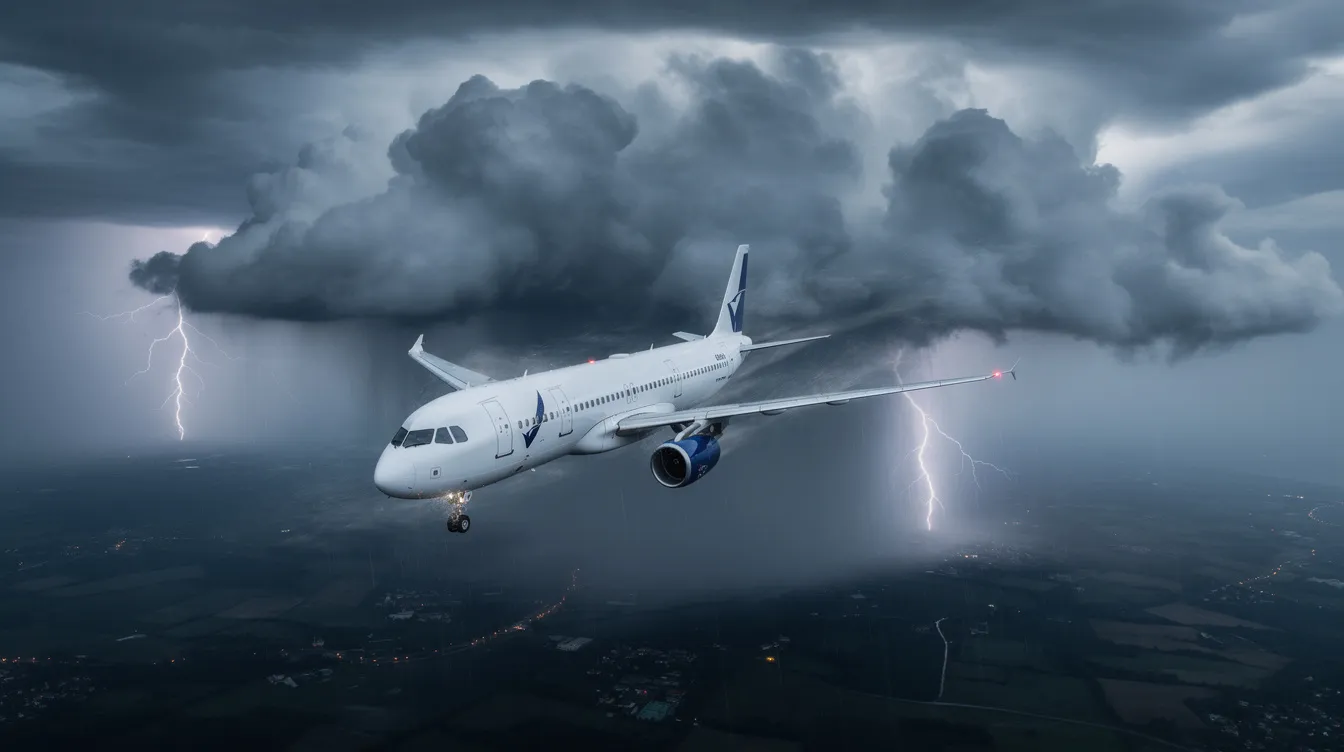
General aviation covers all civil flying outside scheduled airline service: flight training, recreational flying, air taxi, corporate and charter operations, and private aircraft flown by their owners. General aviation aircraft are involved in 78% of all crashes.
The numbers paint a clear picture:
Private plane crashes average 1,000 to 1,200 accidents annually in the U.S. In 2023, general aviation recorded 1,097 total accidents.
In 2022, 358 people died in fatal general aviation crashes in the U.S.
Private planes have a fatal accident rate of 2.3 per 100,000 flight hours.
The fatal accident rate for commercial airlines is 0.01 per 100,000 flight hours, a ratio of roughly 230 to 1.
In 2023, commercial aviation recorded zero onboard passenger fatalities on U.S. carriers. Global scheduled commercial airlines saw only a handful of fatal accidents that year despite operating tens of millions of flights.
Why are small plane accidents so much more common? Small plane crashes are more frequent because weather, mechanical issues, and limited training margins leave less room for error. Varied pilot experience is a major factor. Many private pilots fly infrequently and lack recent practice in emergency procedures. Equipment tends to be older with less redundancy. More operations take place at non-towered or minimally equipped airports without air traffic control coverage.
Within general aviation, professionally crewed charter operations and business jets have better safety records than owner-flown small piston planes. The distinction matters for anyone evaluating private plane safety statistics.
Aviation accident investigation consistently reveals that crashes, or an airplane crash in plain-language terms, result from a chain of events rather than a single error. Human factors are cited as a primary or contributing factor in about 70% to 88% of aviation incidents, with the remaining share split between mechanical issues and environmental conditions.
Major causal categories break down as follows:
Pilot error accounts for 70 to 80% of general aviation accidents. For small plane accidents specifically, pilot error accounts for approximately 75%.
Mechanical and component failures account for roughly 20% to 26% of accidents. Mechanical failure is involved in about 18% of general aviation accidents.
Adverse weather contributes to 15 to 20% of fatal crashes. (Categories overlap because multiple factors often combine.)
Many private plane crashes involve overlapping causes such as pilot error, weather, and maintenance rather than a single trigger.
High-workload phases, specifically takeoff, approach, and landing, amplify the impact of small mistakes. A minor airspeed deviation during cruise at 35,000 feet is recoverable. The same deviation at 200 feet on final approach can lead to a stall.
Loss of control in flight represents over 40% of fatal accidents. Stall/spin events near airports during initial climb, maneuvering turns, or go-around attempts are a persistent killer in general aviation.
Other preventable factors include:
Fuel mismanagement leading to engine failure
Overweight operations beyond the aircraft's certified limits
Failure to go around from an unstable approach
Poor maintenance that allows known defects to persist
Crew resource management training, which teaches professional crews to cross-check decisions and challenge errors, is one reason airline pilots and commercial pilots in charter operations have lower error rates than solo private pilots. The contrast is training depth: a solo private pilot may qualify far sooner, while the Air Force uses a much longer progressive pipeline before pilots move into more demanding aircraft.
Flights into major commercial airports benefit from full radar coverage, advanced instrument procedures, runway safety systems, and continuous air traffic control oversight. Air traffic controllers sequence traffic, issue weather and runway updates, and provide vectoring that reduces mid-air collision and runway incursion risks.
Many general aviation airports are non-towered. Pilots self-separate using common traffic advisory frequencies, with no controller watching for conflicts. These fields may lack precision approach aids, adequate lighting for night operations, and the runway length needed for safe operations in hot or high-altitude conditions.
Congested airspace, short or sloped runways, obstacles near the runway environment, and limited lighting increase complexity during the most dangerous phases. Miscommunication between pilots and air traffic controllers can contribute to accidents even at well-equipped fields, which is why standardized phraseology and readback procedures exist.
Digital charter platforms like Jettly can help travelers select better-equipped airports and operators familiar with complex environments, adding a practical layer of flight safety planning to the booking process.
The U.S. regulatory framework splits aviation into three main categories:
Scheduled commercial airlines (Part 121): strict regulation, multi-pilot crews, advanced systems, continuous Federal Aviation Administration oversight
Charter operations and air taxi services (Part 135): commercial-grade regulation with professional crews and maintenance requirements
Non-commercial owner-flown flights (Part 91): operational requirements differ from commercial rules; aircraft must meet airworthiness requirements
Most major incidents involving airline pilots now attract global attention precisely because they are so rare. Aircraft design typically includes redundant systems to prevent a single mechanical failure from causing a catastrophe. Commercial aircraft and business jets carry redundant flight controls, navigation systems, and engines that provide resilience during the most dangerous phases.
Business jets operated by certified charter carriers show accident and fatal accident rates far below the broader general aviation average. The difference comes from professional crews, structured maintenance programs, recurrent training, and a safety management system that tracks and addresses risk before it becomes an accident.
For travelers, this distinction is practical: choosing a charter flight with a certified operator and professional crew changes the risk profile compared to informal or self-flown trips. Those curious about how this works can review how private jet charter works or explore an overview of the best private jet charter companies and safety-focused providers.
In recent years, U.S. general aviation sees roughly 200 to 300 fatal accidents annually, leading to 300 to 400 deaths per year. In 2022, 358 people died in fatal general aviation crashes in the U.S.
Compare that with global scheduled commercial air transport, where annual fatal accident counts sit in the single digits or low teens worldwide, despite tens of millions of flights involved. In some recent years, such as 2017 and 2023, U.S. scheduled airlines reported zero onboard passenger fatalities.
Private aviation accidents have declined by 25% since 2002, reflecting improvements in training, avionics, and awareness. The FAA reports that the general aviation fatal accident rate reached approximately 0.68 per 100,000 flight hours in 2024, the lowest since tracking began in 2009.
Regional variations matter. U.S. statistics from the National Transportation Safety Board are among the most complete in the world. Other regions may under-report small aircraft accidents or categorize them differently, which can complicate global comparisons.
For travelers assessing personal risk, the key distinction is not "flying versus not flying" but what kind of aircraft and operator they choose. The difference between the safety record of a Part 135 charter jet and an owner-flown single-engine piston airplane is measured in orders of magnitude.
Jettly operates as a digital private jet charter marketplace, connecting travelers to a global fleet of over 20,000 aircraft operated by third-party certified carriers. The platform focuses on private aviation safety by working with operators that hold appropriate commercial certifications and often carry third-party safety audits such as ARGUS, Wyvern, or IS-BAO.
Before booking, customers can review safety-relevant details: aircraft type and age, operator credentials, and crew composition. This transparency helps travelers make informed decisions rather than relying on assumptions about private jet travel.
Use cases where phase-of-flight risks are mitigated by professional planning include:
Short-runway island hops requiring experienced pilots and appropriate aircraft
Mountain airports where approach complexity demands instrument proficiency
Winter operations in icing conditions
Night flights into secondary airports with limited lighting
Travelers looking to reduce personal risk during the most accident-prone phases should favor vetted charter operators over informal arrangements. Learning more about secure air charter practices and consulting a broader guide to private and charter airlines is a practical starting point.
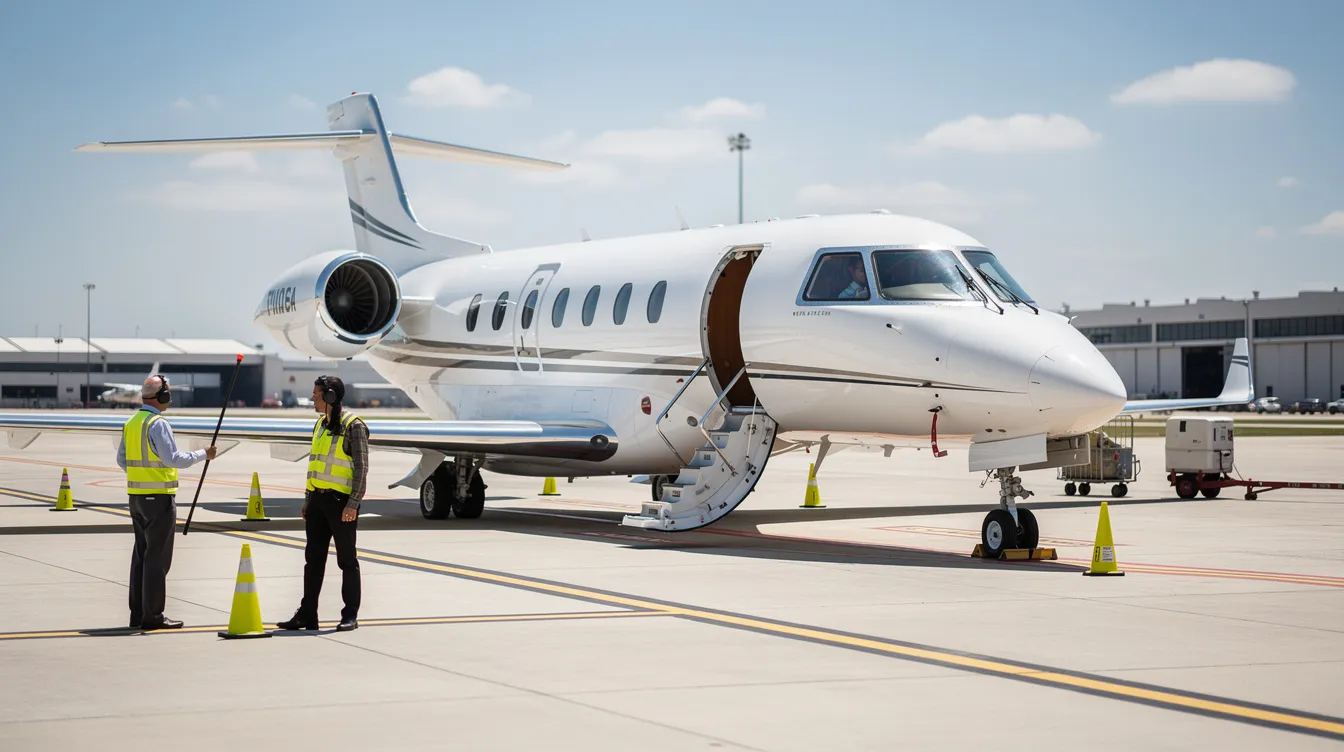
Here are concrete steps for anyone booking private flights or evaluating air travel options, whether on a trip-by-trip basis or through ongoing private jet memberships:
Choose commercial flights or professionally operated private jets for trips involving challenging approaches, marginal weather, or long night segments, ideally through top-rated private jet charter companies that offer well-maintained private charter aircraft.
Ask about operator certification, pilot experience, two-pilot crews on complex routes, and recent safety audits before booking charter flights. Key questions include: Does the operator hold a Part 135 certificate? How many hours do the pilots have on the specific aircraft type?
Maintain schedule flexibility so operators can avoid peak thunderstorm periods, high crosswinds, or night arrivals into difficult airports. Rigid departure times can pressure crews into accepting conditions they would otherwise avoid.
Select airports with longer runways, better instrument approaches, and full-time air traffic control. This choice alone can lower risk during takeoff, approach, and landing phases.
Consider the aircraft category. A turboprop or light jet with terrain awareness systems, weather radar, and anti-ice capability is a different safety proposition than a single-engine piston airplane without these tools. Reviewing types of planes can help clarify which aircraft fits a given mission.
Understanding when and why accidents occur is not about creating fear. It is about giving travelers the information to make safer, more informed air travel decisions.
Most aviation accidents occur during takeoff, approach, and especially landing, while cruise remains the safest segment of a typical flight. The data is consistent across decades of aircraft accident investigation by the Federal Aviation Administration, the National Transportation Safety Board, and international bodies.
General aviation aircraft, especially small, owner-flown airplanes, account for the majority of aviation accidents. Commercial flights and professionally managed private jets show far lower fatal accident rates. Aviation safety has improved across all sectors since the 1970s and 1980s, driven by better technology, tighter regulation, structured flight training, and systematic analysis of prior crashes.
For travelers considering private aviation, using transparent, safety-focused charter brokers like Jettly helps align private flying with standards closer to airline operations than to casual general aviation. The platform connects passengers to vetted operators and professional crews that treat every phase of flight with the discipline that the data demands.
Ready to fly private with confidence? Explore flight options with Jettly’s private jet charter cost estimator, locate suitable airports using the airport locator tool, compare aircraft categories, or request an instant quote at https://www.jettly.com.
The following questions address common concerns about when plane crashes occur, how safe different operations are, and what travelers can do with this information, including how safety considerations intersect with private jet rental costs.
The majority of all accidents occur during takeoff, approach, and landing. Landing and approach together account for 37% to 49% of fatal accidents in commercial jet data, while cruise incidents represent a small fraction of events. However, some of the deadliest aviation disasters, such as Korean Air Flight 801 and other high-profile air crashes, occurred during approach into terrain. For small general aviation aircraft, many fatal crashes also cluster at low altitude during maneuvering, initial climb, and approach, where pilots lose control or hit obstacles. The deadliest aviation disaster in history, the 1977 Tenerife collision, occurred during the takeoff phase on a foggy runway.
Professionally crewed business jets operating under commercial standards such as Part 135 have lower accident and fatal accident rates than typical owner-flown piston aircraft, even when you compare them with some of the cheapest private aircraft options available to individual buyers. Jets benefit from more advanced avionics, redundant systems, higher-altitude cruise, and crew members who undergo recurrent training similar to airline pilots. The safety gap is primarily about how the aircraft is operated and maintained, not just its size. This is why vetted charter operators outperform casual private flying, and why platforms like Jettly focus on connecting travelers with certified operators rather than individual aircraft owners. For a deeper look, see the guide on business jets and a detailed overview of the best-known private aviation providers.
Night itself is not inherently unsafe, but reduced visual cues, fatigue, and weather interactions make errors harder to detect and correct. In general aviation, accident statistics show a higher proportion of fatal en route and maneuvering accidents at night, especially when pilots attempt visual flight in poor visibility. Commercial flights and high-quality charter operations apply specific night procedures, extra training, and stricter weather minimums, which mitigate these risks. The critical variable is pilot qualification and operational standards, not darkness alone.
Key questions include: What regulatory certificate does the operator hold (Part 135 or equivalent)? How many hours do the pilots have on this aircraft type? Is there a two-pilot crew? Is the operator audited by ARGUS, Wyvern, or IS-BAO? Understanding how much a private jet costs overall can also help frame whether charter, ownership, or jet cards best fit your needs. Beyond credentials, ask about average aircraft age, recent maintenance checks, and whether the company runs a formal safety management system. Determining liability after an airplane crash also depends on these operational standards and safety disclosures. Platforms like Jettly surface much of this information up front so travelers can compare options without investigating every operator independently, and can also introduce structured solutions like jet card programs with predictable hourly rates.
Per passenger-mile, commercial air travel remains safer than driving. The structured environment of runways, air traffic control, standardized procedures, and trained professional crews gives aviation a safety advantage over road transport. Even factoring in the higher-risk takeoff and landing phases, the overall fatal accident rate for commercial airlines (0.01 per 100,000 flight hours) is orders of magnitude lower than highway fatality rates. Choosing commercial flights or professionally operated private jets further reduces individual risk compared with casual general aviation flying or long highway journeys, especially when working with a NetJets alternative like Jettly focused on safety and flexibility. Medical bills, lost productivity, and other costs from road accidents far exceed those from commercial aviation incidents on a per-mile basis.
Most plane crashes occur during high-workload phases—especially approach and landing, as well as takeoff and initial climb. These phases leave pilots less time and altitude to respond to changing weather, equipment problems, or other unexpected events. Cruise accounts for much more flight time but a smaller share of fatal accidents. Risk also varies by aircraft and operation: general aviation statistics include many owner-flown small planes, while professionally crewed charter flights operate under different standards.
Travelers can make informed choices by considering the operator’s certification, crew qualifications, aircraft, and safety procedures—not just the aircraft’s size or the time of day. Learn more about how private jet charter works and private jet safety standards. Jettly is a charter broker that connects travelers with certified third-party carriers and offers a digital platform for comparing available private flight options. Explore Jettly’s charter options or request an instant quote.
Share this post:
Jay Franco Serevilla
Nov 8, 2026
|
5
min read
Discover tips and trends in the industry.

5
min read
Delta Airlines Airplane Seating: Seat Maps, Cabins, and How to Choose the Best Delta Seat
Understanding Delta Airlines airplane seating can greatly enhance your travel experience by providing comfort and potential cost savings. This guide details the various cabin classes, how to read seat maps, and tips for selecting the best seats for your journey. Whether you're flying Delta One or Basic Economy, knowing your options can make a significant difference.
Read More
5
min read
What Is Jet A Fuel? A Practical Guide for Private and Commercial Aviation
Jet A fuel is a kerosene-based aviation fuel primarily used for turbine engines in the U.S. It is essential for both commercial airlines and private jet charters, offering specific properties that ensure safety and efficiency during flights. This guide provides insights into its technical specifications, performance in cold weather, and the differences between various aviation fuels.
Read MoreStay updated with our latest insights and tips to elevate your journey with us.
MEMBERSHIPS AND ASSOCIATIONS



© 2026 Jettly Inc. All rights reserved.
Disclaimer: Jettly operates as a charter broker, offering access to a global digital jet charter marketplace. Jettly is not a direct air carrier and does not own or operate aircraft. All advertised flights are conducted by third-party air carriers that are fully licensed and hold the appropriate Part 135 or Part 121 certifications issued by the Federal Aviation Administration (FAA) or equivalent regulatory authorities under U.S. or foreign law. Jettly complies fully with the U.S. Department of Transportation's Part 295 and Part 298 Charter Broker regulations. Jettly does not carry additional liability insurance. Passengers are covered by aircraft operator insurance. TICO: 50023770


