


Login
Get Instant Pricing On 23,000+ Aircraft


Private plane flight times are significantly shorter than commercial travel, influenced by factors like distance, aircraft type, and weather conditions. Understanding these variables is crucial for efficient scheduling and cost management, especially for corporate travelers and families. Jettly offers tools to provide accurate flight time estimates, enhancing the private flying experience.
Jeff Ryan Serevilla
Sep 8, 2026
|
5
min read


View all
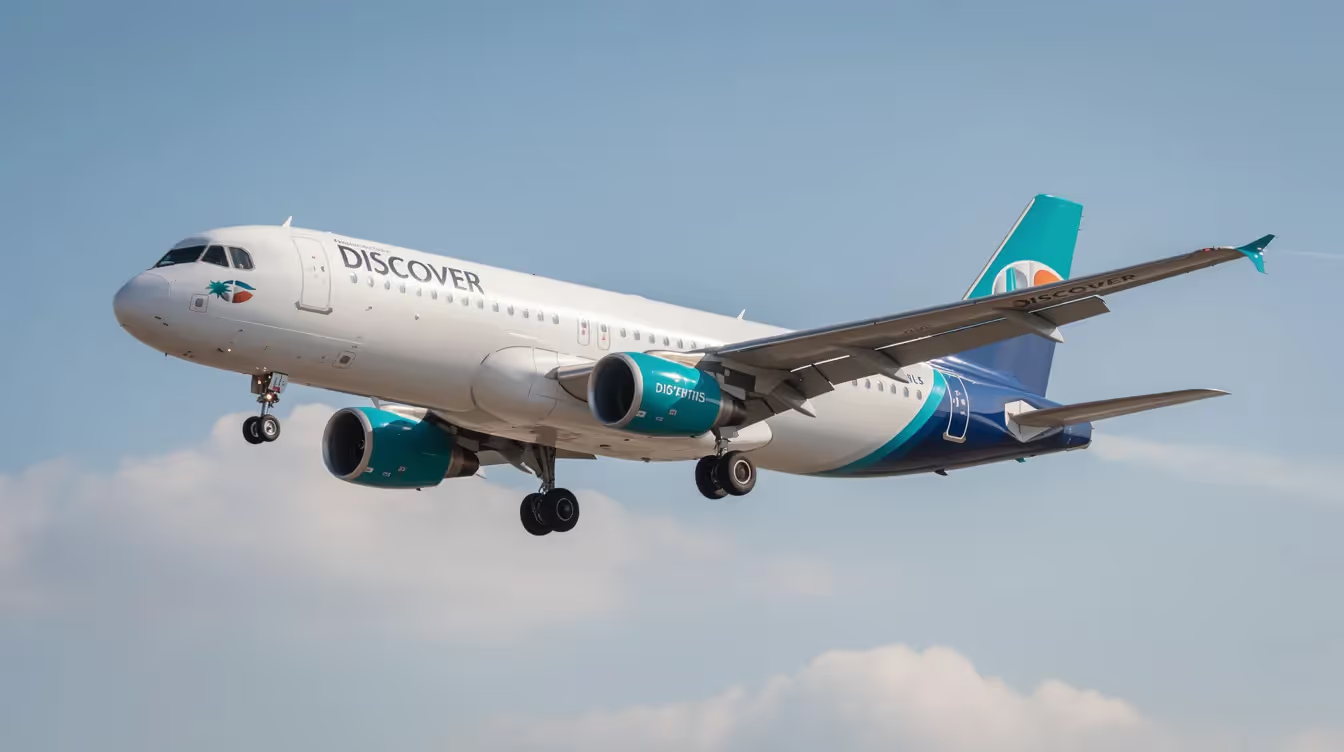
Discover Airlines, rebranded from Eurowings Discover in September 2023, is a leisure-focused airline within the Lufthansa Group, primarily serving vacation destinations from Germany. Despite its affordable fares, customer reviews highlight mixed experiences regarding seat comfort, service quality, and operational reliability, with frequent complaints about cramped economy seating and inadequate staff support during disruptions. For travelers seeking flexibility and personalized service, private jet charter options through platforms like Jettly offer a compelling alternative, allowing for tailored itineraries and improved comfort. Ultimately, the choice between Discover Airlines and private charter depends on individual priorities, such as cost versus control and scheduled routes versus direct flights.
Jay Franco Serevilla
May 18, 2026
|
5
min read

View all
Understanding aircraft categories and classes is crucial for aviation safety, pilot certification, and informed travel choices, particularly in private jet chartering. These classifications, defined by regulatory bodies like the FAA and EASA, influence everything from pilot training to aircraft design and operational standards. Platforms like Jettly utilize these classifications to help travelers select the right aircraft based on mission needs, offering options across various categories such as light jets, midsize jets, and turboprops. Ultimately, recognizing the distinctions between aircraft categories and classes aids in making smarter flight decisions regarding cost, comfort, and airport accessibility.
Jay Franco Serevilla
May 18, 2026
|
5
min read

View all
The Socata TBM 700, also known as the TBM7, is a high-performance turboprop aircraft ideal for private charter travelers seeking speed, efficiency, and access to smaller airports. With a maximum cruising speed of 300 knots and a range of up to 1,550 nautical miles, it offers a comfortable option for short- to medium-haul flights, accommodating 6 to 7 passengers. The TBM 700 is particularly advantageous for executive trips, family leisure travel, and urgent transport missions, providing a cost-effective alternative to light jets. Jettly's platform allows users to easily compare and charter the TBM 700 alongside other aircraft options, ensuring a tailored travel experience.
Jay Franco Serevilla
May 18, 2026
|
5
min read

View all
Estimating flight times is crucial for effective travel planning, impacting schedules and overall trip convenience. This guide outlines how to calculate flight durations based on distance, aircraft type, and external factors like weather and air traffic, emphasizing the use of flight time calculators for accuracy. Jettly's platform provides tailored insights for private jet travelers, helping them optimize their journeys by reducing ground delays and offering flexible routing options. Understanding these elements allows travelers to make informed decisions about aircraft selection and scheduling, enhancing their overall travel experience.
Jay Franco Serevilla
May 18, 2026
|
5
min read

View all
Fractional jet ownership can be a worthwhile investment for high-frequency flyers who travel over 100 hours annually and have a capital commitment of $400,000 or more. It allows owners to share the costs and benefits of private jet travel, providing guaranteed access to a consistent aircraft type and tailored service. However, it is not suitable for those flying less than 50-75 hours per year or with unpredictable travel patterns, as alternatives like jet cards or charter services may offer better flexibility and cost efficiency. Ultimately, understanding your travel habits and financial situation is crucial in determining if fractional ownership aligns with your needs.
Jeff Ryan Serevilla
May 17, 2026
|
5
min read

View all
The leading fractional jet ownership providers in the U.S. are NetJets, Flexjet, PlaneSense, and Airshare, each offering distinct fleet models, pricing structures, and service approaches. NetJets is the largest provider, known for its extensive fleet and global reach, making it ideal for high-utilization travelers, while Flexjet emphasizes premium service and cabin design for those seeking a more personalized experience. PlaneSense focuses on turboprop and light jet efficiency for regional travel, and Airshare offers a day-based model suited for multi-leg itineraries in the central U.S. Prospective owners should carefully evaluate each provider's strengths, limitations, and cost structures to find the best fit for their travel needs.
Jeff Ryan Serevilla
May 17, 2026
|
5
min read
Explore our latest articles and updates.

5
min read
NetJets App: How It Compares to Modern Digital Private Aviation Platforms
The NetJets app offers fractional owners and jet card holders seamless access to a vast private aviation fleet, allowing for easy flight requests and trip management. However, alternatives like Jettly provide a more flexible, app-first experience without long-term commitments, catering to occasional travelers seeking instant pricing and diverse aircraft options. This article compares the features of both platforms to help travelers choose the best fit for their needs.
Read More
5
min read
NetJets Net Worth: What the Numbers Really Mean in Private Aviation
NetJets, a subsidiary of Berkshire Hathaway, is estimated to have a net worth between $9 billion and $11 billion as of 2026. This valuation reflects its extensive fleet of over 1,100 aircraft and significant market share in fractional ownership. The company generates substantial revenue through fractional ownership contracts, jet card programs, and ancillary services, positioning itself as a leader in private aviation.
Read MoreJoin our community and receive the latest blog updates directly in your inbox.
MEMBERSHIPS AND ASSOCIATIONS



Disclaimer: Jettly operates as a charter broker, offering access to a global digital jet charter marketplace. Jettly is not a direct air carrier and does not own or operate aircraft. All advertised flights are conducted by third-party air carriers that are fully licensed and hold the appropriate Part 135 or Part 121 certifications issued by the Federal Aviation Administration (FAA) or equivalent regulatory authorities under U.S. or foreign law. Jettly complies fully with the U.S. Department of Transportation's Part 295 and Part 298 Charter Broker regulations. Jettly does not carry additional liability insurance. Passengers are covered by aircraft operator insurance. TICO: 50023770


