



Login
Get Instant Pricing On 23,000+ Aircraft

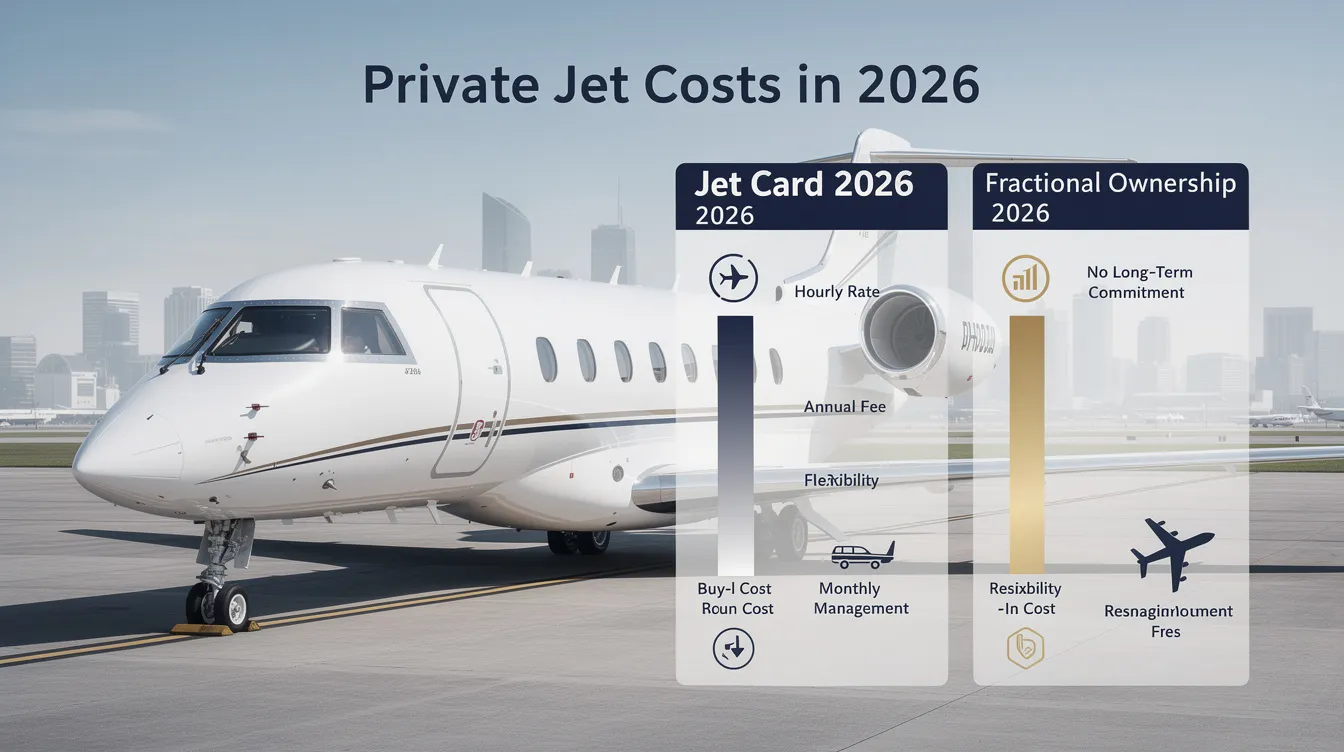
In 2026, private jet access options include jet cards and fractional shares, each with distinct cost structures. Jet cards offer prepaid flight access without ownership, typically involving lower upfront costs and no monthly fees, while fractional shares require significant upfront capital, monthly management fees, and hourly operating charges tied to a multi-year contract. Cost comparisons should consider four key buckets: upfront funds, recurring fees, hourly charges, and contract terms, as well as factors like peak-day surcharges and minimum billing rules. Ultimately, the choice between these options depends on individual flying frequency, budget, and desired flexibility, with Jettly providing a platform for transparent comparisons and bookings.
Jay Franco Serevilla
Jul 9, 2026
|
5
min read



View all
The leading cause of death in plane crashes is blunt force trauma from rapid deceleration upon impact, rather than the dramatic scenarios often portrayed in media. Post-crash fires and smoke inhalation also contribute to fatalities. Understanding these causes helps clarify aviation safety and the importance of proper operator standards for private jet travelers.
Jay Franco Serevilla
Nov 8, 2026
|
5
min read

View all
Most plane crashes occur during critical flight phases, particularly during takeoff, approach, and landing, which account for over 60% of accidents. Understanding these patterns can help travelers make informed decisions about flight safety and choose operators that prioritize safety standards.
Jay Franco Serevilla
Nov 8, 2026
|
5
min read

View all
The last major plane crash occurred on June 12, 2025, when Air India Flight AI171, a Boeing 787-8, crashed shortly after takeoff from Ahmedabad, resulting in 241 fatalities. This incident highlights ongoing concerns about aviation safety, despite the rarity of such disasters in the context of millions of flights each year. This article explores recent aviation accidents, their implications, and the importance of understanding risk in air travel.
Jay Franco Serevilla
Nov 8, 2026
|
5
min read

View all
The history of US air disasters highlights both tragedy and the evolution of aviation safety. Major incidents have led to significant regulatory reforms, improving maintenance practices, pilot training, and aircraft design. This article explores key disasters, their causes, and the lessons learned that have shaped modern aviation safety standards.
Jay Franco Serevilla
Nov 8, 2026
|
5
min read

View all
Understanding what happens during a plane crash can alleviate fears about flying. While the odds of experiencing a crash are extremely low, knowing the causes, survival strategies, and the importance of passenger actions can enhance safety. This article provides insights into aviation safety, the factors contributing to crashes, and what passengers can do to prepare.
Jay Franco Serevilla
Nov 6, 2026
|
5
min read

View all
Airbus crashes, though rare, have significant implications for aviation safety. This article reviews major incidents since 2000, highlighting key findings and lessons learned that have shaped safety reforms in the industry. Understanding these events helps travelers make informed choices about air travel and charter services.
Jay Franco Serevilla
Nov 6, 2026
|
5
min read
Explore our latest articles and updates.

5
min read
How Many Boeing 737 MAX Aircraft Are In Service In 2026?
As of late 2026, approximately 2,300 to 2,400 Boeing 737 MAX aircraft are actively serving airlines worldwide, out of 2,483 delivered. The fleet includes four main variants, with the MAX 8 and MAX 9 being the most prevalent. Despite a troubled history, the 737 MAX has become a key player in short-haul aviation, with ongoing deliveries and regulatory oversight shaping its future.
Read More
5
min read
Flying Delta Airlines: How It Compares to Flying Private with Jettly
Flying Delta Airlines in 2026 offers a structured experience with various fare classes and loyalty perks, making it a solid choice for many travelers. However, for those prioritizing flexibility, privacy, and time savings, private jet charter with Jettly presents a compelling alternative. This guide compares both options, helping travelers decide which fits their needs best.
Read MoreJoin our community and receive the latest blog updates directly in your inbox.
MEMBERSHIPS AND ASSOCIATIONS



© 2026 Jettly Inc. All rights reserved.
Disclaimer: Jettly operates as a charter broker, offering access to a global digital jet charter marketplace. Jettly is not a direct air carrier and does not own or operate aircraft. All advertised flights are conducted by third-party air carriers that are fully licensed and hold the appropriate Part 135 or Part 121 certifications issued by the Federal Aviation Administration (FAA) or equivalent regulatory authorities under U.S. or foreign law. Jettly complies fully with the U.S. Department of Transportation's Part 295 and Part 298 Charter Broker regulations. Jettly does not carry additional liability insurance. Passengers are covered by aircraft operator insurance. TICO: 50023770


