



Login
Get Instant Pricing On 23,000+ Aircraft

>
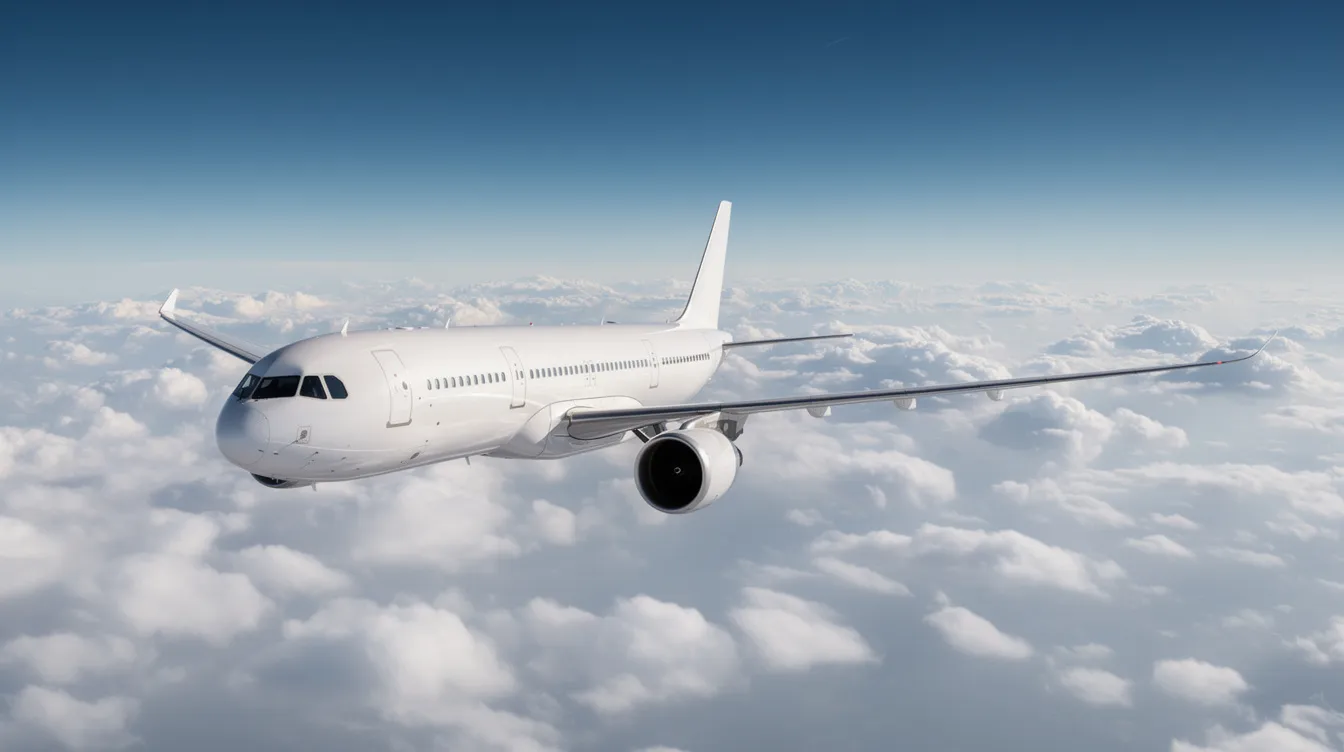
The Boeing 737 MAX 10 carries an advertised range of about 3,100 nautical miles, making it the shortest-range member of the 737 MAX family. That number shapes everything from airline route planning to the decisions private travelers make when choosing between a commercial flight and a charter. Here is what the 737 MAX 10 range actually means in practice, how it compares to other aircraft, and when a private jet booked through Jettly can cover the same distance with less hassle.
The 737 MAX 10 has a published design range of approximately 3,100 nautical miles (5,740 km), the shortest in the MAX family. The MAX 8, by comparison, reaches about 3,550 nautical miles. This gap exists because the MAX 10's stretched fuselage adds weight without adding fuel capacity.
Real-world 737 MAX 10 range with a full passenger load is often closer to 2,800 to 3,000 nautical miles once headwinds, fuel reserves, high altitude departures, and payload constraints are factored in. Weather conditions can reduce operational range further on any given day.
The MAX 10 trades range for capacity. Its stretched fuselage, modified main landing gear, and higher seat count (up to 230 in a single-class layout) improve per-seat fuel efficiency on dense routes but limit the aircraft to medium-haul missions rather than long-haul flights.
Many super-midsize and large-cabin private jets in Jettly's network can match or exceed the 737 MAX 10's practical range for groups of 4 to 14 passengers, while operating from smaller, more convenient airports with faster door-to-door times.
The rest of this article breaks down the 737 MAX 10's range, fuel efficiency, engineering trade-offs, and mission profiles, then compares them with private charter options available through Jettly.
Boeing lists the 737 MAX 10's design range at about 3,100 nautical miles, roughly 5,740 km. That figure reflects ideal test conditions: standard atmosphere, zero wind, a typical two-class configuration of 185 to 210 passengers, and full fuel tanks holding approximately 45,694 lb (20,726 kg) of usable fuel.
This makes the MAX 10 the lowest-range member of the Boeing 737 MAX lineup, despite being the largest variant by both fuselage length (43.8 meters) and maximum capacity (up to 230 passengers in a single-class layout).
Several common city pairs sit comfortably inside the MAX 10's performance margins:
|
Route |
Approximate Distance |
|---|---|
|
New York to Los Angeles |
~2,150 nmi |
|
Chicago to Anchorage |
~2,200 nmi |
|
London to Canary Islands |
~1,600 nmi |
|
Sydney to Bali |
~2,600 nmi |
|
London to Doha |
~3,200 nmi |
Routes approaching 3,000 nmi or beyond, like London to Doha, may require payload restrictions, reduced cargo, or favorable winds to operate at full passenger count.
For travelers considering alternatives, many super-midsize jets also offer 3,000+ nmi range for 8 to 10 passengers. Aircraft like the Challenger 350 and Citation Longitude can cover these same distances while accessing smaller executive airports that a 737 MAX 10 cannot. For a deeper look at private jet range capabilities, Jettly publishes detailed comparisons across aircraft categories.
The Boeing 737 MAX family consists of four main variants: MAX 7, MAX 8, MAX 9, and MAX 10. All share core advanced technology, including CFM LEAP-1B engines, split-tip winglets, and the Boeing Sky Interior cabin design. These common systems give flight crews cockpit commonality and shared type rating across all MAX variants, which lowers airline training costs.
Each variant occupies a different slot in the market:
|
Variant |
Typical Seats (Two-Class) |
Published Range |
|---|---|---|
|
MAX 7 |
~138–153 |
~3,850 nmi |
|
MAX 8 |
~162–178 |
~3,550 nmi |
|
MAX 9 |
~178–193 |
~3,300 nmi |
|
MAX 10 |
~188–204 |
~3,100 nmi |
The MAX 7 targets longer, thinner routes where fewer passengers need to travel farther. The MAX 8 is the mid-sized workhorse with the longest range in the family. The MAX 9 adds seats. The MAX 10 pushes seat count to the maximum the 737 airframe can accommodate, at the cost of range.
The MAX 10 shares type rating and cockpit commonality with other 737 MAX variants, so airlines operating mixed fleets do not need separate pilot pools.
Boeing Commercial Airplanes first received FAA certified status for the 737 MAX line in March 2017 with the MAX 8. By late 2026, Boeing has delivered thousands of 737 MAX aircraft globally and holds a backlog of several thousand unfilled orders across the family.
Airlines choose variants based on range in nautical miles, runway performance, passenger count, and network strategy. Understanding how carriers deploy the MAX family helps private travelers benchmark what "medium-haul" actually looks like when comparing commercial trips with private charters. For a broader view of aircraft categories in civil aviation, Jettly's guides cover everything from turboprops to heavy jets.
The 3,100 nmi figure assumes standard atmospheric conditions, a typical two-class configuration, specific payload assumptions, and IFR fuel reserves with no unusual wind. Boeing's own airport compatibility documents note that published specifications reflect "standard day, zero wind" at long-range cruise speed.
Real-world variables shorten effective range:
Strong headwinds (common on westbound transatlantic or transpacific routes)
Higher-than-planned passenger and cargo weight
Hot temperatures that reduce engine efficiency and increase takeoff roll
High altitude airports that thin the air and cut lift
ATC routing that adds track miles beyond great-circle distance
Required diversion and fuel reserves for alternate airports
Weather conditions can reduce operational range by several hundred nautical miles on difficult days. A full passenger load of around 188 to 204 passengers (two-class configuration) plus standard baggage can push the aircraft close to its maximum takeoff weight limit, which means airlines sometimes cannot carry maximum fuel.
The practical range of the 737 MAX 10 typically operates between 2,800 and 3,000 nautical miles under a full passenger load. Airlines often plan MAX 10 missions in the 1,000 to 2,800 nmi band for schedule reliability, turnaround efficiency, and lower risk of en-route diversion.
Smaller private aircraft, by contrast, often depart at or near full fuel weight because passenger counts and baggage loads are far lighter. A super-midsize jet carrying 8 passengers and their luggage is nowhere near its weight limits, so it can consistently use its full published range, even from challenging airports.
The 737 MAX 10 is 66 inches longer than the MAX 9 and more than 10 feet longer than the MAX 8. At 43.8 meters (143 ft 8 in), it is the longest single-aisle airplane Boeing has ever built on the 737 platform.
Despite this stretch, the MAX 10 keeps the same wing planform, the same wing area, and the same fuel tanks as every other MAX variant. The usable fuel capacity is approximately 45,694 lb (20,726 kg), identical to the smaller MAX models. More airframe, more passengers, and more structural weight must be carried on the same fuel volume.
The MAX 10 requires additional airframe reinforcement for structural integrity to handle its higher maximum takeoff weight. Boeing engineers added structural weight in the fuselage and floor beams. The result is a range penalty of roughly 200 nmi compared to the MAX 9 and about 450 nmi compared to the MAX 8. The MAX 10's range is shorter than the MAX 8's 3,550 nautical miles by a wide margin.
This is a deliberate design choice. The MAX 10's design prioritizes passenger capacity over maximum range. The 737 MAX family features a trade-off between range and capacity; Boeing chose the capacity end of the spectrum for the MAX 10. While total fuel burn per flight is higher on a MAX 10 than on a MAX 8, fuel efficiency measured per seat mile improves when the aircraft operates at high load factors. Airlines flying full planes on busy routes care about seat-mile costs more than absolute range.
That trade-off matters for travelers, too. A single-aisle jet carrying 200+ passengers offers lower per-ticket costs on dense routes, but it means range limitations rule out many longer city pairs that a smaller MAX variant or a more affordable private jet charter could handle nonstop.
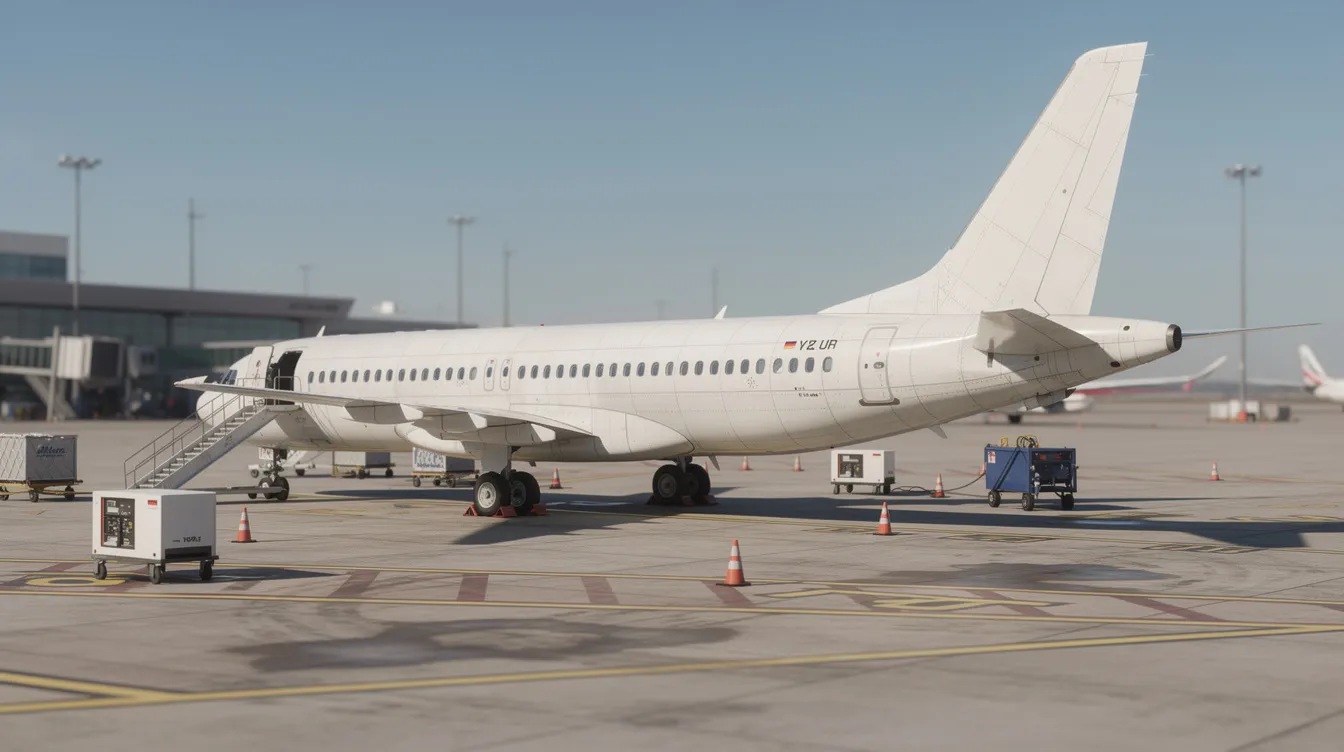
The longer MAX 10 fuselage creates a geometry problem. During takeoff rotation, as the aircraft accelerates and the nose pitches up, the tail sits closer to the runway. Without modification, the MAX 10 would be prone to tail strikes.
Boeing redesigned the main landing gear to solve this. The MAX 10 uses a semi-levered landing gear design: a telescoping, taller gear that extends roughly 9.5 inches during rotation, providing tail clearance. Once airborne, it retracts to fit existing 737-sized wheel wells, preserving compatibility with standard airport gates and taxiways.
The landing gear of the MAX 10 is designed to prevent tail strikes during rotation, and it works. But the redesign adds weight and mechanical complexity. New higher-capacity brakes are also required to handle the higher maximum takeoff weight of the MAX 10.
The landing gear system itself has only a modest direct impact on range. Its added structural weight contributes incrementally to the aircraft's overall fuel consumption and performance ceiling. The bigger operational effect is on runway length requirements. Because of the higher maximum takeoff weight, the MAX 10 needs longer runways, which can limit routes from short or hot-and-high airfields where airlines may face payload restrictions.
The 737 MAX family offers roughly 14 to 20% lower fuel burn per seat compared to the previous generation 737 Next Generation (737NG). This improvement comes from three sources: LEAP-1B engines with higher bypass ratios, advanced technology winglets that reduce induced drag, and aerodynamic refinements across the airframe.
The 737 MAX 10's improved fuel efficiency advantage is strongest on dense, medium-haul routes where its high seat count spreads fuel and operating costs across more passengers. On a fully loaded New York to Los Angeles flight, a MAX 10 burns more total fuel than a MAX 8 on the same route, but it carries 20 to 40 more passengers, which lowers the fuel cost per seat.
Airlines are also integrating sustainable aviation fuel (SAF) into 737 MAX operations. The aircraft is compatible with higher SAF blend ratios as certification standards evolve, though SAF currently makes up a small fraction of total jet fuel supply.
For airline customers, the metrics that matter are CASM (cost per available seat mile) and fuel burned per seat mile. For private travelers, the relevant metrics are total travel time, privacy, and productivity. Jettly focuses on the latter when helping clients compare a commercial flight on a 737 MAX 10 with a private charter aircraft option.
Key fuel efficiency takeaways for the MAX 10:
Lower CO₂ per passenger-km compared with older narrowbodies
Higher total fuel burn per flight than smaller MAX variants
Best economics when every seat is filled on medium-haul routes
Less fuel per seat mile than any previous 737 generation on equivalent routes
The MAX 10's higher maximum takeoff weight and longer fuselage translate into longer required takeoff distances compared with shorter MAX variants, especially at high altitude or in hot conditions.
On a standard day at sea level, heavy long-range departures typically require roughly 2,600 to 2,700 meters (8,500 to 8,900 feet) of runway length. Major carriers operate from hubs like New York JFK, Los Angeles LAX, London Heathrow, and Frankfurt, all of which can easily accommodate the aircraft.
Secondary or regional airports with shorter runways, surrounding terrain, or high field elevations may force airlines to reduce passenger load or limit range. An airport at 5,000 feet elevation on a 35°C day poses a different challenge than a sea-level hub on a cool morning; the MAX 10 loses performance in both takeoff distance and available payload, making tools like Jettly's airport locator tool useful for identifying better-suited fields.
Private jets booked via Jettly present a direct contrast. Many business jets capable of 3,000+ nmi can operate from runways as short as 4,500 to 5,500 feet and use dedicated executive terminals. A MAX 10 might need almost twice the runway length of a super-midsize jet serving the same city pair through a smaller airport. That difference opens access to hundreds of airports the MAX 10 cannot use, including dedicated private aviation gateways in major markets such as Atlanta private jet charter.
The MAX 10's sweet spot is high-demand routes in the 1,000 to 2,500 nmi range: busy domestic corridors, intra-European trunk routes, and dense Asia-Pacific city pairs. The MAX 10 is optimized for high-density short- to medium-haul routes where frequency and capacity matter more than distance.
Classic MAX 10 markets include:
New York to Los Angeles (~2,150 nmi)
Chicago to Seattle (~1,500 nmi)
London to Athens (~1,300 nmi)
Singapore to Tokyo (~2,900 nmi)
Sydney to Perth (~1,800 nmi)
The MAX 10 is designed for medium-distance routes, not long-haul flights. While some shorter transatlantic routes fit within its theoretical range envelope, airlines typically prefer the MAX 8 or Airbus A321LR/XLR (or widebodies) for transoceanic missions due to headwind exposure, diversion requirements, and passenger expectations on longer flights.
Deployment has been shaped by certification timing. The Federal Aviation Administration issued the MAX 10's type certificate on October 20, 2026. Early service entries by United Airlines and Alaska Airlines are expected on busy North American and regional routes beginning in 2027.
Many of these same city pairs are popular for private charters, giving travelers a direct A/B comparison between dense single-aisle commercial aviation and tailored private jet missions booked through Jettly, especially as more people learn how to get a seat on a private jet easily.
Payload is the combined weight of passengers, baggage, and cargo that the 737 MAX 10 carries in addition to fuel. All of it is constrained by the aircraft's maximum takeoff weight.
The aircraft typically accommodates between 185 and 230 passengers depending on cabin layout. At a full passenger load in a two-class configuration (around 188 to 204 seats filled, plus standard baggage), airlines may not always be able to carry maximum fuel. The zero fuel weight limit sits at about 160,000 lb (72,574 kg); once passengers and bags consume that allowance, every additional pound of fuel trades against payload capacity.
With a full two-class load and standard baggage, effective range trends closer to 2,800 to 3,000 nmi, not the full 3,100 nmi. Airlines manage this trade-off through seasonal scheduling, restricting some seats on performance-limited departures, or shifting cargo to other flights on long or demanding legs.
Private jets arranged through Jettly rarely face this constraint. A group of 8 passengers with luggage on a Challenger 650 barely dents the aircraft's payload capacity, allowing it to depart with full fuel tanks and consistently use its published extended range, even from challenging airports.
Airlines view the MAX 10 as a density tool: ideal for maximizing revenue per departure on busy, slot-constrained routes. More seats per flight translate into lower cost per seat mile, which is the core business strategy behind ordering the largest variant in the MAX family.
Key airline customers with confirmed MAX 10 commitments include, alongside widespread use of earlier models like the Boeing 737-800:
United Airlines (one of the largest orders)
Alaska Airlines (the carrier's largest-ever aircraft order includes MAX 10s)
American Airlines
Southwest Airlines (evaluating fleet mix)
WestJet and several international major carriers
Airlines plan to use the MAX 10 on high-density domestic routes. Carriers use the aircraft to upgauge from smaller narrowbodies on trunk routes, reducing the number of daily flights while maintaining or increasing total capacity. The MAX 10 is optimized for lower seat-mile costs on busy routes where load factors are high.
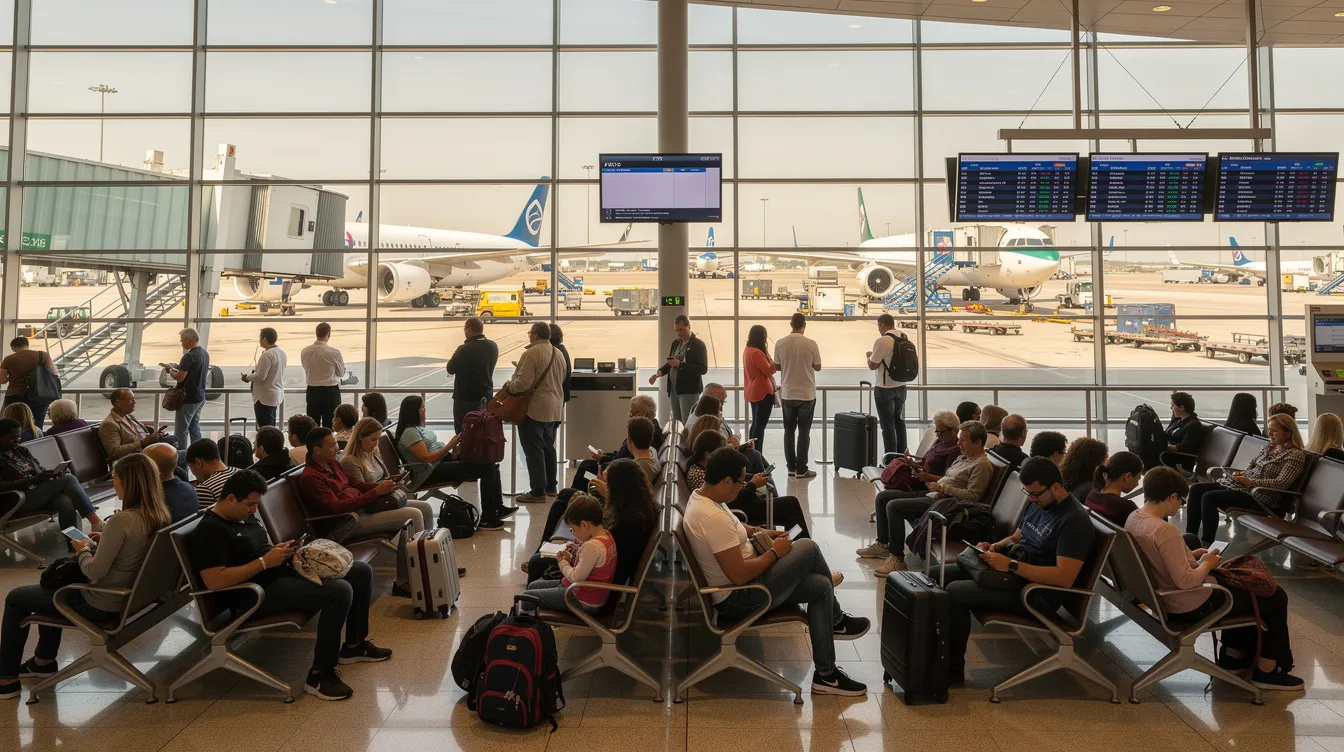
This network role affects traveler experience. Fuller cabins mean longer boarding and deplaning times, less personal cabin space, and more crowded airports. For high-net-worth travelers and corporate teams, these friction points are precisely what drives interest in private jet charter via platforms like Jettly and the broader ecosystem of charter airlines and private operators.
The MAX 10's advertised 3,100 nmi range looks different when placed alongside popular business jets:
|
Aircraft |
Type |
Typical Passengers |
Range |
|---|---|---|---|
|
737 MAX 10 |
Commercial narrowbody |
188–230 |
~3,100 nmi |
|
Challenger 350 |
Super-midsize jet |
8–10 |
~3,200 nmi |
|
Challenger 650 |
Large-cabin jet |
10–12 |
~4,000 nmi |
|
Gulfstream G450 |
Large-cabin jet |
12–16 |
~4,350 nmi |
|
Dassault Falcon 2000LXS |
Large-cabin jet |
8–10 |
~4,000 nmi |
While the MAX 10 can carry 10 to 20 times as many passengers, private jets are optimized for small groups, longer nonstop legs, and flexible routing. A super-midsize jet like the Challenger 350 matches or exceeds MAX 10 range for a fraction of the passenger count, while accessing secondary or executive airports closer to final destinations, whether on shared charter flights or full charters.
Example: a New York to Los Angeles trip on a 737 MAX 10 from JFK involves arriving 90+ minutes early, clearing security, boarding with 200 other passengers, and retrieving luggage at LAX. The same routing on a super-midsize jet from Teterboro (TEB) to Van Nuys (VNY) skips all of that and can even be structured as a crowdsourced or shared private flight. Door-to-door time savings for a group of 6 can exceed 3 hours.
Travelers who frequently cover routes in the 2,000 to 3,000 nmi band can use Jettly's instant-quote tool to see how private jet options compare in total travel time and cost per traveler for small groups, including route-specific options like private jet charter in New Delhi.
Range numbers on paper ignore the hours that accumulate around the flight itself. A commercial 737 MAX 10 trip typically involves:
Arriving at a major hub airport 90 to 120 minutes before departure
Check-in and security screening (15 to 60 minutes depending on airport and line length)
Walking to the gate and waiting to board (20 to 40 minutes)
Boarding with 188 to 230 other passengers (20 to 30 minutes)
Taxi and departure sequencing at a busy hub (10 to 30 minutes)
Post-landing taxi, deplaning, and baggage claim (20 to 45 minutes)
Total overhead beyond flight time: 2 to 5+ hours.
A private charter via Jettly compresses this sequence. Travelers arrive 20 to 30 minutes before departure at a fixed-base operator (FBO), bypass standard security queues, and board directly. Baggage goes from car to aircraft in minutes.
Consider a three-city business roadshow: New York, Chicago, and Dallas in one day. A commercial itinerary on 737 MAX 10 and similar narrowbodies would require an overnight stay and tight connections. A private jet for business travel can hit all three cities with hours to spare, using smaller airports near each meeting location, and careful analysis of jet rentals versus first-class tickets helps corporate teams choose the right mix.
Corporate travel planners can use Jettly's platform to test whether key trips are better served by commercial narrowbodies, private jets, or a combination of both.
The 737 MAX line originally gained FAA certified status in March 2017 with the MAX 8. The MAX 10 followed a longer path. Boeing completed over 2,000 flight hours for MAX 10 certification, with the flight test team logging 976 flights and approximately 1,040 ground test hours before the process concluded.
Certification delays slowed the timeline. The MAX 10 certification faced delays due to software glitches, including issues with the U14 version of the flight-management system that could allow autopilot deviations during go-around procedures. Boeing had to redesign the MAX 10's engine anti-ice system for certification as well, adding months to the schedule. Boeing faced certification delays due to design and safety requirements imposed by the Aircraft Certification, Safety, and Accountability Act of 2020.
The flight test team ran assessments covering fuel burn, climb performance, cruise characteristics, braking, and tail-strike protection under varied conditions. The Federal Aviation Administration issued the MAX 10's type certificate on October 20, 2026, clearing it for production and airline deliveries.
The MAX 10 must include an enhanced angle-of-attack sensor post-certification, along with updated flight-control modifications and human factors evaluations mandated under new safety rules. These safety assessments go beyond what earlier MAX variants required at initial certification.
Certified range figures come from these test programs but will be refined as real-world airline data accumulates. Airlines like Southwest Airlines and United Airlines had to adjust fleet planning during the certification delays, relying longer on existing fleets and other MAX variants.
The 737 MAX grounding remains one of commercial aviation's defining safety events. Lion Air Flight 610 crashed in October 2018, and Ethiopian Airlines Flight 302 crashed in March 2019. Both accidents were linked to the MCAS flight control system receiving erroneous data from a single angle-of-attack sensor, which repeatedly pushed the nose down without adequate pilot awareness or override capability.
The FAA grounded the 737 MAX in March 2019. Boeing redesigned MCAS to reference both angle-of-attack sensors rather than one, added crew alerting, and revised pilot training programs. The FAA cleared the type to return to service in November 2020 after extensive global regulator reviews.
In January 2024, Alaska Airlines Flight 1282 (a 737 MAX 9) experienced a mid-cabin door plug blowout at altitude, exposing quality-control issues in Boeing's production process. The event led to further inspections, FAA oversight escalation, and production rate restrictions.
The MAX 10 must comply with enhanced certification requirements introduced after these events, including stricter human factors evaluations, additional sensor safeguards, and updated braking performance assessments. Boeing completed these requirements before the October 2026 FAA certification.
Some travelers prefer to avoid aircraft families associated with high-profile incidents. Jettly helps clients review operator safety records, aircraft types, and regulatory compliance across a wide fleet of alternatives through its aircraft search tools.
The 737 MAX family offers lower CO₂ emissions per seat-kilometer compared with older 737 generations. The MAX 10, with its higher seat density, spreads emissions across more passengers, which can make it among the most carbon-efficient options per person on busy medium-haul routes.
Boeing participates in sustainable aviation fuel trials and contrail reduction research to further lower the environmental footprint across 737 MAX operations. The aircraft is compatible with higher SAF blend ratios as industry standards evolve.
Private aviation's environmental context is different. Private flights typically have higher emissions per passenger because fewer people share the fuel burn. Operational efficiencies, right-sizing aircraft to mission, and carbon offset or SAF programs can reduce impact. But the per-passenger gap remains real on most routes.
Travelers who prioritize sustainability can consider mixing efficient commercial flights on aircraft like the 737 MAX 10 with strategically chosen private legs via Jettly, balancing environmental concerns with time and flexibility needs while comparing Jettly as a NetJets alternative to traditional fractional programs.
The MAX 10 carries roughly 188 to 204 passengers in a two-class configuration or up to 230 in a single-class layout. The Boeing Sky Interior features modern LED lighting, sculpted sidewalls, and large overhead bins, but personal space and privacy are limited, especially in economy.
High-density layouts, common on budget carriers, have a narrow seat pitch of 28 to 30 inches and a seat width of about 17 inches. Inflight service levels depend on each airline's product design, not the airframe.
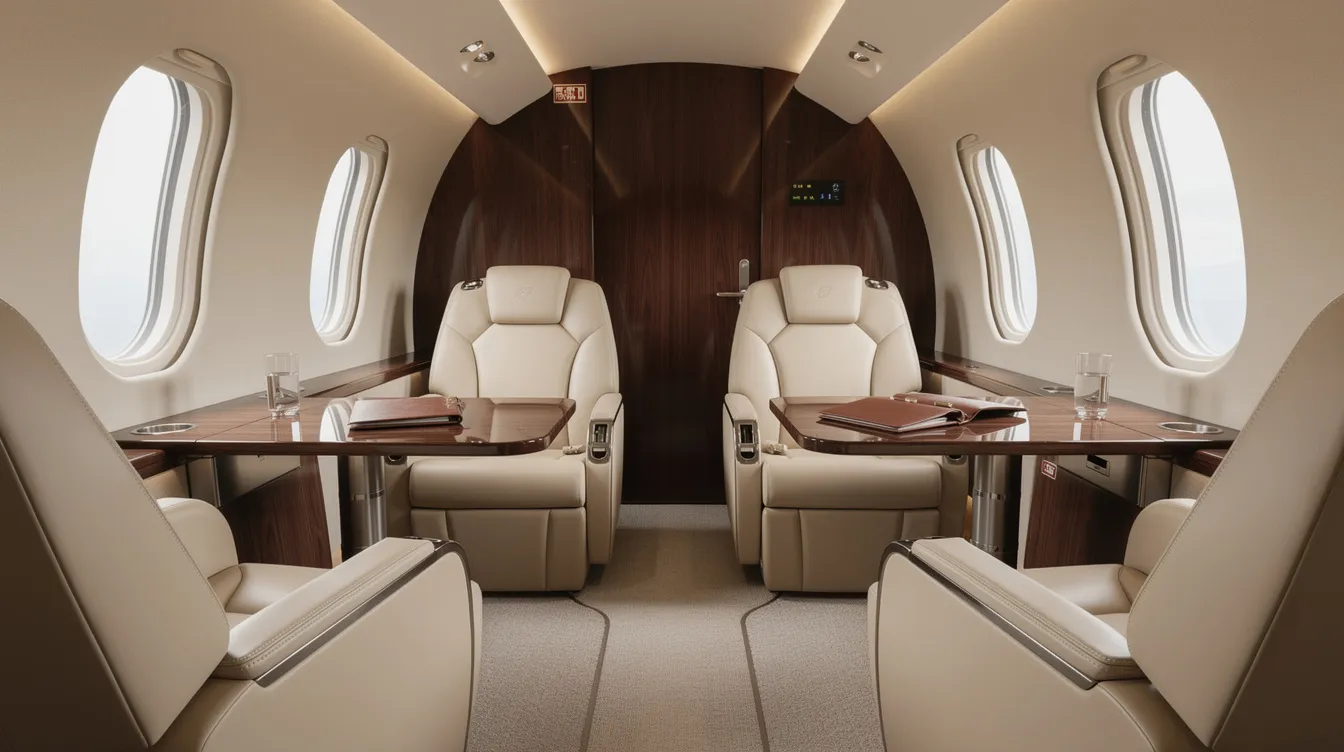
Private jets commonly chartered on Jettly offer a different equation: 8 to 14 seats, club seating, conference-style work areas, quieter cabins, and customizable catering through services like Jettly Eats in-flight catering. The difference in productivity between spending 5 hours in a 30-inch-pitch economy seat and a private cabin with a fold-out table and reliable Wi-Fi is measurable in work output and meeting readiness.
For a detailed comparison of cabin and service differences, Jettly publishes a business class vs private jet guide that walks through real-world trade-offs.
The MAX 10 is the most economical choice when large groups travel on fixed schedules between major hubs, where service frequency and low per-seat fares are the priority. Airlines use it to maximize revenue on high-demand routes, and passengers benefit from frequent departures and competitive ticket prices.
Private jets become more compelling in specific scenarios, as outlined in Jettly's guide to the best private jet charter companies:
Executive teams visiting multiple cities in one day
Families seeking direct access to leisure destinations without connections
Travelers operating on tight timetables where delays carry high costs
Groups of 4 to 12 where per-person charter cost approaches or undercuts business-class fares, whether on shared or full charter flights
Consider not just published range but total door-to-door time, airport accessibility, and schedule flexibility. Jettly's cost calculator allows users to compare different aircraft categories for the same route, showing which options match or exceed 737 MAX 10 range with fewer passengers and faster turnarounds.
Frequent flyers sometimes combine commercial trunk routes on larger aircraft with private connections at either end, a hybrid approach that optimizes both cost and convenience using brokers such as Dexter Air Taxi on Jettly.
Jettly is a charter broker and digital platform that connects travelers with a global inventory of over 20,000 aircraft operated by properly certified third-party carriers. Transparency and regulatory compliance are built into every booking.
The platform's instant pricing tools and aircraft filters allow users to sort by range capabilities, passenger capacity, and airport access. Finding a jet that can handle a 3,000 nmi mission, or longer, takes minutes rather than days of phone calls.
Jettly offers both on-demand charters and membership options for frequent flyers who want more predictable pricing without the long-term commitments of fractional ownership or traditional jet cards. Creating a free account unlocks access to instant quotes and aircraft comparisons, and those interested in recommending the service can explore Jettly's ULTRA high-ticket affiliate program.
Jettly's support team can help interpret complex factors like runway length, payload capacity, and weather when planning trips that push toward an aircraft's maximum range, providing practical guidance beyond raw numbers and tools such as a jet card flight cost estimator.
Explore aircraft options or run sample quotes for your most frequent routes at https://www.jettly.com, or review Jettly's flexible jet card programs if you fly privately on a regular basis.
The 737 MAX 10 is expected to shape airline medium-haul networks through the late 2020s. Boeing announced the type as the answer to high-density, slot-constrained routes, and early deployment plans from launch customer airlines confirm that focus, even as private and charter airlines expand alternatives on similar city pairs.
Competition from Airbus A321neo variants (including LR and XLR) will push both manufacturers to improve operating efficiency, cabin products, and range. The A321XLR offers roughly 4,700 nmi of range in a similar seat count, which pressures the MAX 10 on longer routes. Technological advancements in engine design and aerodynamics will continue to reshape what single-aisle jets can do.
As airlines refine schedules around the MAX 10, travelers will see clearer patterns of when and where the type appears. That clarity helps frequent flyers plan when to use commercial aviation and when to opt for private charter.
Ongoing environmental pressures, SAF adoption, and evolving regulatory standards may shift how airlines balance larger aircraft like the MAX 10 against smaller regional jets and private charter solutions. Platforms like Jettly serve as a flexible complement to commercial services, giving travelers control over how they cover the same distances the 737 MAX 10 is designed to serve, whether booking city-specific options like private jet charter in Kolkata or other global hubs.
These questions address practical issues about 737 MAX 10 range and comparisons with private jets that were not fully covered in the sections above.
The MAX 10's published range of approximately 3,100 nautical miles theoretically covers some shorter transatlantic city pairs (for example, Shannon to St. John's at roughly 1,600 nmi). Standard North Atlantic routes like London to New York (~3,000 nmi westbound, often 3,200+ nmi with routing and headwinds) push close to or beyond the aircraft's comfortable operational limits once reserves and payload are considered. Airlines favor the MAX 8, Airbus A321LR/XLR, or widebodies for transatlantic service. The MAX 10 is unlikely to appear on regular oceanic routes.
The MAX 8 has more absolute range (about 3,550 nmi vs 3,100 nmi for the MAX 10) and slightly lower total fuel consumption at similar payloads because it weighs less. On full flights, the MAX 10 offers better fuel economy per seat mile because the fuel burn is spread across 20 to 40 additional passengers. Airlines that consistently fill the MAX 10 see lower seat-mile costs than they would on the smaller MAX 8 running the same route. The trade-off only works when load factors are high; on thinner routes with empty seats, the MAX 8 or even the smaller MAX variants are more efficient overall.
United Airlines and Alaska Airlines hold substantial MAX 10 orders and plan to operate the type on dense U.S. transcontinental and high-demand regional routes once deliveries begin in 2027. American Airlines and WestJet also have commitments. European and Asia-Pacific carriers are evaluating or have ordered the MAX 10 for similar trunk markets. Exact route assignments will evolve as fleet planning adjusts to actual delivery schedules and market demand.
Private jets tend to make more sense when groups are small (4 to 12 people), time is critical, multiple cities must be covered in a single trip, or travelers want access to smaller, more convenient airports. On a per-person basis, chartering a larger aircraft for 2 passengers rarely competes with a commercial fare. But for a group of 6 to 10 splitting a super-midsize charter, the cost per seat can approach business-class pricing while saving several hours of door-to-door time. Readers can test this trade-off using Jettly's online tools to compare private charter options, range, and estimated costs for their most frequent routes.
Boeing does not offer auxiliary fuel tanks as a standard option on the 737 MAX 10 in its airline configuration. The aircraft's usable fuel capacity of approximately 45,694 lb is fixed by the existing wing tank volume, which is shared across all MAX variants. Some military or VIP derivatives of the 737 platform (like the Boeing BBJ) can add auxiliary fuel tanks for extended range, but those are different programs with different certifications and price points. For travelers interested in BBJ-style capabilities, Jettly's Boeing BBJ guide covers what those aircraft offer, and tools like its jet card flight cost estimator help frame long-range trip budgets.
The 737 MAX 10 offers an advertised range of about 3,100 nautical miles, but it is built for dense, medium-haul routes where capacity and fuel efficiency per seat take priority over maximum distance. The MAX 10 has the shortest range among the 737 MAX variants, a direct consequence of its stretched fuselage, added structural weight, and fixed fuel volume.
Understanding the gap between design range and real-world performance helps travelers set realistic expectations about routing, flight times, and potential payload or seasonal constraints. The practical range under a full passenger load settles closer to 2,800 to 3,000 nautical miles on most days.
For small groups, many private jets available through Jettly match or exceed typical 737 MAX 10 missions with better airport access, faster boarding, and meaningful door-to-door time savings. The MAX 10 range serves as a useful benchmark: if your trip falls within that distance band, there is almost certainly a private aircraft in Jettly's network that can cover it nonstop, with fewer complications.
Ready to see how private charter compares for your most frequent routes? Explore flight options or request a personalized quote at https://www.jettly.com.
The Boeing 737 MAX 10 has an advertised range of about 3,100 nautical miles, but its practical range with a full passenger load is typically closer to 2,800 to 3,000 nautical miles. Its design prioritizes passenger capacity and lower seat-mile costs on busy, medium-distance routes—not long-haul travel. Weather, payload, runway conditions, and required fuel reserves can further affect its operating range. Travelers comparing aircraft can explore Jettly’s guide to private jet range and overview of private jet categories.
For travelers, the MAX 10 provides a useful benchmark when comparing commercial and private travel. Airlines can carry up to 230 passengers, while a private charter may better suit a smaller group that values schedule flexibility, direct routing, or access to a more convenient airport. Compare the trade-offs in Jettly’s guides to shared charter flights and full charters and private jet costs, or use the charter cost estimator to review options for a specific route.
Jettly is a charter broker and digital marketplace that connects travelers with aircraft operated by properly certified third-party carriers. Its instant-quote workflow and broad aircraft access help travelers compare options for a specific trip, while membership programs can offer more predictable pricing for frequent flyers. Learn more about Jettly’s charter options at https://www.jettly.com.
Ready to compare private charter options for your route? Explore available flights or request a quote at https://www.jettly.com.
Share this post:
Jay Franco Serevilla
Nov 11, 2026
|
5
min read
Discover tips and trends in the industry.
5
min read
When to Buy Airline Tickets: Data-Backed Timing for Cheaper Flights (and When to Consider Flying Private)
Understanding when to buy airline tickets can lead to significant savings on air travel. This guide provides data-backed insights on booking windows, seasonal trends, and the benefits of flying private. By being flexible with travel dates and using price alerts, travelers can maximize their savings and make informed decisions.
Read More
5
min read
Private Charter Flight Costs: What You'll Really Pay in 2026
Private charter flight costs in 2026 vary significantly, ranging from $1,200 to $22,900 per flight hour based on aircraft type, route, and demand. This guide provides insights into pricing structures, operational factors, and budgeting tips to help travelers make informed decisions. Understanding these costs can enhance the private flying experience, ensuring travelers choose the right aircraft for their needs.
Read MoreStay updated with our latest insights and tips to elevate your journey with us.
MEMBERSHIPS AND ASSOCIATIONS



© 2026 Jettly Inc. All rights reserved.
Disclaimer: Jettly operates as a charter broker, offering access to a global digital jet charter marketplace. Jettly is not a direct air carrier and does not own or operate aircraft. All advertised flights are conducted by third-party air carriers that are fully licensed and hold the appropriate Part 135 or Part 121 certifications issued by the Federal Aviation Administration (FAA) or equivalent regulatory authorities under U.S. or foreign law. Jettly complies fully with the U.S. Department of Transportation's Part 295 and Part 298 Charter Broker regulations. Jettly does not carry additional liability insurance. Passengers are covered by aircraft operator insurance. TICO: 50023770


