



Login
Get Instant Pricing On 23,000+ Aircraft

>

If you've searched "are Embraer planes safe," you're probably about to board a regional jet or weigh an Embraer business jet for a charter trip. The short answer: yes. Embraer commercial regional jets maintain one of the strongest safety records in aviation, and their business jet lines have no history of system-wide groundings.
This guide breaks down Embraer's safety record with real data, explains how safety is managed on every Embraer flight, and shows how Jettly helps charter travellers make informed, safety-conscious decisions when booking private flights.
Embraer jets have maintained a fatal accident rate around 0.05 per million departures — well below the global average for all jet aircraft. The Embraer E-Jet family, which includes models like the E170, E175, E190, and E195, has experienced zero fatal crashes attributed to technical failure.
Flying is safer than most forms of travel. An average of over 100 people died daily on US roads from 2003 to 2022, while commercial aviation has had only five fatalities since 2009 in the United States.
Major airlines trust Embraer: carriers like American Eagle, Delta Connection, KLM Cityhopper, and Azul fly large Embraer fleets on dense daily schedules.
For private charter customers, aircraft safety depends on both the manufacturer and the certified operator. Jettly, as a charter broker, connects travellers with vetted third-party air carriers that must meet or exceed regulatory requirements.
The article covers how Embraer's safety record compares with other aircraft types, what safety layers protect every Embraer flight, and how to use Jettly's platform to make safer charter choices.
Embraer is the world's third-largest commercial aircraft manufacturer, behind Boeing and Airbus. The Brazilian company has delivered thousands of regional jets and business aircraft since the 1990s. As of late 2025, roughly 360 ERJ-family aircraft, 1,400 E-Jets, and 170 E-Jet E2s were in active service worldwide.
A safety record in aviation is measured by concrete metrics: fatal accidents per million departures, hull losses, and regulatory actions like airworthiness directives. Investigators from agencies like the NTSB, BEA, and CENIPA examine every incident to determine root causes—whether mechanical, environmental, or human.
This matters because people often confuse news coverage with actual risk. A single headline can distort perception of an entire aircraft family, just as name recognition around large operators like NetJets in private aviation can shape how travellers think about safety and service.
The data is clear for Embraer's regional jet families:
|
Aircraft Family |
Fatal Passenger Accidents (Commercial) |
Hull Losses |
Key Stat |
|---|---|---|---|
|
ERJ-135/140/145 |
Zero |
Very few (non-fatal) |
Zero passenger fatalities in commercial service |
|
E175 |
Zero |
Zero |
No fatal accidents, no hull losses |
|
E170/E190/E195 |
Minimal (non-technical) |
Very few |
Zero fatal crashes from technical failure |
Embraer's ERJ-145 family has logged zero fatal passenger accidents in commercial service. That is a remarkable statistic for a fleet that has been flying since the late 1990s across dozens of airlines worldwide. Embraer regional jets have a strong overall safety record, highlighted by zero passenger fatalities in the ERJ 135/140/145 family.
The E175 has recorded zero fatal passenger accidents and zero hull losses in commercial service — a track record that places it among the safest aircraft models ever built.
According to independent rating site SafetyScorer, the E-Jet family earned a safety score of 97 out of 100 (grade A, "Excellent"), with roughly one fatal accident per 28.8 million flights. That translates to a fatal passenger accident rate of approximately 0.035 per million flights.
Both Embraer E-Jets and Bombardier CRJ jets face similar safety standards in regional aviation. All transport-category aircraft certified by the FAA and EASA must meet comparable design and testing thresholds.
Where Embraer stands out is in the numbers. IATA data shows the global jet accident rate was approximately 1.03 per million flights in 2025, with a fatal accident frequency of about 1 per 5.6 million flights across all jet types. Embraer's E-Jet fatal rate of roughly 0.035 per million flights is substantially better than that average.
It's also worth noting what hasn't happened: Embraer has not faced a global grounding of any of its modern aircraft families in the 2010s or 2020s. The most high-profile groundings in recent memory involved other manufacturers, not Embraer.
The best evidence that airlines consider Embraer safe is how widely these jets fly. Major carriers operating large Embraer fleets include:
American Eagle
Delta Connection
United Express
Alaska Airlines regional partners
KLM Cityhopper
LOT Polish Airlines
Azul Brazilian Airlines
Widerøe
These airlines fly Embraer aircraft on dense schedules, in all weather conditions, across thousands of routes. That kind of daily operational stress-testing is the most practical proof of reliability, and for travellers considering private flying, it pairs well with understanding how much a private jet costs across ownership, leasing, and charter models and, more specifically, how much it costs to rent a private jet for a trip.
Flying is safer than driving to the airport. Only five people have died in US commercial aviation since 2009. Meanwhile, general aviation has seen nearly 5,500 deaths since 2009 — a category that includes student pilots, small propeller planes, and older aircraft types that have little in common with Embraer's certified regional and business jets, or with professionally run Part 135 charter companies that operate under strict safety oversight.
An average of over 100 people died daily on US roads from 2003 to 2022. By any measure, stepping onto a certified commercial or charter jet is orders of magnitude safer than the car ride to the terminal, and many of the best private jet charter companies further reinforce that safety margin through rigorous operational standards.
For private aviation, Embraer's business jet lines — the Phenom 100, Phenom 300, Praetor 500, Praetor 600, Legacy 450, and Lineage 1000 — carry strong reliability scores, and many charter clients pair these aircraft with tailored services such as Jettly's in-flight catering for private jets. In a 2021 industry survey, Embraer business jets earned an average reliability rating of 8.4 out of 10, with strong marks for parts availability, warranty support, and dispatch rates; the workhorse Embraer ERJ 145 regional jet similarly demonstrates robust performance in commercial and charter operations.
No Embraer business jet model has been subject to a fleet-wide grounding in the 2010s or 2020s. Notable incidents involving Phenom aircraft have been traced to weather, icing conditions, or pilot decision-making rather than systemic design flaws.
Statistically and operationally, Embraer's safety record is strong and in line with other major Western manufacturers. That is why Jettly regularly sees Embraer aircraft offered by certified charter operators on its platform, often alongside tools that explain affordable private jet charter costs and more detailed guidance on how much it costs to rent a private jet and ways to keep pricing reasonable without compromising safety.
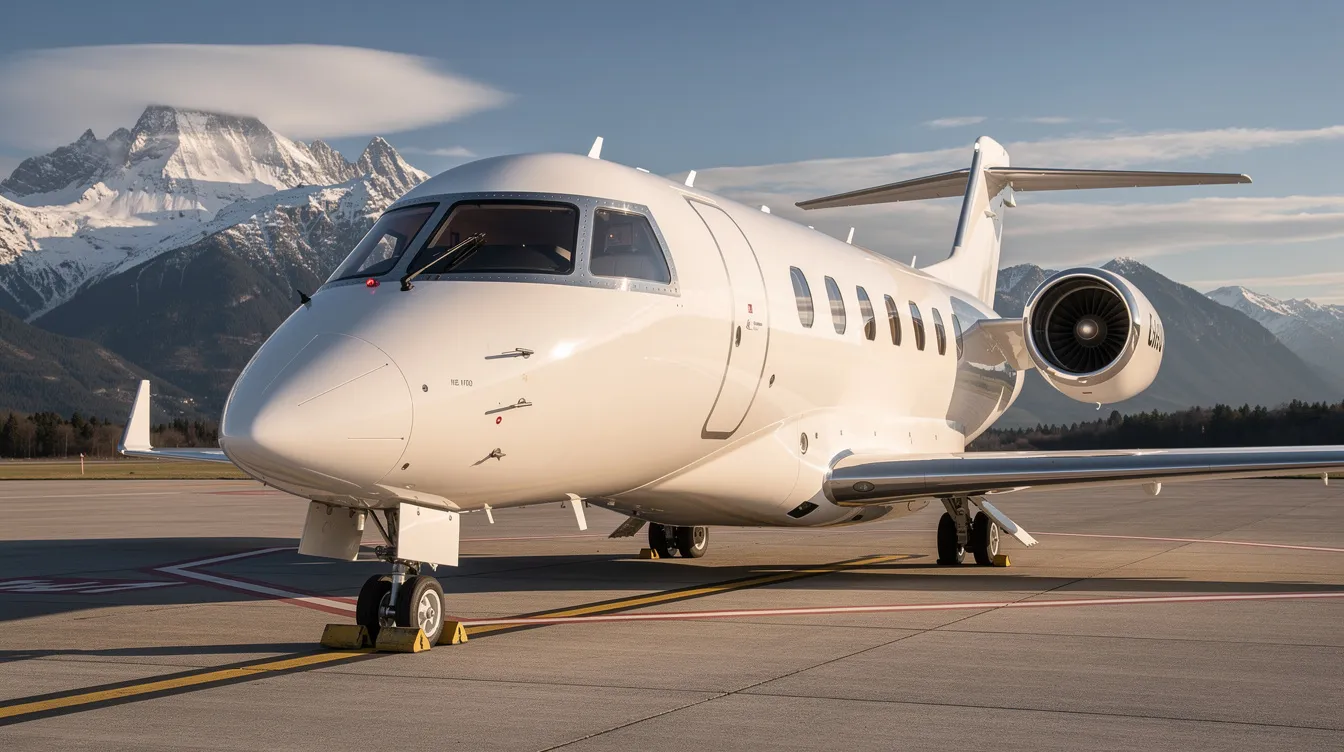
Aircraft safety is not a single feature. It is a layered system: design standards, manufacturing quality, operator maintenance, and crew training all work together on every flight. Understanding these layers answers the question of whether Embraer planes are safe more completely than any single statistic.
Embraer aircraft achieve simultaneous or sequential type certification from ANAC (Brazil's aviation authority), FAA, and EASA. This means every new Embraer model must pass independent scrutiny from multiple regulators before it carries a single passenger.
Embraer commercial jets are certified under Part 25 safety standards — the same certification category that applies to Boeing 737s and Airbus A320s. All commercial jets in the U.S. must meet strict airworthiness and crew training standards, regardless of manufacturer or aircraft size, and brokers positioning themselves as a NetJets alternative like Jettly still rely on these same underlying regulatory requirements when sourcing aircraft.
When a potential safety issue is discovered in service, regulators issue airworthiness directives (ADs) requiring inspections, repairs, or component replacements across all affected aircraft. Recent examples include: Meanwhile, from a traveler’s perspective, understanding safety alongside cost and value—such as using strategies for booking the cheapest private jet flights and breaking down the cost of an individual private flight—helps balance budget with reputable operators.
EMB-545/550 (2026): AD requiring operational checks of pitch trim actuators after a load-path concern was identified. No grounding — handled through inspections and corrective actions.
EMB-505 / Phenom 300 (2026): AD mandating horizontal stabiliser backlash testing and potential hinge component replacement.
ERJ-190-100 ECJ: Overheat detection sensor elements flagged for inspection; affected parts prohibited from installation.
These are targeted, routine fixes — not signs of fundamental design problems. They show that the regulatory system is working as intended.
Embraer emphasises advanced flight-control systems to enhance aviation safety. Modern Embraer jets incorporate:
Multiple redundant hydraulic and flight-control systems
Enhanced Ground Proximity Warning System (EGPWS)
Traffic Collision Avoidance System (TCAS)
Modern flight management systems and avionics suites
Fly-by-wire technology (on newer models like the E2 family and Praetor series)
The Runway Overrun Awareness and Alerting System was certified for the E-Jet E2 family by EASA — a system designed to warn pilots if landing conditions could lead to a runway excursion, one of the most common accident categories in aviation.
Embraer maintains a strong safety reputation due to rigorous regulatory compliance and innovative safety features built into every aircraft line.
For commercial Embraer fleets operated by airlines, maintenance follows structured A/B/C-check cycles, daily inspections, and component time limits. Each check increases in scope:
|
Check Type |
Frequency |
Scope |
|---|---|---|
|
Daily / Pre-flight |
Every flight |
Walk-around, fluid levels, tyre condition |
|
A-Check |
Every 400–600 flight hours |
Detailed systems inspection |
|
B-Check |
Every 6–8 months |
Deeper systems and component review |
|
C-Check |
Every 18–24 months |
Major structural and systems overhaul |
For charter and corporate Embraer business jets, operators must comply with the manufacturer's maintenance manual and all national aviation authority rules. Dispatch reliability for the E-Jet E2 family was targeted at over 99% within the first year of service—a benchmark the original E-Jet generation took nearly a decade to reach, aligning with the stringent standards applied across Jettly’s global private charter aircraft network.
Mechanical issues account for only about 8% of recorded incidents in aviation. The vast majority of safety events trace back to human factors, weather, or operational decisions — not aircraft hardware, which is why using certified Part 135 charter companies is such a critical safety filter in private aviation.
Pilots flying Embraer ERJs, E-Jets, Phenoms, or Praetors must hold a type rating specific to that aircraft family. This requires dedicated simulator training covering normal operations, system failures, and abnormal procedures. Recurrent proficiency checks happen on a regular cycle.
For private flyers, the combination of a proven Embraer airframe, a properly maintained aircraft, and qualified pilots is what materially determines risk — not only the brand on the tail.
Jettly, as a charter broker, lists Embraer and other aircraft only from vetted third-party operators holding valid Air Operator Certificates (AOC), with safety oversight from authorities like the FAA, Transport Canada, or EASA member states. For cost-conscious travellers, Jettly also supports crowdsourced and shared private jet flights that allow passengers to share empty seats while still flying with audited operators, and travellers can explore more options in Jettly's guide on how to buy a seat on a private jet. For more on how private jet safety ratings work, Jettly's guide explains ARGUS, Wyvern, and IS-BAO standards.

When travellers search for private flights through Jettly, Embraer aircraft frequently appear among the options. The lineup spans the full range of private charter needs, and tools like Jettly’s private jet charter cost estimator and its comprehensive guide on how much it costs to rent a private jet help travellers understand pricing before they book:
Light jets: Phenom 100 and Phenom 300 for small groups and shorter routes
Midsize to super-midsize: Praetor 500 and Praetor 600 for longer range and larger cabin space
Corporate shuttle / group charter: Legacy, Lineage, and ERJ regional jets configured for 20–50 passengers
When a Jettly user searches for a route — New York to Toronto, Los Angeles to Denver, or intra-European city pairs — Embraer aircraft often rank among the top options because of their efficiency, runway performance, and cabin comfort, especially when leveraging Jettly's airport locator tool to identify convenient regional and secondary airports.
Embraer jets can access many regional and secondary airports with shorter runways, including busy hubs and political centres that support private jet charter in New Delhi as well as routes like private jet charter in Abuja or private jet charter in Atlanta. This helps people reduce drive time to major hubs while still operating within strict safety margins and performance charts, including in regions served by Jettly such as private jet charter to Kolkata, private jet charter in Chennai, private jet charter in Houston, private jet charter in Hyderabad, private jet charter in Jaipur, private jet charter in Lagos, and private jet charter in Mumbai. For a business team needing to reach a secondary airport near a client site, an Embraer jet can be a faster, more practical option than a larger aircraft limited to major hubs, and the same performance characteristics make them well-suited to private jets flying internationally into smaller airports abroad.
Jettly is a charter broker and digital marketplace, not an aircraft operator. All flights — including those on Embraer aircraft — are operated by independent, certified air carriers responsible for maintenance, crew training, and operational safety. Jettly's platform connects travellers to these operators and presents aircraft choices with transparent pricing, similar to how leading providers featured among the best private jet charter companies emphasise safety and transparency.
This is a straightforward model: Jettly aggregates a large pool of vetted aircraft operators (over 20,000 unique aircraft worldwide) so customers can compare options rather than being locked into a single fleet, drawing on its extensive private charter aircraft database.
When an Embraer option appears inside Jettly's search results, travellers can review overall cost alongside safety, using Jettly resources that outline affordable private jet charter pricing, break down one-way private flight costs, and explain what drives those numbers, and they can also review:
Operator name and AOC status
Aircraft year of manufacture and model
Cabin configuration and passenger capacity
Third-party audit or safety ratings (ARGUS, Wyvern) where available
Nearly 300 people have died in on-demand air service since 2009 — a figure that underscores why operator quality matters as much as airframe quality. Private jets are less regulated than commercial airlines, which means the difference between operators can be significant. Choosing a certified, audited operator is one of the most important safety decisions a traveller can make, and resources like Jettly's guide to charter airlines and private flights can help travellers understand the wider private aviation landscape, while its overview of jet card costs and pricing structures helps frequent flyers align safety with budget.
A business team of six to eight executives flying from Chicago to Boston might choose a Phenom 300 for speed, range, and cabin comfort. A group of 20 to 30 people heading to a corporate retreat might opt for an Embraer regional jet configured for group charter use. In both cases, passengers benefit from Embraer's mature safety history and the operational standards of a certified carrier, and frequent travelers may find that a jet card flight cost estimator or Jettly's world-class corporate jet card programs clarifies whether pay-as-you-go charter or a jet card structure makes more sense financially.
A strong manufacturer safety record is one part of the equation. The operator, the crew, and the maintenance program complete it.
For travelers who want to fly on Embraer aircraft — or simply want the safest charter option available — Jettly's platform makes it easy to compare by aircraft class, trip profile, and budget, and frequent flyers can benefit from Jettly's private jet memberships for added flexibility and value.
Ready to explore current Embraer charter options or request a quote? Travellers comparing providers to NetJets can review Jettly's role as a flexible NetJets alternative, while content creators and travel professionals can also participate via Jettly's ultra-high-ticket affiliate program. Visit https://www.jettly.com to get started.

Below are answers to common questions from travellers new to Embraer jets or private charter in general, including those exploring flexible options for getting a seat on a private jet without chartering an entire aircraft, as well as understanding what a single private flight can cost before they book.
As of mid-2026, Embraer has not faced a global grounding of its modern E-Jet, Phenom, or Praetor lines. Regulators have issued isolated airworthiness directives — such as the 2026 AD on EMB-545/550 pitch trim actuators — but these were handled through targeted inspections and component replacements, not fleet-wide bans. This is standard regulatory practice across all manufacturers, including Boeing and Airbus.
All transport-category aircraft certified by the FAA and EASA must meet comparable safety standards. Embraer's safety record in both commercial and business aviation is strong and comparable to other major Western manufacturers when adjusted for fleet size and mission profile. The safest passenger planes in service today include several Embraer models alongside Boeing and Airbus types, and many of these also feature prominently in rankings of the best private jet charter companies that emphasise safety and fleet quality.
This is one of the most common misconceptions in aviation. Safety is driven by certification category, maintenance quality, and crew training — not physical size. Embraer's regional and business jets are engineered and certified to the same Part 25 regulatory safety levels as larger airliners, similar to other major private aviation providers such as NetJets, a leading fractional operator. The main point is this: a well-maintained, properly crewed Embraer E175 is not inherently less safe than a wide-body aircraft. Nearly 300 people have died in private jet accidents since 2009, but those incidents overwhelmingly involved operator or pilot factors, not aircraft design. General aviation has nearly 5,500 fatalities since 2009 — a category dominated by small, privately owned propeller aircraft, not certified regional or business jets.
Practical steps include:
Review the operator name and confirm they hold a valid AOC
Contact Jettly support to request operator safety information
Check the aircraft year of manufacture and specific model
Ask about crew experience and type-rating currency on Embraer aircraft
Look for third-party safety audits such as ARGUS, Wyvern Wingman, or IS-BAO certification
These details help travellers evaluate real operational traveller experience beyond just the aircraft brand.
No. Jettly is a charter broker and digital marketplace. All flights, including those on Embraer aircraft, are operated by independent, certified air carriers. These operators are responsible for maintenance, crew training, and all aspects of operational safety. Jettly's role is to connect travellers with these operators, present transparent options, and help customers make informed choices.
Embraer commercial and business jets have a strong safety record, supported by rigorous certification, modern safety systems, and structured maintenance requirements. Still, the aircraft model is only one part of the picture. The operator’s oversight, the crew’s training, and the aircraft’s maintenance history also matter—especially in private aviation, where standards can vary between providers.
Jettly is a charter broker, not an aircraft operator. Its platform helps travellers compare available aircraft and request details about the certified third-party carrier operating a flight. Before booking, review the operator’s credentials, aircraft information, and available safety audits so the choice fits the trip as well as the budget.
To compare Embraer charter options and see current pricing, explore flights or request a quote at https://www.jettly.com.
Ready to experience private travel on your terms? Travellers who expect to fly frequently may also want to explore Jettly's jet card program with fixed hourly rates. Explore flight options or request a quote at https://www.jettly.com.
Share this post:
Jay Franco Serevilla
Nov 22, 2026
|
5
min read
Discover tips and trends in the industry.
5
min read
United Premium Economy vs Delta Premium Select: Which Premium Cabin Is Better for Long-Haul Flights?
When comparing United Premium Plus and Delta Premium Select for long-haul flights, the choice hinges on personal preferences such as seat width versus dining quality. United offers wider seats and consistent layouts, while Delta excels in meal service and entertainment options. Both cabins provide enhanced comfort over standard economy, making them appealing alternatives to business class.
Read More
5
min read
Delta Meal Selection: Complete Guide to Pre-Selecting Meals and Private Jet Alternatives
Delta's meal selection program allows eligible passengers to pre-select their in-flight meals, enhancing their travel experience. This guide details the eligibility, benefits, and comparison with private jet catering through Jettly, helping travelers make informed choices about their dining options. Understanding these features can significantly improve comfort and satisfaction during flights.
Read MoreStay updated with our latest insights and tips to elevate your journey with us.
MEMBERSHIPS AND ASSOCIATIONS



© 2026 Jettly Inc. All rights reserved.
Disclaimer: Jettly operates as a charter broker, offering access to a global digital jet charter marketplace. Jettly is not a direct air carrier and does not own or operate aircraft. All advertised flights are conducted by third-party air carriers that are fully licensed and hold the appropriate Part 135 or Part 121 certifications issued by the Federal Aviation Administration (FAA) or equivalent regulatory authorities under U.S. or foreign law. Jettly complies fully with the U.S. Department of Transportation's Part 295 and Part 298 Charter Broker regulations. Jettly does not carry additional liability insurance. Passengers are covered by aircraft operator insurance. TICO: 50023770


