


Login
Get Instant Pricing On 23,000+ Aircraft

>
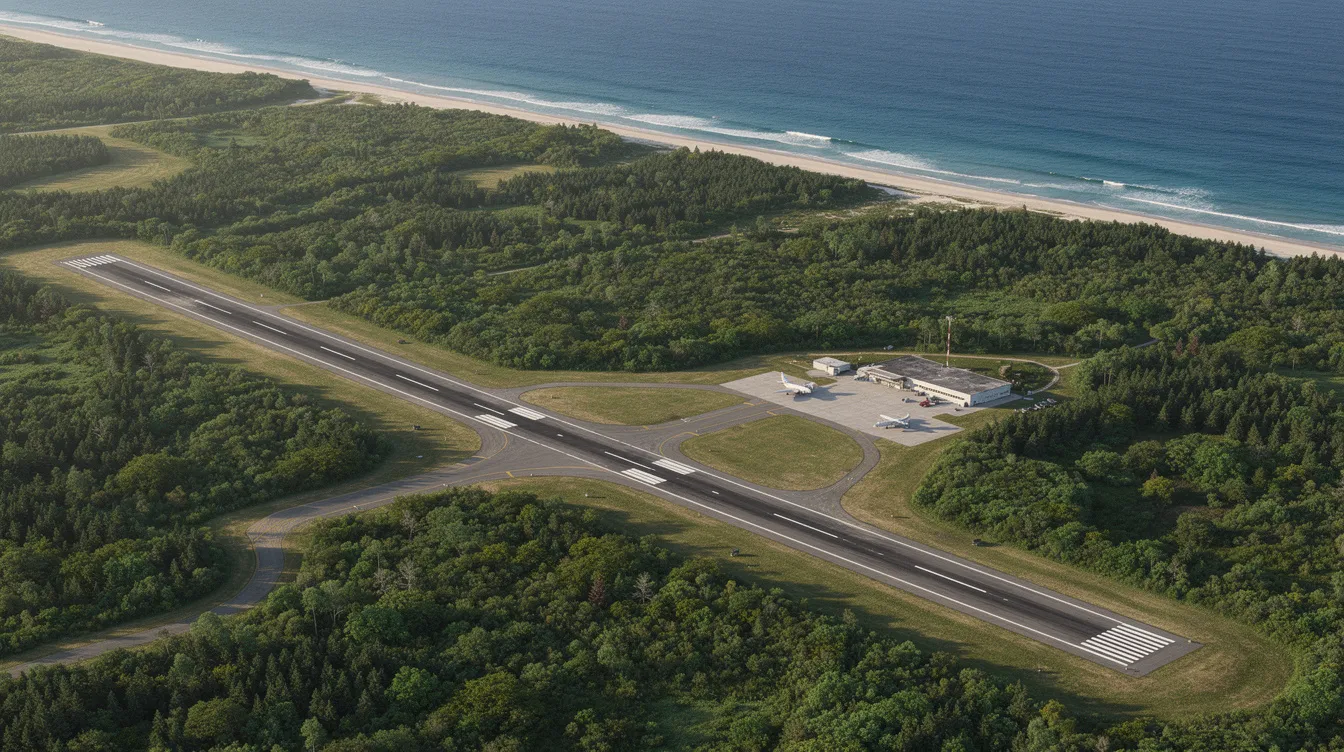
Allan J. MacEachen Port Hawkesbury Airport, known by its ICAO code CYPD and IATA code YPS, is a public regional airport in Port Hastings, Nova Scotia, and the main private aviation gateway to Cape Breton Island’s western shore and the Strait of Canso region. Located approximately 2.1 nautical miles north of Port Hawkesbury and sitting at an elevation of 373 ft above sea level, CYPD Airport is especially relevant for private jet travelers who want a low-congestion, full-service alternative to busier commercial airports when flying for business, golf, or leisure in eastern Canada.
For corporate executives, high-net-worth individuals, families, and other charter passengers, the airport combines efficient access with year-round convenience, making it easier to reach nearby resorts, business centers, and coastal destinations without the delays common at larger hubs. This guide explains what to expect at CYPD, including its facilities and services, private jet suitability, operating considerations, customs clearance, ground transportation, seasonal weather, and how Jettly helps travelers compare instant pricing and book charter flights into CYPD through its digital marketplace.
CYPD (Port Hawkesbury Airport / Allan J. MacEachen Regional Airport) is a public regional airport in Port Hawkesbury, Nova Scotia, identified by ICAO code CYPD and IATA code YPS. It features a single 5,000 x 150 ft asphalt runway (11/29) with GPS approaches, medium-intensity lighting, and year-round operations.
The airport offers comprehensive aircraft servicing, including AVGAS and Jet A fueling, lavatory service, aircraft parking and towing, de-icing, and cabin grooming. An air-conditioned executive lounge opened in 2018 provides a comfortable space for passengers and crew.
Managed by Celtic Air Services since July 2017, CYPD operates 24 hours a day, supporting private aviation and charter flights without major commercial scheduled airlines, which appeals to travelers who prefer predictable access through world-class corporate jet card programs.
The airport serves as a primary aviation entry point for Cape Breton Island and the Strait of Canso region, located about 5 km from the Strait of Canso Causeway.
Private jet traffic at CYPD has surged by 4,000 percent since 2011, largely driven by international golf tourism to nearby resorts like Cabot Links and Cabot Cliffs. This growth has boosted airport revenue significantly and reduced municipal subsidies through increased jet fuel sales.
The airport was renamed in December 2017 after Allan J. MacEachen, a key political figure who advocated for the airport's development starting in the 1970s.
CYPD is an official airport of entry with customs services, facilitating international arrivals for private flights under specific conditions.
Jettly's digital charter marketplace offers instant pricing and booking for turboprops, light jets, and midsize aircraft capable of operating at CYPD, making private travel seamless and efficient.
Allan J. MacEachen Port Hawkesbury Airport is a compact regional facility located approximately 4 km north of the town of Port Hawkesbury in Nova Scotia, Canada. Situated in the community of Port Hastings, it functions as a key air gateway for the Strait of Canso area, western Cape Breton Island, and the surrounding municipalities.
The airport sits at an elevation of 373 ft above sea level, at coordinates 45°39′23″ N, 61°22′6″ W, which travelers can use with an airport map, satellite view, or an airport locator tool to locate CYPD more easily. It is owned by the municipality of Port Hawkesbury, with governance and funding shared among the Counties of Inverness and Richmond. Celtic Air Services has served as the airport operator since July 2017, managing day-to-day operations, fueling, and ground handling.
The main runway configuration is Runway 11/29, measuring 5,000 feet in length and 150 feet in width with an asphalt surface. Both runway ends are equipped with medium-intensity edge lighting for day and night operations. RNAV (GNSS) instrument approaches are published for both directions, giving modern business jets and turboprops reliable access even in reduced visibility conditions. Runway 29 has a slight downhill slope of approximately 0.82%, which pilots factor into performance calculations.
Port Hawkesbury Airport operates 24 hours a day, providing continuous access for private and charter flights. While published services generally run during standard business hours, after-hours operations can be arranged in advance with Celtic Air Services.
There are no major commercial scheduled airlines operating from CYPD, which is primarily utilized for private aviation and charter flights. This results in minimal congestion, fast turnarounds, and an efficient travel experience.
Located about 5 km from the Strait of Canso Causeway, CYPD offers a strategic entry point to Cape Breton Island and the western coastal region, serving the Quad-counties of Antigonish, Guysborough, Inverness, and Richmond.
Jettly uses CYPD as a convenient arrival point for business travelers and leisure guests heading to Port Hawkesbury, Cabot Links, and other Cape Breton destinations. Through Jettly's platform, especially its range of private jet memberships, travelers can access a broad range of charter aircraft types suited to this airport's infrastructure and capabilities.
Arriving at CYPD feels nothing like navigating a major commercial hub. The terminal is compact, the parking apron is steps from the lounge, and the entire arrival process from touchdown to ground transport can take minutes rather than hours. It's built for efficiency, which is exactly what private aviation passengers expect.
The primary runway at 5,000 feet accommodates most turboprops, light jets, and many midsize business jets under standard operating conditions. Apron space supports parking for several aircraft simultaneously, with options for overnight tie-downs and limited hangar parking when available.
The airport offers aircraft servicing, including fuel and lavatory service. Celtic Air Services provides the following on-field support:
Fueling: AVGAS (100LL) and Jet A with PRIST anti-icing additive
Aircraft parking and marshalling
Towing for repositioning on the ramp
Ground power units (28.8 VDC and 90 kVA)
De-icing services during winter months
Cabin grooming, garbage removal, and baggage handling
Lavatory servicing and professional cabin disinfection
These services make CYPD well-suited for quick tech stops, overnight stays, and full charter turnarounds.
An air-conditioned executive lounge opened in 2018 at the airport, providing a comfortable space for arriving and departing passengers. The lounge includes Wi-Fi, seating areas, restrooms, and workspace suitable for crew planning or pre-meeting prep. For private jet guests arriving through a charter marketplace like Jettly, this lounge offers a professional first impression without the crowds of a larger terminal.

CYPD is about a10-0 to 15-minute drive from downtown Port Hawkesbury by car. The airport is located 5 km from the Strait of Canso Causeway, which connects mainland Nova Scotia to Cape Breton Island. Ground transportation options include:
Taxis available locally
Pre-booked car services that can meet flights on the ramp
Rental vehicles are arranged in advance, though availability is more limited than at larger airports
Nearby hotel options commonly used by arriving crews and passengers include:
|
Property |
Approx. Drive from CYPD |
Typical Nightly Rate (CAD) |
|---|---|---|
|
Hearthstone Inn |
~10–15 min |
$120–$180 |
|
Maritime Inn |
~10–15 min |
$130–$200 |
|
The Cove |
~10–15 min |
$120–$170 |
These are mid-range properties offering comfortable rooms suited to business travelers, though they don't carry the luxury resort branding found at some Cape Breton destinations.
Jettly can coordinate ground transportation and align arrival times at CYPD with car rentals, hotel check-ins, and transfers onward to golf resorts or corporate sites. The goal is a smooth door-to-door experience from takeoff to final destination.
The airport's early development began in the 1970s, driven by the vision to establish a 24/7 year-round gateway for Western Cape Breton and the Strait Region. The goal was to provide reliable air access to enhance economic connectivity for Port Hawkesbury and surrounding communities. That vision has largely been realized.
CYPD occupies a central position for the Quad-counties of Antigonish, Guysborough, Inverness, and Richmond. Its proximity to the Canso Causeway makes it a practical entry point for travelers heading into northern Nova Scotia or Cape Breton Island by air, avoiding the long drive from Halifax Stanfield International Airport (YHZ), roughly three and a half hours away by car.
The story of CYPD's modern growth is inseparable from the rise of international golf tourism in Inverness County. When Cabot Links opened in 2012, private jet landings boosted airport revenue significantly. The subsequent addition of Cabot Cliffs amplified demand further.
The airport experienced a remarkable 4,000% increase in flight volume from 2011 to 2017, driven almost entirely by international golf tourism and the private jet traffic it attracted. That growth had a cascading effect:
Increased jet fuel sales reduced municipal subsidies for the airport
The airport now operates year-round due to increased private jet traffic, with many visitors exploring options to share empty seats on private jet flights to reduce individual trip costs
The airport's growth supports local tourism and economic development across the region
Before Cabot Links, CYPD was a quiet municipal airport. After 2012, it became one of the most compelling examples of how a single tourism investment can transform regional aviation infrastructure.

In December 2017, the airport was renamed after Allan J. MacEachen, a long-serving Nova Scotia MP and Senator whose advocacy in Parliament helped create the facility decades earlier. The decision by the town council reinforced the political and economic importance of sustained regional air access.
An airport committee convenes four to six times per year, with representation from Port Hawkesbury, Inverness, and Richmond municipalities. Local First Nations communities, including Potlotek and We'koqma, have also been engaged in recent discussions about inclusion in airport governance, reflecting a collaborative approach to funding, operations, and future development decisions.
Beyond leisure travel, the airport supports corporate shuttles related to energy, marine, forestry, and infrastructure projects in the Strait of Canso area, similar to many operators listed in the ultimate list of charter airlines that serve business-critical routes. Medical, educational, and government travel also benefits from direct private flights into a city that would otherwise require long drives from larger commercial airports.
Jettly's on-demand charter model lets companies and families access CYPD from major Canadian and US hubs like Toronto, Montreal, Boston, or New York without committing to fractional ownership or using a jet card flight cost estimator to lock into fixed-rate programs. The platform turns this regional airport into an efficient, time-saving gateway for anyone who needs to be in Port Hawkesbury or Cape Breton without burning half a day on the road.
Jettly is a digital private jet charter marketplace that gives travelers instant access to a large inventory of aircraft able to operate into CYPD, comparable to other top private jet charter companies serving high-end travelers. That includes turboprops, light jets, midsize jets, and some larger cabin aircraft depending on performance requirements and runway conditions, similar to the considerations involved when finding the best cross-country plane for your travel journey.
Planning a charter trip to MacEachen Port Hawkesbury Airport through Jettly follows a simple workflow:
Search for CYPD or YPS on Jettly's platform
Compare instant pricing across aircraft categories
Review estimated flight times from your departure city
Confirm departure slots that match your schedule—whether that's a morning meeting or an afternoon tee time
For details on how the charter process works from start to finish, Jettly's guide on how to charter a private jet covers each step.
The longest primary runway at the airport is 5,000 feet long, which determines which aircraft categories can operate comfortably. Here's a practical breakdown:
Aircraft Category Comparison Table
|
Aircraft Category |
Typical Range |
Best Fit for CYPD |
Key Considerations |
|---|---|---|---|
|
Turboprops (King Air, PC-12) |
300–1,000 nm |
Regional hops from Atlantic Canada, Quebec, US Northeast |
Maximizes payload on the 5,000 ft runway; ideal for smaller aircraft trips |
|
Light Jets (Citation CJ, Phenom) |
1,200–1,800 nm |
East Coast US, Ontario, Quebec |
Good comfort for small groups; some payload limits |
|
Midsize Jets (Citation XLS, Hawker) |
2,500–3,500 nm |
Central Canada, US Northeast nonstop |
May require reduced payload; summer conditions preferred |
|
Large Cabin / Heavy Jets |
4,000+ nm |
Not recommended unless very light load |
Runway too short for most operations at standard weights |
Nova Scotia's Atlantic climate means operators plan for variable conditions throughout the year. Fall and winter bring strong winds, low ceilings, and icing conditions. Spring is known for fog and rapidly shifting visibility. Summer is milder but still subject to coastal weather patterns.
Pilots use GPS approaches, de-icing services, and detailed performance planning to manage these conditions safely. Jettly works exclusively with licensed, safety-compliant operators familiar with the region, including properly certified Part 135 charter companies where applicable.
Flying commercial into Halifax Stanfield (YHZ) and driving to Port Hawkesbury takes roughly four to five hours door to door—assuming no delays or missed connections. A private charter directly into CYPD cuts that to the flight time itself plus a 10- to 15-minute drive, giving travelers back hours they'd otherwise spend on the highway.
For same-day travel needs, the difference is even more pronounced, especially for travelers who might otherwise buy a seat on a private jet through shared or semi-private services to save time.
Charter rates to CYPD vary based on distance, aircraft size, positioning requirements, and seasonal demand, but travelers can apply proven tips for booking the cheapest private jet flights to keep costs under control. Winter operations often carry additional costs for de-icing and adjusted performance margins.
Jettly surfaces options like empty-leg flights and right-sized aircraft selection that can make private travel more cost-effective for frequent Port Hawkesbury visitors, drawing on its expertise in offering affordable private jet charters worldwide. The platform's private jet charter cost estimator provides quick estimates before committing.
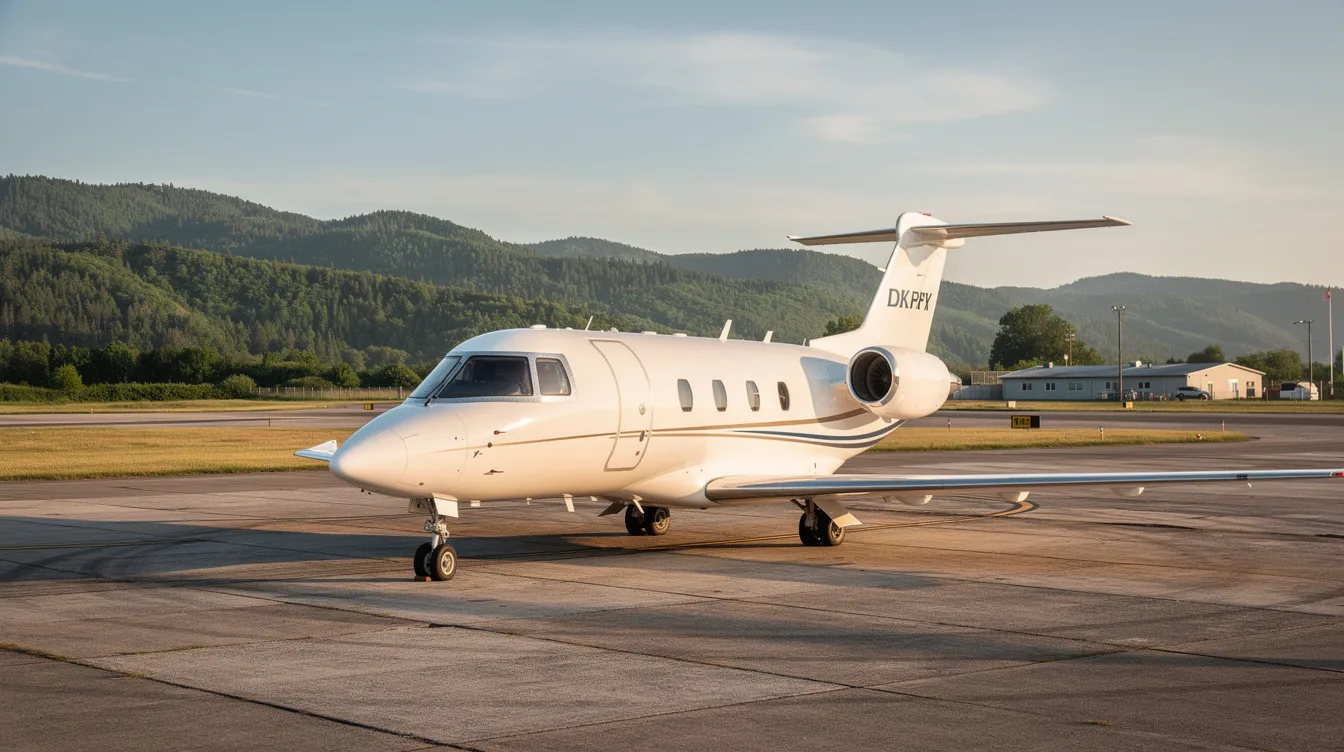
Ready to fly into Port Hawkesbury, Cabot Links, or Western Cape Breton on your schedule? Explore flight options or request a tailored quote at jettly.com.
Below are answers to common questions that private jet travelers ask when considering CYPD as their arrival airport.
Yes. CYPD is an official airport of entry with customs services, designated as AOE/15 by the Canada Border Services Agency, making it suitable for those planning international private jet flights directly into the region. This means it can handle international arrivals for private or corporate aircraft carrying up to 15 non-paying persons (including crew) per flight. However, CBSA services must be requested in advance, and arrivals need to fall within CBSA business hours. For larger groups or flights outside those hours, the common approach is to clear customs at Halifax Stanfield International Airport and then reposition domestically to CYPD.
The airport is roughly a10-0 t15-minutete drive from downtown Port Hawkesbury, and about 5 km from the Canso Causeway that connects to Cape Breton Island. Road conditions and signage are straightforward year-round, though winter driving can slow things down. For travelers heading to the Cabot Links and Cabot Cliffs golf resorts in Inverness County, expect a drive of approximately 1.5 to 2 hours from CYPD, depending on the route and conditions.
Nova Scotia's Atlantic climate brings distinct seasonal patterns. Winter features snow, ice, and lower ceilings. Fall brings strong coastal winds and fast-moving weather fronts. Spring often includes fog and rapidly shifting visibility. Summers are generally mild but still vulnerable to coastal fog and marine weather systems. Pilots and operators use up-to-date METARs, TAFs, and the airport's RNAV (GNSS) approaches to manage arrivals safely in marginal conditions. Departure or arrival times may occasionally be adjusted to maintain safety margins.
Jettly's charter model allows customers to coordinate flights into CYPD along with ground transportation such as pre-booked cars, SUVs, or shuttles to hotels, conference venues, or golf courses, making it easier for newcomers to get a seat on a private jet without needing their own aircraft. Travelers can specify preferred pickup and drop-off points during the quote process so that their arrival at CYPD connects smoothly to local road transfers without gaps or waiting.
If weather or runway conditions prevent a safe landing at CYPD, common contingency options include diverting to Halifax Stanfield (YHZ) or Sydney (CYQY), both of which have longer runways and full services. From either alternate, travelers can continue to Port Hawkesbury by road or by a repositioned charter flight once conditions improve. Jettly's partner operators monitor weather and field conditions closely and will communicate alternative plans in advance whenever possible to minimize disruption.
Allan J. MacEachen Port Hawkesbury Airport (CYPD) stands out as a vital regional hub for private jet travelers seeking efficient, low-congestion access to Cape Breton Island and the Strait of Canso region. Its comprehensive facilities, including fueling, aircraft servicing, and a modern executive lounge, combined with 24-hour operations and customs clearance capabilities, make it a compelling choice for business and leisure flights. The airport's remarkable growth, driven by international golf tourism and strategic regional positioning, has transformed it into a year-round gateway supporting local economic development.
For private aviation customers, CYPD offers significant time savings and convenience compared to commercial alternatives, especially when booked through platforms like Jettly that provide instant pricing and a wide selection of charter aircraft. With its rich history, strong community governance, and ongoing commitment to service excellence, CYPD continues to enhance the private jet travel experience in eastern Canada.
Ready to experience private travel on your terms? Explore flight options or request a quote at https://www.jettly.com.
Share this post:
Jay Franco Serevilla
Aug 23, 2026
|
5
min read
Discover tips and trends in the industry.

5
min read
What Airline Has the Most Crashes 2026 (And What That Really Means for Air Travel Safety)
In 2026, no major airline has been identified as having the most crashes, with serious incidents primarily involving smaller operators. Despite 61 reported crashes resulting in 397 fatalities, commercial flying remains one of the safest modes of transportation due to stringent regulations and advanced safety technologies. Understanding aviation safety statistics is crucial for travelers to make informed decisions about their air travel options.
Read More
5
min read
Survival Rate of Plane Crashes: What the Data Really Shows
The survival rate of plane crashes is significantly higher than commonly believed, with around 90% of accidents being survivable. Factors such as seat location, crew training, and aircraft design play crucial roles in enhancing safety. By choosing regulated operators like Jettly, travelers can further ensure high safety standards in private aviation.
Read MoreStay updated with our latest insights and tips to elevate your journey with us.
MEMBERSHIPS AND ASSOCIATIONS



Disclaimer: Jettly operates as a charter broker, offering access to a global digital jet charter marketplace. Jettly is not a direct air carrier and does not own or operate aircraft. All advertised flights are conducted by third-party air carriers that are fully licensed and hold the appropriate Part 135 or Part 121 certifications issued by the Federal Aviation Administration (FAA) or equivalent regulatory authorities under U.S. or foreign law. Jettly complies fully with the U.S. Department of Transportation's Part 295 and Part 298 Charter Broker regulations. Jettly does not carry additional liability insurance. Passengers are covered by aircraft operator insurance. TICO: 50023770


