


Login
Get Instant Pricing On 23,000+ Aircraft

>
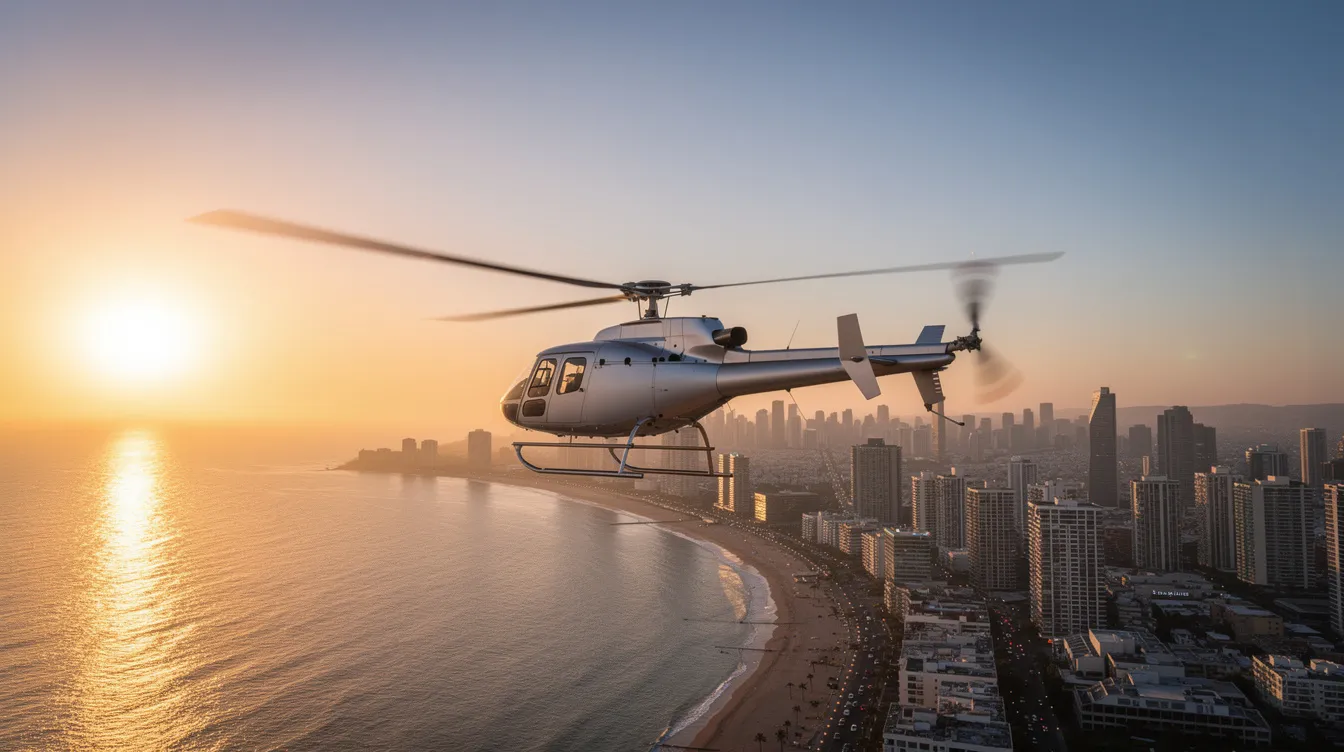
A helicopter ride usually lasts 10 minutes to 2 hours, with sightseeing flights most often running 10 to 45 minutes, short transfers taking just a few minutes, and long-distance charters stretching beyond an hour. The exact duration depends on the route, helicopter type, weather conditions, and whether you’re booking a tour or a point-to-point transfer.
For frequent travelers, corporate executives, and families looking for flexible, convenient private helicopter travel without the commitment of ownership, knowing those time ranges makes it easier to plan connections, set realistic expectations, and choose the right option for sightseeing or transfers. This guide covers typical helicopter ride times by purpose, what “flight time” actually includes, the main factors that change trip length, real route examples, helicopter types, costs, weather delays, booking with Jettly, and how helicopter travel compares with private jets.
Helicopter ride duration varies by purpose and destination, and many travelers book these rides to fly for sightseeing or point-to-point transfers. Typical sightseeing helicopter flights last 10 to 15 minutes for short loops and 20 to 30 minutes for standard city tours. Point-to-point transfers usually take 30 minutes to 2 hours based on distance. Helicopter flight time for most charter trips falls between 10 minutes and two hours.
Here are the main duration brackets:
10 to 15 minutes: Short skyline loops, intro flights, quick hops between nearby heliports
20 to 30 minutes: Standard city or landmark tours (Manhattan, Las Vegas Strip, Niagara Falls)
30 to 45 minutes: Extended scenic routes, regional transfers, coastal flights
45 to 90+ minutes: Intercity charters, island tours, private transfers to resorts or vacation homes
Quoted flight time is usually rotor start to rotor stop, which runs a few minutes longer than the airborne segment from takeoff to landing. Charter platforms like Jettly display estimated flight time alongside total trip time (including ground procedures) when travelers request a quote.
Operators, regulators, and passengers each think about time differently. Here is how the terms break down in practice:
Flight time (block time): Measured from the moment rotor blades start turning to the moment they stop. This is the number operators bill against, and pilots log for duty-hour tracking.
Airborne time: Strictly takeoff (lift-off) to landing (touchdown). Excludes rotor start-up, hover-taxi, and shutdown. Used for maintenance and engine-wear calculations.
Total experience time: Everything the passenger goes through, from arrival at the heliport and safety briefings through disembarkation. Total trip time includes 10 to 15 minutes for boarding and checks on top of flight time.
A concrete example: a 25-minute helicopter flight often totals 50 to 55 minutes door-to-door once pre-flight briefing, rotor spin-up, and post-landing procedures are added. Helicopter sightseeing flights often include additional time for safety briefings and boarding that operators do not count in the advertised duration.
When booking, always ask whether an advertised tour length refers to airborne time only or the full experience from briefing to shutdown.
Extended scenic helicopter tours can last 30 to 60 minutes or more, and helicopters typically have a maximum flight time of about 2 to 3 hours before refueling. Below is how durations line up with common trip types.
10 to 15 minutes: First helicopter ride experiences, quick city flyovers (New York, London), resort-to-resort hops. Shorter helicopter flights can range from $135 to $190 per person at this length.
20 to 30 minutes: Standard sightseeing helicopter tours over major landmarks. Helicopter tours over Las Vegas provide stunning night views of the Strip. Victoria Falls measures 1.7 km wide and 108 m high from the air, making a 20 to 25 minute flight enough to circle the falls and the gorge below.
30 to 45 minutes: Regional scenic routes such as San Francisco to Napa Valley, coastal loops, or mountain circuits. The Grand Canyon offers exclusive helicopter landings on Hualapai lands, typically packaged into 30 to 45 minute tours that include a ground stop. Hawaii offers helicopter tours over lush rainforests and volcanic craters, with standard enclosed tours running 45 to 60 minutes.
45 to 60+ minutes: Intercity private tours (New York to the Hamptons, London Battersea to the Cotswolds, Toronto to Muskoka). Helicopter tours typically cost around $364 for 60 to 65 minutes at this tier.
90 to 120 minutes: Long island tours in Hawaii, multi-stop VIP itineraries. Rides at this length require careful planning for fuel consumption, crew duty limits, and passenger comfort, and are commonly arranged through charter platforms like Jettly.
Helicopter flight time is distance divided by cruise speed, then adjusted for climb, descent, and routing. Helicopter cruising speeds range from 95 to 160 mph depending on model. Many light single-engine aircraft cruise around 110 to 130 knots (about 205 to 240 km/h). Larger twin-engine VIP models reach 140 to 155 knots (260 to 285 km/h), as detailed in Jettly's helicopter specs guide.
Quick distance-to-time references:
50 km (~31 miles): A 50 km helicopter flight takes about 12 to 15 minutes airborne, around 25 to 30 minutes total with ground handling.
100 km (~62 miles): Roughly 23 to 27 minutes airborne, 35 to 45 minutes total.
200 km (~124 miles): A 200 km helicopter trip often takes 45 to 55 minutes airborne, about 60 to 70 minutes door-to-door.
Routing around controlled airspace, noise-sensitive zones, or mountainous terrain can add several minutes even when the straight-line distance stays the same. Travelers can use Jettly's route search to see estimated helicopter flight time compared against private jet and turboprop options for the same city pair, and Jettly's detailed overview of helicopter range and how far different types can fly helps clarify what distances are realistic without refueling.
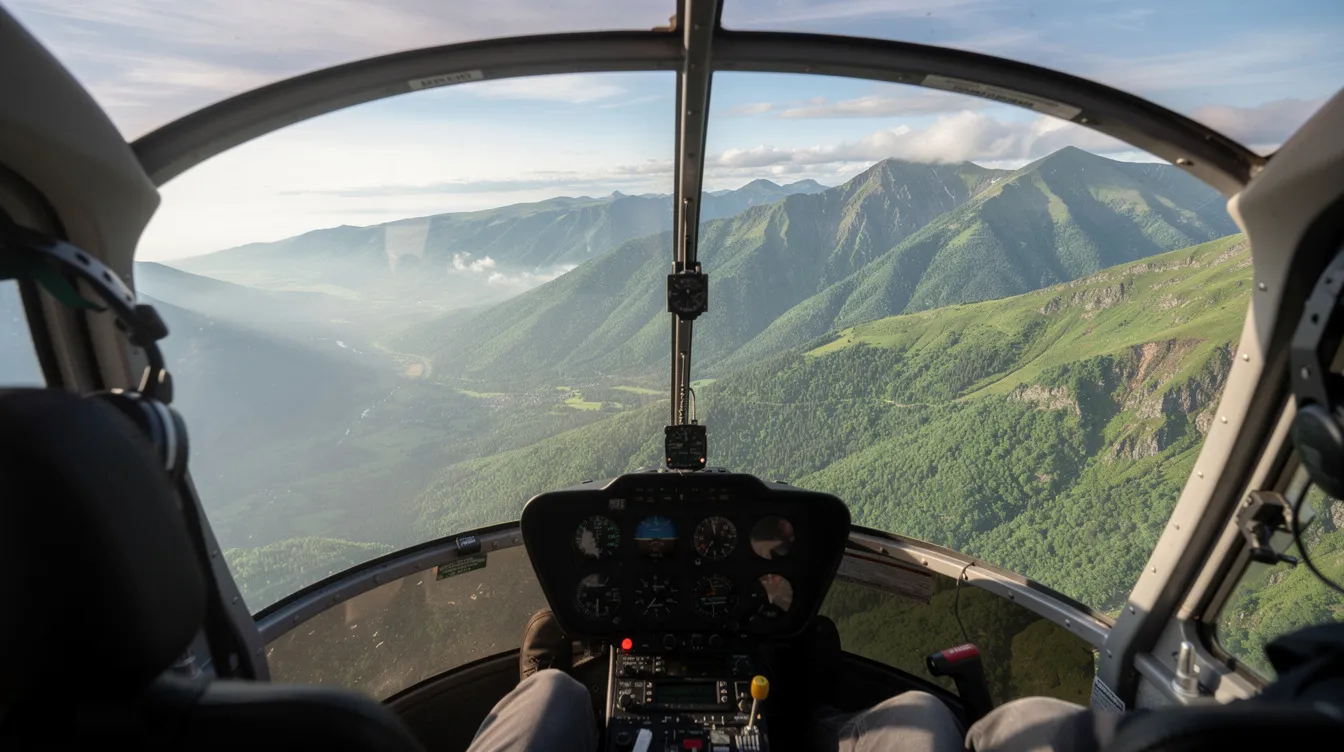
Concrete routes help illustrate what to expect and how a helicopter trip compares to ground transportation.
Manhattan to JFK: Helicopter rides from Manhattan to JFK take about 5 minutes airborne. A helicopter ride from Manhattan to JFK costs $195 and takes 5 minutes, compared to 45 to 90 minutes by car depending on traffic. Total experience including heliport check-in and ground transfer runs 25 to 40 minutes.
New York City to the Hamptons (~150 km): About 35 to 40 minutes airborne; 55 to 65 minutes total including heliport arrival, safety checks, and ground transport at each end. By car on a summer Friday, this drive can stretch past 3 hours.
New York to Philadelphia (~130 km direct): A direct helicopter flight from New York to Philadelphia typically takes around 45 minutes.
London Battersea to Heathrow (~30 km): Around 10 to 12 minutes airborne, 30 to 40 minutes total with pre-flight and ground connections.
Short scenic loops: 12 to 15-minute tours over Central Park and the Statue of Liberty in New York, or 15 to 20 minutes over the Las Vegas Strip at night.
Regional leisure routes: 25 to 35-minute transfers such as Nice to Monaco, or 30 to 40 minutes from Vancouver harbour to nearby island resorts.
Jettly can display helicopter options for these types of routes while also offering faster private jets for longer legs, helping travelers build combined itineraries and use a private jet charter cost estimator to understand pricing for those segments.
Even with a fixed distance, real helicopter flight time can shift by several minutes depending on conditions. Flight times for helicopter rides can be dictated by air traffic control restrictions, and weather conditions like high winds or low visibility can alter helicopter flight duration.
Weather conditions: Headwinds, storms, low clouds, or fog can require slower speeds or routed detours. Weather can increase flight time by 10 to 15% due to headwinds alone.
Helicopter type: The aircraft type affects cruising speed and fuel capacity, influencing flight duration. Heavier twin-engine corporate helicopters may cruise faster but also need more time for checklists and longer routes into major city heliports.
Payload and performance: Payload affects helicopter performance and fuel efficiency. Full passenger loads and baggage limit climb rates and cruise speed, especially in hot-and-high conditions (summer in Denver or Mexico City, where higher altitudes and heat reduce engine output).
Airspace and traffic: Operating near busy hubs like New York, London, or Los Angeles may involve holding patterns, altitude constraints, or slot times that extend total flight time.
Ground processes: Boarding, safety briefings, and rotor spin-up/spin-down typically add 10 to 25 minutes beyond airborne time. First-time passengers often need more briefing time.
Helicopter type shapes both fuel consumption and practical maximum ride length. For a deeper look at how modern helicopters differ in performance, see Jettly's overview of helicopter technology.
Fuel consumption basics: Common single-engine turbine helicopters burn roughly 140 to 170 kg per hour. Larger twin-engine VIP models burn 250+ kg per hour. Higher fuel usage per hour translates directly into higher hourly charter rates.
Fuel efficiency and cost: More fuel consumption means more wear, maintenance, and insurance costs per flight hour. A private helicopter flight can cost approximately $2,200 for a dedicated charter, while shorter shared tours start much lower.
Endurance: Typical helicopters are configured for 1.5 to 3 hours of flight plus reserves, making 20 to 90 minute flights the practical range for most private tours and transfers.
Operator examples: HeliNY uses Bell 407 helicopters equipped with TCAS (Traffic Collision Avoidance System). HeliNY's maintenance team follows strict safety procedures, and HeliNY charges a $45 facility fee per seat for tours. Helicopter tours require regular maintenance to ensure safety across the fleet.
Choosing the right aircraft: A light single-engine model is efficient for a 25-minute city tour. A larger corporate twin is often chosen for a 60-minute regional transfer when passengers want more luxury, cabin space, and range. Jettly's platform lets travelers compare helicopter types, fuel-related costs, and flight times before booking.
For cost breakdowns across different models, Jettly's guide to helicopter pricing covers purchase and charter rates in detail, while this comprehensive guide to helicopter rental costs explains how factors like aircraft type, duration, and location affect pricing.
When deciding between a helicopter ride and a private jet, the key variable is distance, and understanding how much a private jet costs overall helps put helicopter charter pricing into context.
Speed gap: Modern helicopters cruise at roughly 200 to 260 km/h (110 to 140 knots). Light jets cruise around 650 to 750 km/h. Large cabin jets reach 800 to 900 km/h, and a broad guide to charter airlines and private flight options shows how different operators and aircraft categories compare at these speeds.
Short routes (under 150 to 200 km): Helicopters often win on total door-to-door time in dense urban areas because they use helipads close to city centers. Skip the drive to a distant airport,t and the helicopter becomes the efficient choice, while for longer cross-country trips it can be helpful to review how to choose the best cross-country plane if you’re considering fixed-wing alternatives.
Longer routes (beyond 200 to 300 km): Private jets cover the distance far faster, even after accounting for driving to and from airports. A 500 km trip that takes a helicopter nearly 2 hours takes a light jet about 40 minutes airborne.
Combined itineraries: Imagine flying by private jet from Chicago to New York (about 1 hour 45 minutes), then a 5 to 10 minute helicopter ride from the airport to Manhattan. This kind of schedule can be arranged in a single booking through Jettly, which offers access to a wide range of private charter aircraft for the jet portions of your trip.
Cost and time trade-offs: Travelers often use Jettly's platform to compare helicopter and jet options side by side for the same city pair, picking the combination that fits their schedule and budget.
For more on how chartering works, Jettly's step-by-step guide covers the process for both helicopters and fixed-wing aircraft, and its explanation of Part 135 charter companies and why they matter clarifies the safety and regulatory standards behind your flight options.
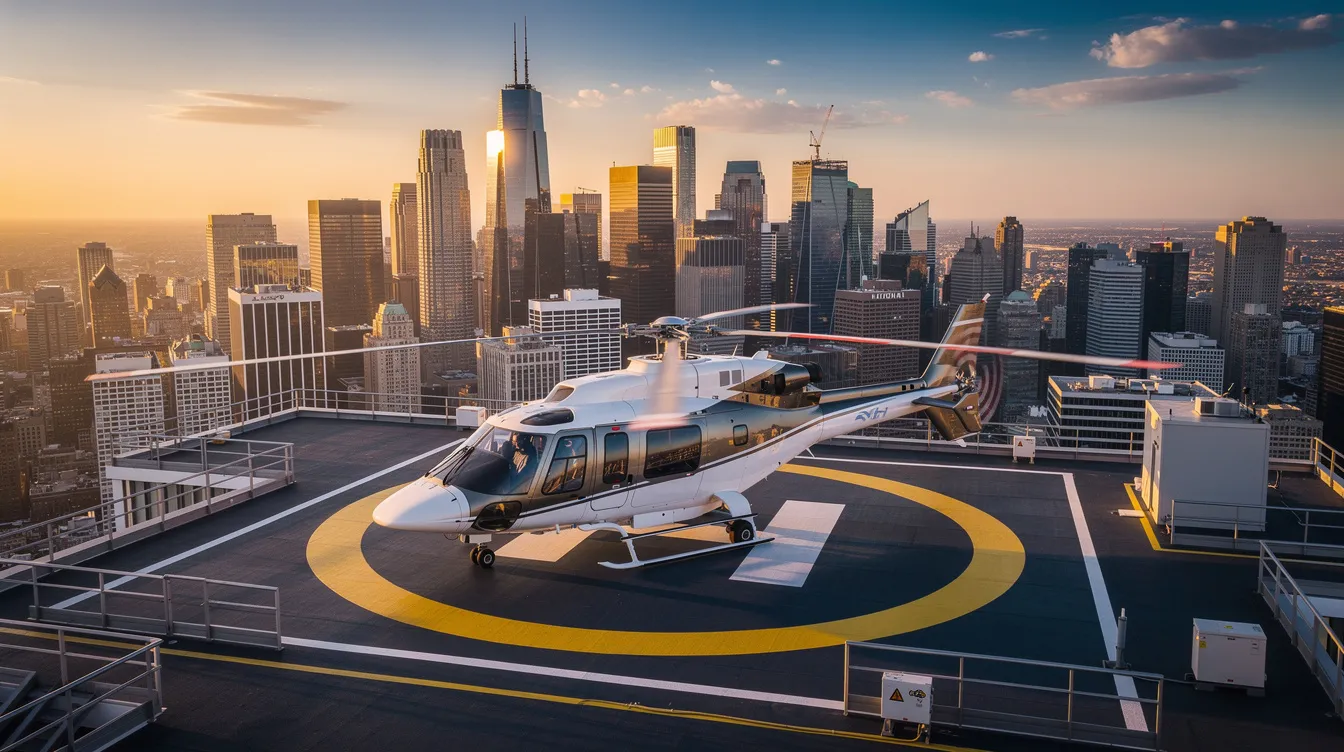
A first flight in a helicopter is a memorable experience, and knowing the routine removes most of the uncertainty.
Arrival timing: Plan to arrive 20 to 45 minutes early, depending on whether the trip is a shared tour or private charter. Check-in, weight and balance verification, and safety briefings fill this window; frequent flyers who value predictable schedules sometimes pair helicopter segments with jet card programs offering fixed hourly rates for their longer flights.
Safety briefings: Pilots undergo rigorous training to meet industry standards. Before boarding, crew will cover safety protocols, including securing seat belts and familiarizing passengers with emergency exits, headset use, and behavior around rotor blades on the ground, while some travelers opt for private jet memberships to streamline similar safety and check-in routines across frequent trips.
Boarding and seating: Seating is often assigned based on maximum weight distribution and passenger preferences. Some tours rotate passengers between front and rear seats on longer flights to share the best perspective.
In-flight experience: Expect moderate noise (headsets reduce it and carry pilot narration), some vibration during takeoff and landing, and a smooth ride once at cruise altitude. A camera with a wrist strap is useful; phones in cases with lanyards work well too. Travel bloggers and content creators who recommend these experiences sometimes monetize their audience through Jettly’s high-ticket affiliate program, earning commissions when followers book flights.
Duration perception: Many first-time visitors say a 15 to 20 minute helicopter ride "feels shorter" because of the constant adventure and photo opportunities. If the sightseeing experience matters more than the transfer, book a longer tour.
For guidance on how many passengers different helicopters accommodate, see Jettly's helicopter passenger capacity guide.
Helicopter tours are designed to maximize spectacular views and photo opportunities, and duration choices often reflect how much time guests want for photography.
Seats and visibility: Front-row seats in most touring helicopters offer a wider field of view. Rear seats still provide large wraparound windows. Operators of popular city tours assign seating to balance weight and views.
Doors-on vs. doors-off: Doors-off flights offer unobstructed views and cleaner photos but may be shorter due to wind exposure and comfort. These are a popular choice in locations like Hawaii and New York.
Optimal duration for photography: 20 to 30 minutes is enough for skyline tours; 30 to 45 minutes works better for natural landmarks, coastal routes, or flights with a landing stop.
Lighting and time of day: Golden hour (just after sunrise or before sunset in summer and other seasons) produces the best air-to-ground photos. Schedule accordingly, even if it means an early arrival at the heliport.
Planning tip: When requesting a quote via Jettly, travelers can specify if photography is a top priority so operators recommend suitable aircraft equipped with large windows and appropriate flight times.
Weather conditions shape whether helicopter rides run on schedule, feel smooth, and stay within planned flight time.
Morning vs. afternoon: In locations like Florida, Nevada, and Texas, mornings offer calmer air and fewer thunderstorms. Flight times are more predictable before midday convection builds.
Seasonal considerations: Winter flights at lake regions or mountain areas benefit from late-morning to early-afternoon scheduling for warmer temperatures and better visibility. Summer flights near coastal cities (San Francisco, London) may face morning fog that clears by midday.
Wind speed and turbulence: Strong winds extend airborne time and make flights bumpier. Pilots adjust speed or routing to maintain safety and passenger comfort, and aircraft like the Eurocopter EC30, a light utility helicopter, are often chosen for their performance and handling on shorter, weather-sensitive routes.
Visibility and ceilings: Low cloud ceilings, fog, or haze (common on coastal routes) may cause rerouting or temporary holds that extend total trip time.
Planning flexibility: Allow 30 to 60 minutes of buffer in your schedule around the planned helicopter tour, especially when connecting to or from private jet flights; services such as Dexter Air Taxi’s private jet operations via Jettly can help coordinate these connections efficiently.
Jettly simplifies the process of choosing the right helicopter flight time and aircraft for any trip. The platform lets travelers enter a route, dates, and passenger count to see available helicopters, indicative flight time, estimated cost, and helicopter type in one view.
Key features for helicopter bookings:
Side-by-side comparison: The platform shows helicopter flight services alongside private jets and turboprops, helping users decide whether a 20- to 30-minute helicopter ride or a faster jet segment fits their schedule, and tools like Jettly's airport locator for private flights make it easy to plan routes into smaller airfields closer to your destination.
Certified operators: Jettly works with operators that follow standardized safety procedures. Operational factors like fuel consumption, payload, and weather are built into time estimates.
Custom private tours: Travelers can request customized tours for proposals, anniversaries, or corporate events, specifying desired flight time, route highlights, and photo stops, and can even explore crowdsourced and shared private flights to fill empty seats on certain routes to reduce overall trip cost.
Transparent pricing: Global average pricing for a 25 to 35 minute scenic helicopter tour sits at about $342 per person in 2026, but rates vary by location and aircraft. Jettly surfaces these details before booking so there are no surprises, and its overview of affordable private jet charter pricing can help compare helicopter tours with fixed-wing options.
Is there a minimum helicopter flight time I must book? Most operators set minimums of 10 to 30 minutes of billable flight time for short transfers and private tours. Jettly can confirm minimums with partner operators before booking, whether you’re adding a heli hop onto a private jet charter into Hyderabad, Telangana, or another destination.
How early should I arrive before my helicopter ride? Arrive 20 to 45 minutes before departure. Tours with shared seating need less lead time; private charters involving customs or luggage loading need more, and those using a jet card flight cost estimator for connecting jet segments should also build in buffer for potential delays.
Can I extend my helicopter tour while in the air? Extensions depend on aircraft fuel reserves, crew availability, and airspace. Request flexibility in advance so the operator can plan for extra fuel and a longer route, particularly if your schedule also includes connecting services such as a private jet charter in Kolkata, West Bengal.
Are sightseeing helicopter tours timed differently from charters? Tours often advertise airborne time only. Charters quote full block time from rotor start to stop. Always confirm which number you are seeing before comparing prices or scheduling ground transportation at the landing point, especially in busy markets like private jet charter in Houston, Texas, where ground transfers can add significant time.
Most helicopter rides range from 10 to 45 minutes for sightseeing and up to about 2 hours for charters. Actual helicopter flight time is shaped by distance, helicopter type, weather, and operational factors like airspace routing and payload.
Understanding the difference between block time and airborne time helps set realistic expectations for any helicopter ride. A 30-minute advertised tour does not mean 30 minutes of views; it often means 22 to 26 minutes airborne with the rest spent on rotor procedures. Knowing this makes it easier to pick the right duration for a quick city transfer, a scenic skyline tour, or a regional getaway.
Ready to plan your next helicopter ride or compare it with private jet options? Explore flights or request a quote at https://www.jettly.com.
Share this post:
Jeff Ryan Serevilla
Sep 22, 2026
|
5
min read
Discover tips and trends in the industry.
5
min read
Wheels Up Private Jet Center FBO at Cincinnati / Northern Kentucky (CVG)
The Wheels Up private jet center FBO at Cincinnati/Northern Kentucky International Airport has transitioned to PremierFBO, operated by Premier Private Jets since April 2025. This guide details the changes, current services, and booking processes for private aviation travelers using this key facility.
Read More5
min read
How Long Is a Helicopter Ride? (From 10-Minute Tours to 2-Hour Charters)
Helicopter rides typically last between 10 minutes and 2 hours, depending on the purpose and distance. Sightseeing flights usually range from 10 to 45 minutes, while point-to-point transfers can take longer. Understanding these timeframes helps travelers plan their itineraries effectively.
Read MoreStay updated with our latest insights and tips to elevate your journey with us.
MEMBERSHIPS AND ASSOCIATIONS



Disclaimer: Jettly operates as a charter broker, offering access to a global digital jet charter marketplace. Jettly is not a direct air carrier and does not own or operate aircraft. All advertised flights are conducted by third-party air carriers that are fully licensed and hold the appropriate Part 135 or Part 121 certifications issued by the Federal Aviation Administration (FAA) or equivalent regulatory authorities under U.S. or foreign law. Jettly complies fully with the U.S. Department of Transportation's Part 295 and Part 298 Charter Broker regulations. Jettly does not carry additional liability insurance. Passengers are covered by aircraft operator insurance. TICO: 50023770


