



Login
Get Instant Pricing On 23,000+ Aircraft

>
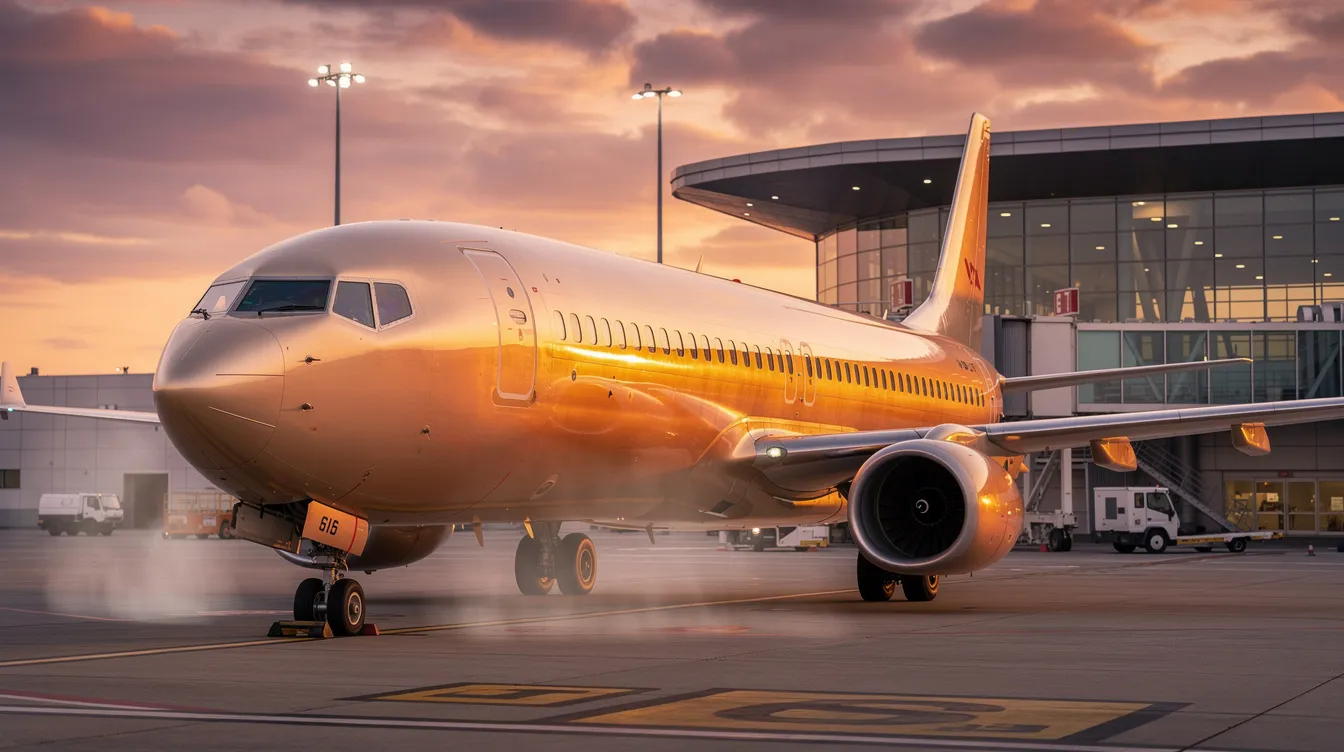
If you have ever looked at your boarding pass and wondered how many passengers a 737-800 holds, the short answer is between 162 and 189, depending on the airline’s cabin configuration: most two-class layouts seat about 162 to 175 passengers, while high-density all-economy versions can reach 189. That range reflects the trade-offs airlines make between legroom, premium cabins, revenue, and operating costs.
For frequent travelers, corporate executives, high-net-worth individuals, families weighing private jet charter alternatives, and aviation enthusiasts, those numbers are useful context when comparing comfort, cost, and flexibility. This article breaks down Boeing 737-800 passenger capacity, airline seating layouts, cabin design trade-offs, regulatory limits, and how the 737-800 compares with other 737 variants and private jets—including where Jettly’s private charter options can complement commercial 737-800 travel for different group sizes and trip needs.
The Boeing 737-800 is one of the most widely operated narrow-body aircraft in commercial aviation. Here is what matters most when it comes to its passenger capacity:
The 737-800 typically seats 162 to 189 passengers depending on the cabin layout, with a two-class layout seating around 160 to 175 and a single-class all-economy setup reaching up to 189.
The aircraft belongs to the Boeing 737 Next Generation family, widely used for short-haul routes and medium-haul routes around the world.
Full-service airlines often choose fewer seats to offer business class cabins, extra legroom rows, and larger galleys, while low-cost carriers push toward the maximum 189-seat density.
The 737 MAX family has largely replaced the NG line in new orders, with models like the 737 MAX 10 accommodating up to 230 passengers in high-density configurations.
Private jets typically carry 4 to 16 passengers on any given flight, offering a fundamentally different travel experience compared to a full 737-800 cabin.
The Boeing 737- 800 usually seats about 162 passengers in a typical two-class layout and up to 189 passengers in a single-class economy configuration, as outlined in detailed Boeing 737-800 specs and range. That 189-seat number represents the certified maximum in commercial service, and it is the figure most commonly seen on aircraft operated by ultra-low-cost carriers like Ryanair.
The Boeing 737-800 maximum capacity varies based on the airline's seating arrangement. Layouts with fewer seats trade raw capacity for extra legroom, larger galleys, or additional lavatories. Legacy airlines commonly configure Boeing 737-800 aircraft to approximately 160 seats when they include a premium cabin up front.
Real-world examples show how much seat count can differ:
American Airlines: 172 seats with a 16-seat business class cabin and economy behind
Southwest Airlines: 175 seats in a single-cabin layout with 31–32-inch pitch
Ryanair: 189 seats in an all-economy high-density layout
Passenger capacity varies by model and airline configuration choices. The Boeing 737-800 is one of the highest-capacity models in the Boeing 737 Next Generation family, though it does not match the seat numbers of newer MAX 9 or MAX 10 variants. Actual capacity can shift slightly depending on regulatory approvals, emergency exit layouts, and optional interior features like crew rest areas or additional galley space.
The Boeing 737 family is the best-selling commercial jet line in history, spanning four main generations:
Original (737-100 and 737-200) - entered service in the late 1960s
Classic (737-300, -400, -500) - introduced in the 1980s
Next Generation / NG (737-600, -700, -800, -900/900ER) - debuted in the late 1990s
MAX (MAX 7, 8, 9, 10) - entered service in 2017
The Boeing 737 family seats 85 to 230 passengers depending on the model. The 737-200 can accommodate up to 130 passengers in high-density configurations, while the 737 MAX 10 can accommodate up to 230 passengers in dense configurations.
Within the 737 Next Generation lineup, the 737-800 sits as the "sweet spot" workhorse. Here is how the variants compare:
|
Variant |
Typical Two-Class Seats |
Max Single-Class Seats |
Primary Role |
|---|---|---|---|
|
737-600 |
108–130 |
~130 |
Regional/thin routes |
|
737-700 |
125–149 |
~149 |
Flexible, smaller markets |
|
737-800 |
160–175 |
189 |
High-volume short & medium haul |
|
737-900 / 900ER |
177–189 |
Up to 220 |
Higher capacity, similar routes |
Operators like Southwest Airlines, Ryanair, and United Airlines are among the major airlines that built large portions of their fleets around the 737-800. Boeing 737 cabins typically feature a 3-3 seating configuration in economy, meaning six seats across a single aisle, which helps readers visualize just how standard this cabin layout really is across the types of planes in commercial service.
The cabin layout is the single biggest driver of how many passengers a 737-800 holds, even on the same airframe. Three common configurations cover most of the range:
This is the maximum-density setup. Airlines install 3-3 seating throughout, minimize galley and lavatory space, and set seat pitch as low as 28–29 inches. The Boeing 737-800's all-economy configuration is utilized by ultra-low-cost carriers on short-haul routes where turnaround speed and seat count matter most. Ryanair is the textbook example, filling its 737-800s to the 189-seat ceiling. Malindo Air has also used a high-density Boeing 737-800 layout.
Most full-service airlines use a two-class layout with a small premium cabin at the front. A typical two-class configuration for the Boeing 737-800 seats around 160 to 175 passengers. American Airlines, for instance, runs 172 seats with 16 business class seats and 156 economy seats. Alaska Airlines operates configurations ranging from about 159 to 162 seats depending on the specific sub-variant.
Leisure operators, charter companies, and some airlines targeting premium routes may install as few as 138 seats. These layouts offer wider seat pitch (32+ inches), extra lavatory space, and larger galleys. Some charter or leisure operators, including those offering private Boeing 737-800 charter, also reduce the passenger count to support higher baggage loads or special-purpose flights.
Airlines use different cabin layout strategies depending on their business model and target customer. A low-cost carrier focused on domestic routes will push toward the 189-seat maximum, while a full-service airline serving business travelers will accept fewer seats to offer premium amenities.
Key elements that change the seat count include:
Number of business class rows: Each row of 2-2 business seating replaces a row of 3-3 economy, removing two seats per row.
Seat pitch and seat width: Increasing pitch from 29 inches to 32 inches across the entire cabin can eliminate two to three full seat rows.
Galleys and lavatories: Larger galley stations for meal service and additional lavatories take up space that could hold more seats.
Crew rest areas: On longer routes, crew rest facilities may be installed, further reducing available cabin space.
Airlines can adjust seating layouts to optimize passenger comfort, or they can go the other direction and squeeze in more seats for higher revenue per flight. Airlines may reduce seating capacity for comfort and service flow, especially on routes where business travelers pay a premium.
Consider the contrast: a dense leisure route configuration might pack 186 seats with two small lavatories and a compact galley, while a business-heavy configuration on the same airframe might carry 162 seats with a full galley, three lavatories, and 16 premium seats up front.
Seat pitch is the distance from a point on one seat to the same point on the seat directly in front. It is the closest proxy passengers have for legroom, and it is the single biggest factor airlines adjust when deciding on seat count.
Typical pitch ranges on a Boeing 737-800:
Dense economy: 28–29 inches (common on low-cost carriers)
Standard economy: 30–32 inches (most full-service airlines)
Extra-legroom or business: 34–40 inches
A 1–2 inch increase in pitch across the entire passenger cabin may seem trivial, but it adds up fast. For example, going from 29-inch pitch to 31-inch pitch across 30 rows adds roughly 60 inches of total space - enough to eliminate a full row of six seats or more.
Airlines targeting frequent business travelers often select fewer seats to provide greater passenger comfort. The trade-off is straightforward: fewer seats means the aircraft can feel less crowded and boarding times drop, but the airline's cost per seat rises, which usually translates into higher ticket prices. That cost equation is one reason some travelers start looking at private jet charters for shorter routes where time and comfort matter more than fare alone.
Many Boeing 737-800s flown by full-service airlines feature a small premium cabin at the front and a larger economy class section behind. Standard two-class configuration typically includes business and economy seats arranged in distinctly different layouts.
Business class on a 737-800:
2-2 seating (four seats per row)
Seat width around 20–21 inches
Seat pitch typically 34–40 inches
Leather upholstery, adjustable headrests, and priority boarding on most carriers
Economy class on a 737-800:
3-3 seating (six seats per row)
Seat width around 17–18 inches
Seat pitch typically 29–32 inches
Replacing rows of 3-3 economy with 2-2 business class seats reduces the total available seats but allows airlines to sell higher-yield tickets. Some airlines brand the forward cabin as "first class" on domestic routes, but the physical seats and pitch are often similar to what others call business class. The naming convention varies; the first class seats on one airline may be nearly identical to the class seats marketed as "business" by another.
A typical mixed configuration might look like this: 12 business class seats in the first three rows, followed by 150–160 economy seats, bringing the total to about 162–172 passengers instead of the 189-seat maximum.
The 737-800 sits within the broader 737 Next Generation family and competes for fleet spots against the newer 737 MAX models. The Boeing 737 family seats 85 to 230 passengers across all variants, and capacity ranges shift significantly depending on which model airlines select.
|
Model |
Typical Two-Class |
Max Single-Class |
|---|---|---|
|
737-600 |
108–130 |
~130 |
|
737-700 |
126–149 |
~149 |
|
737-800 |
160–175 |
189 |
|
737-900ER |
177–189 |
Up to 220 |
|
Model |
Typical Two-Class |
Max Seats |
|---|---|---|
|
MAX 7 |
~138–153 |
~172 |
|
MAX 8 |
~162–178 |
~200 |
|
MAX 9 |
~178–193 |
~220 |
|
MAX 10 |
~188–204 |
Up to 230 |
The 737 MAX 8 can carry between 162 and 200 seats, while the 737 MAX 10 can be configured for up to 230 seats. MAX aircraft use advanced technology including larger CFM LEAP engines (the CFM LEAP-1B), split scimitar winglets, and aerodynamic improvements that improve fuel efficiency while supporting similar or higher seating density than the 737-800. Malindo Air received the first 737 MAX 8 and operated the type’s first commercial flight in 2017.
The 737-900ER can seat up to 220 passengers in a high-density layout, making it the largest NG variant. However, the 737-800 remains the most widely deployed generation aircraft in the NG line. Airlines increasingly shift to 737 MAX or Airbus A320neo family aircraft for lower fuel burn per seat, though the 737-800 remains in many airline fleets worldwide and will continue flying for years.
The 737-800 is a next-generation aircraft that brought significant upgrades over earlier Classic models, even though it predates the 737 MAX line. Key technology features that affect the passenger experience include:
CFM56-7B engines: More fuel-efficient engines than previous generations, with lower fuel burn and reduced noise. These engines help reduce fuel consumption compared to Classic 737s.
Glass cockpit: Modern flight deck instrumentation that supports crew commonality across the NG family, meaning pilots can transition between 737-700, -800, and -900 variants with minimal additional training.
Blended winglets: Standard on most 737-800s, these curved wingtip devices reduce drag and improve fuel efficiency by an estimated 3–5%.
Many newer or recently refurbished 737-800s feature the Boeing Sky Interior, which includes sculpted sidewalls, LED mood lighting, larger overhead bins, and quieter cabin panels. Not every 737-800 has this interior - it depends on when the aircraft was built or last refurbished - but passengers on aircraft equipped with it tend to notice a more open, modern-feeling cabin space.
These comfort upgrades relate to capacity in a practical way. More efficient overhead bin layouts, for example, can reduce the need for checked bags and speed up boarding, which helps airlines maintain high utilization without changing the seat count itself.
Regulatory agencies like the FAA and EASA set maximum seating limits based on a combination of emergency exit configuration, evacuation testing, and safety rules. Emergency exit limits dictate the maximum capacity of the Boeing 737-800, not just the cabin's physical length.
The 737-800's certified maximum of 189 passengers is tied directly to its number and type of exit doors and overwing exits. Each exit type has a rated capacity - the number of passengers it can evacuate within the required 90-second window. Adding more seats beyond what the exits can support would require additional doors, which is not practical on the same airframe.
Airlines must design the cabin layout so that all passengers can reach exits within regulatory time limits. This means:
Aisle widths must remain above minimum thresholds
Seat rows cannot block exit paths
Lavatories and galleys must not obstruct evacuation routes
High-density configurations at 189 seats are engineered specifically to meet these certification standards, often with minimal galley and lavatory space. The official certified maximum may differ from real-world airline configurations, which are typically slightly below the maximum for practical passenger service reasons.
The Boeing 737-800 has a typical range of approximately 2,935 nautical miles, which supports medium-haul routes like New York to Los Angeles, London to the Canary Islands, or Singapore to Tokyo.
Carrying the full 189 passengers plus baggage adds weight, which can slightly reduce range or require performance trade-offs. On very hot days or at airports with shorter runways, airlines may need to impose payload restrictions - limiting either the passenger count or the amount of cargo the aircraft can carry cargo alongside passenger bags.
Key performance factors include:
Maximum takeoff weight: Roughly 79,000 kg, which caps the total combination of fuel, passengers, bags, and cargo.
Landing distance: Heavier loads require longer runway lengths for safe stopping.
Fuel burn per seat: Improves as more seats are filled, which is why airlines favor dense 737-800 layouts on high-demand routes.
Airlines sometimes cap the number of sold seats or restrict carry cargo volume on operationally challenging routes to balance fuel load, runway length, and safety margins. Fuel consumption per passenger drops as load factor increases, making full flights more economically efficient - but the aircraft burns roughly the same total fuel whether 160 or 189 seats are occupied.
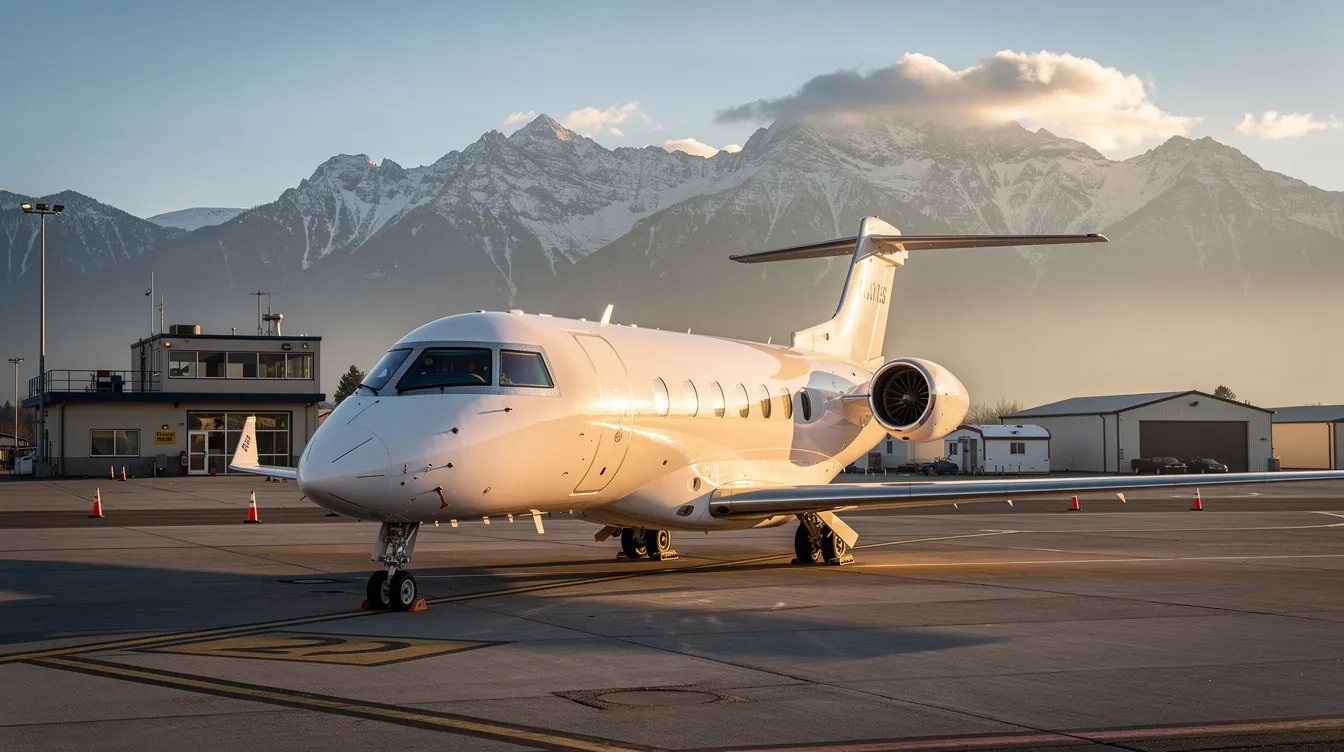
Airlines constantly balance passenger capacity, ticket prices, and operating costs, including fuel, crew, and maintenance. The Boeing 737-800's flexibility across configurations is one reason it has remained popular in many airline fleets worldwide.
Higher-density cabins reduce cost per available seat mile (CASM), which is the airline industry's primary efficiency metric. But that comes with trade-offs:
More seats, lower CASM: A 189-seat layout spreads fixed costs across more passengers, but reduces comfort and limits the ability to charge premium fares.
Fewer seats, higher yield: A 162-seat layout with business class allows airlines to sell a portion of tickets at 2–5 times the economy fare, potentially generating more revenue per flight despite having fewer total seats.
Aircraft utilization - how many hours per day the airplane flies - and load factor (the percentage of seats sold) are as important as the maximum seat count for airline profitability. A 189-seat aircraft flying half-empty generates less revenue than a 162-seat aircraft at 95% load factor.
These economics matter for travelers too. When schedule control and comfort outweigh the lowest possible fare, some passengers turn to private charter. Understanding the cost of private jet charter and broader affordable private jet charter pricing in context helps put commercial ticket prices into perspective.
The Boeing Business Jet line takes the same 737 platform and transforms it into a corporate and VIP aircraft. The BBJ2 variant is based directly on the 737-800 airframe, sharing the same fuselage length and wing design.
While a commercial 737-800 may seat up to 189 passengers, a Boeing Business Jet version typically carries around 19 to 50 passengers in a highly customized layout. These VIP cabins may include:
Private offices and conference rooms
Bedrooms with full-size beds
Dining areas and lounges
Full-size lavatories with showers
Auxiliary fuel tanks for extended range (sometimes exceeding 6,000 nautical miles)
BBJs are usually privately owned or government-operated. They are fundamentally different from the smaller business jets that most private charter clients use for everyday trips. The cost of operating a BBJ dwarfs that of a midsize private jet, which is why most corporate and leisure charter clients fly aircraft in the 4–16 seat range instead, often choosing from a broad list of private charter airlines and operators.
That said, platforms like Jettly can arrange VIP-configured airliners or large business jets when clients need a 737-size cabin with dramatically fewer seats and significantly higher comfort for special events, sports teams, or executive retreats.
A typical Boeing 737-800 seats 160–189 passengers, while most private jets carry between 4 and 16 passengers - often with similar or more total cabin floor space per person. Private jets prioritize comfort over maximum seating capacity, and that fundamental difference is the reason many business travelers and families consider private aviation.
Factors that push travelers away from commercial 737-800 flights toward private charter:
Crowded terminals and long security lines at major airports
Fixed schedules that may not align with meeting times or personal plans
Connection requirements on routes without nonstop 737-800 service
Limited privacy for in-flight work or family time
Private aviation offers access to smaller airports closer to the final destination, arrival just 15–30 minutes before departure, and the ability to tailor schedules precisely using tools like Jettly's airport locator. For a first-time private jet traveler, the experience is dramatically different from boarding a packed single-aisle aircraft.
Consider a practical example: a team of six flying from New York to Chicago. On a commercial 737-800, the trip involves a 90-minute drive to JFK or Newark, a two-hour airport buffer, a two-hour flight, and another 60 minutes to reach downtown Chicago. Total door-to-door time: roughly 6–7 hours. On a midsize private jet departing from Teterboro, the same trip might take 3.5 hours door-to-door.
Jettly is a digital private aviation marketplace that complements - not replaces - commercial Boeing 737 travel for many customers. Some trips make perfect sense on a scheduled 737-800 flight. Others demand the flexibility, speed, and privacy that only a private charter can deliver, sometimes using crowdsourced and shared-seat private jet flights to reduce individual costs.
Jettly connects travelers with a global inventory of over 20,000 private charter aircraft, from light jets to large-cabin aircraft, all operated by certified third-party carriers. The platform offers instant pricing, route comparisons, and transparent cost breakdowns, allowing travelers accustomed to 737-800 routes to quickly see private jet alternatives.
Key platform features include:
Membership and on-demand options: Access predictable pricing without long-term jet card or fractional ownership commitments.
Instant quoting: Enter origin, destination, dates, and passenger count to receive real-time pricing.
Aircraft filtering: Browse by category, range, and passenger capacity to match group size.
Learn more about Jettly's charter options and instant quote tools at jettly.com.
A fully loaded Boeing 737-800 suits large tour groups, sports teams, and high-traffic scheduled routes. Private jets serve a different segment entirely: small executive teams, families, and time-sensitive travelers.
Typical private jet capacity ranges and the many ways to get a seat on a private jet:
|
Aircraft Category |
Typical Seats |
Best For |
|---|---|---|
|
Light jets |
4–7 |
Short trips, small teams |
|
Midsize jets |
6–9 |
Cross-country, moderate baggage |
|
Super-midsize jets |
8–10 |
Longer range, extra cabin space |
|
Heavy jets |
10–16 |
Transcontinental, large groups |
|
737-800 (commercial) |
160–189 |
Scheduled airline service |
Jettly can coordinate multiple aircraft for larger groups or occasionally arrange VIP airliner solutions when a single 737-sized cabin is not the best economic or operational fit. A company might split a 20-person leadership team across two super-midsize jets rather than booking a commercial airline charter on a full-size airliner.
Baggage volume, range requirements, and runway length all factor into aircraft selection. A midsize private jet may not accommodate oversized sports equipment as easily as a 737-800's cargo hold, but it can land at thousands of smaller airports that 737-800s cannot reach.
Although the Boeing 737-800 carries far more passengers, individual comfort per traveler is typically much higher on a private jet.
|
Feature |
737-800 Economy |
Midsize Private Jet |
|---|---|---|
|
Seat width |
17–18 inches |
20–24+ inches |
|
Seat pitch/legroom |
29–32 inches |
50+ inches (club seating) |
|
Aisle access |
Shared with 180+ passengers |
Walk freely in cabin |
|
Power outlets |
Limited |
Every seat |
|
Wi-Fi |
Varies by airline |
Available on most jets |
|
Noise level |
Moderate–high |
Generally quieter |
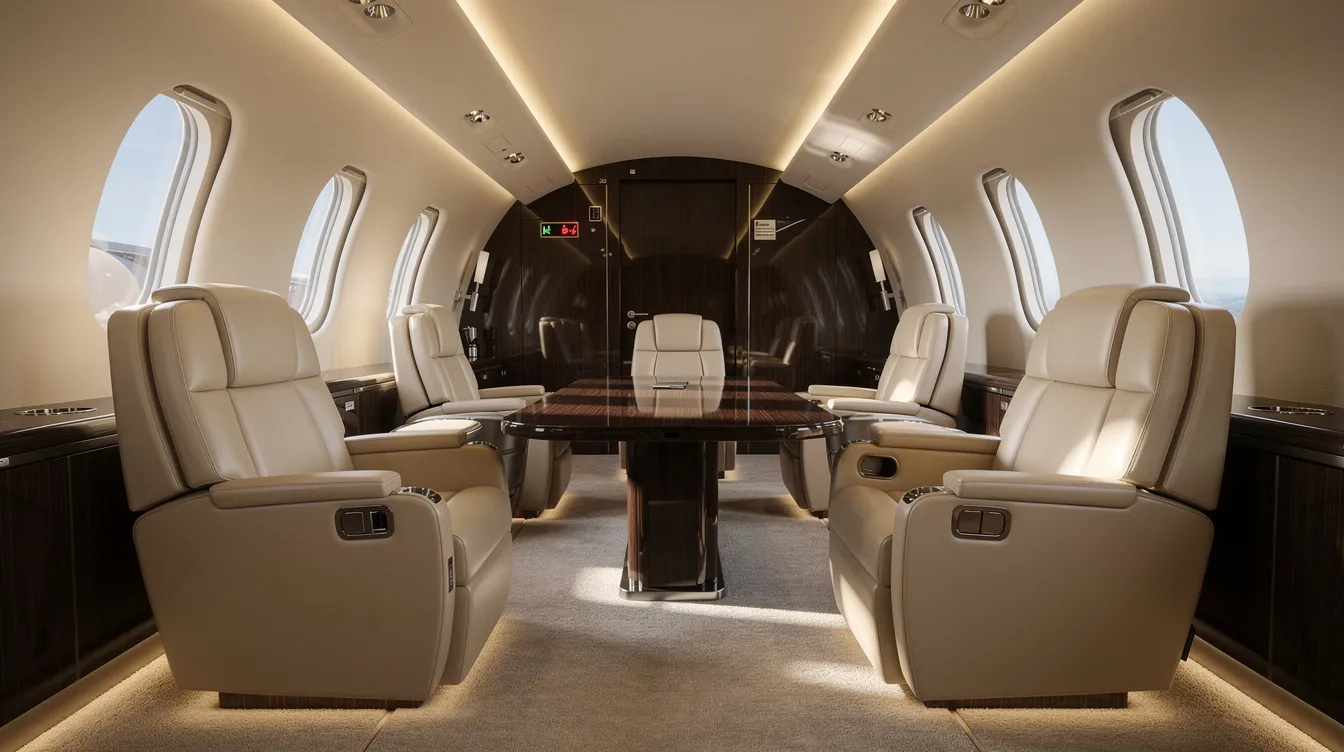
Private jet cabins often feature club seating, tailored in-flight catering such as Jettly Eats private jet catering, and conference tables, supporting in-flight work and relaxation in ways not possible in a packed Boeing 737 cabin. Passengers can hold meetings, spread out documents, or simply stretch out during the flight.
For travelers who prioritize productivity and privacy on critical trips, private charter through Jettly offers a clear advantage, especially when weighing jet rentals versus first-class tickets for corporate travel. For routine travel where cost is the primary driver, commercial 737-800 flights remain the practical choice.
Boeing 737-800 and 737 MAX aircraft are designed to move large numbers of passengers efficiently, resulting in relatively low carbon emissions per seat when the aircraft is full. Fuel efficient engines on the 737 Next Generation line, combined with blended winglets and aerodynamic improvements, help reduce fuel consumption compared to older narrow-body aircraft.
Private jets use more fuel per passenger, but offset this in several practical ways, especially when travelers plan ahead using tools like a jet card flight cost estimator:
Direct routing eliminates connections and reduces total flight time
Smaller airport access shortens ground transport distances
Schedule flexibility can eliminate overnight hotel stays and associated resource use
Technology improvements continue across both segments. Split scimitar winglets on updated 737-800s further improve fuel efficiency, and 737 MAX variants with larger CFM LEAP engines achieve even lower fuel burn per seat.
Private aviation providers, including operators working through Jettly, can use carbon offset programs and sustainable aviation fuel (SAF) where available. The practical approach is to match aircraft size to group size - flying a 189-seat 737-800 with 40 passengers is not more efficient than chartering two right-sized private jets for those same 40 people.
This comes down to a practical decision based on route, group size, schedule, and budget.
Very price-sensitive trips where the lowest fare matters more than time savings
High-demand routes like New York–Miami or London–Barcelona with frequent nonstop 737-800 service
Flexible schedules where airline departure times align with travel plans
Last-minute business meetings where schedule control justifies the premium
Complex multi-city itineraries completed in a single day (e.g., Toronto to Montreal to New York)
Family trips to destinations without direct 737-800 service, like smaller resort airports or remote locations
On a route like Toronto to Vancouver, a nonstop 737-800 flight takes about 5 hours gate to gate, plus airport buffer time. For a business team that needs to arrive, hold a 3-hour meeting, and return the same day, a private jet departing and returning on their schedule could save an entire overnight stay.
Compare both options using Jettly's instant-quote tools or explore private jet membership options to see time and cost trade-offs for your specific trip.
Travelers can use Jettly's digital platform to benchmark commercial Boeing 737-800 flights against private charter options for specific routes and dates.
Basic steps:
Enter trip details: Origin, destination, travel dates, and passenger count.
Review aircraft options: The platform automatically generates a list of available aircraft matched to your route and group size.
View instant pricing: See transparent cost estimates without waiting for callbacks or negotiation rounds.
Filter by category: Narrow results by aircraft type - turboprop, light jet, midsize, super-midsize, or heavy jet - to find the right balance of capacity, range, and cost.
Sample scenario: A team of six traveling from New York to Chicago could compare first-class tickets on a 737-800 (roughly $800–$1,200 each, plus ground transport and time) against chartering a midsize private jet through Jettly (total charter cost split across six passengers, with direct access to Teterboro and Midway).
Ready to see what private jet options look like for your next trip? Visit jettly.com to explore aircraft and pricing in real time or review Jettly's jet card programs for more structured access.
While the certified maximum is 189 passengers in a single-class layout, most full-service airlines configure their Boeing 737-800 aircraft with around 160 to 175 seats to allow for business class and extra legroom. High-density 189-seat layouts are more common with low-cost carriers operating short-haul routes. Exact seat counts differ by airline and route, so checking individual seat maps before booking a commercial flight is always a good idea. The passenger count you actually encounter on board will almost always be below the theoretical maximum.
Jettly primarily arranges private jet charters on smaller business jets seating 4 to 16 passengers. For bigger groups, the platform can coordinate access to larger aircraft, including regional airliners or VIP-configured airliners, through its group charter service.
Chartering an actual Boeing 737-800 for private use is uncommon and often costly, but practical alternatives with fewer seats and more cabin space per person exist. Platforms like Dexter Air Taxi on Jettly illustrate how brokered operators can provide tailored solutions. Jettly acts as a charter broker, with all flights operated by certified third-party carriers that meet strict safety standards.
A Boeing 737-800 has a substantial baggage hold that can easily support a full cabin of passengers with standard checked bags on most routes. Private jets usually carry fewer passengers but may have tighter total baggage volume, especially on light and midsize jets.
Travelers with heavy or unusual baggage - sports equipment, production gear, or trade show materials - should discuss luggage needs during the booking process so the right aircraft category is selected. For very baggage-intensive trips, a larger charter aircraft or a commercial 737-800 may be the more practical option.
Both major airlines and reputable private jet operators follow strict safety and maintenance regulations set by aviation authorities like the FAA and EASA. Safety levels depend on the operator, maintenance standards, crew training, and regulatory oversight - not just aircraft size.
The 737 MAX line did experience two fatal crashes that led to a lengthy grounding and subsequent design changes, underscoring the importance of regulatory oversight for all aircraft types. Jettly works only with certified third-party operators that meet regulatory requirements and industry best practices.
For a solo traveler, a commercial ticket on a Boeing 737-800 is usually more cost-effective. For small groups - especially business teams of four to eight - private charter can become competitive when factoring in time saved, hotel nights avoided, and schedule flexibility.
Situations like last-minute trips, multi-stop same-day itineraries, or routes without nonstop 737-800 service often tip the balance. Jettly's membership options and transparent pricing help frequent flyers bring predictability to private travel budgets without long-term fractional ownership commitments.
The Boeing 737-800 typically holds between 162 and 189 passengers depending on cabin layout, seat pitch, and the mix of business versus economy class seating. That range reflects deliberate airline strategy - balancing passenger comfort, revenue per flight, and operating costs on every route the aircraft serves.
Newer 737 MAX models follow the same capacity logic with updated technology, while Boeing Business Jet variants use the same airframe in a fundamentally different way, prioritizing cabin space per passenger over raw seat count.
Jettly gives travelers a straightforward way to compare commercial Boeing 737-800 travel with private charter alternatives for specific trips and group sizes, similar to how broader overviews of the best private jet charter companies help frame the market.
Whether the question is about how many passengers a 737- 800 holds or how many passengers a Gulfstream G280 can carry, the right answer always depends on what matters most for that particular trip, a topic explored in depth in guides to choosing the best personal plane.
Ready to see how private jet charter could complement or replace your next Boeing 737-800 flight? Explore flights or request a quote at jettly.com.
Share this post:
Jay Franco Serevilla
Nov 11, 2026
|
5
min read
Discover tips and trends in the industry.
5
min read
Bombardier Global 8000: The Fastest Business Jet for Non-Stop Global Charters
The Bombardier Global 8000, launched in December 2025, is the fastest business jet, boasting a top speed of Mach 0.95 and a range of 8,000 nautical miles. With its four-zone cabin designed for long-haul comfort, it offers a unique flying experience for ultra-long-haul travelers, making non-stop flights between major city pairs a reality.
Read More
5
min read
Bombardier Challenger 300 Business Jet: Performance, Cabin, and Charter Guide
The Bombardier Challenger 300 is a super-midsize business jet known for its impressive performance, spacious cabin, and competitive operating costs. With a range of up to 3,100 nautical miles and a comfortable stand-up cabin, it is ideal for business travelers and charter clients seeking efficiency and comfort. This guide provides insights into its specifications, performance, and how to charter through Jettly.
Read MoreStay updated with our latest insights and tips to elevate your journey with us.
MEMBERSHIPS AND ASSOCIATIONS



© 2026 Jettly Inc. All rights reserved.
Disclaimer: Jettly operates as a charter broker, offering access to a global digital jet charter marketplace. Jettly is not a direct air carrier and does not own or operate aircraft. All advertised flights are conducted by third-party air carriers that are fully licensed and hold the appropriate Part 135 or Part 121 certifications issued by the Federal Aviation Administration (FAA) or equivalent regulatory authorities under U.S. or foreign law. Jettly complies fully with the U.S. Department of Transportation's Part 295 and Part 298 Charter Broker regulations. Jettly does not carry additional liability insurance. Passengers are covered by aircraft operator insurance. TICO: 50023770


