


Login
Get Instant Pricing On 23,000+ Aircraft

>
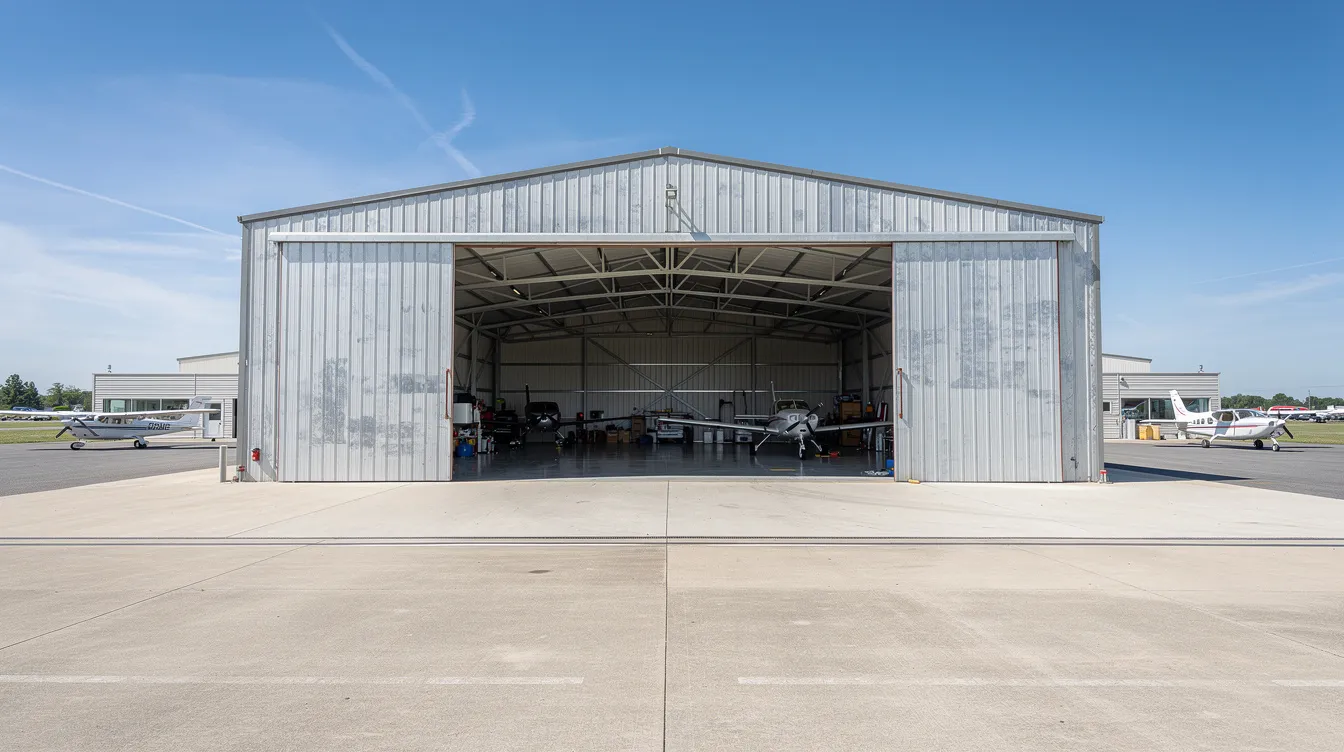
For aircraft owners weighing the decision to build, one question comes up before all others: how much does it cost to build an airplane hangar? The short answer is anywhere from $25 to $600+ per square foot, depending on size, location, materials, and finish level. This guide breaks down every major cost driver so you can budget with confidence.
Building an airplane hangar typically costs between $25 and $600+ per square foot. A basic steel structure shell runs roughly $30 to $60 per sq ft, while a fully built-out hangar with a concrete slab, hangar doors, utilities, and moderate interior finish often lands at $80 to $150+ per square foot. Total costs typically range from $60 to $150 per square foot for a finished structure. Custom-built hangars with premium offices, climate control, and fire suppression can exceed $200 per square foot.
Here are three concrete examples for 2026:
|
Hangar Size |
Use Case |
Estimated Total Cost |
|---|---|---|
|
40×40 ft (1,600 sq ft) |
Single-piston aircraft, basic finish |
$144,000–$250,000 |
|
60×60 ft (3,600 sq ft) |
Light jet or turboprop, modest office |
$300,000–$400,000 |
|
100×100 ft (10,000 sq ft) |
Corporate jet, full amenities |
$550,000–$1.15 million+ |
Small private hangars cost around $144,000 to $500,000+ for 5,000 square feet or smaller. A 60×60 hangar costs between $300,000 and $400,000 and works out to approximately $83 to $111 per square foot.
Most owners end up requesting a customized quote once they settle on hangar size, location, and interior finish. For those still deciding whether to build or simply fly private without the infrastructure burden, charter platforms like Jettly offer a way to skip construction entirely and pay per trip instead by booking from a wide range of private charter aircraft.
No two aircraft hangars cost the same. The overall cost swings dramatically based on several core variables:
Hangar size, clear-span width, and ceiling height
Steel structure type (pre-engineered vs custom)
Local building codes, climate loads (wind, snow, seismic)
Foundation, concrete slab, and site preparation
Door system style and automation
Utilities: electrical, plumbing, HVAC, fire protection
Interior build-out: office, shop, bathroom, lighting
Regional labor costs, building permits, and regulatory fees
Pre-engineered steel structures are the most common choice for airplane hangars because they deliver durability and wide clear spans at a competitive price. The style and size of hangar doors are major cost drivers as well. Clarifying the intended use of a hangar early on influences its design and regulatory requirements, which ripple through every budget line.
Each section below dives into one factor with example numbers and trade-offs.
Hangar size is the single largest determinant of total cost. Length, width, and clear height together define steel tonnage, slab area, door dimensions, and HVAC volume.
Steel hangars have a clear-span design for unobstructed interior space, meaning no columns block wingtips or tail sections. Achieving wider clear spans requires heavier steel sections, which push the price per square foot higher.
Common sizes and use cases:
40×40 ft (~1,600 sq ft) - single-piston aircraft like a Cirrus SR22 or Cessna 182, with minimal workspace.
60×60 ft (~3,600 sq ft) - a light jet such as a Citation CJ3, or multiple smaller aircraft with a small shop area.
80×80 to 100×100 ft - midsize and super-midsize jets like a Challenger 350 or Gulfstream G450, often with offices and maintenance bays.
Taller doors and higher rooflines needed to fit aircraft like a Global 7500 significantly increase material and labor costs. Larger hangar footprints also require thicker concrete slabs and stronger foundations.
The hangar design must accommodate current aircraft dimensions and future upgrades. Expanding a door opening or extending the roof after construction is disproportionately expensive, so plan ahead.
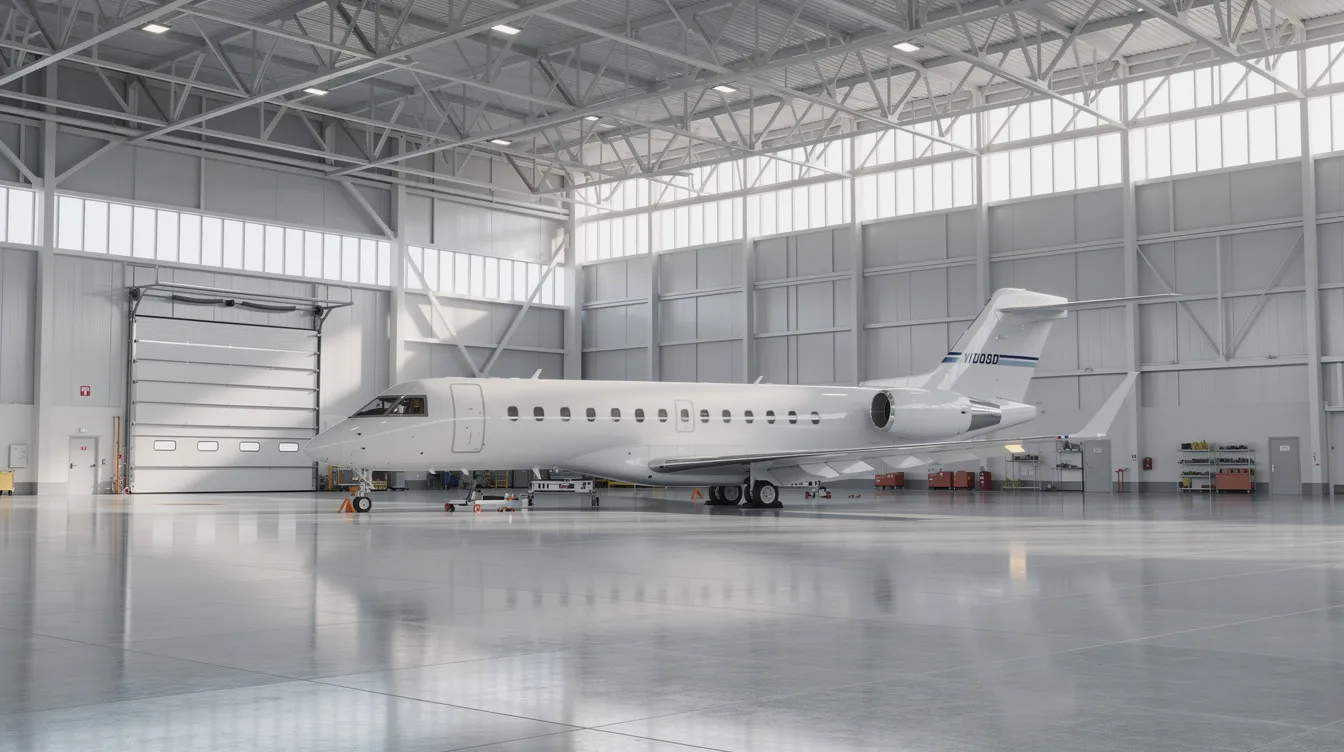
Most modern aircraft hangars use a steel building for good reason: steel delivers the clear spans, durability, and code compliance that aviation demands.
Pre-engineered metal buildings (PEMBs) dominate the market. Steel building kits cost between $25 and $35 per square foot for a basic shell package. Custom steel building kits range from $50 to $150 per square foot depending on span, height, and engineering requirements. These prices exclude the slab, erection labor, doors, and interior work.
Alternatives exist but come with trade-offs:
|
Building Type |
Pros |
Cons |
|---|---|---|
|
Steel hangar (PEMB) |
Long lifespan, clear span, code-ready |
Higher upfront material cost |
|
Concrete block |
Fire-resistant walls |
Limited span without steel roof |
|
Wood structure |
Lower material cost for small projects |
Shorter lifespan, higher regular maintenance |
|
Pole barn |
Cheaper for light storage |
Not ideal for wide spans or heavy aircraft |
|
Canopy hangar |
Flexible installation and low maintenance |
Shorter lifespan, weather limitations |
Canopy hangars are made from modular aluminum alloy frames and work as temporary or budget-conscious shelters, but they rarely meet code for permanent aircraft storage in high-wind or snow-load regions.
Steel prices remain volatile. Quotes from steel building companies typically expire after 30 to 60 days due to market fluctuations. Structural design must also meet local wind, snow, and seismic codes, which can require heavier framing and raise costs in places like coastal Florida or the Rockies.
Land condition and airport rules often determine whether a hangar project stays on budget. Most private hangars sit on leased airport land rather than purchased property, so ground lease terms matter as much as construction costs.
Key site cost elements include:
Land preparation - grading, soil testing, drainage, and utility connections. Land preparation costs can range from $10,000 to $50,000. Site preparation can add significantly to hangar construction costs, especially on hilly or poorly drained parcels.
Concrete slab and foundation - typically 10–25% of the total cost. Reinforced concrete slabs for hangars are generally at least six inches thick. Heavy-duty concrete floors are required to handle concentrated landing gear loads, and concrete slabs for hangar floors must withstand heavy point loads from landing gear. A concrete slab for a 60×60 ft hangar runs roughly $6 to $12 per sq ft, putting the slab alone in the $22,000 to $43,000 range.
Concrete ramp or apron - the paved area outside the door where aircraft taxi in and out, typically costing a similar per-square-foot rate as the floor slab.
Airports may also require specific pavement standards, taxiway tie-ins, and stormwater solutions. Capture these in early budgeting.
The aircraft hangar door is one of the most expensive single line items and the component most critical to daily functionality.
|
Door Type |
Typical Installed Cost |
Best For |
|---|---|---|
|
Bi-fold doors |
$15,000–$35,000+ |
Most private and mid-size hangars |
|
Sliding panel |
$10,000–$25,000+ |
Low headroom situations |
|
Hydraulic swing |
$20,000–$65,000+ |
Premium operations, wide openings |
Hangar door installation costs range from $10,000 to $30,000 for standard configurations. Wider or taller openings, insulation, and automation push the price higher.
Door clear opening height and width must match the largest aircraft tail height and wingspan planned for the hangar. Underestimating height is one of the most common and costly mistakes in hangar construction.
In climates with snow, ice, or strong winds, consider insulated door panels, backup power for automation, and robust weather sealing. These customization options add cost upfront but protect the aircraft and reduce long-term ventilation and heating losses.
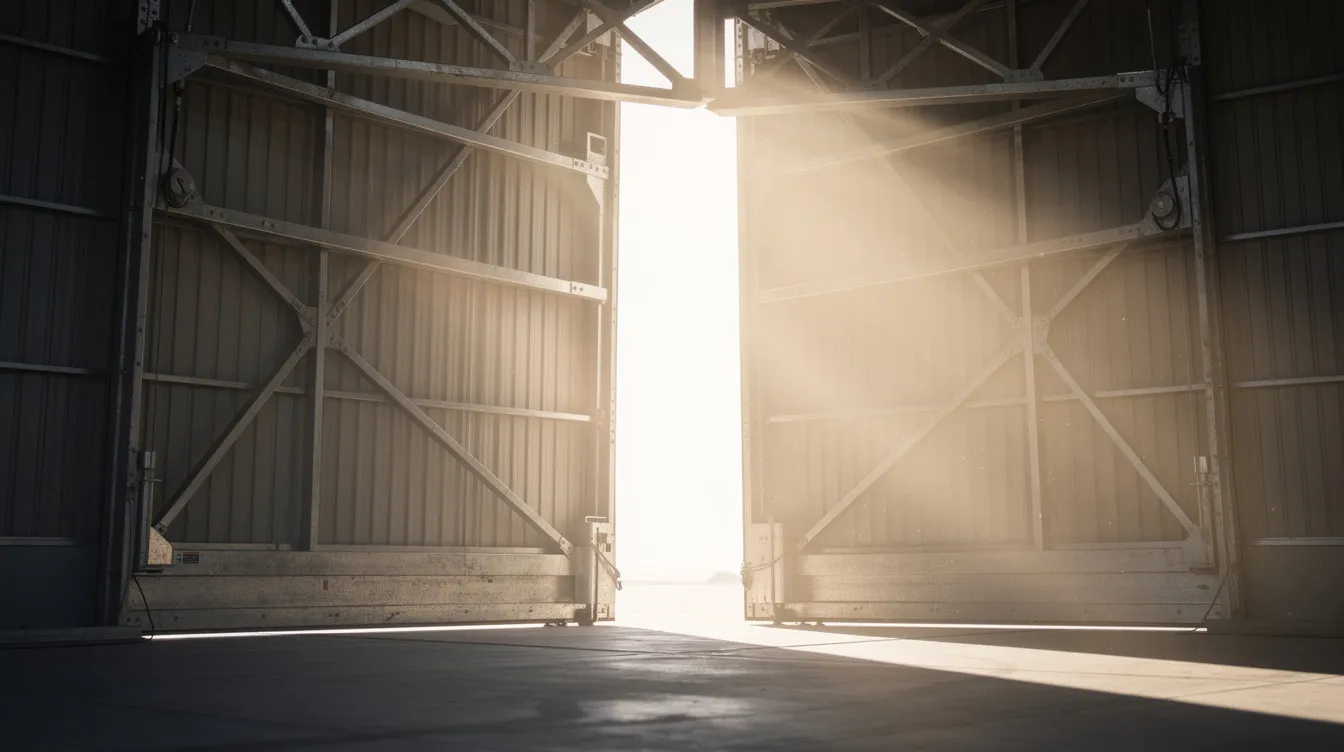
Many airplane hangar cost overruns come from interior systems, not the shell. Utilities and amenities can significantly increase the hangar budget by up to $100,000.
Systems that can significantly increase overall cost:
Electrical - service requirements for electrical systems will drive up expenses, especially if powering ground support equipment, shop tools, or high-intensity lighting.
Plumbing - adding a full bathroom or wash station requires water and sewer connections.
Air conditioning and HVAC - adding full heating or insulated systems to a hangar can significantly increase costs. The difference between unheated storage and a climate-controlled shop or office is substantial.
Fire protection - fire suppression systems must be designed according to the NFPA 409 standard. Specialized fire protection systems may be necessary for hangars storing jet fuel. Fire protection systems in aircraft hangars may be legally mandated by local building codes, and local building codes and regulations dictate fire suppression systems in hangars.
Security, data, and compressed air — additional costs that scale with the scope of operations.
An office space, pilot lounge, parts storage, or conference room shifts a simple storage hangar into a mixed-use building with higher permit and code requirements. Owners planning to host charter operations or sublease space must meet code for additional safety and regulatory standards, which add to potential costs.
Local labor markets and permitting environments can swing an aircraft hangar project budget by a wide margin. Construction costs can vary by 15% to 30% depending on geographic region. Locating a hangar in high-demand airports can increase costs by 20% to 50%.
Labor costs for hangar construction range from $65,000 to $125,000, depending on the size of the construction team, local wage rates, and whether specialized crews need to travel in.
Typical soft costs include:
Architectural and engineering fees
Building permits (permits vary widely by municipality)
Environmental reviews - environmental regulations can add costs to pre-construction expenses for hangars
Airport authority approvals and FAA Form 7460-1 filings
Hangars must comply with strict zoning regulations when located at airports. Consulting airport authorities early is important for understanding zoning requirements and ensuring the plan aligns with the airport layout plan.
Build a contingency of 10–20% of your total budget for regulatory delays, inspection changes, and material price swings. This buffer protects the investment from surprises that lead projects to stall or overshoot.
Here are three illustrative scenarios to help visualize all-in project costs for 2026. These include land lease assumptions, steel structure, slab, doors, utilities, and basic finishes.
Scenario 1: Small 40×40 ft hangar (~1,600 sq ft) Single piston aircraft, bifold door, basic electrical, no office. Estimated range: $150,000–$250,000. Cheaper in low-cost Southern or Midwest markets; higher in the Northeast or California.
Scenario 2: Mid-size 60×60 ft hangar (~3,600 sq ft). Light jet or turboprop, insulated walls and roof, small office with a bathroom, shop area. Estimated range: $300,000–$400,000. Interior finish quality and door type push this toward the upper half.
Scenario 3: Large 100×100 ft hangar (~10,000 sq ft, corporate or business jet, climate control, fire suppression, pilot lounge, full bathroom, security system. Estimated range: $550,000–$1.15 million+. Premium materials and location can push toward $1.5 million.
These are illustrative examples, not binding quotes. Actual pricing should always come from a customized quote based on current market conditions and your specific scope.
Some aircraft owners use these numbers to compare against the long-term cost of chartering through digital platforms like Jettly, where money goes toward flights rather than concrete and steel, often after researching how much a private jet costs across ownership, leasing, and charter options.
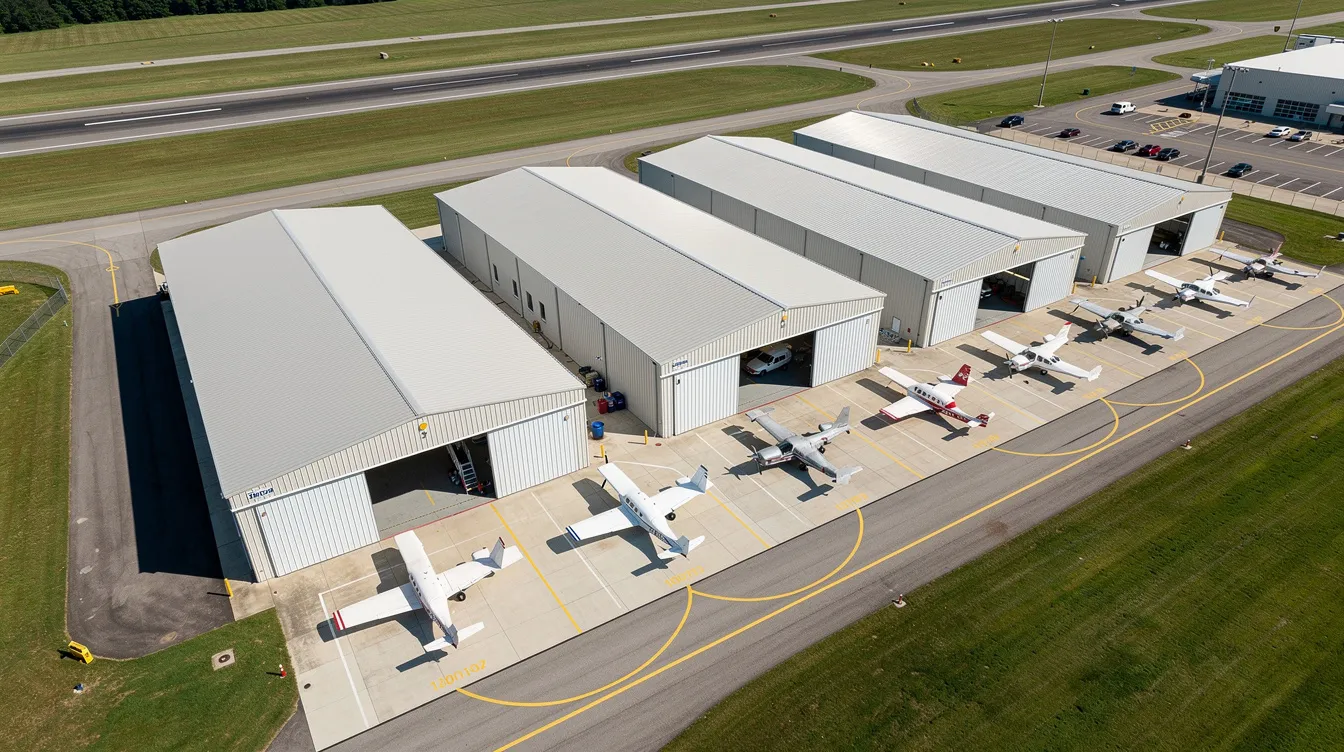
The decision to build an airplane hangar sits within a larger question: own an aircraft and hangar, or rely on charter, private jet memberships, and third-party storage?
Beyond construction, ownership carries recurring costs—insurance, property taxes or lease fees, utilities, regular maintenance, and potential staffing. These add up quickly and sit alongside substantial private jet operating costs. For a detailed breakdown, see The Real Cost of Aircraft Ownership.
Chartering through Jettly flips the model. No capital tied up in a hangar or aircraft, flexible access to different aircraft categories, and predictable trip-based costs instead of fixed infrastructure expenses, with options to crowdsource private jet flights and share empty seats to reduce per-passenger costs further. Learn more about private jet charter costs to see how the numbers compare.
A practical example: a business that flies 50 to 75 hours per year may find that the total cost of ownership plus hangar construction far outweighs the cost of high-quality private jet charter, especially when considering affordable airplane rental options as an alternative. Very high-utilization flyers — 300+ hours annually — may justify both an owned aircraft and a hangar for cost efficiency.
Hangar construction should be viewed as part of a broader private aviation strategy. Understanding private jet operating costs alongside aircraft acquisition and hangar expenses helps clarify the true long-term commitment. For many owners, fractional jet ownership vs. charter is worth exploring before breaking ground.
Serious planning should begin with a customized quote from experienced hangar designers, general contractors, and steel building suppliers. Tools such as an airport locator can also help you narrow down viable airfields before you commit. Prepare the following before reaching out:
Preferred airport and location
Target hangar size and clear-span requirements
Aircraft type, wingspan, and tail height
Desired interior features (office, shop, bathroom, insulation level)
Budget range and target completion date
Request separate quotes for the steel structure kit, erection and general construction, doors and specialty systems, and utilities and interior finishes. Compare multiple proposals, check references, and verify that providers understand aviation-specific requirements, especially if you are comparing traditional ownership against NetJets alternatives like Jettly or other flexible charter models.
If you are still evaluating whether to own or charter, Jettly's Private Jet Charter Cost Estimator and jet card flight cost estimator can help compare lifetime hangar and ownership costs against on-demand charter access with transparent private jet pricing in 2026.
The cost to build an airplane hangar depends on hangar size, steel structure design, site conditions, doors, systems, and regional labor and regulations. A basic steel aircraft hangar shell might start around $25 per square foot, but a fully built-out, climate-controlled facility with quality finishes can quickly multiply that figure. Upgrades in insulation, fire protection, and amenities add to the total project cost faster than most owners expect.
Before committing capital to construction, clarify your aircraft usage, long-term plans, and financial goals. Get a detailed, customized quote and compare it against alternatives. Understanding how much it costs to build an airplane hangar helps owners choose between building, renting space, or relying on private jet charter.
Ready to see how charter compares to ownership? Explore flight options or request a quote at https://www.jettly.com, or review destination-specific options such as private jet charter in New Delhi as you plan your typical routes.
Share this post:
Jeff Ryan Serevilla
Sep 20, 2026
|
5
min read
Discover tips and trends in the industry.
5
min read
How Much Does It Cost to Build an Airplane Hangar?
Building an airplane hangar can cost between $25 and $600+ per square foot, influenced by size, materials, and location. This guide outlines key cost factors, including hangar size, structure type, and necessary utilities, helping aircraft owners budget effectively for their hangar construction.
Read More
5
min read
How Much Does Private Flight Cost? (2026 Guide to Private Jet Pricing)
This comprehensive guide details private flight costs in 2026, highlighting factors that influence pricing for various travelers. From hourly rates to hidden fees, it provides insights into budgeting for private jet travel, making it easier to compare quotes and understand total expenses.
Read MoreStay updated with our latest insights and tips to elevate your journey with us.
MEMBERSHIPS AND ASSOCIATIONS



Disclaimer: Jettly operates as a charter broker, offering access to a global digital jet charter marketplace. Jettly is not a direct air carrier and does not own or operate aircraft. All advertised flights are conducted by third-party air carriers that are fully licensed and hold the appropriate Part 135 or Part 121 certifications issued by the Federal Aviation Administration (FAA) or equivalent regulatory authorities under U.S. or foreign law. Jettly complies fully with the U.S. Department of Transportation's Part 295 and Part 298 Charter Broker regulations. Jettly does not carry additional liability insurance. Passengers are covered by aircraft operator insurance. TICO: 50023770


