


Login
Get Instant Pricing On 23,000+ Aircraft

>
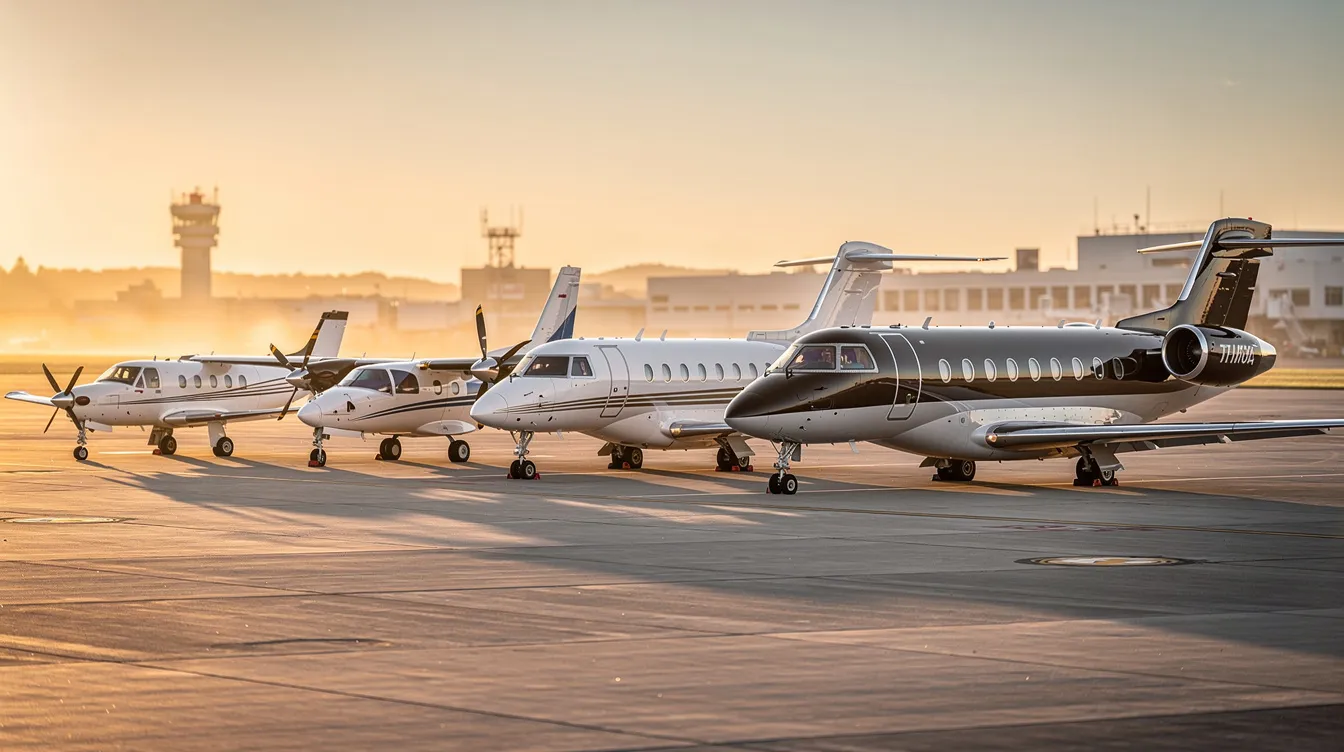
Every aircraft has a strict limit on how much weight it can carry. Whether you fly a small Cessna or charter a large-cabin private jet with tailored services such as in-flight catering for private jets, that limit is governed by the same physics and the same regulatory framework. Understanding how much weight a plane can hold helps travelers, pilots, and charter platforms make smarter decisions about passengers, baggage, fuel, and route planning.
The maximum weight a plane can hold is determined by its structural design limits, specifically its certified maximum takeoff weight. Every airplane has an MTOW that sets the absolute ceiling for safe departure. Aircraft must stay within approved weight limits for safe operation, and these structural limits constrain the aircraft's allowable weight and loading.
Here are a few concrete examples across categories:
A Cessna 172 has a maximum takeoff weight of approximately 2,550 pounds, with a useful load of approximately 850 lbs for fuel, passengers, and baggage.
A typical light jet used in private charter, like the Citation CJ3+, has an MTOW of roughly 13,870 lbs, seats six to eight passengers, and offers a useful load of around 5,530 lbs.
A Boeing 737-800 carries an MTOW of about 174,200 lbs.
The Airbus A380 has a maximum takeoff weight of 1,268,000 lbs, making it one of the heaviest commercial aircraft ever built.
How much weight a plane can hold depends on several factors: maximum takeoff weight, maximum landing weight, and structural limits on seats and cargo holds. Charter platforms like Jettly match trip requirements-passengers, bags, and range-to private charter aircraft with enough useful load and payload capacity.
Before diving deeper, it helps to know the core terms that pilots, dispatchers, and charter operators use when calculating how much a plane can carry.
Aircraft weight is the total weight of the airplane at any given moment, including the airframe, engines, crew, passengers, baggage, cargo, fuel, oil, and hydraulic fluid.
Empty weight refers to the airplane structure, engines, and fixed equipment with no passengers, usable fuel, or cargo on board.
Takeoff weight is the actual weight at the start of the takeoff roll, including everything loaded. It must never exceed the certified maximum.
Landing weight is the total weight at touchdown. It has its own certified limit, separate from takeoff weight.
These terms appear in every aircraft flight manual and are essential for weight and balance calculations. Private jet charter operators and brokers-including Jettly's partner operators-rely on them to plan safe, compliant flights across a diverse ecosystem of private and charter airlines.
Empty weight is the starting point for all airplane weight calculations. Everything else-fuel, people, bags-gets added on top.
Standard empty weight represents the manufacturer's baseline: it includes the airframe, engines, fixed equipment, full operating fluids such as engine oil and hydraulic fluid, and unusable fuel.
It does not include usable fuel, passengers, or cargo.
Basic empty weight builds on that by adding any optional equipment the owner has installed, plus all full operating fluids. Two aircraft of the same model can have different basic empty weights depending on interior upgrades, avionics packages, or cabin configurations.
In Federal Aviation Administration and other aviation authorities' paperwork, pilots reference these numbers to figure out how much extra weight an airplane can safely carry on a given flight.
When Jettly shows an aircraft profile, specifications like basic empty weight help estimate how many passengers and bags a specific airplane can handle, whether the flight is operated by a partner like Dexter Air Taxi or another licensed carrier.
These certified limits directly answer the question of how much weight a plane can hold. Aircraft weight must comply with multiple limits, including MTOW and MLW.
Maximum takeoff weight is a fixed certified limit-the heaviest weight at which the aircraft is approved to begin its takeoff roll. Exceeding it is both unsafe and illegal.
Maximum landing weight is usually lower than MTOW. Landing puts more stress on the landing gear, tires, and airframe than cruising, so manufacturers set a stricter ceiling. For example, the Citation CJ3+ has an MLW of roughly 12,750 lbs versus its 13,870 lb MTOW.
Maximum ramp weight is the highest weight allowed before ground operations and taxi begin, typically slightly above MTOW to account for taxi fuel burn.
Maximum zero fuel weight is the weight limit before adding usable fuel. It protects the wing-fuselage joint from excessive bending loads by capping how much passengers plus cargo can weigh without fuel in the tanks.
For context, a Gulfstream G650ER has an MTOW of about 103,600 lbs and an MLW of roughly 83,500 lbs-numbers that matter for long-range private flights.
These numbers translate certified limits into real-world seats, luggage, and cargo.
Useful load is the difference between maximum takeoff weight and basic empty weight. It includes crew, passengers, baggage, cargo, and usable fuel. Payload is everything minus the fuel-just the revenue-generating items like passengers and their belongings. Payload capacity is the maximum weight of revenue-generating items an aircraft can carry.
The trade-off is straightforward: payload and fuel trade-offs affect the total weight an aircraft can handle. More fuel for range means less room for passengers and bags, and vice versa. The useful load varies depending on the aircraft's mission.
A few examples:
A small Cessna 172 has a basic empty weight around 1,680 lbs and a useful load of roughly 850 lbs-enough for three to four adults with light bags and partial fuel, but not always full fuel.
A typical light jet like the Embraer Phenom 300E offers a useful load of about 3,700 lbs, supporting six to eight adults with luggage and fuel for trips like New York to Miami.
Exceeding useful load can compromise aircraft safety and performance. Jettly's instant pricing engine performs these useful load and payload checks in the background when presenting aircraft options to customers, similar in spirit to its private jet charter cost estimator that helps travelers understand pricing trade-offs.
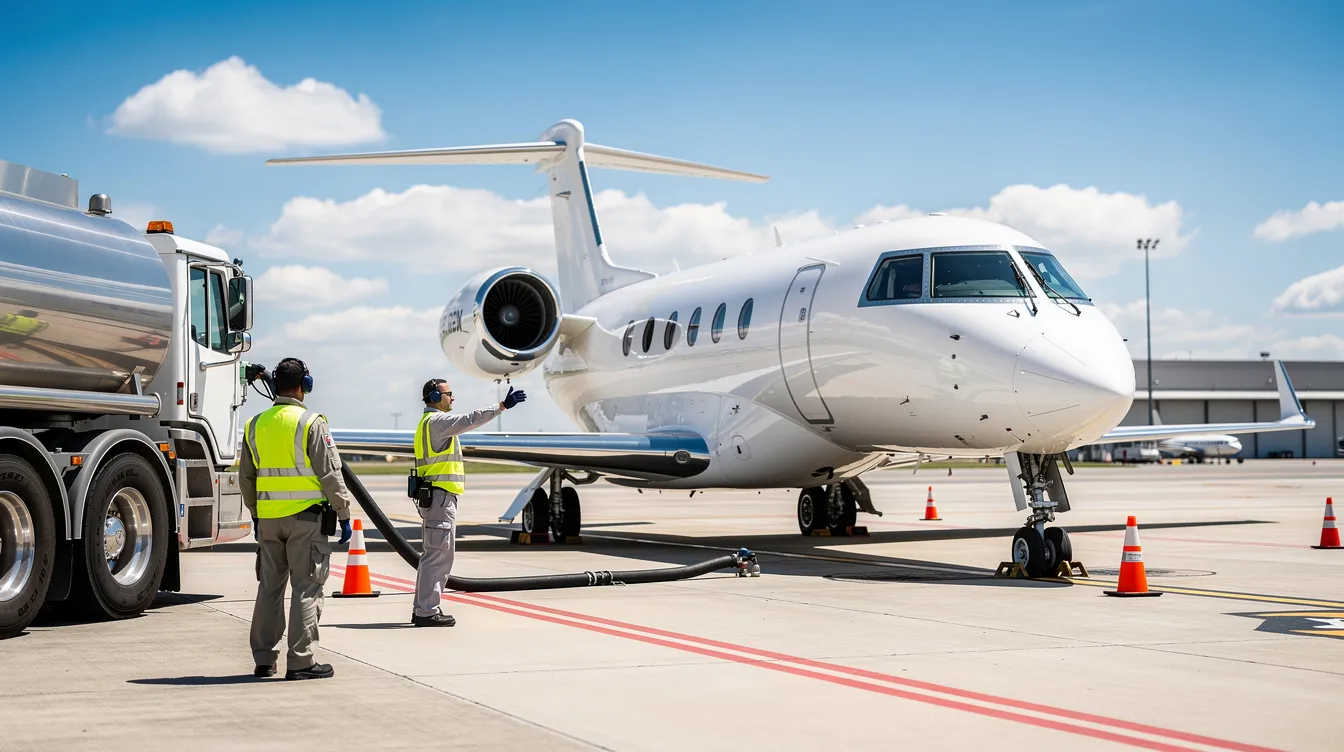
Fuel weight is one of the biggest variables in flight planning. The more fuel an aircraft carries, the less room remains for passengers and cargo.
Jet fuel weighs about 6.7 lbs per U.S. gallon. That adds up fast:
A Boeing 737-800 can carry up to roughly 6,875 gallons-about 46,000 lbs of fuel.
A large-cabin private jet like the Bombardier Global 7500 holds around 51,150 lbs of fuel, enabling a 7,700+ nautical mile range.
A Gulfstream G650ER with full fuel has a payload of only about 1,800 lbs-dramatically less than its maximum payload of 6,500 lbs.
More fuel generally means less room for payload when MTOW is fixed. On short routes like Los Angeles to Las Vegas, the aircraft does not need full fuel, so operators can carry more passengers and baggage. On long-range flights like New York to London, how much fuel is required may force operators to reduce passengers or bags, and departure and arrival choices can be optimized using an airport locator tool.
When customers request quotes on Jettly for long non-stop sectors, the platform may suggest different aircraft or fuel-stop options to stay within safe fuel weight and payload limits, while also outlining strategies for affordable private jet charter based on aircraft type and route.
Airplanes weigh dramatically different amounts across categories, but every type is bound by the same principles of empty weight, fuel load, and maximum weight. Here is how common aircraft compare, and choosing the right model for longer trips follows similar logic to selecting the best cross-country plane for your travel needs:
Small general aviation airplanes:
Cessna 172 Skyhawk: empty weight roughly 1,680 lbs, MTOW 2,550 lbs
Piper PA-28-181 Archer: empty approximately 1,700–1,800 lbs, MTOW 2,550 lbs
Private jets commonly available on Jettly:
Very light jet (Cessna Citation Mustang): empty about 6,700 lbs, MTOW 8,645 lbs
Light jet (Citation CJ3+): empty roughly 8,200 lbs, MTOW 13,870 lbs
Midsize jet (Hawker 800XP): empty around 15,000 lbs, MTOW 28,000 lbs
Heavy jet (Gulfstream G450): empty approximately 43,000 lbs, MTOW 74,600 lbs
Commercial airliners: these figures also shape how commercial airlines plan passengers, baggage, and fuel within certified limits.
A Boeing 737-800 weighs about 91,300 lbs empty, with an MTOW of 174,200 lbs.
Airbus A320neo: empty roughly 93,900 lbs, MTOW about 174,000 lbs
A Boeing 777-300ER has a maximum takeoff weight of 775,000 lbs, with an empty weight around 370,000 lbs
A Boeing 747-400 has a maximum takeoff weight of 910,000 pounds
Airbus A380-800: empty approximately 610,000 lbs, MTOW 1,268,000 lbs
For a deeper breakdown of how much an airplane weighs, Jettly's aircraft guides cover dozens of models.
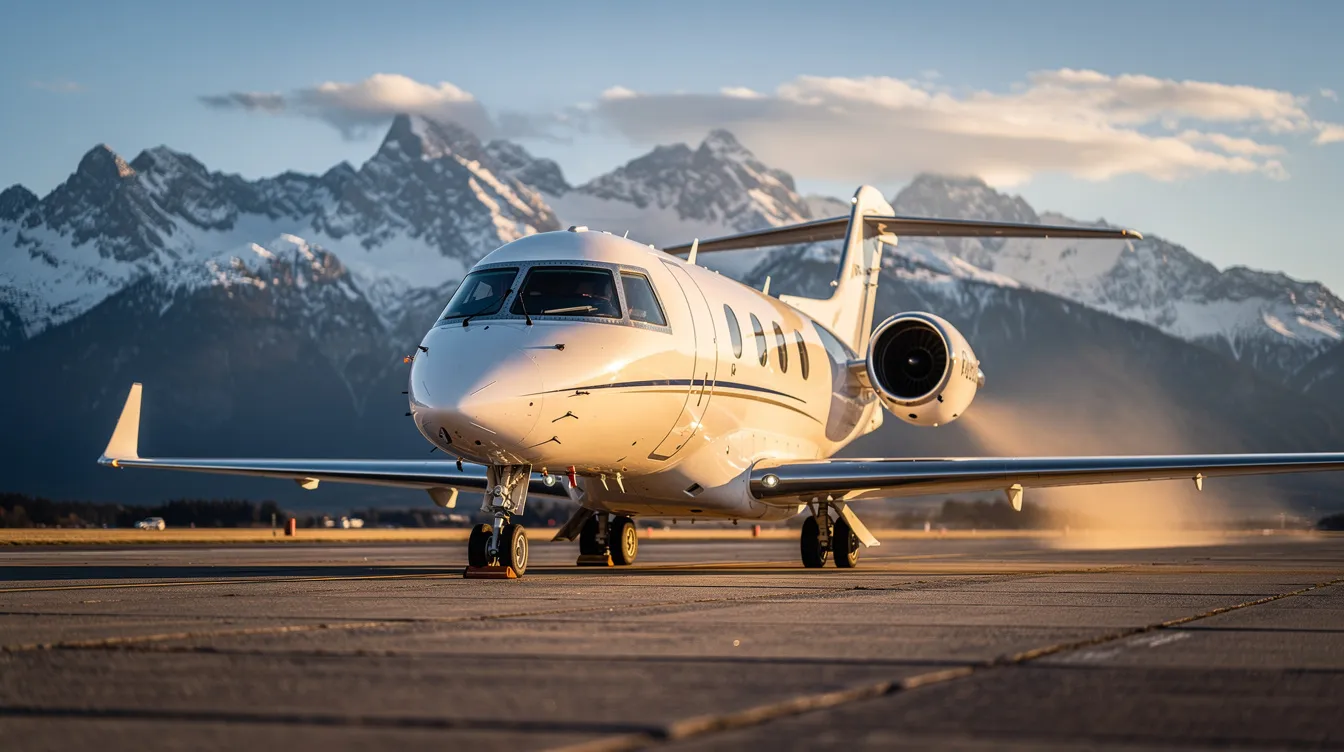
An aircraft's weight affects its takeoff distance and climb performance, fuel consumption, cruise altitude, and how smoothly passengers experience the flight. Weight management is critical for flight safety and performance.
Heavier aircraft require longer runways for takeoff. A higher takeoff weight leads to a longer takeoff roll and higher rotation speed, reduced maneuverability, and reduced climb performance, all of which factor into planning private jet charter in New Delhi, Delhi, and other high-traffic airports. Increased weight reduces an aircraft's climb rate and maximum altitude, and exceeding MTOW risks insufficient altitude gain after departure. An aircraft's ability to take off, climb, and maneuver depends on the lift generated by its wings, and engine thrust must provide enough power as weight increases. High temperatures and high elevations reduce air density, which compounds the effect of extra weight, requiring even longer runways and producing more stress on the aircraft structure. An overweight aircraft consumes more fuel during flight, creating a cycle where excess weight increases fuel consumption further.
Exceeding MTOW can lead to reduced climb performance, and overloading risks structural damage to the airframe and landing gear. For private jet travelers, operating at lighter weight means smoother climbs to optimal cruise altitudes, saving time and fuel. Jettly's partner operators account for runway length, airport elevation, temperature, and airplane weight to confirm each charter route is feasible.
Total weight alone is not enough. Center of gravity must remain within approved limits for safety. CG is the aircraft's balance point, and loading passengers, baggage, and fuel incorrectly can shift it dangerously.
A CG too far forward can make rotation and flare difficult during takeoff and landing.
A CG too far aft reduces stability and can make the airplane harder to control, leading to safety risks and reduced maneuverability.
The center of gravity must be within safe forward and aft limits for stability. Pilots and dispatchers use weight and balance forms, load sheets, and software to keep both airplane weight and CG within certified ranges. On charter flights, passenger seating, baggage placement, and cargo distribution are adjusted to maintain proper balance without passengers ever noticing the underlying balance calculations, whether they are flying popular routes like private jet charter in Kolkata, West Bengal, or elsewhere.

For travelers booking through Jettly, the question of how much weight a plane can hold translates directly into how many people, bags, and special items can come along, especially if you plan to buy a single seat on a private jet rather than chartering the whole aircraft.
Very light jets (4–5 passengers): typical payload of 1,000–1,500 lbs excluding fuel. Enough for four adults plus overnight bags on routes like London to Geneva.
Light jets (6–8 passengers): payload often 2,000–2,500 lbs. Suitable for six adults with luggage on New York to Miami non-stops, and ideal for crowdsourced private jet flights that share empty seats to improve overall aircraft utilization.
Super-midsize jets (8–10 passengers): payload of 3,000–4,000+ lbs. Ideal for eight passengers and checked-size luggage on Toronto to Vancouver or Los Angeles to Chicago, and commonly used in jet card flight cost estimator scenarios where travelers compare typical route pricing.
Large and ultra-long-range jets (up to 14–16 passengers): payload commonly 5,000–7,000 lbs, supporting transatlantic trips with full cabins and forming the backbone of many premium jet card programs for frequent flyers.
Cabin configuration-club seating, divans, extra galleys-changes basic empty weight and therefore useful load, even within the same model. Smaller aircraft naturally have tighter weight budgets than heavy jets, which is important to remember when using services that help you get a seat on a private jet easily without booking the full airplane.
Jettly's platform factors in passengers, baggage estimates, and trip distance when suggesting aircraft, whether customers are booking shared charter flights or full charters, so they do not need to run weight calculations manually. If you are traveling with ski bags, golf clubs, or pet crates, share those details when requesting a quote so operators can verify weight and balance in advance.

Strict regulation governs aircraft weight worldwide. Aviation authorities like the Federal Aviation Administration, EASA in Europe, and Transport Canada certify every model's maximum takeoff weight, maximum landing weight, and structural limits. Operators must maintain accurate, up-to-date weight data, and each aircraft's empty weight and basic empty weight are re-recorded after modifications or interior changes.
In private charter, the process works like this, whether you fly with a major fractional provider or a NetJets alternative like Jettly:
The operator calculates takeoff weight and landing weight before each flight.
Dispatch teams verify runway performance, contingency fuel, and whether the pilot can safely land at the destination airport given the expected landing weight.
Pilots confirm final passenger counts and baggage weights before departure.
If an emergency requires returning to the airport shortly after takeoff, some larger aircraft may need to dump fuel to get below maximum landing weight and safely land.
Jettly works with licensed, regulated operators only, and its digital flight planning tools streamline the process while respecting all aircraft weight and safety rules. Staying under the certified maximum weight is non-negotiable. If a requested load is too heavy, the solution is a larger aircraft, fewer bags, a fuel stop, or fewer passengers-never bending the limits.
MTOW is the highest certified weight at which an aircraft is approved to begin its takeoff roll. It is a fixed limit set by the manufacturer to ensure safe operation. Exceeding MTOW is unsafe and illegal.
Useful load includes the total weight of passengers, baggage, cargo, and usable fuel that an aircraft can carry beyond its empty weight. Payload refers only to the revenue-generating items such as passengers and cargo, excluding fuel.
MLW is lower because landing stresses the aircraft's structure and landing gear more than takeoff. This limit protects the airframe from damage during landing.
Fuel weight reduces the available payload capacity since total weight must not exceed MTOW. More fuel means less room for passengers and cargo.
A run-up is a pre-takeoff procedure where engines and systems are tested at higher power settings while the aircraft is stationary, ensuring everything operates correctly before departure.
Pilots perform weight and balance calculations before each flight, considering passenger weight, baggage, fuel, and cargo. They also verify that the center of gravity remains within safe limits.
Yes, exceeding weight limits can reduce climb rate, increase takeoff distance, reduce maneuverability, and increase fuel consumption, all of which compromise safety and efficiency.
How much weight a plane can hold comes down to certified limits: empty weight, fuel weight, payload, maximum takeoff weight, and maximum landing weight-not just the number of seats. The difference between a smooth, efficient flight and a compromised one often starts with accurate weight planning.
When booking a private jet charter, think in terms of passenger count, typical luggage per person, and desired range. Platforms like Jettly use that information to match you with the right aircraft and capacity through flexible private jet memberships, handling the weight calculations behind the scenes.
Ready to find the right aircraft for your next trip? Explore flight options or request a quote at jettly.com.
Share this post:
Jeff Ryan Serevilla
Oct 8, 2026
|
5
min read
Discover tips and trends in the industry.
5
min read
AVCARD: The Aviation Fuel Card Powering Smarter Fuel Purchasing
AVCARD is a versatile aviation fuel card from World Fuel, enabling operators to manage fuel purchases and operational expenses seamlessly at over 8,600 locations worldwide. It simplifies billing with detailed invoicing and supports various fuel types, making it essential for flight departments and charter operators. With no annual fee and integration with contract fuel programs, AVCARD enhances cost control and efficiency in aviation fuel procurement.
Read More5
min read
How Much Weight Can a Plane Hold? (From Small Planes to Private Jets and Airliners)
Understanding how much weight a plane can hold is crucial for safe flight operations. Each aircraft has a certified maximum takeoff weight (MTOW) that dictates its capacity for passengers, baggage, and fuel. This knowledge helps travelers and pilots make informed decisions about flight planning and safety.
Read MoreStay updated with our latest insights and tips to elevate your journey with us.
MEMBERSHIPS AND ASSOCIATIONS



Disclaimer: Jettly operates as a charter broker, offering access to a global digital jet charter marketplace. Jettly is not a direct air carrier and does not own or operate aircraft. All advertised flights are conducted by third-party air carriers that are fully licensed and hold the appropriate Part 135 or Part 121 certifications issued by the Federal Aviation Administration (FAA) or equivalent regulatory authorities under U.S. or foreign law. Jettly complies fully with the U.S. Department of Transportation's Part 295 and Part 298 Charter Broker regulations. Jettly does not carry additional liability insurance. Passengers are covered by aircraft operator insurance. TICO: 50023770


