



Login
Get Instant Pricing On 23,000+ Aircraft

>
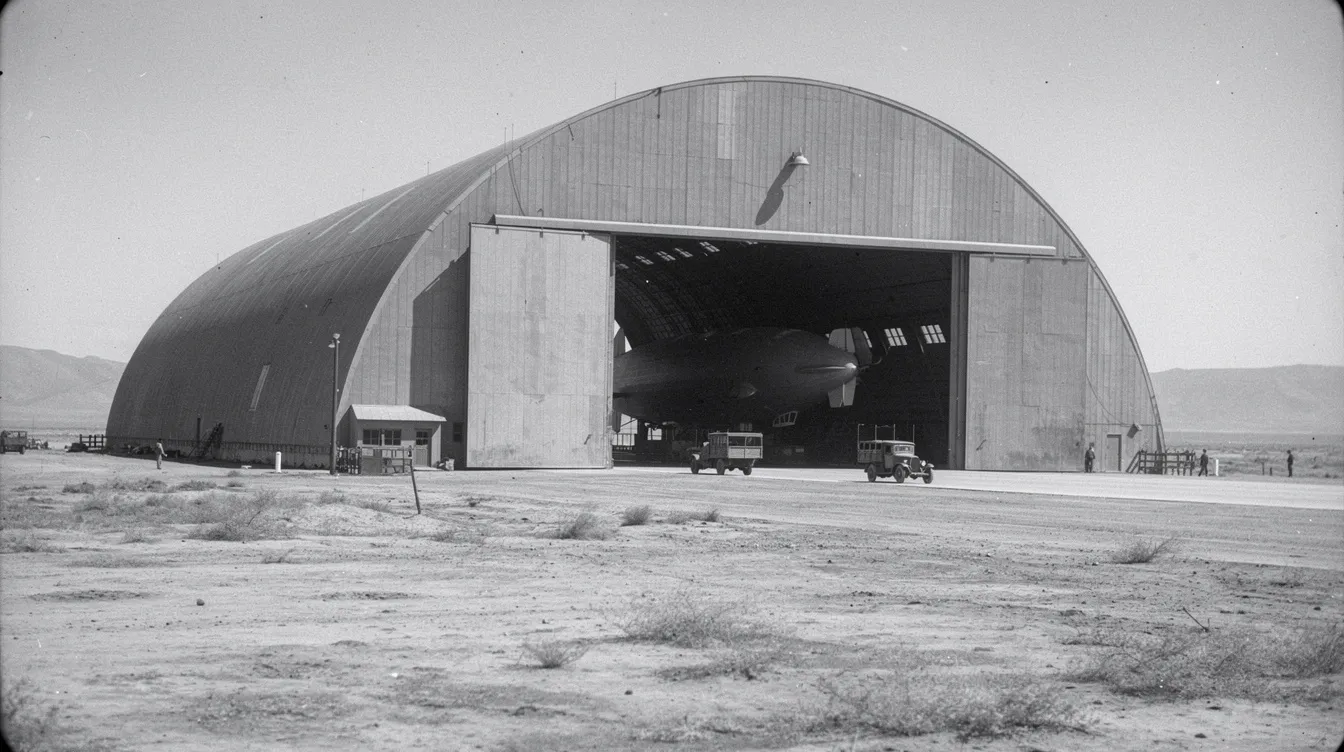
Moffett Federal Airfield sits on the southern edge of San Francisco Bay, between Mountain View and Sunnyvale, in Santa Clara County, California. Once a bustling Naval Air Station, the airfield now serves NASA, the California Air National Guard, and a handful of federal and corporate tenants. For private flyers headed to Silicon Valley, understanding how this restricted field works, and which nearby airports to use instead, saves time and avoids surprises.
Moffett Federal Airfield (KNUQ) in Mountain View, California, is a former Naval Air Station now operated by NASA Ames Research Center with limited, prior-permission-only access for private aircraft.
The field evolved from a 1930s Navy airship base to a World War II maritime patrol hub and, after 1994, into a federal research airfield supporting aerospace technology development.
Current tenants include NASA Ames Research Center, the California Air National Guard's 129th Rescue Wing, high-tech corporate operators, and academic partners such as Carnegie Mellon University.
Jettly can arrange private jet access to nearby airports with full instrument procedures, such as San Jose (KSJC), Palo Alto (KPAO), and San Carlos (KSQL), for travelers visiting Moffett Field, NASA Ames, or Silicon Valley.
The Moffett Field Museum preserves the base's aviation and space heritage and is a relevant stop for private aviation travelers and their families.
Moffett Federal Airfield is a unique blend of historic naval air station, NASA research hub, and restricted-access airfield. Its FAA identifier is KNUQ, and the facility is operated by NASA Ames Research Center rather than a city or county aviation authority. The field is located near northern Mountain View and Sunnyvale, in Santa Clara County, California.
Two parallel runways serve the airfield. Runway 14L/32R stretches about 9,197 feet, and Runway 14R/32L runs roughly 8,121 feet, both 200 feet wide. These dimensions accommodate large military and government aircraft, but Moffett Field is not a typical general-aviation reliever airport. The field averages 5 to 10 flights daily, mostly military, research, or authorized corporate traffic.
|
Airfield detail |
Information |
|---|---|
|
FAA identifier |
KNUQ |
|
Location |
Between northern Mountain View and Sunnyvale, in Santa Clara County |
|
Operator |
NASA Ames Research Center |
|
Runway 14L/32R |
Approximately 9,197 feet long and 200 feet wide |
|
Runway 14R/32L |
Approximately 8,121 feet long and 200 feet wide |
|
Typical activity |
About 5–10 flights daily, primarily military, government, research, and authorized corporate traffic |
|
Private charter access |
Restricted; prior permission is required |
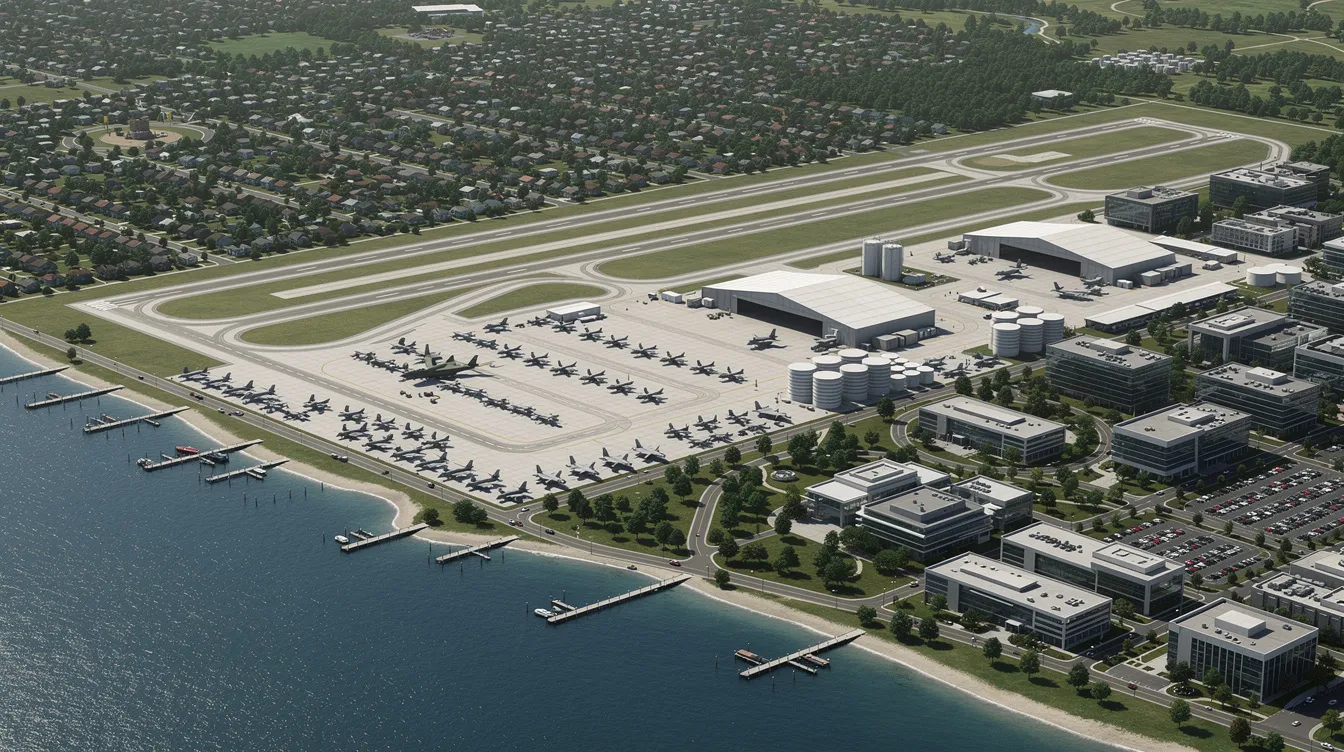
Moffett Field sits minutes from the campuses of Google, Apple, and numerous venture capital firms, making it strategically attractive. Yet it is not generally open to public charter arrivals. This article blends base history, current operations, access considerations for private aircraft, and practical guidance for travelers booking flights into nearby airports.
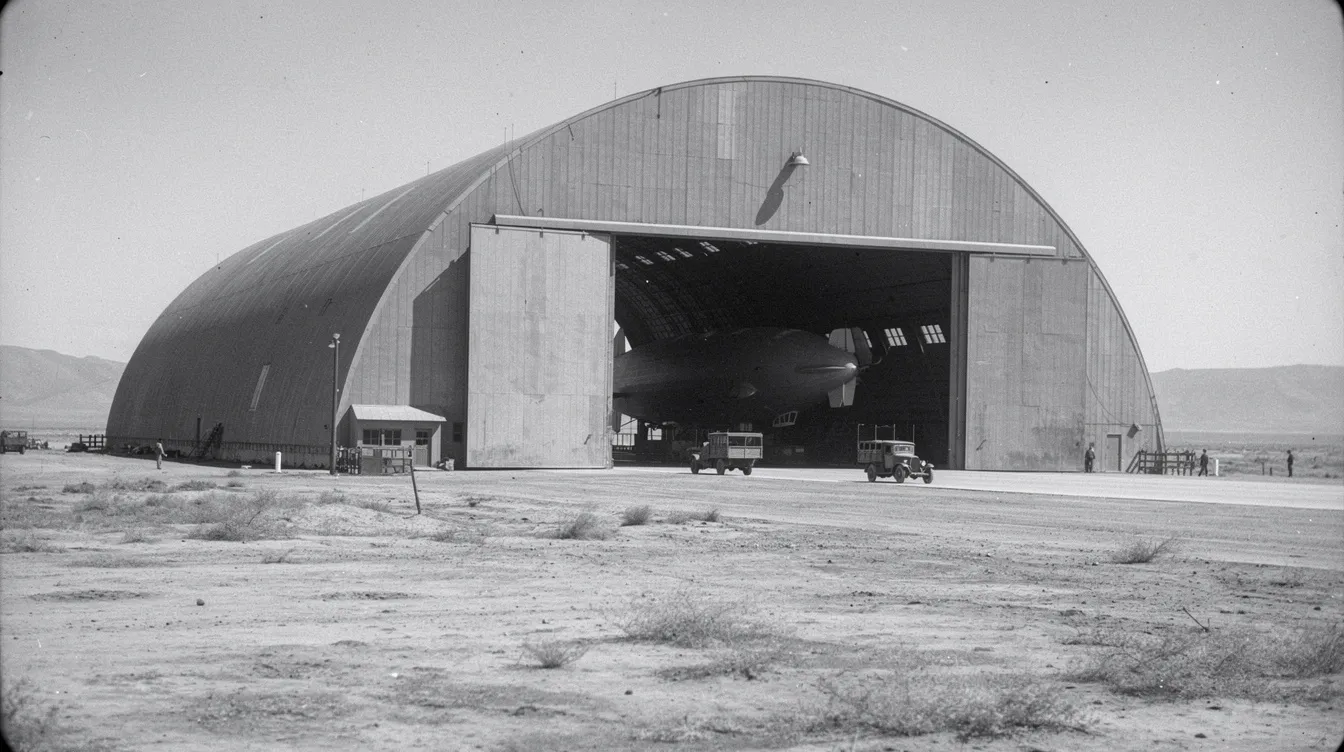
In 1930, Bay Area counties purchased roughly 1,000 acres near San Francisco Bay and sold them to the U.S. government for a symbolic $1. The intent was to host a Navy lighter-than-air facility, specifically the rigid airship USS Macon. Construction moved quickly, and on April 12, 1933, the base was commissioned as NAS Sunnyvale. The station's early focus centered on blimp operations, lighter-than-air flight, and Pacific coast defense.
The station was renamed NAS Moffett Field in honor of Rear Admiral William A. Moffett, Chief of the Bureau of Aeronautics, who died in the 1933 USS Akron airship disaster near San Diego Harbor. When the USS Macon crashed off the California coast in 1935, the Navy shifted its priorities. Control of the base briefly passed to the Army Air Corps before reverting to naval air authority in 1942.
When the facility returned to Navy control in 1942 as NAS Moffett Field, it expanded rapidly for World War II. The base became a major West Coast hub for maritime patrol aircraft, anti-submarine warfare missions, and Pacific Fleet support. Maritime reconnaissance aircraft like the PBY Catalina flew patrol sorties from the field, scanning the Pacific Ocean for enemy submarines.
Through the Korean War and into the Cold War, Moffett Field remained central to U.S. naval air power on the Pacific coast. The Korean War brought new patrol squadron deployments, and the base hosted P-2 Neptune and later P-3 Orion aircraft that monitored Soviet submarine activity. Various training sorties flew from the field as its mission expanded from lighter-than-air blimps to heavier-than-air fighter aircraft and patrol planes. The last fighter aircraft stationed at Moffett gave way to dedicated ASW patrol operations by the mid-1950s, reflecting broader changes in U.S. naval air doctrine. The base also served as a training headquarters and fleet support center, with an east coast counterpart at NAS Brunswick in Maine.
Moffett Federal Airfield was decommissioned as a U.S. Navy installation in 1994 under the Base Realignment and Closure process. The airfield transferred to NASA Ames Research Center, which had operated nearby since 1939 as the Ames Aeronautical Laboratory. The field was redesignated Moffett Federal Airfield, covering approximately 1,427 acres with over 3.5 million square feet of buildings.
NASA Ames Research Center, part of the National Aeronautics and Space Administration, had long focused on aeronautics, wind-tunnel testing, flight simulation, and computational fluid dynamics. The facility includes major wind tunnels and testing complexes for aeronautical research operated in partnership with the U.S. Air Force. Today the former base functions as a mixed-use federal campus with NASA laboratories, mission control facilities, and testbeds for aviation and space technology. Moffett Federal Airfield continues to be an important site for aerospace research and technology development, supporting experimental aircraft, airborne science campaigns, and visiting military and government aircraft.
The California Air National Guard's 129th Rescue Wing is a major tenant at Moffett Field. This Air National Guard unit conducts combat search and rescue and peacetime rescue missions under the motto "That Others May Live." The wing operates HC-130J Combat King II aircraft and HH-60G Pave Hawk helicopters. Since 1975, the unit has saved over 1,100 lives through Moffett rescue operations and deployments worldwide. ANG mission requirements drive much of the field's occasional air traffic, including nighttime training and airdrop exercises.
Moffett Federal Airfield supports various military, government, and research activities. Army Reserve and Navy units use the field for specific operations. Moffett Federal Airfield supports private corporate aviation activities, including operations for tech executives who often rely on an airport locator and charter booking platform to select suitable Bay Area fields. Google's Planetary Ventures holds a lease covering roughly 1,000 acres, including the hangars, runways, and adjacent parcels used for research and development. Moffett Federal Airfield has a significant partnership with Google's Planetary Ventures for operational management.
Air Force One and other senior government aircraft occasionally use Moffett Field when visiting the Bay Area, taking advantage of its secure environment and long runways. Routine use, however, centers on federal, military, and research operations, with limited access for civil or private traffic. The field has limited ramp space, and the ANG ramp is dedicated to military operations.
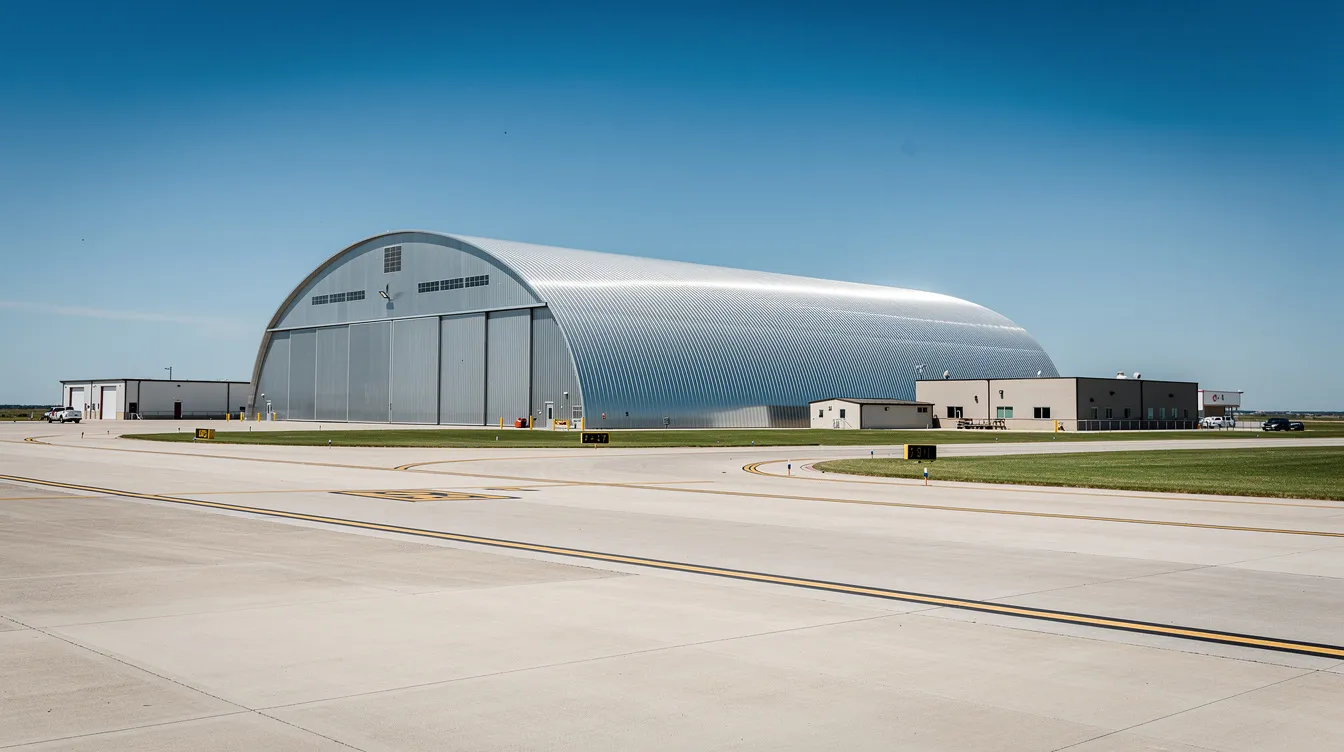
Hangar One at Moffett Federal Airfield is one of the largest freestanding structures in the world and one of the largest unsupported structures ever built. The structure covers roughly eight acres, measuring 1,133 feet long, 308 feet wide, and 198 feet high. The airfield was built to house the rigid airship USS Macon, and Hangar One's distinctive aerodynamic curved shell has defined the Bay Area skyline since the 1930s. It ranks among the world's largest freestanding structures visible from Highway 101 and regional flights.
Additional World War II-era blimp hangars (Hangars Two and Three) stand nearby, constructed of timber and steel. These structures supported Naval Air Transport Service operations and heavy aircraft overhaul.
The airfield features significant environmental remediation efforts due to historical contamination. Hangar One's siding and roofing contained PCBs, asbestos, and lead paint. The Navy stripped these materials in the early 2000s, leaving the steel skeleton exposed for years. Hangar One underwent a restoration project completed in December 2025, with the work maintaining the original visual character while upgrading structural integrity per Secretary of the Interior historic standards. NASA signed the lease with Planetary Ventures in 2014 to rehabilitate Hangar One and manage the adjacent airfield leasehold.
The Ames Research Center campus hosts several academic and government partners. Carnegie Mellon University operates its Silicon Valley program on site, and the Bay Area Environmental Research Institute collaborates with NASA on earth science research. The United States Geological Survey began relocating its West Coast science center from Menlo Park to Moffett Field around 2019; by fiscal year 2023, construction was 86% complete.
These partners use the site's laboratories, supercomputing facilities, and proximity to Moffett Federal Airfield for earth science, robotics, autonomy, and spaceflight research. Some partnerships generate flight activity. Airborne earth-observation missions and technology-demonstration flights stage from KNUQ, adding to the field's traffic pattern beyond military operations. The adjacent headquarters of NASA Ames reinforces Moffett's role as a national research asset, not a commercial airport.
The Moffett Field Museum is the primary way the public can engage with the base's history. Located near the main gate, it focuses on aviation, naval air history, NASA Ames Research Center, and Silicon Valley's aerospace heritage. Historical artifacts on display range from World War II patrol equipment to space-era instruments. A World War I exhibit features a walk-through trench experience, authentic artifacts, rare WWI vehicles, and a period biplane, with exhibit extensions running into early 2027.
The museum's mission is to preserve and interpret the heritage of Moffett Field for future generations. It is typically open to the public on specific days, though occasional closures for private events are announced in advance. Travelers should check opening hours before planning a visit. Airport signage at the main gate directs visitors; airport signage is otherwise unavailable for general navigation (airport signage unavailable for standard GA references).
Jettly travelers flying into nearby airports should consider adding a museum stop to their Silicon Valley itinerary, especially for families, STEM-minded students, and aviation enthusiasts.
Moffett Federal Airfield is not an ordinary public airport and requires prior permission for private flights. Operations are controlled by NASA and federal authorities under a Prior Permission Required (PPR) framework. The tower frequency monitor is 119.55 MHz when the tower is active (approximately 0700 to 2300 local). Tsnt alert svc and sq ops coordinate access for authorized users. Exp delay is common for non-scheduled arrivals. The field is closed Saturday for most non-military traffic, and the south boundary is subject to bird hazard advisories.
Moffett Field is available for corporate and charter aircraft under specific agreements. Private jets can be parked at Moffett Field for $1.3 million annually, a fee that reflects the field's restricted nature and premium location. The NASA FBO handles fuel support, though bulk oxygen and bottled oxygen services are limited (no bottled oxygen for most transient users). Historically, some corporate and charter aircraft have used Moffett under government-related missions, but such access is the exception. Private planes and private aircraft seeking routine access are directed elsewhere.
Most business aviation traffic serving Mountain View, Sunnyvale, and the Ames Research Center uses nearby airports. Jettly, as a charter broker connecting travelers with properly certified third-party operators, leverages its comprehensive private aviation platform and typically recommends these alternatives for on-demand private jet charter when clients visit NASA Ames or local tech campuses.
Several nearby airports offer robust instrument procedures for reliable access in the Bay Area's variable coastal weather:
|
Airport |
Best suited to |
Practical considerations |
|---|---|---|
|
San Jose International (KSJC) |
Light through heavy jets |
Full-service FBOs, ILS and RNAV (GPS) approaches, and runways suited to larger aircraft; roughly 15–25 minutes by car to Mountain View. Airport details. |
|
Palo Alto (KPAO) |
Light jets and turboprops |
Close to Mountain View and Sunnyvale; confirm aircraft, operating, and airport restrictions before booking. Airport information. |
|
San Carlos (KSQL) |
Smaller aircraft |
A useful alternative for nearby destinations, with charter services available. |
|
Oakland (KOAK) |
Larger jets and international itineraries |
Longer runway options and customs services; airport details. |
|
Livermore (KLVK) |
Travelers seeking an inland alternative |
May be considered when coastal fog affects Bay Area airports. |
Private flights can land at airports with fewer restrictions than KNUQ, and these fields provide ILS, RNAV, and radar vectors for approaches in low visibility. Instrument procedures enhance navigation, support lower landing minima, and give flight planners multiple alternates within a short flight time. While Moffett Federal Airfield itself has instrument procedures for authorized operations (including ILS for Runway 32R and TACAN approaches), most private charter flights rely on approaches at surrounding airports. Jet departure from any of these fields to San Jose, San Francisco, San Diego, or Rockwell Field-area destinations is straightforward.
Jettly is a digital private jet charter marketplace and charter broker providing access to over 20,000 unique aircraft worldwide through an on-demand, app-driven booking platform, positioning itself as a flexible alternative to NetJets-style programs. Digital booking allows access to over 20,000 private charter aircraft, with instant pricing available through the platform. Users can book private jets online for convenience, and digital booking provides flexibility without ownership burdens.
For trips to the Moffett Field area, Jettly focuses on routing clients into the most convenient nearby airports with suitable runway length, instrument procedures, and ground connectivity. The platform's instant pricing and cost estimation tools, alongside its jet card flight cost estimator, let travelers weigh cost, cabin size, baggage capacity, and Wi-Fi availability for flights into Bay Area airports. Private jets can reduce travel time compared to commercial flights, and private travel provides greater flexibility in scheduling, especially when paired with flexible private jet memberships. Private travel allows for instant digital booking through platforms like Jettly.
Typical use cases include Silicon Valley board meetings, investor roadshows, engineering team visits to NASA Ames Research Center, and family trips combining museum visits with broader Bay Area tourism, as well as travelers looking to crowdsource and share private jet flights to reduce individual costs. Empty leg flights occur when a jet returns empty after a charter; these repositioning flights can save travelers up to 75% on standard charter rates, with over 20,000 aircraft available for discounted empty leg opportunities. All flights are operated by properly certified third-party air carriers. Jettly's role is to match clients with the right aircraft and operator, arrange schedules, and coordinate extras such as in-flight catering through Jettly Eats or ground transportation. For a broader industry overview, including major operators and service models, see Jettly's guide to flying private and its ultimate list of charter airlines.
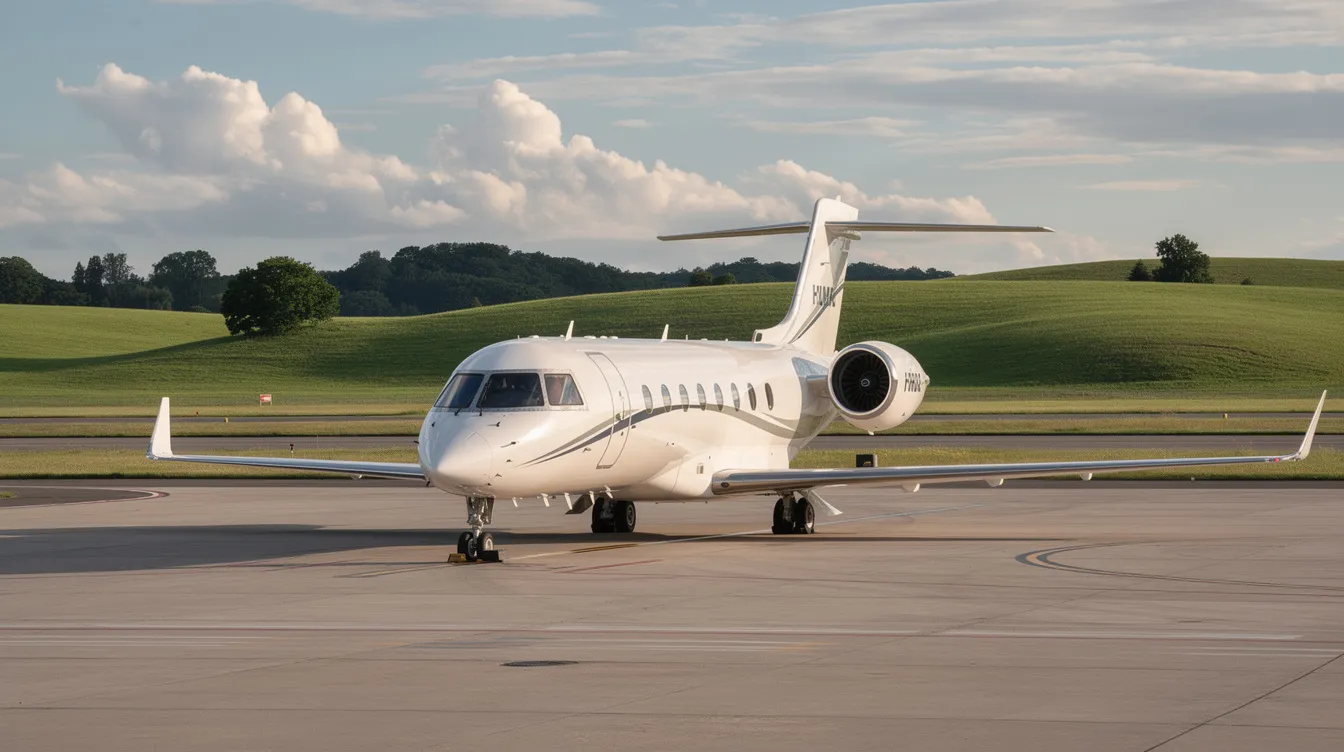
Mountain View and Sunnyvale sit along US-101, CA-85, and CA-237, putting nearby airports within a 15- to 30-minute drive of the Moffett Federal Airfield and Ames Research Center area. Moffett Community Housing, branded "The Villages at Moffett and Parks," provides privatized on-base housing for active military families and their dependents. Most Jettly customers, however, stay in nearby hotels: business hotels near major tech campuses, boutique properties in downtown Mountain View or Palo Alto, or extended-stay options for longer projects.
Jettly's trip support teams coordinate ground transport from whichever nearby airport is used to the client's hotel, office, or to visitor entrances at Ames Research Center or the Moffett Field Museum, just as they do for private jet charter clients in Atlanta, Georgia. For those planning multi-day trips to San Jose and the surrounding area, the region's density of lodging and dining options simplifies logistics, much like the support offered for private jet travel to and from Lagos.
Moffett Federal Airfield is a Prior Permission Required facility operated by NASA and the U.S. government. Access is generally restricted to federal, military, research, and specifically authorized corporate flights. President Roosevelt-era precedents of military priority still shape access policy. Most on-demand private jet charters arranged through Jettly use nearby public airports like KSJC, KPAO, or KSQL to reach Mountain View and the Ames Research Center area.
San Jose International (KSJC) is often the most practical choice for larger jets, with full-service FBOs and extensive instrument procedures, located roughly 15 to 25 minutes by car. Palo Alto (KPAO) and San Carlos (KSQL) are popular for light jets and turboprops and offer shorter ground travel times to Mountain View and Sunnyvale.
The Moffett Field Museum is generally open on specified days and times. Base access controls or ID requirements at the gate may apply. Check the museum's official website for current opening hours, ticket information, and any temporary closures for private events before visiting.
Jettly is a charter broker and digital marketplace, not an air carrier, and its blog even profiles major providers such as NetJets, a leader in private aviation. All flights are operated by properly certified third-party air carriers. Jettly provides instant pricing, broad aircraft access across over 20,000 aircraft, and expert trip planning into the most suitable nearby airports for each customer's schedule and aircraft requirements. Many active facilities at these airports support a range of aircraft sizes and mission types, from ad hoc charters to jet card-based flying.
Instrument procedures such as ILS and RNAV approaches are critical for reliable access during low visibility, marine layer, or winter weather common around San Francisco Bay. Jettly's partner operators and dispatchers factor available instrument approaches and alternates into flight planning to minimize weather-related delays for business and leisure travelers. Metric and imperial units for runway lengths, visibility minimums, and approach altitudes are published in FAA charts for each field.
Moffett Federal Airfield is an important NASA, military, and research facility, but it is not a routine public airport for private charter arrivals. Travelers should confirm access directly before planning to land at KNUQ and consider nearby airports such as San Jose International, Palo Alto, or San Carlos for more predictable access to Mountain View, Sunnyvale, and NASA Ames.
Jettly helps travelers compare aircraft and nearby airport options through instant pricing and access to a broad charter marketplace. As a charter broker, Jettly coordinates trips operated by properly certified third-party carriers, helping business and leisure travelers choose an itinerary that fits their schedule, aircraft needs, and ground transportation plans.
Share this post:
Jay Franco Serevilla
Nov 14, 2026
|
5
min read
Discover tips and trends in the industry.
5
min read
Moffett Federal Airfield (KNUQ) Guide for Private Flyers and History Enthusiasts
Moffett Federal Airfield (KNUQ) is a historic site in California, transitioning from a Naval Air Station to a NASA research hub. With restricted access for private flyers, understanding nearby airport options is crucial for efficient travel to Silicon Valley. The airfield also features a museum that showcases its rich aviation history.
Read More
5
min read
Southwest Flight Status: How to Check, Decode, and Stay in Control (and When to Consider Private Charter)
Staying updated on your Southwest Airlines flight status is crucial for a smooth travel experience. This guide outlines how to check and interpret flight statuses, as well as when to consider private charter options through Jettly for more control over your travel plans.
Read MoreStay updated with our latest insights and tips to elevate your journey with us.
MEMBERSHIPS AND ASSOCIATIONS



© 2026 Jettly Inc. All rights reserved.
Disclaimer: Jettly operates as a charter broker, offering access to a global digital jet charter marketplace. Jettly is not a direct air carrier and does not own or operate aircraft. All advertised flights are conducted by third-party air carriers that are fully licensed and hold the appropriate Part 135 or Part 121 certifications issued by the Federal Aviation Administration (FAA) or equivalent regulatory authorities under U.S. or foreign law. Jettly complies fully with the U.S. Department of Transportation's Part 295 and Part 298 Charter Broker regulations. Jettly does not carry additional liability insurance. Passengers are covered by aircraft operator insurance. TICO: 50023770


