



Login
Get Instant Pricing On 23,000+ Aircraft

>

When planes crash, the news cycle moves fast. Headlines appear within minutes. Footage spreads across social media. Fear spikes. But behind the alarming images lies a more grounded reality: commercial aviation remains one of the safest ways to travel, and each incident—no matter how minor—triggers a system designed to make flying safer.
This article explains what happens when planes crash or collide, why these events are rare, how investigators turn close calls into better rules, and what it means for travelers considering commercial and private aviation.

When planes crash or collide, the response is immediate and structured. Emergency crews respond, passengers follow tested procedures, and agencies such as the National Transportation Safety Board (NTSB) begin investigating.
Aviation accidents are statistically rare. In 2025, the global all-accident rate was approximately 1.32 accidents per million flights, down from 3.72 per million in 2005. A multi-layered safety system helps prevent crashes, and investigations lead to improvements. A multi-layered safety system refers to the combination of redundant aircraft systems, mandatory maintenance, air traffic control, pilot training, and regulatory oversight that work together to prevent accidents.
In the Miami International Airport collision involving a Copa Airlines Boeing 737 and a UPS Boeing 767, two people reported minor injuries.
Investigations have helped drive better crew training, enhanced ground radar, stricter duty-time rules, and improved taxiway procedures.
Jettly connects travelers with certified third-party carriers and offers transparent pricing and access to more than 20,000 aircraft globally.
The phrase “when planes crash” covers a wide range of events. It can describe a catastrophic accident or a less severe event, such as a ground collision in which aircraft make contact on a taxiway. Understanding the difference matters.
Three broad categories define many aviation events:
Crashes involving aircraft loss: The plane is destroyed or damaged beyond repair. These are among the rarest events.
Hard landings and runway excursions: An aircraft lands with excessive force or leaves the runway. Many such events are survivable.
Ground collisions and taxiway incidents: Aircraft, or an aircraft and a vehicle, make contact while on the ground. Damage and injuries vary.
The Miami collision involved a Copa Airlines Boeing 737 arriving from Panama City, and a UPS Boeing 767 cargo aircraft headed to Bogotá, Colombia. The aircraft made contact at a taxiway intersection. The Copa flight had 172 people aboard, according to reports.
Air traffic control instructed the UPS plane to yield to the Copa flight. Preliminary information indicated that the UPS aircraft did not stop. The collision damaged the UPS plane’s nose and the Copa aircraft’s wing. Two people reported minor injuries, and no fatalities were reported.
The NTSB opened an investigation. The agency said it expected to issue a preliminary report within 30 days. Investigators will establish the sequence of events and determine contributing factors; conclusions should not be assumed before the investigation is complete.
When an impact or collision occurs, a well-practiced response begins:
Pilots assess the situation. If there is fire, structural damage, or a fuel leak, the captain may order an evacuation. If a ground incident does not present an immediate danger, the crew may keep passengers onboard until emergency teams confirm it is safe to leave.
If evacuation is ordered, cabin crew direct passengers to exits and tell them to leave belongings behind. Emergency procedures and training prepare crews for rapid evacuations.
Airport fire and rescue teams respond with firefighting and rescue equipment. Paramedics assess and treat injured people.
Responders prioritize immediate threats, including fire, smoke, and fuel leaks, while coordinating medical care and passenger movement.
Modern commercial aircraft are designed with crashworthiness in mind. Fire-resistant cabin materials, energy-absorbing seats, and reinforced structures can help protect occupants in an impact.
Once immediate danger is contained, the focus shifts to protecting people and evidence:
Affected runways or taxiways may be closed, and air traffic may be rerouted while officials assess the scene.
Investigators control access to protect evidence and the privacy of those involved.
Flight data recorders, cockpit voice recorders, air traffic control audio, debris patterns, and maintenance logs may be preserved for analysis.
Even a ground incident with limited injuries can prompt a formal investigation. The NTSB investigates aviation safety incidents to identify lessons that could help prevent future events.
Aviation accidents capture headlines precisely because they are uncommon. In 2025, airlines worldwide completed approximately 38.7 million flights. About 51 met the threshold for classification as accidents, an all-accident rate of roughly 1.32 per million flights. Fatal accidents were rarer still, occurring roughly once every 5.6 million flights. Commercial aviation is significantly safer than it was in earlier decades, with accident rates declining from 3.72 per million flights in 2005.
When an accident happens, understanding its causes is essential to reducing the chance of recurrence.
Aviation accidents and serious incidents may involve several contributing factors. Statistics vary according to the dataset and definitions used, so percentages should be treated as broad estimates rather than fixed shares.
Human factors: Human error is estimated to account for roughly 50% to 80% of aviation incidents. Pilot decision-making, execution errors, fatigue, and communication can all play a role. Spatial disorientation is a risk in low visibility or at night. Inadequate preparation and fuel management can also contribute to accidents.
Air traffic control and coordination: Air traffic control helps maintain separation and situational awareness, including safe distances between aircraft on the ground and in the air. Misunderstandings between pilots and controllers can contribute to runway incursions. Investigators must determine the specific sequence and causes in each event rather than draw conclusions from preliminary information alone.
Mechanical issues: Mechanical failures contribute to roughly 20% of aviation accidents. Engine, hydraulic, sensor, or control-surface problems can be involved. Scheduled maintenance and inspections are mandatory for commercial aircraft, and redundant systems are designed to prevent a single failure from causing a crash.
Weather: Weather conditions account for roughly 11% to 12% of aviation crashes. Wind shear, icing, and thunderstorms can create hazards, while severe weather can increase pilot workload. Bird strikes during takeoff or landing can damage engines, windshields, or control surfaces.
Organizational factors: Training gaps, maintenance problems, and weak safety practices can reduce safety margins. These factors may interact with other risks rather than cause an accident on their own.
The Miami taxiway collision is an example of why ground procedures matter. Air traffic control instructed the UPS aircraft to yield to the arriving Copa flight. The NTSB’s preliminary information said the UPS plane had been instructed to give way but did not stop. The investigation will establish how the events unfolded and whether other factors contributed.
Other ground incidents can involve service vehicles, runway excursions, tail strikes, ground-handling damage, or near-misses at taxiway crossings. Each can provide investigators with information about procedures, communication, airport layout, and operational safeguards.
Modern aircraft use multiple design features to reduce risks and protect occupants:
Reinforced cabin floors and fuselage frames help absorb impact energy.
Fire-resistant materials can slow the spread of flames.
Seats are designed to meet crash-force standards and absorb loads.
Smoke detection and suppression systems protect cargo holds.
Redundant flight controls allow backup systems to take over if a primary system fails.
Pilots also undergo extensive simulator training to prepare for emergencies. They practice scenarios such as engine failures and abnormal procedures so they can respond methodically under pressure.
After the scene is stabilized, investigators follow a structured process:
Analyze flight data recorders and cockpit voice recordings to reconstruct the event.
Map and photograph debris and catalog relevant wreckage.
Interview crew members, air traffic controllers, and maintenance staff.
Review radar tracks, weather reports, communication logs, and maintenance records.
Issue a preliminary report when available. For the Miami collision, the NTSB expects a preliminary report within 30 days.
Prepare a final report that identifies causes and contributing factors and may include safety recommendations. This can take a year or longer.
Aviation investigations recommend changes to prevent future accidents. Their findings can lead to revised rules, procedures, training, or technology. The NTSB’s investigation of the Miami collision is ongoing, so the final causes and any recommendations remain to be established.
Past investigations have contributed to practical safety improvements:
Crew resource management (CRM): Training strengthens cockpit communication and coordinated decision-making. It is standard across commercial and charter operations.
Enhanced ground radar: Airport surface detection systems track aircraft and vehicles on taxiways, helping reduce collision risks.
Duty-time limits: Regulations limit pilot duty and flight time and require rest to address fatigue risks.
Taxiway signage and lighting: Clearer markings can reduce confusion at complex airport intersections.
Checklist procedures: Updated taxi clearances and hold-short procedures help crews manage runway-incursion risks.
These lessons extend beyond commercial airlines. Certified charter operators flying under FAA Part 135 must meet applicable regulatory requirements, including requirements related to operations, maintenance, and safety. When an investigation leads to industry-wide changes, those changes can also affect operators that fly private jet charter missions through platforms like Jettly.
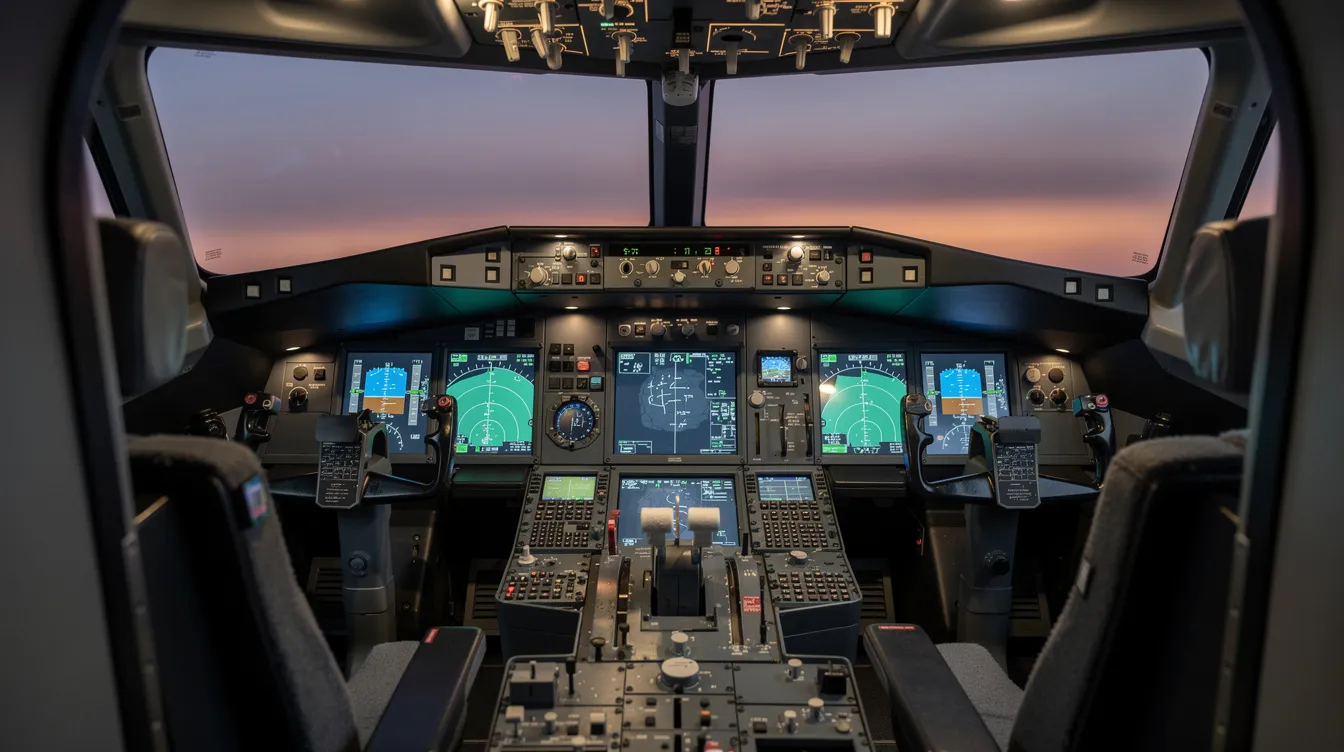
When people search “when planes crash,” they often want more than a news summary. They want practical guidance: what happens if something goes wrong, how to make informed choices, and whether private aviation offers a different safety experience.
Major airlines and reputable charter operators work within strict safety frameworks. Their operations differ in schedule, aircraft, airports, and regulatory requirements. Private charter is not categorically safer; the operator, aircraft, crew, and specific circumstances matter.
|
Factor |
Commercial airlines |
Private charter (certified operator) |
|---|---|---|
|
Airport access |
Often major hubs with busy ground traffic |
May use regional airports with fewer movements |
|
Schedule |
Fixed schedules |
Departure times selected by the traveler, subject to availability and operating conditions |
|
Passenger load |
Often 150–400+ passengers |
Commonly 4–16 passengers, depending on aircraft |
|
Ground operations |
May involve busy terminals and taxiway crossings |
May offer direct ramp access and less terminal congestion |
|
Oversight |
FAA Part 121 in the U.S.; other applicable standards |
FAA Part 135 in the U.S., with relevant operator certifications and audits |
Miami International handles heavy daily traffic, including complex taxiway movements. A smaller airport used by private aircraft may have fewer ground movements, but airport choice alone does not determine flight safety. Private charter gives travelers more control over departure airports, timing, and aircraft selection, while tools such as Jettly’s airport locator can help identify suitable departure and arrival options, and weather, crew, and operator procedures remain important.
Private flights operated by Part 135 charter companies are subject to regulatory requirements. Travelers can ask about the operator and flight before booking. Relevant considerations include:
Whether the operator holds the required Air Carrier Certificate.
Pilot qualifications, experience, and training.
Aircraft inspection and maintenance schedules.
Safety management and incident-reporting practices.
Applicable federal oversight and independent safety audits.
For travelers asking whether private jets are safe, the answer depends heavily on the operator behind the flight. A booking platform should make clear which carrier operates the aircraft.
Jettly is a digital charter broker and marketplace. It does not own or operate aircraft. It connects travelers with properly certified third-party carriers and provides access to a global inventory of more than 20,000 aircraft. Travelers can compare available private charter aircraft and pricing, choose on-demand booking or explore membership options, and consider airports beyond major commercial hubs.
Jettly’s private jet charter cost estimator and instant-quote workflow help travelers review options for their route and preferences. The carrier operating the flight is responsible for the aircraft and flight operations.
Private charter can offer practical differences, but they should not be confused with a guarantee of lower risk. Resources such as a guide to charter airlines and private flights can help travelers understand the options. Depending on the trip, travelers may benefit from:
A smaller passenger group and a more direct boarding process, with optional services such as dedicated in-flight catering for private jets.
Direct access to the operating crew for questions.
A choice of aircraft models and configurations, subject to availability.
Flexibility to adjust departure times when operational conditions require it, and opportunities to reduce costs by sharing or crowdsourcing private jet flights when appropriate.
Access to alternate airports that may better fit the route, alongside other affordable aircraft rental options for travelers comparing ways to fly privately.
The operator retains responsibility for safe operational decisions. A flight may be delayed or changed because of weather, aircraft condition, or crew requirements.
If safety is a primary concern, consider these steps before booking any flight:
Review the operator’s safety record and incident history.
Ask about pilot experience, recent training, and crew qualifications.
Ask about the aircraft’s maintenance and inspection history.
For private charter, compare aircraft categories—such as light, midsize, and heavy jets—to find one that fits the route, passenger count, baggage, and runway requirements, and consider insights on top private plane manufacturers for different budgets and needs.
Use Jettly’s instant-quote system to compare available options and review affordable private jet charter costs without a long-term commitment.
For travelers who want more control over their flying experience, exploring private jet charter can be a practical next step, whether through platforms like Jettly or established providers profiled in guides to leaders such as NetJets. Learn more about Jettly’s membership and on-demand models at https://www.jettly.com.
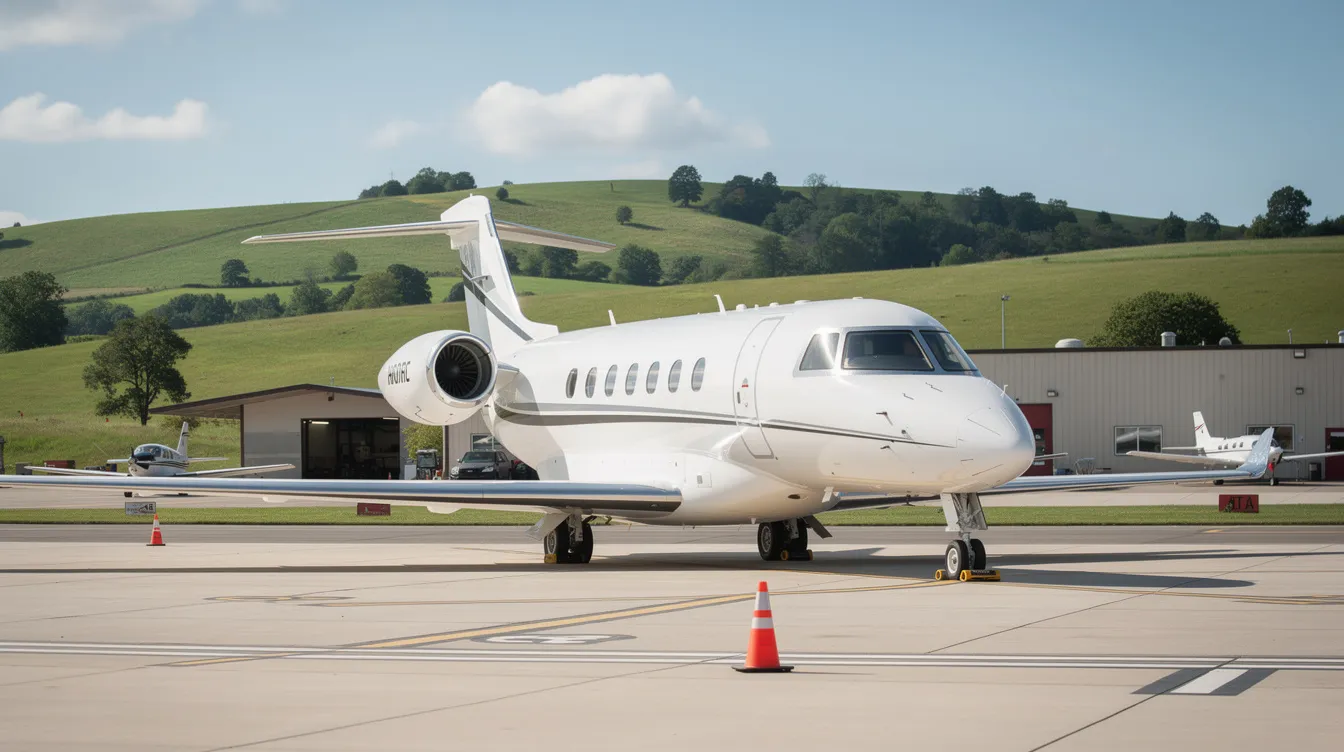
Commercial aviation is one of the safest forms of transport. In 2025, approximately 38.7 million flights took place worldwide. The all-accident rate was roughly 1.32 per million flights, while fatal accidents were far rarer—about one per 5.6 million flights. No form of travel is entirely risk-free, but aviation safety has improved substantially over time.
The answer depends on the operator’s maintenance standards, pilot training, aircraft, and regulatory oversight—not simply whether a flight is private or commercial. Travelers should check which certified carrier will operate the flight and ask about its qualifications and safety practices.
Jettly is a charter broker, not an aircraft operator. It connects customers with properly certified third-party carriers and is frequently listed among leading private jet charter companies. For more information, see Jettly’s guide to private jet safety ratings.
Stay calm and follow the flight crew’s instructions. If an evacuation is ordered:
Leave luggage and personal belongings behind so they do not slow evacuation or block exits.
Follow crew directions to the nearest usable exit.
Once outside, move away from the aircraft and follow emergency responders’ instructions.
Accept a medical assessment, even if injuries seem minor.
After a ground collision, the crew and emergency teams will decide when it is safe to leave the aircraft. Do not assume an evacuation is necessary unless instructed.
No route or airport can eliminate risk. Travelers can, however, consider operational factors such as airport congestion, schedule, and available facilities. Private charter may offer access to alternate airports with different traffic patterns, and travelers focused on budget can apply tips for booking the cheapest private jet flights, but the operator’s safety standards and real-time conditions remain central.
Jettly is a charter broker and digital marketplace that connects travelers with certified third-party operators. The platform provides access to aircraft options and pricing so travelers can compare available aircraft categories, configurations, and costs before booking.
Travelers can review options across more than 20,000 aircraft globally, book on demand or explore membership programs, and consider airports beyond major commercial hubs, using tools such as Jettly’s jet card flight cost estimator when evaluating membership-style solutions. Ready to explore private travel on your terms? You can buy a seat on a private jet through shared and on-demand options, or compare aircraft and request a quote at https://www.jettly.com.
When planes crash—or collide on the ground—the immediate response is to protect passengers, treat injuries, and secure the scene. Investigators then review evidence to determine what happened and recommend changes that could reduce future risk. In the Miami taxiway collision, the NTSB investigation is ongoing, and a preliminary report is expected within 30 days. The final findings will clarify contributing factors.
Commercial aviation is significantly safer than in past decades, thanks to trained crews, air traffic control, aircraft redundancy, required maintenance, and independent investigations. For private aviation, safety depends on the specific aircraft, crew, and operator—not simply whether a flight is private or commercial. Jettly is a charter broker connecting travelers with properly certified third-party carriers. Its instant-quote workflow and global aircraft marketplace help travelers compare available options.
Ready to explore private travel on your terms? Compare flight options or request a quote.
Share this post:
Jay Franco Serevilla
Nov 20, 2026
|
5
min read
Discover tips and trends in the industry.

5
min read
How to Find Empty Seats on Private Jets: A Practical Guide to Empty Legs with Jettly
Finding empty seats on private jets is easier than it seems, primarily through discounted empty leg flights. These repositioning flights can save travelers 25% to 75% compared to standard charter rates, making private travel more accessible. This guide outlines how to locate these flights, what to consider before booking, and when they are most beneficial for your travel needs.
Read More
5
min read
Victor Empty Legs vs. Jettly Empty Leg Flights: How to Find the Best Deals
This guide compares Victor and Jettly empty leg flights, highlighting how travelers can save significantly on private jet travel. While both platforms offer discounted repositioning flights, they differ in geographic coverage and pricing workflows. Flexibility in travel plans can lead to substantial savings, making empty legs an attractive option for those willing to adapt their schedules.
Read MoreStay updated with our latest insights and tips to elevate your journey with us.
MEMBERSHIPS AND ASSOCIATIONS



© 2026 Jettly Inc. All rights reserved.
Disclaimer: Jettly operates as a charter broker, offering access to a global digital jet charter marketplace. Jettly is not a direct air carrier and does not own or operate aircraft. All advertised flights are conducted by third-party air carriers that are fully licensed and hold the appropriate Part 135 or Part 121 certifications issued by the Federal Aviation Administration (FAA) or equivalent regulatory authorities under U.S. or foreign law. Jettly complies fully with the U.S. Department of Transportation's Part 295 and Part 298 Charter Broker regulations. Jettly does not carry additional liability insurance. Passengers are covered by aircraft operator insurance. TICO: 50023770


