


Login
Get Instant Pricing On 23,000+ Aircraft

>

The Boeing 777‑200LR is one of the most capable ultra-long-haul aircraft flying today, connecting distant city pairs without a fuel stop. But how many people can it actually carry? The answer depends on the airline, the route, and how the cabin is configured. This guide breaks down everything about the Boeing 777-200LR seating capacity-from Boeing's official numbers to real-world airline layouts, comfort trade-offs, and what this all means if you are planning a large-group charter.
The Boeing 777‑200LR seating capacity typically ranges from about 266 to 317 seats in standard airline layouts and can reach up to 440 seats at the aircraft's maximum exit limit. Most operators, however, stay well below that ceiling due to the aircraft's ultra-long-haul mission profile.
Boeing's published baseline places the 777‑200LR at roughly 301 seats in a three-class layout and up to about 317 seats in a two-class configuration. Typical seating capacity varies from 276 to 440 passengers depending on the layout, though densities above 350 are rare on this variant.
Real-world examples vary widely. Emirates operates a refreshed two-class Boeing 777‑200LR with updated business and economy cabins. Carriers such as Air Canada, Air France, British Airways, United Airlines, Japan Airlines, and China Airlines use similar design logic across their 777 fleets, offering useful comparison points even when they operate more 777‑200ER or 777‑300ER aircraft.
Seating capacity directly affects comfort. The choice between 9-abreast and 10-abreast economy seating shifts seat width from roughly 18.5 inches down to about 17 inches per passenger, a difference that matters significantly on flights lasting 14 hours or more.
For charter and group travel, understanding what a 300-seat aircraft looks like helps planners decide whether a single wide-body, multiple smaller jets, or a standard private jet cabin fits their mission. Jettly focuses on private aircraft charter but uses the Boeing 777‑200LR as a benchmark to explain capacity, range, and use cases for large group charters and VIP configurations.
The Boeing 777‑200LR-"LR" standing for Longer Range-is an ultra-long-haul, twin-engine wide-body introduced in the mid-2000s as part of the second generation of the Boeing 777 family from Boeing Commercial Airplanes. The aircraft is designed for ultra-long-haul routes, offering the capability to connect city pairs that were previously impractical without a stop.
The 777‑200LR has a maximum range of 8,555 nautical miles and can carry a maximum payload of 228,700 pounds. It is powered by GE90-110B1 or GE90-115B engines, among the most powerful jet engine options ever fitted to a twin-engine airliner. In 2005, a 777‑200LR set a record for longest non-stop flight at 11,664 nautical miles, flying from Hong Kong to London eastbound-a demonstration that created long-range success for the platform.
Compared with the standard 777‑200 and 777‑200ER, the 777‑200LR features a stronger structure, additional fuel capacity via optional auxiliary fuel tanks, and a higher maximum takeoff weight. These changes let it serve routes like Dubai–Los Angeles and Doha–Auckland non-stop, but the Boeing 777-200LR trades lower passenger capacity for ultra-long-range capability. For a broader look at how aircraft sizing works, see Jettly's guide to the size of planes and a dedicated overview of the Boeing 777‑200LR specs, range, and charter rates.
Boeing publishes "typical" seating capacities in its specification sheets, but individual airlines rarely match them exactly. Each operator customises interiors, selects different seat models, and allocates cabin space according to its own route economics and brand positioning.
According to Boeing's December 2024 specification document, the 777‑200LR's standard figures are approximately 301 seats in a three-class layout and around 317 seats in a denser two-class configuration. These baseline numbers assume economy seating at 9-abreast with moderate pitch and traditionally proportioned premium cabins.
The aircraft's maximum exit limit is capped at 440 seats, a regulatory ceiling set in coordination with the Federal Aviation Administration based on emergency evacuation requirements. The same specification document notes that higher-density two-class layouts could push capacity toward 339 seats under more compact arrangements.
However, ultra-long-range missions on the 777‑200LR usually favour fewer passengers and more space per seat. On sectors exceeding 14 hours, increased fuel capacity permits the aircraft to fly farther, but fuel weight consumes payload capacity. That means airlines flying the longest routes often accept lower seat counts to maintain performance, cargo revenue, and passenger comfort rather than squeezing in maximum seats.
Airlines tune their 777‑200LR seating capacity to match their route networks. Ultra-long-haul flights prioritise comfort and premium revenue, while some carriers seek higher density on shorter missions where the aircraft's range is less of a constraint.
A typical cabin structure includes one or two premium cabins-business class and sometimes first class-along with an optional premium economy section and a large economy cabin. Total capacity is a product of how much floor space is allocated to each class. Common business class layouts include 1-2-1 for direct aisle access or 2-2-2 for a more traditional arrangement. Premium Economy seats typically offer a 2-4-2 configuration when equipped, sitting between the business cabin and the main economy section.
The impact of seat pitch and width on capacity is significant:
|
Factor |
Higher Capacity |
Lower Capacity |
|---|---|---|
|
Economy abreast count |
10-abreast (3-4-3) |
9-abreast (3-3-3) |
|
Economy seat pitch |
30–31 in |
33–36 in |
|
Premium cabin size |
Minimal business section |
Large business + first |
|
Galleys/lavatories |
Compact arrangement |
Generous service areas |
Airlines operating related 777 variants-like British Airways, Air France, United Airlines, Japan Airlines, and China Airlines-use similar design logic. Their layouts provide useful benchmarks for understanding possible 777‑200LR configurations even when they primarily fly the 777‑200ER or 777‑300ER.
Three-class layouts featuring first, business, and economy cabins are common on long-haul flagship routes. Airlines balance high-yield premium seats against a large economy cabin to maximise total revenue on competitive corridors.
A representative three-class configuration around Boeing's 301-seat baseline might include:
First Class: 4 to 8 suites if installed, arranged in a 1-1-1 or 1-2-1 layout with generous pitch
Business Class: 40–48 lie-flat seats in a 1-2-1 or 2-2-2 arrangement
Economy Class: approximately 220 to 300+ seats depending on layout, typically 9-abreast with roughly 32 inches of pitch
Configuration for Economy Class ranges typically from 220 to 300+ seats depending on layout and how much floor space is reserved for premium cabins. Such layouts usually include spacious galleys, multiple lavatories, and forward flight crew rest areas, which slightly reduce maximum possible seating but are essential on flights exceeding 14–16 hours. The aft cabin crew rest compartment also occupies space that could otherwise hold a few extra rows.
Some carriers have removed first class from their 777 fleets entirely, turning former three-class 777‑200LRs into a business-plus-premium-economy-plus-economy configuration-or a straightforward two-class setup. This shifts the balance between cabins but does not change the overall cabin footprint.
Two-class layouts combining business and economy-sometimes with a small premium economy section-are now the dominant configuration for most surviving 777‑200LR fleets. The Boeing 777-200LR often accommodates 300 to 375 passengers in a two-class configuration, depending on how aggressively the operator packs the economy cabin.
Using the 317-seat Boeing benchmark as a reference, a realistic example would include about 40–48 business class seats arranged 1-2-1 or 2-2-2, with roughly 260–275 economy seats at 9-abreast.
The trade-offs airlines make are straightforward:
More business seats for premium routes (e.g., North America–Middle East) can depress total capacity toward 280–300 seats.
A leaner business cabin on regional routes can nudge capacity closer to or just above 320 seats.
Adding premium economy (typically 24 seats in a 2-4-2 layout) reduces economy rows but captures fare premiums.
Emirates' refreshed two-class Boeing 777‑200LR is a well-known example. The airline pairs an upgraded business class-wider seats arranged in pairs-with a refreshed economy cabin optimised for comfort on long flights. With 38 business and 264 economy seats, the total comes to approximately 302 passengers.
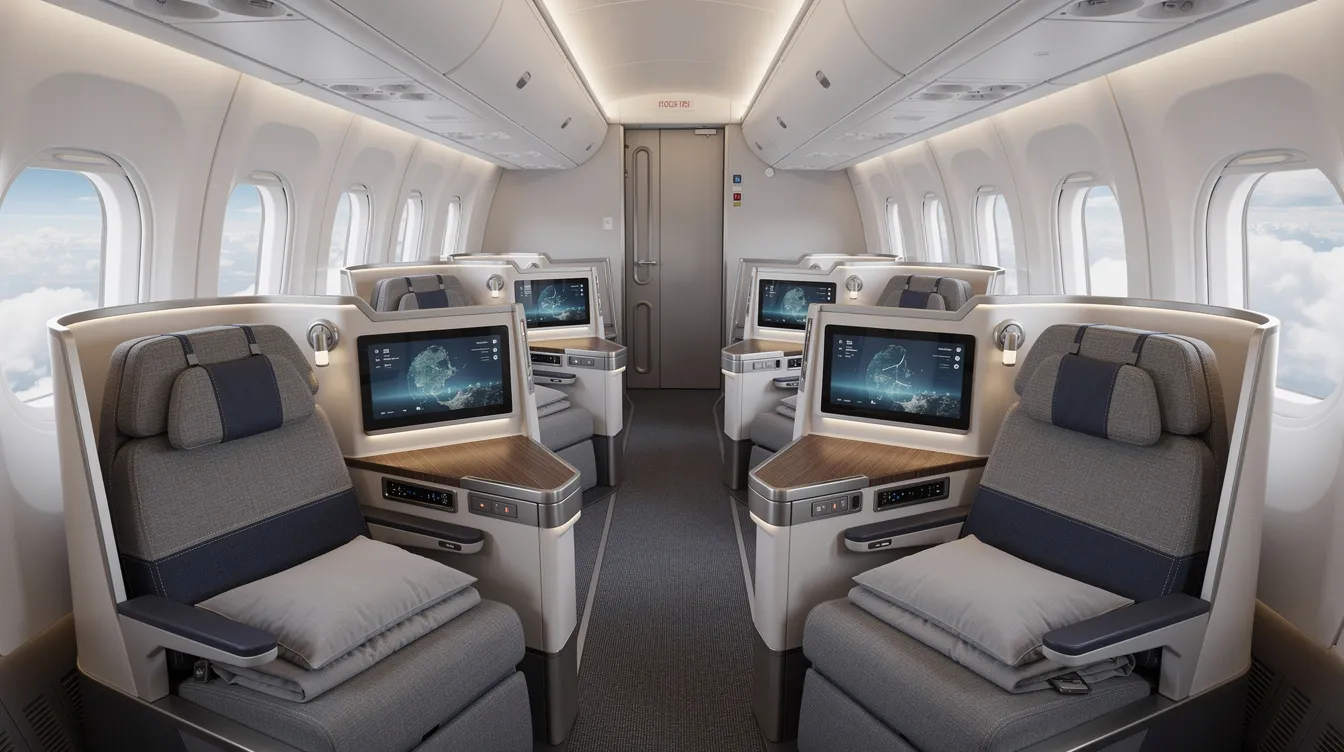
While the 777‑200LR is usually reserved for long-range missions, some operators and charter specialists can reconfigure the cabin at higher density for religious pilgrimages, seasonal tourism, or ad-hoc contracts. For more on how commercial airline charters work in these scenarios, Jettly maintains a dedicated guide.
High-density layouts reduce or remove premium cabins, switch to 10-abreast economy, and tighten pitch. This can push capacities well above 330 seats in a 777‑200LR airframe. The aircraft's maximum exit limit is capped at 440 seats, though reaching that ceiling would require extreme compromises in comfort and service facilities. Densities above 350 seats are far more common on the longer-fuselage 777‑300ER.
These configurations change the passenger experience significantly:
Seat width drops to approximately 17 inches
Personal space and storage are reduced
Fewer lavatories serve more passengers
Less galley space limits catering options
For large group movements-sports teams, corporate incentives, government delegations-charter brokers like Jettly may coordinate with operators that use high-density or mixed-class configurations based on client budget and comfort priorities. Pakistan International Airlines, for instance, has operated 777‑200LR aircraft with approximately 310 seats, and Ethiopian Airlines has pushed to around 315 seats in layouts designed for maximum throughput.
Emirates is one of the most visible operators of the Boeing 777‑200LR, deploying its fleet of ten aircraft on long routes from Dubai to cities across the Americas, Africa, and Asia.
The airline's refreshed two-class cabin features a business class reconfigured into wider seats arranged in 2-2-2 pairs with updated in-flight entertainment, leather headrests, and a modernised economy class with new upholstery and seat-back screens. The Boeing Signature interior treatment brings the 777‑200LR closer in feel to Emirates' newer aircraft.
This refit affects seating capacity in a specific way: the business cabin grows slightly more spacious per passenger with wider individual seats, while economy remains large enough to keep total capacity efficient for long-haul markets. The result is often just under or around the 300-seat mark, balancing revenue-generating premium seats against volume in economy.
Emirates' extensive Boeing 777 fleet-including the 777-300ER- means the 777‑200LR sits alongside larger variants, offering flexibility in both superior range and seating capacity. For charter planners, the Emirates configuration serves as a useful reference point when estimating what a long-range wide-body cabin looks and feels like in practice.
While not every major airline flies the 777‑200LR in large numbers, their 777‑200ER and 777‑300ER layouts offer concrete, comparable data points for understanding what a Boeing 777 cabin can look like at different capacities. Eight major airlines collectively operate hundreds of 777 variants, and their configurations illustrate the spectrum of possibilities.
United Airlines operates 777‑200/200ER aircraft often seating between roughly 270 and 320 passengers in various Polaris business, Premium Plus, and Economy layouts. This mid-range density approach reflects a balance between domestic and regional operations and long-haul international flying.
British Airways and Air France use 777‑200ER and 777‑300ER aircraft in three-class cabins, often around 280–314 seats for the 777‑200ER and 350–472 seats for denser 777‑300ER variants. Air France was a launch customer for several Boeing platforms, and customer Air France configurations have evolved over decades of 777 service. Airlines began operating the 777 in the mid-1990s, and both carriers have refined their layouts significantly since then.
Japan Airlines and China Airlines provide examples of Asia-Pacific carriers using 777 variants in both premium-heavy and leisure-oriented layouts. Japan Airlines' approach often prioritises comfort, while China Airlines adjusts seat counts to match route profiles and passenger preferences. All Nippon Airways (Nippon Airways) also operates 777 variants on Pacific routes.
Singapore Airlines, Cathay Pacific, and Delta Air Lines round out the major operators. Launch customer Cathay Pacific was instrumental in the 777 program's early success. The 777‑200LR fits within this broader range but skews slightly lower in seat count because it is optimised for ultra-long ranges.
The Boeing 777-200LR features a twin-aisle cabin with a width of 5.86 meters (about 19 ft 3 in). This generous cross-section is what allows airlines to choose between 9-abreast and 10-abreast seating in economy-a decision that has a measurable impact on passenger comfort.
9-abreast layouts (3-3-3 or 2-5-2) offer seat widths around 18–18.5 inches and more shoulder room. Most travelers find these configurations noticeably more comfortable, especially on flights longer than 10 hours. Many 777‑200LR operators targeting ultra-long-haul routes favour 9-abreast to reduce passenger fatigue and support premium brand expectations.
10-abreast layouts (3-4-3) increase capacity by 20–30 passengers per aircraft but drop seat width to roughly 17 inches. The narrower seats are comparable to what some passengers experience on many Airbus airliners in economy class, though the 777's cabin width still provides more total volume than narrower single-aisle aircraft.
|
Layout |
Seats per Row |
Seat Width (Economy) |
Capacity Impact |
|---|---|---|---|
|
9-abreast (3-3-3) |
9 |
~18–18.5 in |
Lower total, more comfort |
|
10-abreast (3-4-3) |
10 |
~17 in |
Higher total, tighter fit |
The choice between these layouts is not purely about economics. On ultra-long-haul sectors where the 777‑200LR excels, carrying fewer passengers per row translates into a better experience-and that experience supports higher fare levels that can offset the lost seats.

Seat pitch-the distance from one seatback to the same point on the seat in front-is the single biggest determinant of how many rows, and therefore how many passengers, fit in each cabin class on a 777‑200LR.
The Boeing 777-200LR has a published seat pitch of 40 inches as a reference point, though actual values differ by class:
|
Cabin Class |
Seat Width |
Seat Pitch |
Recline/Bed Length |
Typical Abreast Layout |
|---|---|---|---|---|
|
Business Class |
21 inches |
72–78 inches |
180° full flat bed |
1-2-1 or 2-2-2 |
|
Premium Economy |
~19–20 inches |
37–38 inches |
20 inches recline travel |
2-4-2 |
|
Economy Class |
~17–18.5 inches |
31–36 inches |
6–8 inches recline |
9-abreast or 10-abreast |
When airlines increase pitch or add premium economy, they reduce the number of economy rows. This can lower overall seating capacity by several dozen seats but improve perceived value and support higher fares.
Air Canada's 777‑200LR configuration illustrates this balance clearly. The Boeing 777-200LR seats 40 in business class, accommodates 24 passengers in premium economy class, and the economy class on the Boeing 777-200LR has 236 seats-for a total of approximately 300 passengers. That mix of pitch, width, and recline across three cabins is a textbook example of how manufacturers typically designed aircraft interiors to balance comfort against economics.
The 777 family includes several passenger variants-777‑200, 777‑200ER, 777‑300, 777‑300ER, and the upcoming 777X (777‑8 and 777‑9)-plus dedicated freighters including the Boeing converted freighter and production freighter model versions.
Here is how the 777‑200LR fits into the lineup:
|
Variant |
Typical 3-Class Seats |
Fuselage Length |
Key Difference |
|---|---|---|---|
|
777‑200 |
~305 |
209 ft |
The Boeing 777-200 typically has 305 seats in a three-class layout |
|
777‑200ER |
~301 |
209 ft |
The 777-200ER variant has 301 seats in a three-class configuration with extended range |
|
777‑200LR |
~301 |
209 ft |
Maximum range, additional fuel capacity |
|
777‑300ER |
~365 |
242 ft |
Stretched fuselage, high-density option |
Airlines such as Air France and British Airways use 777‑300ER aircraft in high-density layouts up to the 470-seat range, demonstrating how cabin length rather than width drives the very highest seat counts. The 777‑200LR shares external fuselage length with the previous Boeing model 777‑200/200ER but carries more fuel and achieves greater range.
Comparison aircraft like the Airbus A350-900 typically seat around 300 to 350 passengers, placing them in a similar capacity band to the 777‑200LR, alongside popular wide-bodies such as the Boeing 737‑800 for shorter sectors. For ultra-long-haul flights where range and fuel weight are critical, the 777‑200LR's typically lower seating capacity helps maintain performance. For a deeper look at long-range aircraft options, see Jettly's guide to the plane with the longest range.
Beyond standard airline cabins, some 777‑200LR aircraft are converted into VIP or government transports with radically different seating capacity and interior concepts. These presidential aircraft configurations serve heads of state and senior government officials. In some cases, an air force decided to acquire existing aircraft like the 777-200LR; for instance, the official air transport fleet may use the aircraft with a callsign like Japanese Air Force designations on government missions.
Typical VIP or head-of-state 777‑200LR layouts include:
Private suites and bedrooms
Conference rooms and office space
Lounges and reception areas
Staff and security seating
The result is total capacities as low as 40–80 passengers instead of 300+. These bespoke layouts leverage the same cabin volume but trade rows of commercial seats for private jet cabins, workspaces, and living areas. The japan aircraft development corporation-representing japanese aerospace contractors in the broader 777 program-played a role in producing individual aircraft components used across both commercial and VIP variants.
Platforms like Jettly primarily arrange charters on smaller business jets but can coordinate access to wide-body charter options through partners for government, corporate, or large-event movements, and frequent flyers may prefer predictable access through jet card programs for private jets. For travelers who prioritize onboard service, dedicated in-flight catering for private jets can further enhance the experience. For a look at VIP wide-body options, see the guide to private jumbo jets.
Most private jet charters do not use aircraft as large as the 777‑200LR. Instead, they rely on light, midsize, and large-cabin business jets seating 4–18 passengers for efficiency and privacy.
However, a 777-class commercial aircraft becomes relevant for charter in specific situations, whereas smaller groups might opt for regional types like the Cessna 207 for short, flexible hops:
Sports teams needing to move 50–150+ players, coaches, and staff with equipment
Touring artists requiring stage gear, production crew, and entourage transport
Corporate roadshows where 100+ executives need to arrive simultaneously
Large family celebrations such as destination weddings with hundreds of guests
Time-critical evacuations or repatriation flights
Seating capacity can be adjusted for these charters. Standard airline layouts keep per-seat cost low, while reduced-density business-heavy layouts provide a premium experience. Some operators dedicate zones for staff, equipment, or cargo within the same passenger airliner fuselage.
A digital charter marketplace like Jettly helps clients compare smaller private jets against larger charter aircraft, weighing factors like total passengers, per-seat cost, airport access, and onboard amenities, and tools such as a jet card flight cost estimator make it easier to model repeat-trip pricing. Jettly's global inventory of private charter aircraft illustrates how seating capacity scales from light jets to airliner-class cabins. For groups of around 50, a dedicated guide on private jets for 50 passengers explains the options.
Jettly is a global digital private jet charter platform providing access to thousands of aircraft types-from light jets and turboprops to larger airliner-class aircraft. The platform is designed to make booking transparent and straightforward, supported by educational resources on affordable private jet charter pricing.
Travelers can use Jettly's tools to filter aircraft by seating capacity, range, and price, and an instant private jet charter cost estimator helps translate those choices into budget ranges. This helps planners understand when a 12-seat jet, a 30-seat regional airliner, or a 200-plus-seat wide-body is appropriate for their mission. A 30-passenger plane guide and a comprehensive aircraft charter guide are available on the platform for detailed comparisons.
Even if clients do not charter a Boeing 777‑200LR itself, understanding its seating capacity serves as a benchmark when evaluating large-group options. Knowing that a wide-body carries roughly 300 passengers helps planners gauge whether a narrow-body charter (150–200 seats), multiple mid-size jets, or a single large aircraft is the right fit.
Explore Jettly's aircraft selection and instant pricing features at jettly.com to see real-world capacity ranges and match options against group size, route length, and service expectations, or consult a guide to the best private jet charter companies if you're comparing providers.
Most private flights use aircraft far smaller than the Boeing 777‑200LR, which in its typical airline configuration seats between 266 and 317 passengers. For readers comparing wide-bodies against smaller options, an overview of the cheapest private aircraft options can help frame how cabin size and cost trade off. For a detailed breakdown, see how many passengers a private jet can carry.
Here is how the major private aircraft categories compare:
|
Category |
Typical Seats |
Range |
Best For |
|---|---|---|---|
|
Turboprops |
4–9 |
800–1,500 nm |
Short regional hops |
|
Light Jets |
4–7 |
1,200–2,000 nm |
City pairs under 3 hours |
|
Midsize Jets |
6–9 |
2,000–3,000 nm |
Coast-to-coast flights |
|
Super-Midsize Jets |
8–10 |
3,000–4,000 nm |
Transcontinental |
|
Large-Cabin / Heavy Jets |
10–18 |
4,000–7,500 nm |
Intercontinental |
For groups up to about 18 passengers, a long-range business jet offers 777-style range with far lower seat counts but significantly higher privacy and flexibility. These corporate aircraft serve routes similar in length to those flown by the 777-200LR- think transatlantic or transpacific sectors-without the constraints of commercial airliner schedules.
For groups too large for a single jet but too small to justify a 777-class charter, Jettly can arrange multiple synchronized flights. This approach may still be more cost-effective and convenient than booking an ultra-large aircraft. Boeing and aircraft manufacturers like Airbus both produce platforms across the spectrum, but the right aircraft depends on the mission, not the brand; for example, an Airbus A330‑300 long-haul charter might be a better fit than a 777‑200LR on some routes. Quad-jet aircraft like the 747 and four-engine aircraft like the A340 are also options for very large groups

The number of seats on a 777‑200LR directly affects its cost per seat, profitability for airlines, and cost structure for large-group charters. The aircraft has a maximum takeoff weight of 766,000 pounds, and how that weight budget is divided between fuel, passengers, cargo, and the aircraft itself determines what is economically feasible on each route.
High-density seating spreads fixed operating costs-fuel, crew, maintenance, landing fees-across more passengers. This reduces per-seat cost and can provide a typical operating cost advantage on routes where demand justifies the capacity, much like flight-sharing platforms that crowdsource private jet flights and empty seats to improve utilization. Outstanding fuel efficiency and seat fuel efficiency improve as more seats are filled. However, cramming seats in lowers comfort and may reduce the premium fare potential that makes ultra-long-haul routes profitable.
Ultra-long-haul routes often prefer fewer seats and higher-yield cabins for a specific reason: avoiding severe weight penalties. Fuel tanks derived from the 777‑200ER's design plus optional auxiliary fuel tanks give the 777‑200LR its superior range, but all that fuel is heavy. On hot-and-high departures or challenging runways, every pound matters.
Charter planners working with Jettly consider not just total capacity but also sector length, airport options, and cabin layout when estimating total trip price and recommending aircraft types. Understanding the relationship between seating capacity and operating economics helps clients make smarter decisions. For reference, the cost to charter a 747 illustrates how large aircraft economics scale.
When a 777‑200LR is close to full capacity on a 15-hour route, the passenger experience depends heavily on which cabin you are in. Boarding a first commercial aircraft of this size can feel like entering a small terminal-twin aisles, overhead bins stretching into the distance, and hundreds of fellow travelers settling in.
In economy, a full cabin means overhead bin pressure, limited aisle movement during meal services, and a heightened awareness of your neighbour's proximity. At 9-abreast, shoulder contact is minimal; at 10-abreast, it is nearly constant. Seat pitch-whether 31 or 36 inches-determines whether you can cross your legs or not.
In business class, the experience remains relatively calm even at full load. With 1-2-1 or 2-2-2 configurations, direct aisle access or wide seats buffer passengers from the density of the economy cabin behind them. The lie-flat capability makes a 16-hour flight manageable.
In premium economy, the experience sits between these extremes-more space than economy, less isolation than business, and typically a distinct cabin divider.
Airlines mitigate high load factors through staggered boarding, multiple galley positions, and additional cabin crew. But seat width, pitch, and layout remain the biggest comfort determinants on a long-range flight.
Contrast this with a private jet experience, where a much smaller passenger load ensures fast boarding, quick baggage handling, and quiet cabins. This is why some frequent travelers choose private charter for time-critical or high-value journeys, using resources that explain the costs of renting a private jet to decide when a smaller aircraft is more economical than flying commercially.
Jettly's platform focuses on private charters and can facilitate access to a wide variety of aircraft, including regional airliners and, in some cases, wide-body types for special projects through its group private jet charter service, supported by a broad catalog of private charter aircraft and a detailed overview in its guide to charter airlines and private flights.
The typical steps for arranging a large-group charter:
Submit route and group size details through Jettly's digital platform
Review proposed aircraft with different seating capacities and layouts
Compare pricing transparently across options
Confirm schedule and specify onboard services (catering, ground transport, special equipment)
Finalise booking with clear terms and itinerary
Jettly emphasises transparent pricing and digital booking, enabling planners to quickly see how changing aircraft type or seating configuration impacts cost and travel time. For travelers focused on lowering per-seat costs without booking an entire aircraft, guides on how to buy a seat on a private jet outline shared and semi-private options. The replacement aircraft initiative called for by some operators means older wide-body types may occasionally become available for charter at competitive rates, providing additional options for budget-conscious groups.
Event planners, corporate travel managers, and logistics coordinators can use Jettly's tools to model scenarios-such as one 200-seat aircraft versus multiple 30-seat aircraft-using the 777‑200LR's capacity as a mental reference point for what "very large group" actually means, while resources explaining how to get a seat on a private jet easily can help smaller sub-groups travel more flexibly.
Growing interest in environmental responsibility in aviation has made aircraft size and seating capacity central to discussions about emissions per passenger. The engine aircraft combination on the 777‑200LR-GE90-series engines paired with an aerodynamically refined airframe reflects projected engine developments that prioritise fuel efficiency alongside thrust.
While a 777‑200LR burns substantial fuel on a long-haul sector, filling seats can yield competitive per-passenger emissions compared with smaller aircraft flying multiple hops. Operational performance data established by airlines shows that high load factors on wide-body flights reduce per-passenger carbon intensity significantly.
Right-sizing aircraft to demand is the key principle. Using a 777‑200LR only when its range and seating capacity are truly needed improves overall efficiency. For many missions, smaller private jets or narrow-body charters are more appropriate-both economically and environmentally. Boeing announced plans and unveiled proposals for next-generation aircraft with improved efficiency, and these projected developments will continue to shape the market. Meanwhile, Flight International reported on ongoing improvements to existing aircraft fleets through retrofits and new flight control software that reduce fuel burn.
Jettly can help clients consider efficiency by matching aircraft type, passenger count, and route length. Many operators offer or support carbon offset programmes, which travelers can incorporate into trip planning alongside other decisions about accommodating smaller aircraft or larger wide-bodies, and understanding the landscape of top private plane manufacturers can also inform which efficient models to prioritize.
The Boeing 777‑200LR typically seats roughly 266–317 passengers depending on layout, with Boeing's published references around 301 seats for three classes and 317 for two classes. The aircraft's maximum exit limit reaches 440, but commercial operators almost never approach that figure due to comfort, weight, and regulatory considerations.
Actual seating capacity depends on each airline's balance between premium cabins and economy, seat pitch, and whether 9-abreast or 10-abreast economy is used. Operators like Emirates, United Airlines, British Airways, Air France, Japan Airlines, and China Airlines offer useful comparison points across the 777 family. The 777 program's development-from the replacement aircraft initiative in the late 1980s through FAA and JAA certification to today's fleet-illustrates how twin jets established a new standard in long-haul aviation, largely replacing quad jet aircraft on many routes. Chief test pilot John Cashman flew the first 777 in 1994, and the type has since become one of the most successful Boeing jetliner programmes ever.
The broader 777 story involves GE Capital Aviation Services as a major lessor, launch customer Air France bringing the aircraft to European networks, and Delta Air Lines among US operators. Nine aircraft might serve one route while other carriers deploy fleets of 50 or more across their networks. This flexibility, combined with modified main landing gear and redesigned main landing gear options for different operating weights, means the 777 can accommodate missions from domestic and regional operations to the world's longest flights.
Understanding this capacity spectrum helps travelers set expectations for cabin comfort and crowding on ultra-long-haul flights-and recognise when a 777-class aircraft may or may not be the right choice for a group charter.
Ready to explore private charter options for your next trip? Learn more about Jettly's charter options and explore aircraft by seating capacity at https://www.jettly.com, or compare flexible private jet membership plans if you expect to fly frequently.
These answers address common questions about the 777‑200LR that go beyond what is covered in the sections above. Whether you are booking a commercial ticket or planning a group charter, these details can help you make a more informed decision.
Most commercial Boeing 777‑200LR aircraft seat between about 266 and 317 passengers, depending on whether the cabin is set up in two or three classes. Boeing's standard references cite around 301 seats for three-class and 317 for two-class layouts. This range assumes a mix of business and economy-and sometimes premium economy-with 9-abreast economy seating on long-haul routes. Some operators like Ethiopian Airlines push toward 315 seats with reduced premium cabin areas, while Qatar Airways sits closer to 272 with a more generous layout. The same airport gates and infrastructure that serve other wide-bodies handle the 777‑200LR without modification.
In theory, very high-density layouts could push seat counts beyond 330 seats, and the airframe's maximum exit limit allows up to 440. However, this is uncommon for the 777‑200LR because it is optimised for ultra-long-haul flights where more space per passenger is desirable. The larger 777‑300ER is the variant more often used in 350–470-seat high-density configurations, thanks to its 33 feet of extra fuselage length. Airbus airliners like the A380 also target the high-density segment at a different scale.
Each airline customises its 777‑200LR interiors, so seat counts, class mixes, and seat widths vary. Passengers should always check the specific seat map from sources like SeatMap.app for their flight when booking. Airlines can and do reconfigure cabins over time-Emirates, for example, transitioned from a three-class to a two-class layout on its 777‑200LR fleet, changing total seating capacity in the process. The aircraft began life with one configuration and may look quite different a decade later.
A typical private jet seats 4–18 passengers-far fewer than a 777-200LR- but offers significantly more space and privacy per traveler, plus access to smaller airports located via an airport locator and charter booking tool and flexible schedules. Travelers can use the 777‑200LR as a mental benchmark for very large groups. For smaller teams or families, working with a charter platform like Jettly to find right-sized private aircraft is usually more practical and cost-effective, and resources outlining the best private jet charter companies can help compare providers. Flight control software and modern avionics on private jets match or exceed the technology found on commercial airliners.
While Jettly's core inventory focuses on private business jets and smaller airliners, the platform can often arrange access to large airliner-class aircraft, including 777 variants, through its operator network for special large-group missions. Readers planning events or group travel requiring very high seating capacity can request a custom quote via https://www.jettly.com to explore the most suitable aircraft options or consider Jettly as a flexible NetJets alternative for ongoing private flying needs.
The Boeing 777‑200LR seating capacity reflects a careful balance between ultra-long-range performance and passenger comfort. Typically seating between 266 and 317 passengers, this aircraft offers flexibility through various cabin configurations that prioritize premium cabins or higher-density layouts based on route demands. Its maximum exit limit of 440 seats is rarely utilized due to operational and comfort considerations. For travelers and charter planners, understanding the 777‑200LR’s seating options provides valuable insight into how large-group travel can be managed efficiently, whether for commercial flights or specialized charters. Platforms like Jettly offer access to a broad range of private charter aircraft, helping clients find the right fit for their group size, travel distance, and comfort preferences. Exploring the 777‑200LR seating capacity serves as a useful benchmark when evaluating private and commercial aviation options for ultra-long-haul journeys.
Ready to experience private travel on your terms? Explore flight options or request a quote at https://www.jettly.com .
Share this post:
Jay Franco Serevilla
Aug 4, 2026
|
5
min read
Discover tips and trends in the industry.
5
min read
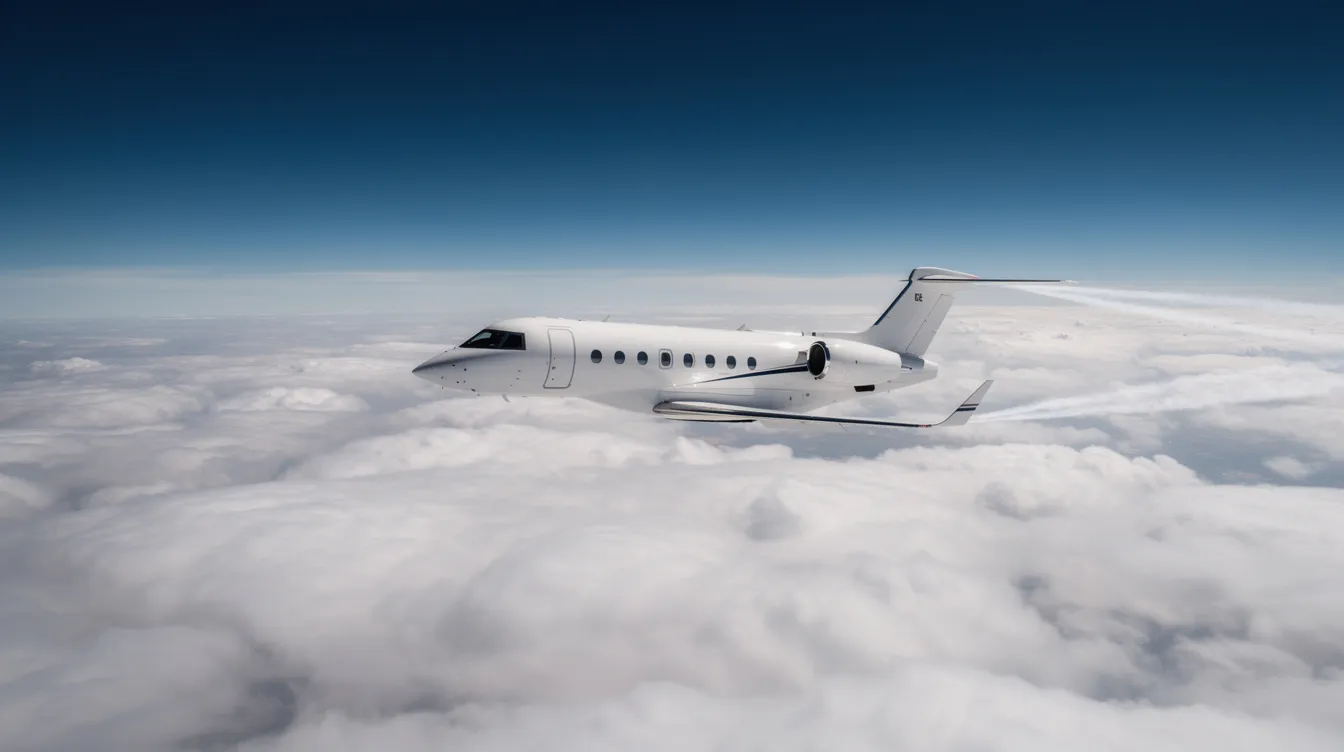
Gulfstream GV: Ultra Long Range Business Jet Guide
The Gulfstream GV is an ultra long range business jet designed for nonstop intercontinental travel, featuring a spacious cabin for up to 18 passengers. With a maximum range of 6,500 nautical miles and advanced avionics, it offers unparalleled comfort and efficiency for corporate executives and families alike. Chartering through Jettly provides a flexible, cost-effective alternative to ownership.
Read More
5
min read
Corporate Flight Attendant Jobs: Career Guide for Private and Corporate Aviation
Corporate flight attendant jobs offer a unique blend of safety and luxury service aboard private jets. This career path is ideal for those with hospitality backgrounds seeking flexible schedules and high-end travel experiences. With growing demand in private aviation, aspiring attendants can find rewarding opportunities in this expanding field.
Read MoreStay updated with our latest insights and tips to elevate your journey with us.
MEMBERSHIPS AND ASSOCIATIONS



Disclaimer: Jettly operates as a charter broker, offering access to a global digital jet charter marketplace. Jettly is not a direct air carrier and does not own or operate aircraft. All advertised flights are conducted by third-party air carriers that are fully licensed and hold the appropriate Part 135 or Part 121 certifications issued by the Federal Aviation Administration (FAA) or equivalent regulatory authorities under U.S. or foreign law. Jettly complies fully with the U.S. Department of Transportation's Part 295 and Part 298 Charter Broker regulations. Jettly does not carry additional liability insurance. Passengers are covered by aircraft operator insurance. TICO: 50023770


