



Login
Get Instant Pricing On 23,000+ Aircraft

>
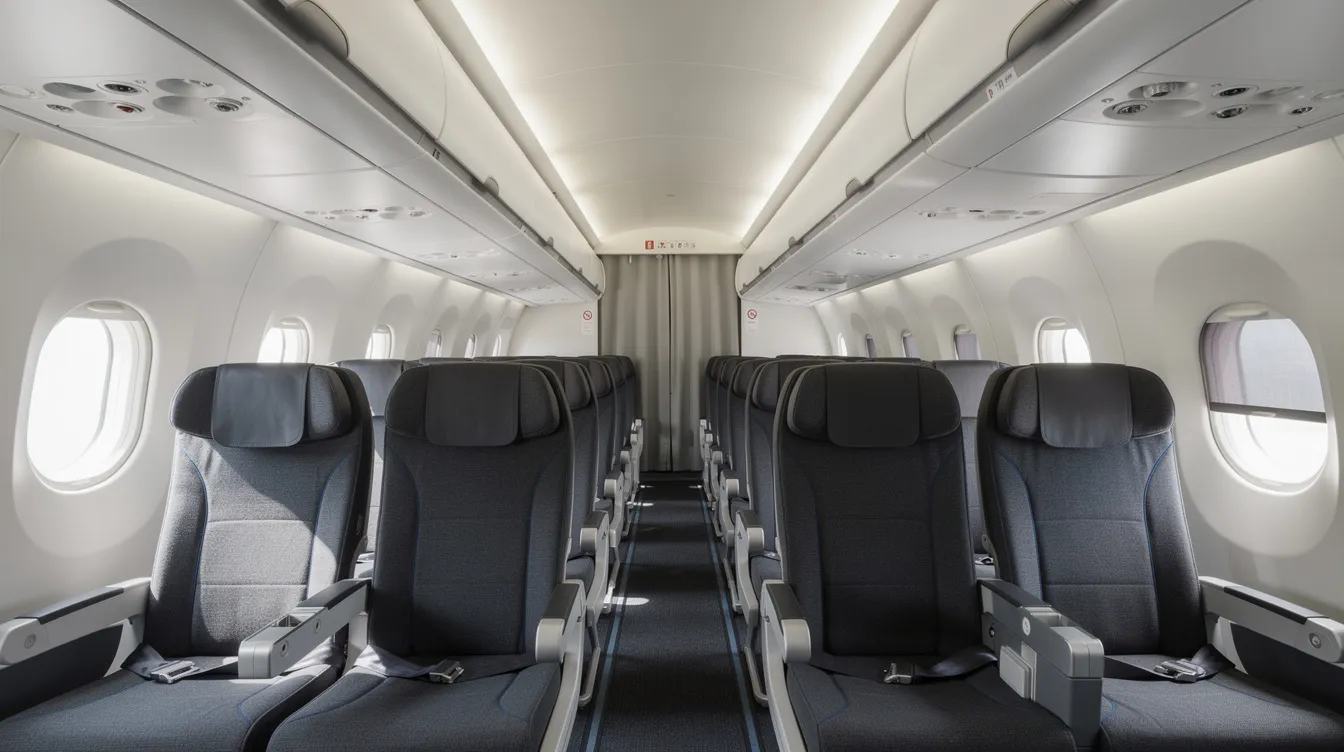
The typical Delta First Class bathroom is similar in footprint to economy aircraft lavatories, but features upgraded toiletries, better lighting, and more frequent cleaning from the flight attendant team.
Only one person can use any commercial first-class lavatory at a time, and queues still form in the first-class cabin, especially after meal service.
Delta First, Delta One, and business class cabins all share lavatories among multiple passengers, while private jet charters through Jettly often provide quiet, low-traffic bathrooms dedicated to a small group.
Private jet travel removes shared-bathroom stress on many aircraft, with fewer passengers, more flexible lavatory use, and cleaner facilities throughout the flight.
Travelers can compare premium commercial cabins with private jet options and request a quote at https://www.jettly.com, applying many of the same principles outlined in Jettly’s guide on how to buy a seat on a private jet.
Many travelers upgrade to Delta First Class expecting a noticeably better First Class bathroom and overall cabin experience. Reviews from 2024–2026 show that the first class lavatory on most Delta domestic routes is nearly the same size as economy, with subtle but meaningful upgrades like premium hand soap, lotion, and more attentive cleaning. Passengers who truly care about privacy and comfort in the lavatory often graduate from first class to private jet charter, where a platform like Jettly connects them to aircraft with quiet, low-traffic, or even dedicated bathrooms.
This article explains what Delta Airlines actually offers in the bathroom and cabin across its premium products, how each compares, and when a private charter becomes the more practical option.
The bathroom facilities in Delta Air Lines vary by class of service and aircraft type, but the physical space in a first-class bathroom on a narrow-body jet is smaller than most first-time flyers expect. Domestic first class lavatories are similar in size to standard Main Cabin lavatories on Boeing 737s and Airbus A321S used for U.S. routes. Delta's first class bathrooms are larger than economy bathrooms on some wide-body configurations, but on the single-aisle aircraft that make up the bulk of domestic flights, the difference is modest.
The lavatories in Delta's Domestic First Class focus primarily on seat and service quality rather than a dramatically larger bathroom. Only one person can be in the first class bathroom at a time, behind a standard locking door. Inside, you'll find a compact sink, a small mirror, a folding change table on select aircraft, and standard lavatory doors that lock with an occupied indicator. Some Boeing 737-800 aircraft have a forward lavatory reserved for first class passengers, positioned near the cockpit door.
Where the upgrade becomes noticeable is in the details. Delta Air Lines provides premium hand soap and lotion from Grown Alchemist in lavatories across many refitted cabins. First class passengers have access to premium toiletries, softer paper products, and fresher fixtures. Delta's first class bathrooms feature upgraded lighting and decor, particularly on newer A321neo interiors.
The overall experience in Delta's First Class lavatories is slightly upgraded from Main Cabin. On a 2.5-hour flight from New York to West Palm Beach, for example, the main difference a passenger notices is the higher-end products and quicker cleaning—not a dramatically different room. The lavatory experience can differ considerably by aircraft type, so expectations should vary depending on whether you board a fresh A321neo or an older 737.
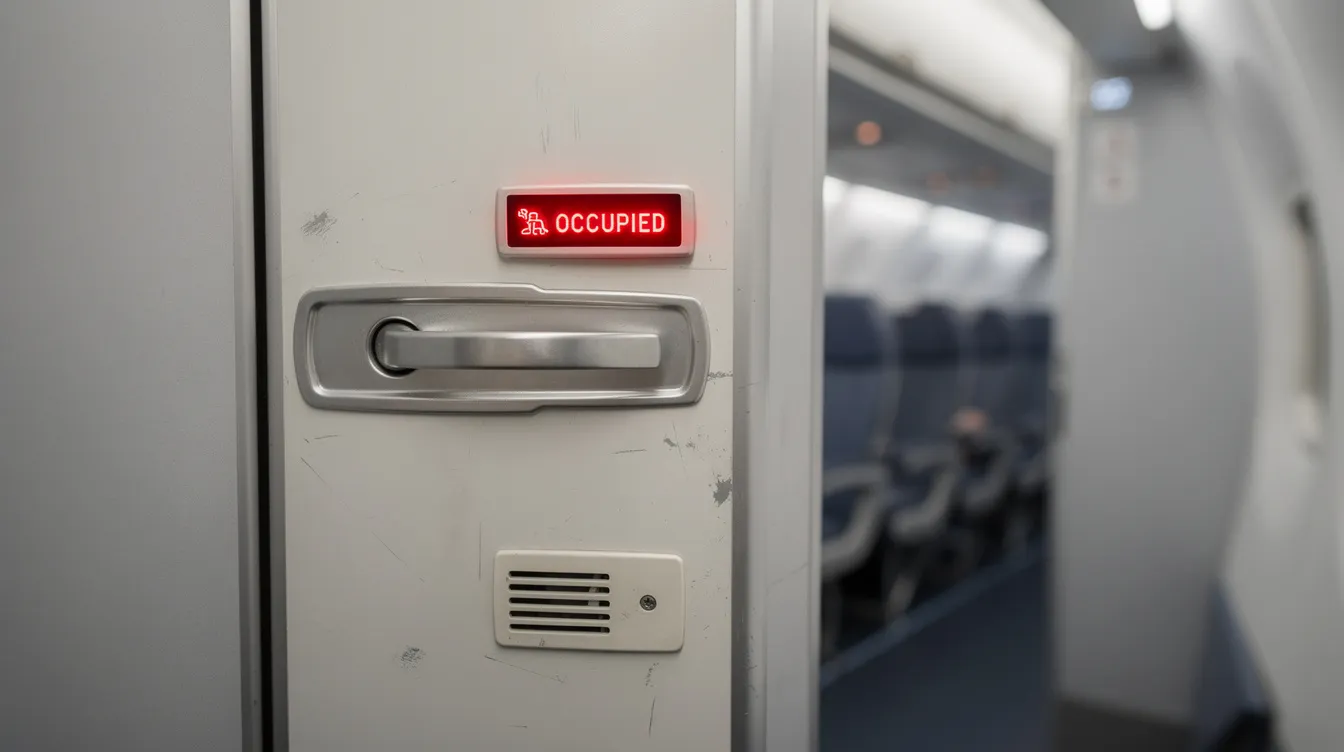
On most Delta domestic flights, the forward class lavatory is intended for first class passengers. But access to lavatories may vary depending on the aircraft and crew enforcement policies. In practice, lavatory restrictions are not always strict. Flight attendants may direct economy class passengers forward when rear lines grow long, or the flight crew notifies passengers that the front bathroom is reserved for a specific class lavatory during boarding.
This means the first class lavatory is not a guaranteed private space. The FAA regulates many aspects of cabin safety, and passenger safety takes priority over cabin exclusivity. If there is a bathroom emergency, the crew leverages situational flexibility to manage access. During some flights, the rules feel enforced arbitrarily—on one Salt Lake City to Seattle leg, the forward lavatory may be strictly reserved, while on another route, it's open to all.
Delta does not publish a formal policy exception for economy passengers using the first-class lavatory. Most real-world enforcement comes down to how the flight crew manages the situation in real time, and whether the unavailable lavatory in the rear creates a safety or comfort issue.
The dedicated flight attendant assigned to the first class cabin tends to monitor the first class bathroom more frequently. Flight attendants check and service the front lavatory more frequently during flights—wiping down sinks, restocking towels, and removing trash, sometimes two to three times on a three-hour flight.
This extra attention makes the class lavs feel cleaner and better maintained than economy bathrooms, even when the physical footprint is nearly identical. Luxury lavatories provide additional amenities compared to standard lavatory facilities, including proactive restocking of Grown Alchemist soap and lotion bottles, refreshed tissues, and a quick check of the lock or light if the lavatory seems occupied for an extended period—points that can be compelling talking points if you join Jettly’s high-ticket affiliate program and refer travelers weighing commercial first class against private jet options.
Contrast this with a private jet charter, where a crew of one or two may serve only 4–12 passengers. With fewer users and a flexible schedule, the single onboard lavatory stays spotless throughout the flight. The service cart never blocks access in the aisle, and there's no competition for the bathroom with dozens of fellow passengers, especially when travelers tap into platforms that crowdsource private jet flights and share empty seats to lower per-person costs.
Delta Air Lines features different lavatory experiences for Domestic First Class and Delta One. Delta First operates mainly on domestic and shorter international flights, while Delta One is available on select long-haul international routes and certain transcontinental segments.
Delta One lavatories are positioned at the front of the Delta One cabin, stocked with premium skincare products from Grown Alchemist, and often feature enhanced accessible layouts for mobility. Delta's Airbus A350 has two accessible lavatories. Delta One lavatories often feature enhanced accessible layouts for mobility, meeting or exceeding current Disabilities Act requirements and lavatory standards for commercial aviation.
Beyond the bathroom, Delta One offers 180-degree flat bed seats, chef-curated dining options, and premium amenities like Missoni bedding. Passengers can select meals 7 days before departure. Delta One features dedicated meal service and quiet cabin environments designed for travelers who fly long-haul flights regularly.
Still, even in Delta One, space is constrained. There is still only one person at a time, and lines form after meals on overnight long-haul flights. Delta Air Lines does not have onboard showers available in any of its aircraft—so true "spa-style" bathrooms remain out of reach on any Delta flight, whereas dedicated in-flight catering solutions like Jettly Eats highlight how private aviation can elevate other onboard comforts even when the bathroom itself remains compact.
Here's a quick comparison across Delta's premium cabins:
|
Feature |
Delta Comfort |
Delta First |
Delta One |
|---|---|---|---|
|
Lavatory class |
Economy (shared) |
Forward (upgraded products) |
Forward (premium finishes) |
|
Toiletries |
Standard |
Grown Alchemist |
Grown Alchemist |
|
Lavatory fire protection |
Standard |
Standard |
Standard |
|
Shower |
No |
No |
No |
|
Typical routes |
Domestic flights |
Domestic / short-haul |
Long-haul, transcontinental |
|
Premium Select or above seating |
No |
Yes |
Yes (lie-flat) |
For a deeper look at how luxury first class flights compare across airlines, Jettly's guide breaks down what each carrier actually delivers and situates them within the broader private aviation landscape covered in this ultimate list of charter airlines.
Simple etiquette goes a long way in the first class cabin:
Avoid changing clothes if there's a visible line behind you.
Keep grooming quick—one bathroom serving 12–20 first-class passengers creates pressure.
Leave the sink area dry and clean for the next person.
Use the lavatory before meal service begins, after you board and check in to your seat, or during quieter midflight periods.
Because many single-aisle jets have only one forward lavatory, lingering can quickly create queues. Timing matters more than most passengers realize, especially on longer flights where drink and meal service occupy the aisle and a service cart may block the path to the rear.
On a light jet or midsize private aircraft chartered through Jettly, passengers rarely queue. With just a few travelers on board, coordinating lavatory use is effortless, and the economics of flying private become clearer once you understand how much a private jet really costs compared with first-class fares.
The core differences between a commercial first-class bathroom and a private jet lavatory come down to:
Passenger-to-bathroom ratio: 12–20 passengers per lavatory in Delta First vs. 4–8 on a typical charter.
Privacy: No cabin-wide announcements about lavatory use on a private jet. No one waiting outside the door from a different cabin.
Flexibility: On a private flight, you can freshen up, change clothes, or support special accommodations without time pressure.
On many light and midsize jets, there is one enclosed lavatory at the rear with a solid door, mirror, and better lighting than most airline lavatories. Larger jets available through Jettly's marketplace—like a Challenger 605 or Gulfstream G450—may feature more spacious lavatories with separate vanity areas, with overall trip pricing shaped by the same factors explained in Jettly’s guide to understanding one private flight cost.
Private charters also avoid airport bathroom congestion. Passengers board via private terminals (FBOs) with clean, quiet restrooms, bypassing the crowded airline terminal entirely. There's no Sky Priority line, no one lounge packed with other travelers—just a direct path from car to aircraft.
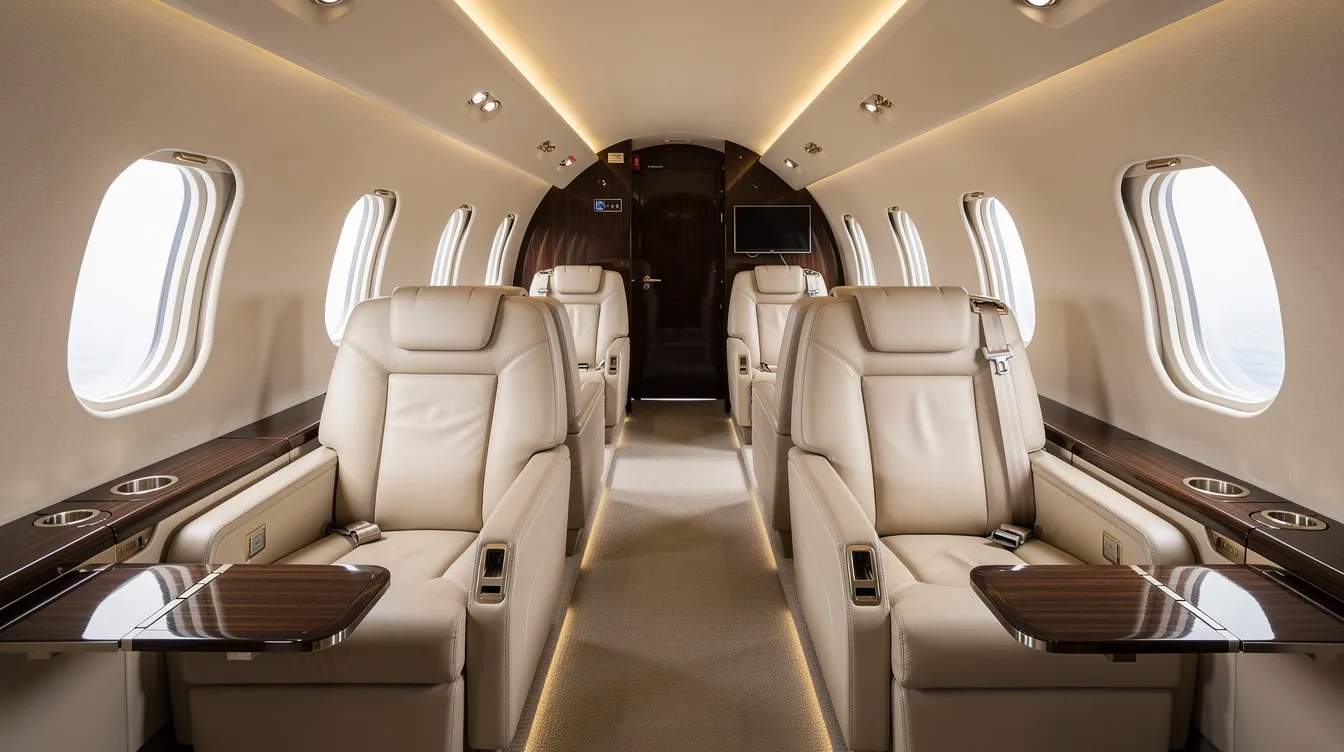
Along with the first-class lavatory, travelers in Delta First typically get wider seats with extra legroom—often up to eight inches more legroom than standard economy—along with extra recline and enhanced meal service based on flight distance. First class passengers often enjoy immediate refreshments, dedicated overhead bin space, and sometimes access to a window seat with two parallel aisles of visibility on wide-body aircraft with parallel aisles.
Delta Comfort sits between economy and first class, offering more legroom but no separate bathroom and usually the same lavatory access as main cabin passengers. The seat is the primary differentiator, not the bathroom.
For travelers weighing Delta Comfort, Delta First, or Delta One, the bathroom should be a small part of a much bigger equation that includes time savings, boarding priority, lounge access, seat comfort, and the breadth of private charter aircraft available if you decide to fly private instead. On a private jet charter booked through Jettly, the entire cabin—including the lavatory, galley, and seating—functions as a private space for a single group, not dozens of strangers.
Specific scenarios where bathroom privacy and cabin control justify exploring a private charter—and deciding between shared charter flights and full charters:
High-profile executives preparing for on-arrival meetings who need to change and freshen up without sharing a bathroom.
Medical or mobility concerns where accessible, low-traffic lavatories matter and special accommodations are easier to arrange.
Families with small children who need flexible lavatory access and a quieter cabin.
Multi-leg same-day trips (e.g., New York–Chicago–Dallas) where shared first class bathrooms, boarding lines, and terminal congestion add hours of friction.
On routes underserved by Delta or when flying to smaller airports—such as secondary cities and regional hubs where commercial first class is limited—a light or midsize charter becomes especially practical, with dedicated options like private jet charter in Kolkata, West Bengal illustrating how Jettly covers niche markets worldwide. For groups of four to eight splitting the cost of a private jet charter, the per-person price can approach what each person would spend on a first-class ticket—especially on shorter domestic segments, as explained in Jettly’s in-depth guide to how much it costs to rent a private jet.

Using Jettly's platform takes a few steps, and it aligns with many of the tactics you’d use when figuring out how to get a seat on a private jet easily:
Enter your route (e.g., ATL–JFK), date, and passenger count.
Review instant pricing and available aircraft options.
Compare the total cost against what your group would spend on Delta First or Delta One tickets for the same trip.
Jettly operates as a charter broker—all flights are operated by certified third-party carriers, but the platform centralizes search, comparison, and booking in one digital interface. Travelers can explore everything from turboprops to heavy jets across a network of over 20,000 aircraft worldwide, often using Jettly as a flexible NetJets alternative rather than committing to traditional fractional ownership.
Use the Private Jet Cost Calculator together with Jettly’s Jet Card Flight Cost Estimator to estimate pricing before you commit, and browse available aircraft or compare different private jet memberships to see cabin layouts, lavatory configurations, passenger capacity, and access options.
Ready to move beyond the shared first class bathroom? Explore flight options or request a quote at https://www.jettly.com.
On most Delta narrow-body aircraft flying domestic routes, the first class bathroom is roughly the same physical size as economy class lavatories. The improvements are mainly in cleanliness, products, and how often the flight crew tidies the space. On some wide-body aircraft used for international flights, the forward lavatory may be slightly larger, but the difference remains modest.
The first class lavatory is generally intended for first class passengers, but flight attendants may allow or direct main cabin passengers to use it when necessary. This depends on safety considerations, queue length, and aircraft configuration. Airline travel policies on lavatory access are rarely absolute—the crew makes judgment calls based on the situation in the cabin.
Delta One cabins have similar-sized lavatories with more premium finishes and better toiletries, but they remain shared among all passengers in the forward cabin. No commercial Delta aircraft offers a one-bathroom setup exclusive to a single seat or traveler.
Private jet lavatories typically serve far fewer passengers, feel quieter and more private, and may be more comfortably appointed—especially on midsize and heavy jets. On larger aircraft, you may find better lighting, solid-door enclosures, and vanity space. The key difference is the ratio: four to eight people sharing one lavatory instead of a full cabin of class passengers.
Enter your route, dates, and group size into Jettly's online platform for instant charter pricing. Compare that cost with Delta First or Delta One fares to decide which experience—shared first class or a fully private cabin and lavatory—best fits your needs. Start at https://www.jettly.com.
A Delta First Class bathroom offers modest upgrades, such as premium toiletries and more frequent attention from the crew, but it is still a shared, compact lavatory. Delta One adds premium cabin amenities, yet its bathrooms are also shared and vary by aircraft. Travelers who prioritize privacy, flexible lavatory access, or a quieter cabin may want to compare those benefits with a private charter.
Jettly lets travelers review aircraft options and instant pricing for their route and group size. Jettly is a charter broker, and flights are operated by properly certified third-party carriers. Explore options or request a quote at https://www.jettly.com.
Share this post:
Jay Franco Serevilla
Nov 15, 2026
|
5
min read
Discover tips and trends in the industry.
5
min read
Flight Time From NY to London: What to Expect on Commercial and Private Jets
The flight time from New York to London typically ranges from 6.5 to 7.5 hours for commercial flights, while private jets can complete the journey in about 6 to 7 hours. Factors such as jet stream conditions, airport choice, and aircraft type significantly influence travel times. This guide provides insights into optimizing your trip, whether flying commercially or privately.
Read More
5
min read
How Far in Advance Should I Book a Flight? (Private & Commercial)
Understanding how far in advance to book a flight is crucial for travelers. For commercial flights, the ideal booking window is typically 1 to 3 months ahead, while private jet charters can often be arranged closer to departure. Factors like destination, seasonality, and route type significantly influence the best time to secure your tickets.
Read MoreStay updated with our latest insights and tips to elevate your journey with us.
MEMBERSHIPS AND ASSOCIATIONS



© 2026 Jettly Inc. All rights reserved.
Disclaimer: Jettly operates as a charter broker, offering access to a global digital jet charter marketplace. Jettly is not a direct air carrier and does not own or operate aircraft. All advertised flights are conducted by third-party air carriers that are fully licensed and hold the appropriate Part 135 or Part 121 certifications issued by the Federal Aviation Administration (FAA) or equivalent regulatory authorities under U.S. or foreign law. Jettly complies fully with the U.S. Department of Transportation's Part 295 and Part 298 Charter Broker regulations. Jettly does not carry additional liability insurance. Passengers are covered by aircraft operator insurance. TICO: 50023770


