



Login
Get Instant Pricing On 23,000+ Aircraft

>
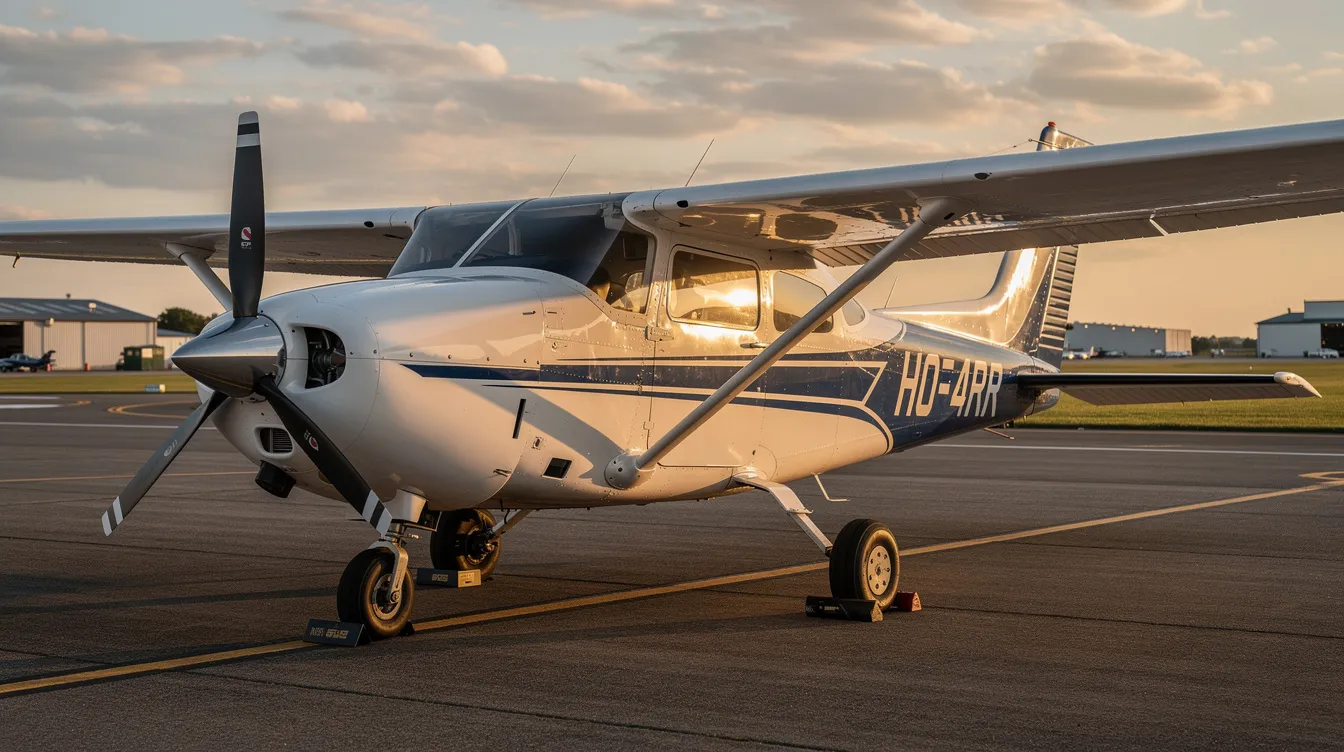
The Fokker F50 remains one of the most recognizable regional turboprops ever built. Decades after the last airframe rolled off the production line, this Dutch-designed workhorse continues to fly passengers, freight, and charter groups across every continent. Here is what travelers, charter planners, and aviation enthusiasts need to know about the Fokker 50 — from its development roots to how it fits into today's private charter market.
The Fokker 50 is a twin-engine turboprop regional airliner built by Dutch aircraft manufacturer Fokker, seating 46 to 56 passengers in its standard configuration and up to 62 passengers in high-density layouts.
Developed in the early 1980s as a heavily modernized successor to the F27 Friendship, it had its maiden flight on December 28, 1985, and entered service in 1987.
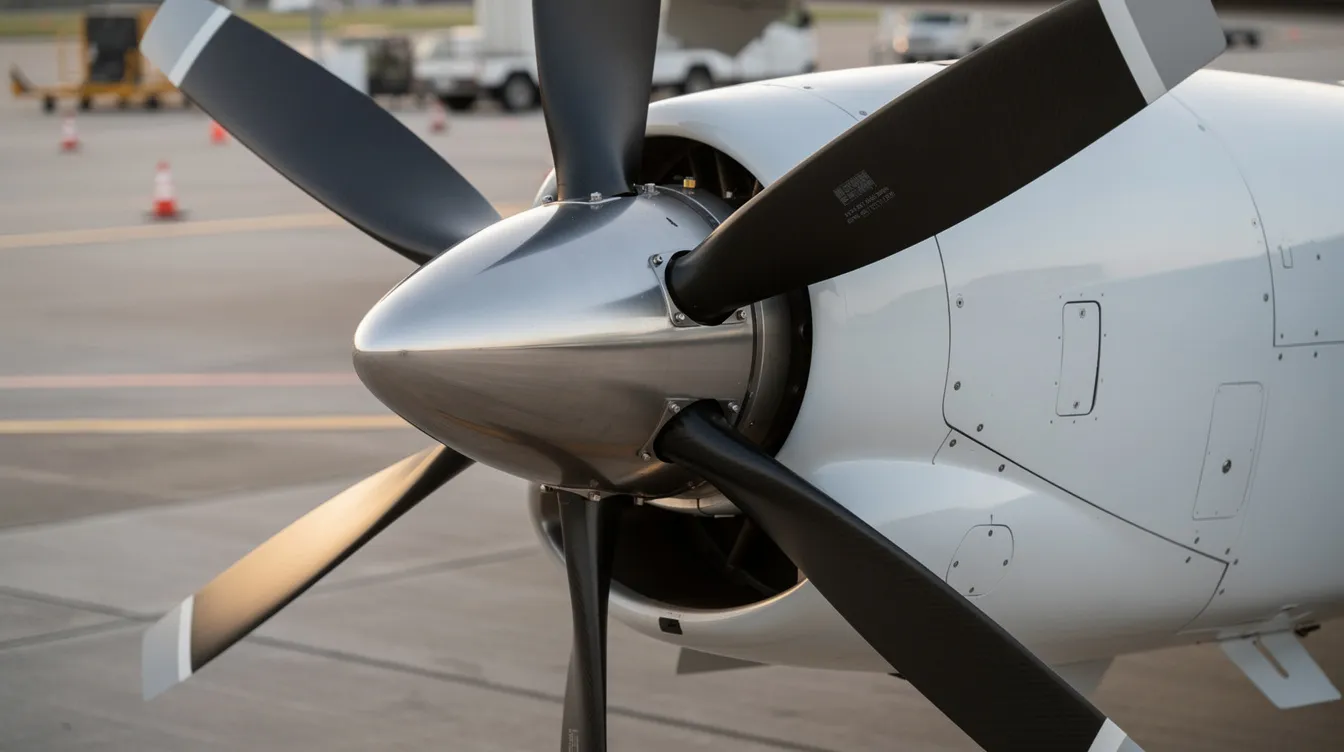
Core upgrades include Pratt & Whitney Canada PW124 engines, six-bladed composite propellers, composite materials throughout the airframe, and a modernized cockpit with an Electronic Flight Instrument System and Cat II-certified controls.
Production was terminated in March 1996 after Fokker's bankruptcy, but as of August 2022, 73 Fokker 50 aircraft remained in service worldwide with airlines, governments, and charter operators.
On Jettly's private charter platform, the Fokker 50 fits group charters that need short-runway performance and regional range at a lower cost than jets, with customizable cabin layouts and dedicated flight attendant service available.
The Fokker 50 is a medium-size twin-engine turboprop regional airliner from Dutch aircraft manufacturer Fokker, designed for short-haul routes. It seats 46 to 56 passengers in standard airline configurations and can accommodate up to 62 passengers in maximum-density layouts. Its roles span regional commuter operations, charter use, and government or military transport — filling a niche between small business jets and larger regional jets such as the higher-capacity Boeing 737-800.
Key headline specs include a cruising speed of approximately 500 km/h (about 286 knots), a maximum range that can reach up to 1,700 km depending on payload (roughly 1,080 nautical miles), and a crew of two pilots plus one or two flight attendants depending on the operator. The aircraft is officially designated Fokker F.27-050 due to certification continuity with the F27, but the market knows it simply as the Fokker 50.
Within Jettly's inventory, the Fokker 50 sits as a high-capacity turboprop option suited for regional group charters, sports teams, corporate shuttles, and incentive trips where capacity and cost-efficiency matter more than jet speed.
By the late 1970s, rising fuel prices, tightening noise regulations, and intense competition from multiple modern competitors like the ATR 42 and de Havilland Canada Dash 8 pushed Fokker to look beyond its existing product line. The firm launched two development projects as follow-up products to that line — ultimately the Fokker 50 and the Fokker 100 jet — to secure the company's long-term viability in the regional aviation market.
In November 1983, Fokker decided to commence simultaneous work on the two successor programs. Design studies focused on airframe and design features that would dramatically improve the aging F27 Friendship. Despite visual similarities, the Fokker 50 shares only about 10% commonality with the F27. The company decided to certify it as the F.27-050 to reduce costs, but this was effectively a new airliner. The maiden flight took place on December 28, 1985, and two prototypes performed extensive test flying before certification was successfully completed. The first production aircraft was delivered on August 7, 1987, to launch operators including DLT in Germany and Ansett in Australia.
Key design changes versus the F27 included a strengthened and refined airframe, re-engineered wing design, and smaller windows — doubled in number for better light distribution. Fokker partnered with several companies to manufacture portions of the aircraft through a multinational production approach: fuselage sections by Dassault-Breguet in France, outer wings by SABCA in Belgium, wing components manufactured by Messerschmitt-Bölkow-Blohm in West Germany, and tail surfaces by Fuji Heavy Industries in Japan, with final integration and composite parts completed in the Netherlands.
This section provides a technical overview for travelers and charter planners evaluating the Fokker 50 for regional missions.
The powerplant consists of two Pratt & Whitney Canada PW124 engines generating 1,864 kW each, driving six-bladed composite propellers that deliver major advances in noise reduction and fuel consumption. The aircraft achieves roughly a 30 percent reduction in fuel burn compared with early F27 variants, a significant factor in keeping charter economics favorable.
Structural and systems updates include an increasing proportion of composite materials in control surfaces, nacelle fairings, and other components. The reinforced landing gear handles frequent short-haul cycles, and cockpit automation features several improvements — notably an Electronic Flight Instrument System (EFIS) and Cat II-certified controls representing new advances for regional turboprops of that era.
Practical performance figures: maximum takeoff weight of 22,500 kg, a cruise speed of approximately 286 knots, service ceiling roughly 25,000–30,000 ft, and strong short takeoff and landing capability. The aircraft is designed for operations on unpaved runways and short fields, a feature that opens up secondary and remote airports.
For charter decisions on Jettly, these specs translate to suitable stage lengths such as London–Dublin or Dubai–Doha, with typical cruise times competitive against ground alternatives and per-seat costs well below comparable light or midsize jets on similar regional sectors, especially when compared with other cross-country aircraft options.
Fokker decided to proceed with continual production from the mid-1980s onward. The aircraft's production ran until March 1996, when Fokker's bankruptcy — driven by financial difficulties suffered across the company, massive cost overruns, sizable losses from a major restructuring program, and a last-ditch effort to renegotiate prices with suppliers — forced a halt. Although a partial or complete restart of production was considered as a last-ditch effort, losses continued, and the Dutch government declined further support. A total of 213 Fokker 50 aircraft were completed before production ended.
The principal civil version offered various refinements in cabin layout, from high-density 56-seat configurations to more spacious corporate shuttle interiors. The Fokker 50 can also be converted into a cargo freighter with over 7,000 kg of payload capacity, featuring a large cargo door for mixed missions. The stretched Fokker 60, built in only four units for the Royal Netherlands Air Force, added a longer fuselage for military transport.
The Fokker 50 shares a comparable role with regional turboprops such as the ATR 42/72, de Havilland Canada Dash 8 Series 300, Saab 340 and Saab 2000, Embraer EMB 120 Brasilia, CASA CN-235/C-295, Ilyushin Il-114, and Xian MA60. These aircraft were built by established manufacturers for similar regional missions. Among these, the Fokker 50 occupies a middle position in capacity and maximum speed. Many of these types also appear alongside the Fokker 50 in Jettly's marketplace, giving customers a range of turboprop options to progressively reduce costs versus jet alternatives, often positioned as a flexible alternative to fractional providers like NetJets.
Despite production ending decades ago, the Fokker 50 remains operated by airlines, charter operators, and governmental agencies worldwide. As of August 2022, 73 Fokker 50 aircraft were in service. Major operators included Avianca, Denim Air, and VLM Airlines, while KLM operated 20 Fokker 50 aircraft in its fleet during peak operations. The type has been subsequently delivered to carriers and charter companies across Europe, Africa, the Middle East, and Asia.
Government and military use includes the Royal Netherlands Air Force's operation of Fokker 50 and Fokker 60 aircraft for transport and utility duties, with other governments using the type for VIP and utility missions, similar to how the Eurocopter EC30 light utility helicopter serves specialized roles in shorter-range operations. The Dutch aviation authority (RLD) and the Dutch aviation authority more broadly oversaw certification and ongoing airworthiness.
Like other regional turboprops of its era, the Fokker 50 has been involved in a limited number of serious incidents, a safety profile comparable to aircraft used by top private jet charter companies. Charter flights arranged via Jettly are operated by certified carriers that meet strict safety and maintenance standards. The fact that these aircraft continue operations decades after the first aircraft left the factory demonstrates robust design features and a solid parts support ecosystem managed by Fokker Services, which in turn supports global operators such as Dexter Air Taxi and similar brokers.
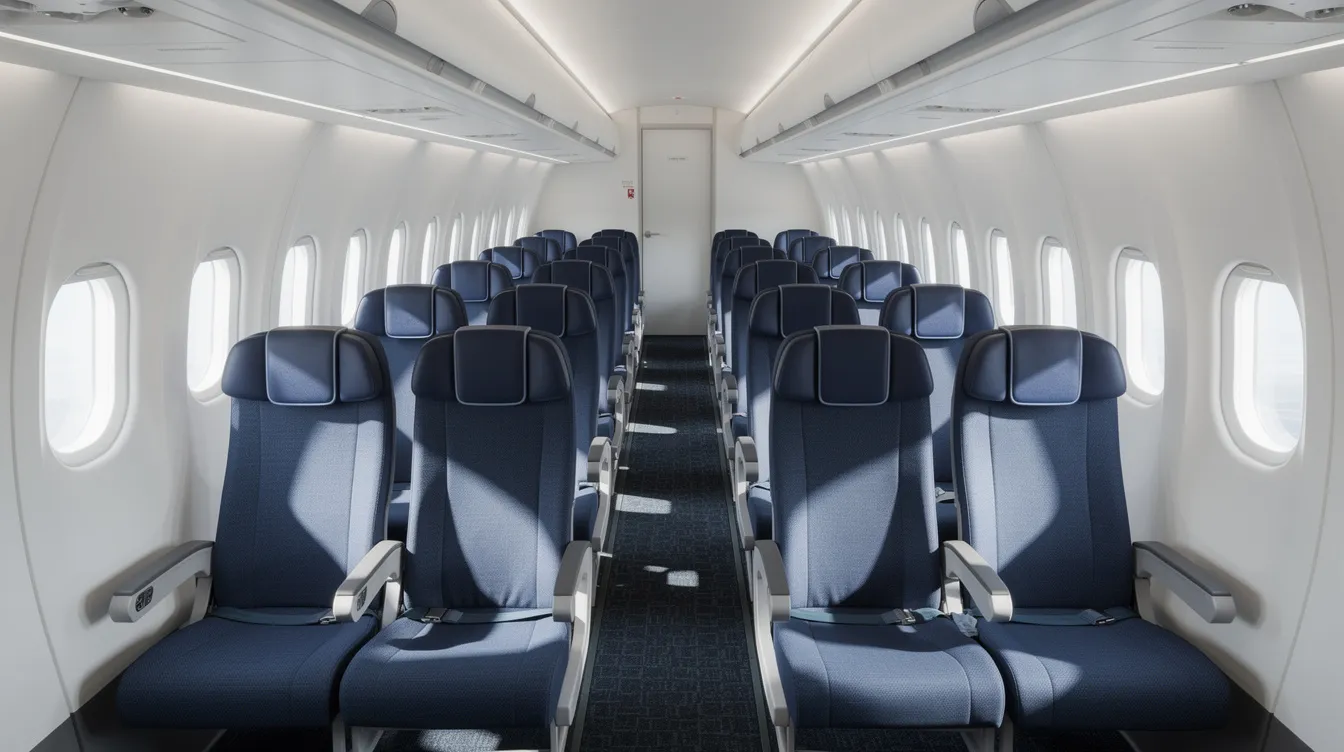
The Fokker 50 is known for its passenger comfort and operational flexibility. The cabin length of the Fokker 50 is 15.96 meters, accommodating a 2-2 single-aisle configuration with up to 56 seats in standard layouts. Charter configurations can be customized to include more legroom, business-style seating, or mixed passenger and cargo layouts.
The aircraft features a four-door design allowing faster boarding and cargo handling - a practical advantage for charter turnarounds. A cabin noise level of 77 dBs, achieved through modern propellers and soundproofing, makes it relatively quiet for a turboprop. The numerous smaller windows provide good natural light, and overhead storage handles personal bags while larger luggage goes in the hold.
Typical crew composition: two pilots in the cockpit and at least one flight attendant in the cabin, often coordinating with dedicated in-flight catering services like Jettly Eats on premium charters. On higher-capacity or service-intensive charters, an extra flight attendant is often added to manage catering and passenger needs, mirroring service levels seen across many leading private charter airlines. Clients booking through Jettly can specify service level, catering, and special requests - from business meeting setups to family-friendly seating - with the platform coordinating cabin setup and staffing with the operator.
Within Jettly's inventory of over 20,000 aircraft, the Fokker 50 fills a specific niche: a cost-efficient regional turboprop for larger groups rather than an executive jet for small parties. It is an improved version of the traditional turboprop charter concept - built for volume, not velvet.
Ideal charter use cases include corporate shuttles between secondary cities, shuttle flights to remote project sites, sports teams traveling to regional events, and government or NGO missions requiring short-runway access, often into smaller fields located via an airport locator and charter platform. In the current form of the charter market, per-seat costs on a full Fokker 50 charter can be very competitive with commercial fares on comparable routes, particularly when the group size justifies the aircraft's capacity, and can be reduced further when travelers use crowdsourced and shared private flights to fill empty seats.
Compared to light and midsize jets on similar stage lengths, the Fokker 50 offers a higher degree of baggage volume and passenger count at lower hourly rates, which can be explored in more detail using a dedicated private jet charter cost estimator. Jets fly faster and higher, but for groups of 40–60 on sectors under 1,700 km, the turboprop math often wins. Jettly's platform allows clients to filter and compare turboprop versus jet options with transparent cost breakdowns covering aircraft, crew, fuel, and handling, helping travelers understand affordable private jet charter pricing alongside turboprop alternatives like the Fokker 50.
Explore more posts and aircraft profiles on Jettly to understand how different aircraft map to distinct mission types and budgets, including a detailed guide to affordable airplane rental options and costs.
Jettly acts as a digital charter broker, connecting customers to certified operators of aircraft like the Fokker 50 and handling logistics end-to-end. Flights are operated by appropriately certified third-party carriers.
The typical booking steps are straightforward:
Enter route, dates, and passenger count on Jettly's platform.
Specify luggage needs and any special requirements.
Review instant or rapid-turn quotes — Fokker 50 options will appear when they fit the mission.
Finalize the booking digitally with full cost transparency.
Decision points for this aircraft category include whether a turboprop is acceptable from a comfort and speed perspective, whether short-runway or remote airport access is required, and whether per-seat savings outweigh the higher cruise speeds of jets, considerations that mirror those in broader guides on how renting a plane works. Optional services on a 40–50 seat charter can include tailored in-flight catering, onboard branding for corporate groups, ground transportation coordination, and pre-flight manifest management, all of which are available across Jettly's extensive private charter aircraft network.
Ready to fly on your terms? Learn more about Jettly's charter options or request a quote for a Fokker 50 or similar turboprop at https://www.jettly.com.
Below are answers to common questions not fully covered above.
The Fokker 50 is a twin-engine turboprop, not a jet. Its Pratt & Whitney Canada PW124 engines drive propellers rather than producing jet thrust directly. Turboprop propulsion is more fuel-efficient for short-haul regional flights at lower altitudes and speeds, which is why the type remains economical to operate on sectors under 1,700 km.
The certified maximum is up to 62 passengers in high-density configuration. Standard airline layouts seat 46 to 56 passengers, but charter layouts are often adjusted to fewer seats for added legroom, equipment space, or mixed passenger-cargo missions depending on the operator and mission profile.
The Fokker 50's turboprop engines and robust landing gear allow it to operate from relatively short regional runways, including some unpaved strips with limited infrastructure. This gives charter clients access to secondary cities and remote destinations that may not be practical for larger jets.
Comfort is different rather than strictly better or worse. A Fokker 50 offers a regional airliner-style cabin suited for larger groups, with a cabin noise level of 77 dBs — quiet for a turboprop. Business jets offer more spacious seating for smaller parties. Jettly helps clients balance comfort, capacity, and budget when choosing between a turboprop and a jet.
Hourly rates for a Fokker 50 are typically lower than for many midsize or large jets, and prospective flyers can compare these with jet card flight cost estimates when evaluating long-term flying habits. The per-seat cost on a full charter can be competitive with - or even lower than - commercial fares on comparable routes, especially for groups of 40 or more, particularly when paired with structured jet card programs for frequent flyers. For precise, route-specific pricing, request an instant quote via Jettly or explore its range of private jet membership plans for ongoing charter use.
The Fokker 50 remains a practical choice for regional missions that prioritize group capacity, short-field access, and operating efficiency over jet speed. Its 46-to-62-seat capacity, useful regional range, and adaptable passenger or cargo configurations make it worth considering for corporate shuttles, team travel, and remote-site transport. Availability and cabin layouts vary by operator, so travelers should compare the aircraft with other turboprops and jets against route, passenger, baggage, and runway requirements.
Jettly helps travelers check available aircraft and compare route-specific options through its digital charter marketplace. As a charter broker, Jettly connects customers with properly certified third-party carriers that operate the flights. Explore Fokker 50 charter availability, compare aircraft, or request a quote at https ://www.jettly.com.
Share this post:
Jay Franco Serevilla
Nov 15, 2026
|
5
min read
Discover tips and trends in the industry.
5
min read
Flight Time From NY to London: What to Expect on Commercial and Private Jets
The flight time from New York to London typically ranges from 6.5 to 7.5 hours for commercial flights, while private jets can complete the journey in about 6 to 7 hours. Factors such as jet stream conditions, airport choice, and aircraft type significantly influence travel times. This guide provides insights into optimizing your trip, whether flying commercially or privately.
Read More
5
min read
How Far in Advance Should I Book a Flight? (Private & Commercial)
Understanding how far in advance to book a flight is crucial for travelers. For commercial flights, the ideal booking window is typically 1 to 3 months ahead, while private jet charters can often be arranged closer to departure. Factors like destination, seasonality, and route type significantly influence the best time to secure your tickets.
Read MoreStay updated with our latest insights and tips to elevate your journey with us.
MEMBERSHIPS AND ASSOCIATIONS



© 2026 Jettly Inc. All rights reserved.
Disclaimer: Jettly operates as a charter broker, offering access to a global digital jet charter marketplace. Jettly is not a direct air carrier and does not own or operate aircraft. All advertised flights are conducted by third-party air carriers that are fully licensed and hold the appropriate Part 135 or Part 121 certifications issued by the Federal Aviation Administration (FAA) or equivalent regulatory authorities under U.S. or foreign law. Jettly complies fully with the U.S. Department of Transportation's Part 295 and Part 298 Charter Broker regulations. Jettly does not carry additional liability insurance. Passengers are covered by aircraft operator insurance. TICO: 50023770


