



Login
Get Instant Pricing On 23,000+ Aircraft

>
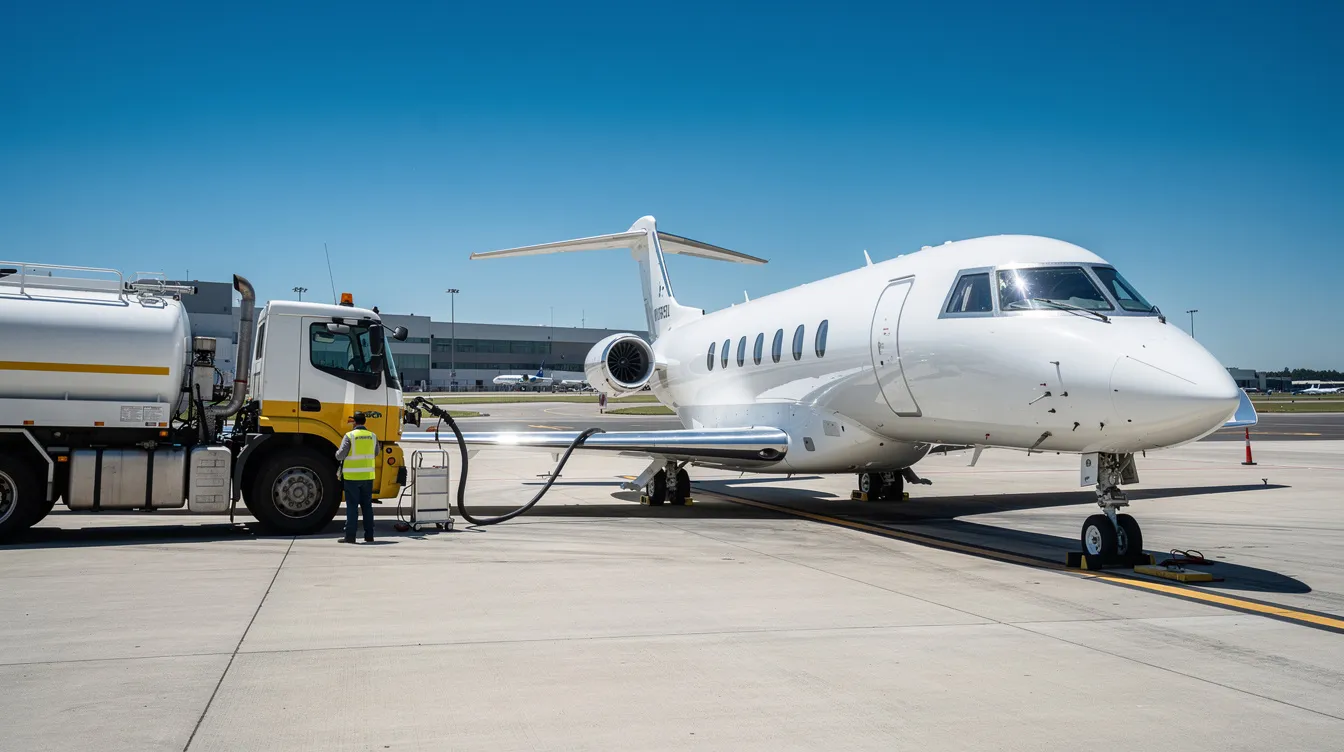
Choosing the right fuel for jet engine performance is not something most private jet travelers think about—but it directly shapes the range, cost, and safety of every charter flight. Whether a jet burns Jet A on a domestic hop or Jet A-1 on a transatlantic crossing, fuel type influences everything from pricing to airport selection. This guide breaks down the main types of jet fuel, how specifications keep flights safe, and what it means when booking through a platform like Jettly.
Most jet engines run on kerosene-based jet fuel, primarily Jet A or Jet A-1. These two main types of aviation turbine fuel power the vast majority of private jets and commercial airliners worldwide. Piston-engine aircraft, like small propeller trainers, use aviation gasoline (AVGAS) instead. When booking a private jet through Jettly, the aircraft listed will almost always burn jet fuel. Understanding these fuel types helps travelers interpret range, pricing, and routing.
Fuel specifications such as ASTM D1655, DEF STAN 91-91, and the AFQRJOS checklist set consistent aviation fuel quality requirements across suppliers, climates, and regions. These standards matter most on longer routes where temperature, altitude, and fuel availability vary widely.
Fuel type directly affects range, airport choice, and operating cost—factors Jettly's platform accounts for when generating instant charter pricing. Travelers can preview how these inputs translate into a trip budget using Jettly's private jet charter cost estimator. Ready to see how fuel and aircraft class shape a trip? Explore options and request a quote at jettly.com.
Jet fuel is a refined kerosene-based liquid designed specifically for gas-turbine engines, including turbofans, turbojets, and turboprops. It is refined from crude oil through fractional distillation in a relatively simple refining process and then treated to meet strict specifications. The kerosene fraction used for jet fuel typically contains hydrocarbon chains with roughly 8 to 16 carbon atoms, giving it properties quite different from gasoline, diesel fuel, or fuel oil, even though it comes from a nearby cut in the refining process.
Jet turbine engines primarily run on kerosene-based hydrocarbon fuels. In simple terms, air is drawn in and compressed, mixed with atomized jet fuel, ignited in a combustion chamber, and expelled through a nozzle to produce thrust. Jet engines are optimized to use specially designed jet fuel rather than ordinary gasoline or diesel because combustion must remain stable across a wide range of altitudes, temperatures, and power settings.
A few terms worth clarifying:
Aviation fuel — umbrella term for fuels used in aircraft engines.
Jet fuel — kerosene-based fuel for turbine engines and turboprops, including Jet A, Jet A-1, and Jet B.
AVGAS — aviation gasoline for piston engines in small airplanes.
Modern jet fuels must meet strict safety and performance criteria: controlled volatility, suitable energy content, clean burning, and a sufficiently low freezing point for high-altitude flight. Nearly all jets listed on Jettly's platform burn conventional jet fuel, while some smaller prop planes and trainers still rely on AVGAS.
Aviation fuels fall into two broad categories: jet fuels for turbine engines and AVGAS for gasoline engines used in piston-powered aircraft, especially small piston-engine airplanes. The difference matters because each fuel is engineered for a fundamentally different type of engine.
Jet fuel — kerosene-based, clear to straw-colored, used in jet engines and turboprops; includes Jet A, Jet A-1, and Jet B among the types of jet fuel.
AVGAS — high-octane aviation gasoline, often containing tetraethyl lead (100LL), used in piston engines powering trainers, crop dusters, and legacy general aviation aircraft.
AVGAS 100LL remains the most common fuel for spark-ignition engines, but regulatory pressure is driving adoption of unleaded alternatives. The FAA approved G100UL, an unleaded 100-octane AVGAS, for use across much of the piston fleet, subject to aircraft approval.
Private jets chartered through Jettly almost always use jet fuels like Jet A or Jet A-1. AVGAS is mainly relevant for light piston charters or air-taxi props—not the turbine-powered aircraft that dominate the platform's inventory, especially when selecting the best cross-country plane for your travel journey.
|
Fuel grade |
Typical use |
Maximum freezing point or characteristic |
|---|---|---|
|
Jet A |
Primarily U.S. domestic operations |
-40°C |
|
Jet A-1 |
Widely used internationally; suitable for long-haul and polar routes |
-47°C |
|
Jet B |
Extreme cold-weather operations |
About -60°C; more volatile |
|
TS-1 |
Russia and some CIS markets |
Below -50°C |
|
JP-8 |
NATO military operations |
Similar to Jet A-1, with additives |
|
JP-5 |
U.S. naval aviation |
High-flashpoint kerosene |
Jet A and Jet A-1 are the workhorses of civil aviation, powering everything from regional turboprops to intercontinental business jets. Both are refined kerosene-based fuels with very similar energy content, but a few differences matter for route planning.
Jet A:
Kerosene-based jet fuel, mainly used in the U.S.
Meets ASTM D1655 fuel specifications.
Minimum flash point of 38°C; maximum freezing point of -40°C.
Standard fuel for most domestic U.S. jet aircraft and charter flights.
Jet A-1:
Kerosene-grade aviation turbine fuel with a mandatory antistatic additive.
Has a maximum freezing point of -47°C, lower than Jet A, supporting high-altitude and cold-weather performance.
Must meet ASTM D1655 specifications as well as applicable DEF STAN 91-91 requirements.
Has a minimum flash point of 38°C.
Widely used outside the U.S. as the most common type for international turbine operations and preferred for long-haul international flights and polar routes.
Key difference: The 7°C gap in freezing point between Jet A (-40°C) and Jet A-1 (-47°C) is the primary distinction. Jet A-1 is better suited for long-haul or high-altitude polar routes due to its lower freezing point, which helps prevent wax crystals from restricting filters in very cold conditions. Jet A-1 also includes mandatory antistatic additives. In contrast, flight operators can use Jet A and Jet A-1 as fuels interchangeably when approvals and supply allow, even though their manufacturing specifications still differ, so operators still consider the route, climate, and applicable fuel specifications when planning.
When Jettly displays range and performance data for a private jet, those figures assume standard Jet A or Jet A-1 energy content. For a deeper look at how fuel burn translates to cost, see How Much Fuel Does a Private Jet Use? and Jettly's guide on how much it costs to fuel a private jet.
While Jet A and Jet A-1 dominate globally, other fuels serve critical roles in extreme environments and specific regions.
Jet B:
A wide-cut fuel designed for very cold climates, blending roughly 70% gasoline fractions with 30% kerosene.
Can resist freezing down to -60°C, making it suited to harsh regions like northern Canada and Alaska.
Higher volatility and a low flash point make it more dangerous to handle and store than Jet A or Jet A-1.
It is a common alternative in certain cold-weather operations, though those handling risks confine most use largely to cold climates rather than routine civil aviation.
TS-1:
A main jet fuel grade in Russia and many CIS states, governed by a State Standard (GOST).
Kerosene type with higher volatility and a flash point minimum near 28°C.
Has a freezing point below -50°C, offering comparable or better cold-weather capability than Jet A-1.
Other national grades:
Chinese No. 1–No. 5 jet fuels include RP-3, similar to Jet A-1, and RP-4, similar to Jet B.
Former Soviet grades (T-1 to T-8 and RT) follow GOST or technical-condition specifications.
Jet B is often described as the most common alternative to Jet A-1 for use in very cold climates, but its handling characteristics limit its use. Private flights arranged via Jettly into or out of these regions rely on local aviation fuels compatible with aircraft approvals. Flight operators verify fuel compatibility before dispatch rather than assuming different grades can be substituted. Jettly's broad network of private charter aircraft helps match each mission and region.
Military jet fuels build on civil formulations but add features for corrosion protection, thermal stability, and operational requirements.
JP-8 (NATO F-34): Similar to Jet A-1 and used by NATO forces. JP-8 includes specific performance and anti-corrosion additives, along with icing inhibitor and static dissipater additives, and under single-fuel military logistics, it may also be used in some diesel fuel vehicles.
JP-5 (F-44): A high-flashpoint kerosene used predominantly by the U.S. Navy and Marine Corps for operations from aircraft carriers. Its higher flash point, around 60°C, reduces fire risk on ship decks.
JP-4 (F-40): A legacy wide-cut fuel with a very low flash point, largely phased out due to safety and environmental concerns.
Military jet fuels must meet stringent specifications, but they are rarely encountered in civil private jet charter. Jettly, as a civil aviation charter broker, focuses on aircraft operated under civil rules using Jet A or Jet A-1, coordinating flights through third-party operators such as Dexter Air Taxi. Additive technologies developed for military grades, particularly those addressing static charges and icing, have also informed civil fuel practices.
Fuel specifications guarantee consistent quality, safety, and performance wherever a jet refuels. Without them, a flight departing London and stopping in Dubai could encounter fuel that behaves unpredictably in the engine.
Key civil fuel specifications include:
ASTM D1655 — U.S. standard for aviation turbine fuels, including Jet A and Jet A-1; it sets limits for density, energy content, freezing point, flash point, sulfur, and more.
DEF STAN 91-91 — UK specification for Jet A-1, with requirements that include conductivity control.
AFQRJOS Checklist — combines stringent requirements from ASTM and DEF STAN for jointly operated systems, supporting fuel interchangeability across suppliers.
Many countries base national specifications on these core standards, with regional variations. Specifications govern properties such as density, net heat of combustion, flash point, freezing point, sulfur level, water content, and allowable additives. Suppliers such as Air BP operate within these applicable quality frameworks.
Aircraft operators on Jettly's platform source compliant aviation fuels and maintain quality control. These requirements affect safety and scheduling reliability. For more on how standards shape jet specs, see Jettly's detailed guide.
Not all jet fuels behave identically. Key physical and chemical properties determine how safely and efficiently a turbine engine runs. All standard kerosene-based jet fuels have very similar specific energy and thermal efficiency, but differences in other properties can be critical.
The most important properties include:
Energy density — affects aircraft range and fuel economy; a minimum net heat of combustion is specified under ASTM D1655.
Flash point and volatility — influence fire risk and ground handling. Jet A and Jet A-1 have a higher flash point (at least 38°C) than Jet B.
Freezing point — jet fuel must maintain a sufficiently low freezing point to avoid clogging at high altitudes, where fuel temperature can fall below -40°C on extended flights.
Viscosity and lubricity — fuel must flow smoothly at low temperatures to ensure reliable pumping and combustion.
Cleanliness — contaminants, water, and microbial growth can block filters or affect operation. Chemical stability is critical to prevent degradation during storage and transport.
Thermal stability — fuel must resist thermal breakdown at high temperatures to prevent deposits that can clog fuel-system components.
Pilots and ground crews monitor fuel temperature, perform water checks, and verify the correct fuel type before departure. For passengers on Jettly charters, especially those flying at high altitude on overnight or winter missions, these properties support reliable engine operation.
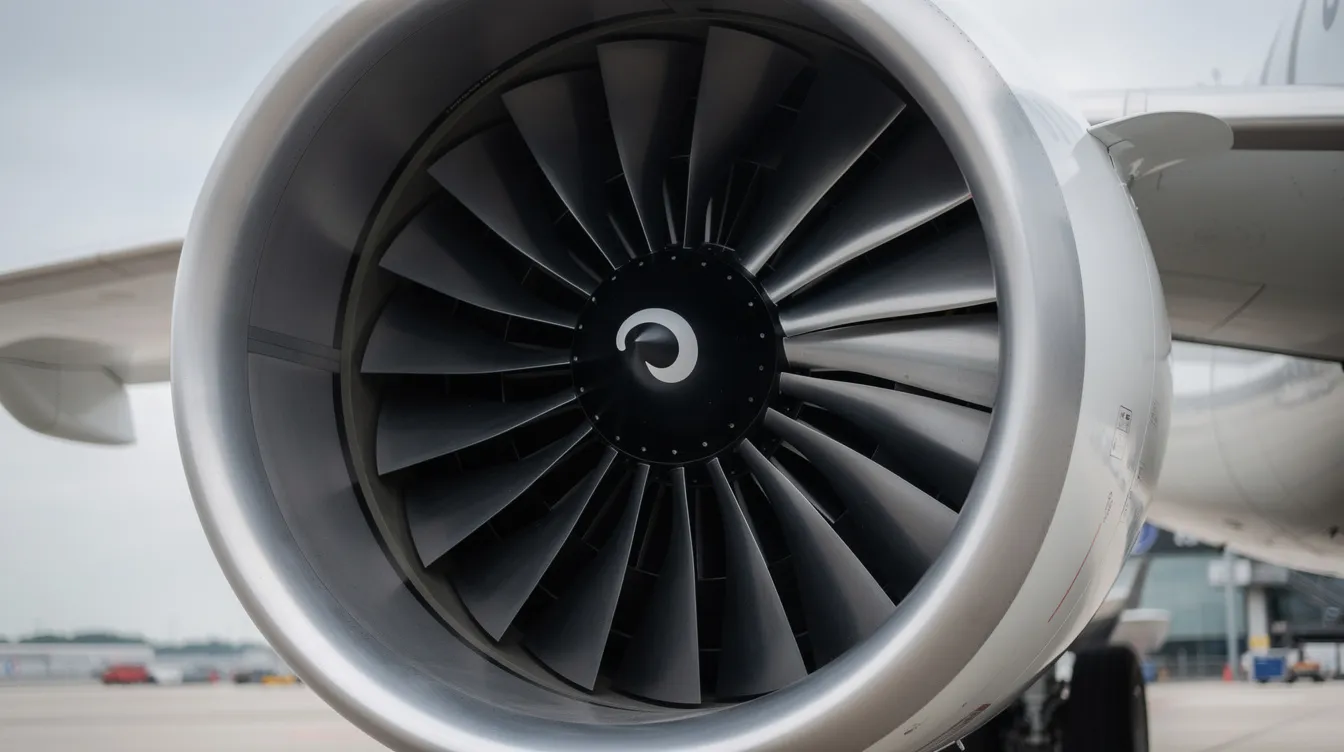
The aviation fuel landscape is shifting. Alongside conventional jet fuel and AVGAS, newer liquid fuels aimed at reducing emissions are entering the supply chain.
The main fuel types now appearing in aviation include:
Conventional jet fuels — Jet A, Jet A-1, Jet B, TS-1, and regional variants remain the backbone of the industry.
AVGAS — 100LL and emerging unleaded replacements like G100UL serve piston engines.
Sustainable Aviation Fuel (SAF) — a renewable alternative derived through pathways including Fischer-Tropsch synthesis, HEFA, alcohol-to-jet processes, and synthetic fuel routes that can use natural gas as a feedstock.
SAF can reduce lifecycle greenhouse gas emissions when blended with conventional jet fuel. Industry estimates indicate sustainable aviation fuels can reduce greenhouse gas emissions by 60–80% compared with fossil-derived kerosene, depending on feedstock and production pathway, while natural gas has also been discussed as a lower-emission transition fuel in aviation. Fischer-Tropsch synthetic fuels are certified for blending with conventional jet fuel at up to 50%, subject to the approved pathway and specifications.
Real-world adoption is accelerating. KLM's flight on February 8, 2021, used synthetic kerosene, and broader adoption also depends on testing and certification across various aircraft and engines rather than isolated demonstration flights. Qatar Airways operated a flight using a 50:50 synthetic fuel blend, demonstrating compatibility with existing jet engines. Biofuels are key to achieving carbon neutrality in aviation by 2050, though availability and lifecycle outcomes vary. Europe's ReFuelEU regulation sets blending requirements that rise over time.
Charter customers may increasingly see SAF options through platforms like Jettly, which positions itself as a flexible NetJets alternative for on-demand and membership-based private flying. Learn more about Sustainable Aviation Fuel and its role in private jet travel.
Fuel is not an abstract concern—it shapes the aircraft Jettly's marketplace presents for a trip. Range, payload, runway requirements, and fuel availability at specific airports all factor into which jet fits a route. Jettly's airport locator can help travelers assess departure and arrival options.
Here is how fuel planning affects real decisions:
Range and routing — Jet A-1, with its lower freezing point, is suitable for long, high-latitude flights such as New York–Reykjavik–Oslo. Jet A handles most U.S. domestic routes.
Airport selection — remote or cold-weather airports may stock limited fuel grades, potentially restricting refueling options or requiring a technical stop.
Operating cost — regional fuel prices, expected fuel burn, and reserves feed into charter quotes. A light jet on Los Angeles–Las Vegas will use far less fuel than a long-range jet on Toronto–Vancouver or New York–London.
Jettly integrates fuel assumptions into its instant pricing process, so travelers can compare aircraft classes and estimated trip costs. See private jet charter cost and Jettly's guidance on affordable private jet charter pricing. Understanding jet fuel helps customers interpret range charts, technical-stop suggestions, and price differences when reviewing options.
Every batch of jet fuel must be checked before it enters an engine, whether for an airline or a private charter aircraft.
Typical checks and procedures include:
Laboratory testing against ASTM or DEF STAN specifications for density, flash point, freezing point, sulfur content, and thermal stability.
Airfield quality checks for water, filtration, and regular sampling from storage tanks and refueling trucks.
Strict fueling procedures to prevent misfuelling between jet fuel and AVGAS, particularly at mixed-use airports.
Safety regulators such as the FAA, EASA, and Transport Canada require operators to maintain fuel quality programs. Reputable charter operators in Jettly's network use certified suppliers and follow applicable standards. For passengers, most of this work is invisible, but it supports safe operations and reliable scheduling. For more detail, see Jettly's guide to aviation fueling.
Fuel considerations vary by aircraft class. The right choice depends on distance, passengers, luggage, and airport access—not just the aircraft's name.
Turboprops — burn jet fuel at lower rates and suit short hops to smaller airports with shorter runways. They can be a practical choice for regional trips.
Light and midsize jets — optimized for Jet A or Jet A-1 on regional and medium-haul routes, balancing speed, cabin space, and fuel cost.
Heavy and long-range jets — carry larger fuel loads and require careful planning for intercontinental flights. Jet A-1 and SAF blends may be relevant where available and approved.
Piston aircraft — use AVGAS and may suit very short, budget-conscious hops where speed matters less than cost.
Jettly's instant-quote system lets travelers filter by aircraft class and route, accounting for fuel burn and required fuel types in displayed pricing. Tools like the jet card flight cost estimator can help compare structured program costs. Focus on mission profile—distance, passengers, luggage, and runway conditions—rather than aircraft brand alone.

Standard jet engines and turbofans are designed for jet fuels like Jet A or Jet A-1. Running AVGAS, automotive gasoline, or other fuels through a turbine engine could cause serious damage or failure. Jettly-chartered aircraft follow the manufacturer's approved fuel list. Services such as Jettly Eats in-flight catering enhance the onboard experience but do not affect fuel requirements.
Fuel is one of the major variable costs in a charter. Local fuel prices, expected burn based on aircraft type, and required reserves are reflected in Jettly's instant quotes. A more fuel-efficient midsize jet may sometimes offer a similar trip cost to a smaller aircraft on a medium-length route, depending on flight time, availability, and operating requirements. Shared or empty-seat private flights may distribute costs among passengers when available.
Some business jets are certified to use approved SAF blends with conventional jet fuel. Availability is concentrated at larger hubs in North America and Europe but is growing. Operators in Jettly's network may be able to arrange SAF on request. Visit the SAF page for more details.
Jet fuel is flammable and can be harmful with direct exposure, but passengers typically have no contact with it. Fueling takes place outside the cabin under strict procedures. Airport fueling systems and air-side protocols keep passengers at a safe distance, while Jet A and Jet A-1 have higher flash points than gasoline.
Enter the origin, destination, and passenger count on Jettly's platform. It displays aircraft options with range, fuel burn, and cost considered across its global inventory of private charter aircraft. For routes requiring technical stops or special fuel considerations, charter specialists can recommend an appropriate aircraft.
Ready to find the right aircraft for a trip? Explore flight options or request an instant quote at jettly.com, or learn about Jettly's membership options.
Jet fuel specifications help determine how reliably an aircraft can operate across routes, climates, and airports. Jet A and Jet A-1 power most private jets, while specialized grades and Sustainable Aviation Fuel serve specific conditions and evolving emissions goals, with Jet A-1 especially useful on long-haul international flights because of its lower freezing point.
Travelers do not need to select a fuel themselves: certified operators confirm that each aircraft uses an approved fuel and meets applicable standards. Learn more about aviation fueling and the types of jet fuel. The practical takeaway is to choose an aircraft that fits the route, passenger count, luggage, and airport requirements.
Jettly’s instant-quote platform helps compare available aircraft and pricing, while membership options can support more predictable travel costs. Jettly is a charter broker; flights are operated by properly certified third-party carriers.
Ready to see how aircraft choice, routing, and fuel requirements affect a trip? Explore flight options or request a quote.
Share this post:
Jay Franco Serevilla
Nov 18, 2026
|
5
min read
Discover tips and trends in the industry.

5
min read
How Much Does a Pilot Make a Year? (2027 Guide to Airline Pilot Salaries)
In 2027, airline pilot salaries range from approximately $85,000 for entry-level regional pilots to over $450,000 for senior captains at major airlines. Factors such as rank, aircraft type, and employer significantly influence earnings, with additional compensation often including bonuses and profit sharing. This guide provides a comprehensive breakdown of pilot salaries, pay structures, and career progression.
Read More5
min read
Fuel for Jet Engine: Types, Specifications, and What Matters for Private Jet Travel
Choosing the right jet fuel is crucial for private jet travel, impacting range, cost, and safety. This guide explains the main types of jet fuel, their specifications, and how they influence charter flights. Understanding these factors helps travelers make informed decisions when booking through platforms like Jettly.
Read MoreStay updated with our latest insights and tips to elevate your journey with us.
MEMBERSHIPS AND ASSOCIATIONS



© 2026 Jettly Inc. All rights reserved.
Disclaimer: Jettly operates as a charter broker, offering access to a global digital jet charter marketplace. Jettly is not a direct air carrier and does not own or operate aircraft. All advertised flights are conducted by third-party air carriers that are fully licensed and hold the appropriate Part 135 or Part 121 certifications issued by the Federal Aviation Administration (FAA) or equivalent regulatory authorities under U.S. or foreign law. Jettly complies fully with the U.S. Department of Transportation's Part 295 and Part 298 Charter Broker regulations. Jettly does not carry additional liability insurance. Passengers are covered by aircraft operator insurance. TICO: 50023770


