



Login
Get Instant Pricing On 23,000+ Aircraft

>
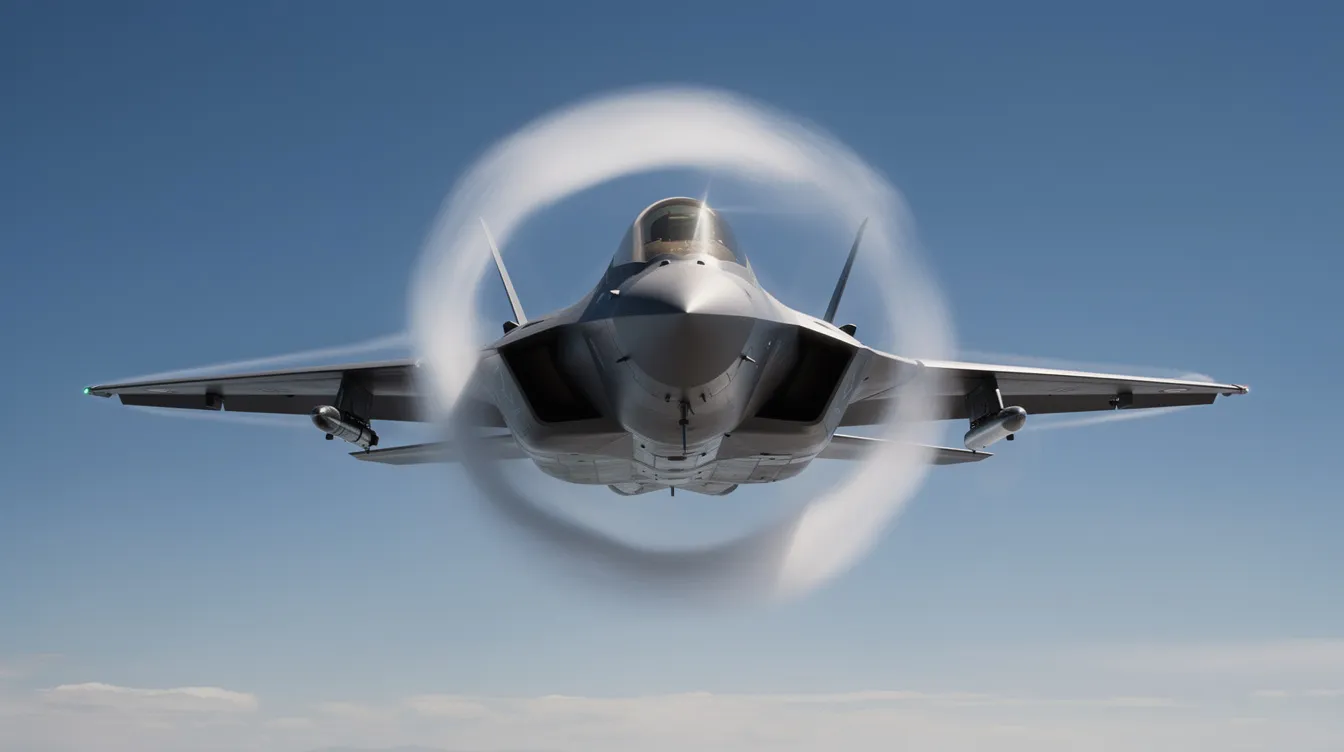
If you watched Top Gun: Maverick and wondered how fast is Mach 10 speed in real life, you are not alone. The film's memorable opening scene pushed the Darkstar aircraft past Mach 10, leaving audiences questioning where movie magic ends and aerospace reality begins. Here is a grounded look at what Mach 10 actually means, whether any aircraft has reached it, and how it compares to the private jets people fly today.
Mach 10 is approximately 7,670–7,826 mph (12,350–12,600 km/h) at sea level, placing it firmly in the hypersonic speed regime (Mach 5 and above).
No human has ever flown at Mach 10. The current record for manned flight is Mach 6.7, set by the X-15 program in 1967.
The Darkstar scene in Top Gun: Maverick draws on real aerospace concepts, but Maverick's Mach 10 flight is scientifically improbable for survival given the acceleration, heating, and G-forces involved.
NASA's unmanned X-43A reached near-Mach 10 speed on November 16, 2004, but it was a short experimental burst, not a crewed or operational flight.
Private jets chartered through platforms like Jettly cruise well below Mach 1, prioritizing safety, comfort, and efficiency over extreme top speed.
Mach is a ratio comparing an object's speed to the local speed of sound. Mach 10 means 10 times the speed of sound. At standard sea level conditions (about 15 °C), Mach 1 is approximately 767 mph or 1,225 km/h. That puts Mach 10 at roughly 7,670 mph (12,350 km/h), though some sources calculate it closer to 7,826 mph depending on exact atmospheric assumptions.
The speed of sound deviates with temperature and altitude. At 60,000–80,000 ft, where air density is lower and temperatures drop to −50 °C or colder, the actual speed of Mach 10 falls closer to 6,700–6,900 mph. This range aligns with the figures relevant to Top Gun: Maverick's Darkstar sequence.
Hypersonic speeds are classified as Mach 5 or greater. Mach 10 is classified as hypersonic speed, sitting at the boundary of what NASA calls the "high hypersonic" regime (Mach 10–25). For context:
Commercial airliners cruise around Mach 0.78–0.84 (~515–560 mph).
Even the fastest business jets operate below Mach 1.
Mach 10 is roughly 13 times faster than a typical private jet capable of Mach 0.75.
In the memorable opening scene of Top Gun: Maverick, Tom Cruise's Pete "Maverick" Mitchell climbs into the cockpit of a sleek, fictional aircraft called the Darkstar and pushes it past Mach 9, reaching Mach 10 and then Mach 10.2 before the craft breaks apart in an explosion at the edge of Earth's atmosphere, a far cry from the real-world limits described in guides on how fast private jets fly.
The Darkstar is not a real aircraft. Its wedge-shaped design draws inspiration from the rumored Lockheed Martin SR-72 concept and decades of hypersonic research. Producers Christopher McQuarrie, Jerry Bruckheimer, and David Ellison worked alongside writers Eric Warren Singer, Ehren Kruger, and Peter Craig to blend cinematic drama with realistic aerial craft aesthetics. Lockheed Martin's Skunk Works reportedly advised the production, and a full-scale model was built for filming.
On screen, Mach 10.2 translates to roughly 7,800+ mph at sea level or around 6,700+ mph at altitude. These Mach values are thrilling to watch but remain well beyond what any real pilot or jet capable of flight has achieved. The speed Maverick reaches is a narrative device tied to the character's thirty years of pushing limits, not a documentary figure.
At Mach 10, an object could travel approximately 2.13 miles per second. That figure makes abstract velocity feel concrete.
Some practical examples:
Crossing the continental United States (~2,400 miles): about 20 minutes.
Flying from New York to London (~3,500 miles): roughly 30–35 minutes.
In the Top Gun film, if Maverick held Mach 10 for about 7 minutes, the distance covered would be approximately 750–900 miles (1,200–1,450 km).
These calculations assume constant Mach 10 with no acceleration or deceleration phases. The movie condenses complex flight dynamics for storytelling. By contrast, typical private jets available through Jettly cruise at roughly 450–575 knots (515–660 mph). Much slower than Mach 10, but optimized for comfort, range, and access to thousands of airports.
Hypersonic speed begins at Mach 5. At Mach 10, the physics of flight change dramatically compared to anything a commercial or military plane normally encounters.
Air at that velocity compresses violently. Strong shock waves form just millimeters from the vehicle surface. Wind resistance generates extreme friction. At Mach 10, surface temperatures on an aircraft can exceed 2,000 °F, hot enough to melt most conventional metals. The atmosphere itself begins to break down: diatomic molecules dissociate, and in some conditions the fluid surrounding the craft ionizes, behaving more like plasma than air.
NASA and the Defense Intelligence Agency classify flight regimes as follows:
|
Regime |
Mach Range |
Examples |
|---|---|---|
|
Subsonic |
Below Mach 1 |
Airliners, private jets |
|
Supersonic |
Mach 1–5 |
Concorde, fighter jets |
|
Low Hypersonic |
Mach 5–10 |
X-15, some missiles |
|
High Hypersonic |
Mach 10–25 |
X-43A, re-entry vehicles |
|
Re-entry |
Above Mach 25 |
Spacecraft returning from orbit |
Mach 10 is still below the orbital velocity required to maintain Low Earth Orbit (roughly Mach 25). But it introduces nearly every thermal and aerodynamic challenge engineers must solve before reaching speeds that would be impossible to manage with standard engines and airframes.
The main limitation is not raw speed but the G-forces required to accelerate, decelerate, and maneuver at hypersonic speed. One G equals normal Earth gravity. Humans can withstand up to 9Gs for a few seconds, and trained fighter pilots with G-suits can sustain that briefly. Average passengers tolerate about 4–6 Gs for short bursts before losing consciousness.
Reaching Mach 10 within seconds or even tens of seconds would subject the human body to acceleration far beyond survivable limits. For comparison:
Astronauts experience around 3Gs during rocket launch sequences.
High-performance fighter maneuvers in jets like the F/A-18 Super Hornet peak near 7–9 Gs.
The X-15 pilots experienced up to 8 Gs during re-entry.
Even a future hypersonic passenger vehicle cruising near Mach 5–6 would need very gentle, prolonged acceleration and near-straight flight paths. Nothing close to a Top Gun-style climb to Mach 10 is realistic for humans. Maverick's Mach 10 flight is scientifically improbable for survival-dramatic cinema, not operational flight planning, whereas real travelers weigh practical choices like affordable aircraft rental options, complete guides to private jet rental costs, and conventional charter services.
Mach 10 speed has never been achieved by a manned aircraft. The official manned maximum speed record is about Mach 6.7, set by William J. "Pete" Knight in the X-15A-2 on 3 October 1967. Knight set that world record, reaching speeds of roughly 4,520 mph at an altitude above 100,000 feet, using rocket propulsion after an air launch from a B-52 bomber.
The X-15 program operated at the boundary of space. These experimental jets relied on rocket engines, not conventional air-breathing propulsion, and could reach altitudes above 354,000 feet.
On the unmanned side, NASA launched the X-43A, an air-breathing hypersonic vehicle that achieved approximately Mach 9.6 under its own scramjet power on November 16, 2004. The rocket booster that carried it to launch velocity briefly hit Mach 10.
Modern programs continue exploring Mach 5+ cruise missiles and glide vehicles, but Mach 10 manned flight remains beyond today's operational capability. No realistic aerial craft or spacecraft concept on a near-term timeline targets Mach 10 with people on board.
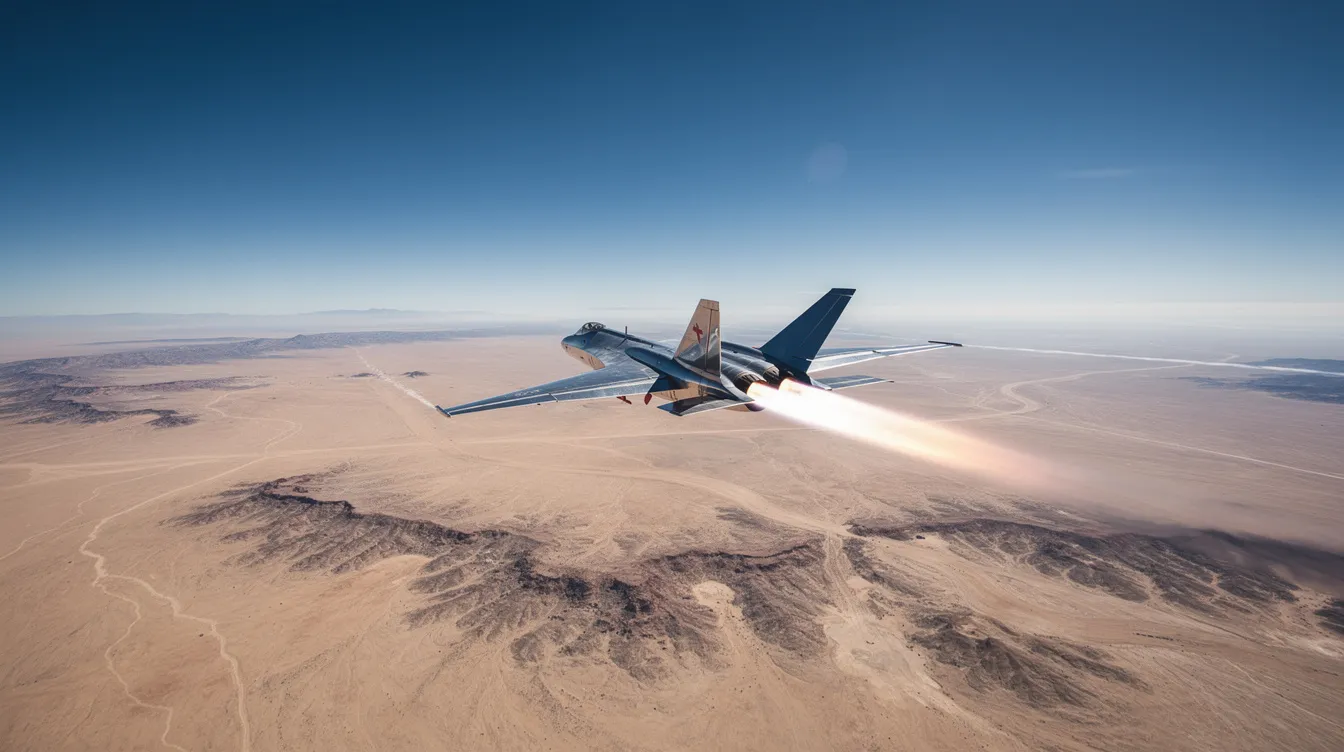
The gun maverick persona and Darkstar's Mach 10 scene sit in a different universe from the real jets featured across both Top Gun films. Here is how real aircraft compare:
|
Aircraft |
Role |
Approximate Top Speed |
|---|---|---|
|
F-14 Tomcat (original Top Gun) |
Fleet interceptor |
~Mach 2.3–2.34 |
|
F/A-18E/F Super Hornet (Top Gun: Maverick) |
Multirole fighter |
The F/A-18 Super Hornet can reach speeds of Mach 1.5 |
|
SR-71 Blackbird |
Reconnaissance |
~Mach 3.2 |
|
SR-72 (concept) |
Hypersonic ISR |
~Mach 6 (not yet flown) |
|
X-15A-2 |
Research |
~Mach 6.7 |
These speeds are already extreme. Flying faster than 1,500 mph requires specialized training, complex engines, and highly controlled conditions. Actors, including Tom Cruise, flew in real jets but never approached Mach 10. The hypersonic scenes blend practical aerial photography with visual effects. Ed Harris's character pushing back against the program in the movie underscores the point: even in fiction, the scene was treated as an impossible stunt, much like the rarefied experiences offered by industry leaders such as NetJets in real private aviation.
To appreciate the scale, compare Mach 10 to what people actually fly, including aircraft from leading private plane manufacturers:
Boeing 737 / Airbus A320: ~Mach 0.78–0.82 (515–560 mph)
Long-haul widebodies (777, A350): ~Mach 0.84–0.89
Concorde (retired): ~Mach 2.0
Modern business jets: ~Mach 0.70–0.90
Private aircraft available through Jettly's marketplace range from light jets to large-cabin models, generally cruising between Mach 0.70 and 0.90, reflecting the broad mix of private charter aircraft used in modern business and leisure travel and the different private jet sizes and passenger capacities that match various group needs.
For frequent business flyers and families, the total journey time depends more on avoiding connections, bypassing long security lines, and using smaller airports than on pushing toward hypersonic speed, as outlined in this broader guide to private and charter airlines and destination-specific services like private jet charter in Kolkata, West Bengal. Efficient routing and direct departures from convenient airports often "feel faster" than any marginal cruise-speed advantage.
Despite its appeal in the film, Mach 10 is not a realistic target for passenger aviation. The engineering challenges alone explain why:
Extreme aerodynamic heating requires advanced thermal protection pushed well beyond current certified materials.
Propulsion would need scramjets or rockets, not conventional turbofan engines.
Flight corridors at Mach 10 altitude would face strict regulation, sonic boom restrictions, and air traffic integration challenges.
Certification, operation, and maintenance costs would dwarf anything in current aviation economics.
In practice, customers gain far more value from flexible scheduling, direct routings, and access to thousands of airports worldwide than from chasing a theoretical top speed like Mach 10, which is why many compare top private jet charter companies and look at cost-effective NetJets alternatives like Jettly based on reliability, network, and service rather than raw speed.
Real-world private aviation is about moving "as fast as makes sense." Jettly is a digital private jet charter broker connecting travelers with a global network of over 20,000 private charter aircraft operated by fully certified third-party carriers and supported by flexible private jet membership plans that give access to wholesale charter rates.
These aircraft do not fly anywhere near Mach 10, but they cut total door-to-door travel time by enabling options such as buying a single seat on a private jet, using crowdsourced private jet flights and shared empty seats, or chartering an entire aircraft, which can still dramatically reduce total journey time compared to commercial flights, by:
Offering direct routes with no layovers.
Using smaller airports closer to origin and destination.
Minimizing check-in, security, and boarding time.
Jettly's instant pricing tools and on-demand booking let members get predictable costs without the long-term commitment of jet cards or fractional ownership, helping travelers better understand what one private flight really costs and estimate one-way trip pricing with tools like the jet card flight cost estimator. For business leaders and families, practical speed-reliable schedules and smooth ground-to-air coordination matter far more than headline velocity figures. Explore private jet models and charter choices to see what fits your travel profile.
Below are answers to common questions not fully covered above.
Unmanned experimental vehicles like NASA's X-43A have briefly reached near-Mach-10 speeds, but no operational aircraft can routinely cruise at Mach 10. Current hypersonic research mostly targets missiles, glide vehicles, and test platforms-not everyday transport.
Most near-term high-speed aviation concepts target supersonic (Mach 1.2–2.0) or low hypersonic (Mach 3–5) flight, which are far easier to engineer. Mach 10 passenger service would require major breakthroughs in materials, propulsion, and safety systems. It is not on any realistic commercial timeline today.
Typical private jets chartered through Jettly cruise between roughly 450 and 575 knots (about Mach 0.70–0.90, or 515–660 mph). In real travel scenarios, avoiding connections and using smaller airports often saves more time than any theoretical increase in cruise Mach number, while tools that explain how much a private jet costs and guides that break down private jet card pricing in detail help put those time savings in financial perspective. Use the Private Jet Cost Calculator to compare options.
No. All hypersonic segments were cinematic, blending shots in real jets, full-scale models, and visual effects. Real F/A-18 flights during filming stayed within safe, real-world performance limits well below Mach 2. The Mach 10 scene required intensive pilot support and military oversight, but the speed itself remained a fictional element. Follow followed share posts about the making of the movie to see how the production balanced authenticity with share add spectacle.
Choosing nonstop private flights, closer airports, and flexible departure times often cuts hours off a journey without changing the aircraft's cruise speed. The answer lies in logistics, not raw velocity, and in understanding affordable private jet charter pricing and the many ways to get a seat on a private jet easily rather than chasing extreme speeds.
Ready to experience private travel on your terms? Explore flight options or request a quote at https://www.jettly.com.
Mach 10 is about 7,670–7,826 mph at sea level, though its exact speed changes with altitude and atmospheric conditions. It is firmly hypersonic, far beyond the speed of any crewed aircraft. NASA’s unmanned X-43A demonstrated near-Mach-10 flight in 2004, while the X-15 still holds the manned flight record at Mach 6.7. Maverick’s survival in Top Gun: Maverick remains cinematic fiction, not a realistic example of human flight.
For everyday travel, practical time savings come from direct routes, flexible schedules, and convenient airport access—not hypersonic speeds. Jettly’s global aircraft marketplace connects travelers with aircraft operated by certified third-party carriers and provides instant charter quotes. Ready to travel on your terms? Explore flight options or request a quote.
Share this post:
Jay Franco Serevilla
Nov 18, 2026
|
5
min read
Discover tips and trends in the industry.
5
min read
What Is the Best Fighter Plane in the World?
The best fighter plane in the world is often debated, with the F-22 Raptor frequently cited for its air superiority capabilities. However, the F-35 Lightning II excels in multirole operations, while emerging contenders like the J-20 and Su-57 showcase advanced technologies. Ultimately, the 'best' fighter depends on mission requirements and operational context.
Read More5
min read
How Fast Is Mach 10 Speed? (Top Gun: Maverick, Hypersonic Flight & Reality)
Mach 10 speed, approximately 7,670–7,826 mph, is firmly in the hypersonic realm, far beyond any crewed aircraft capabilities. While films like Top Gun: Maverick depict thrilling Mach 10 flights, no human has ever flown at this speed, with the current record being Mach 6.7. Real-world aviation prioritizes safety and efficiency over extreme speeds, focusing on practical travel solutions.
Read MoreStay updated with our latest insights and tips to elevate your journey with us.
MEMBERSHIPS AND ASSOCIATIONS



© 2026 Jettly Inc. All rights reserved.
Disclaimer: Jettly operates as a charter broker, offering access to a global digital jet charter marketplace. Jettly is not a direct air carrier and does not own or operate aircraft. All advertised flights are conducted by third-party air carriers that are fully licensed and hold the appropriate Part 135 or Part 121 certifications issued by the Federal Aviation Administration (FAA) or equivalent regulatory authorities under U.S. or foreign law. Jettly complies fully with the U.S. Department of Transportation's Part 295 and Part 298 Charter Broker regulations. Jettly does not carry additional liability insurance. Passengers are covered by aircraft operator insurance. TICO: 50023770


