



Login
Get Instant Pricing On 23,000+ Aircraft

>
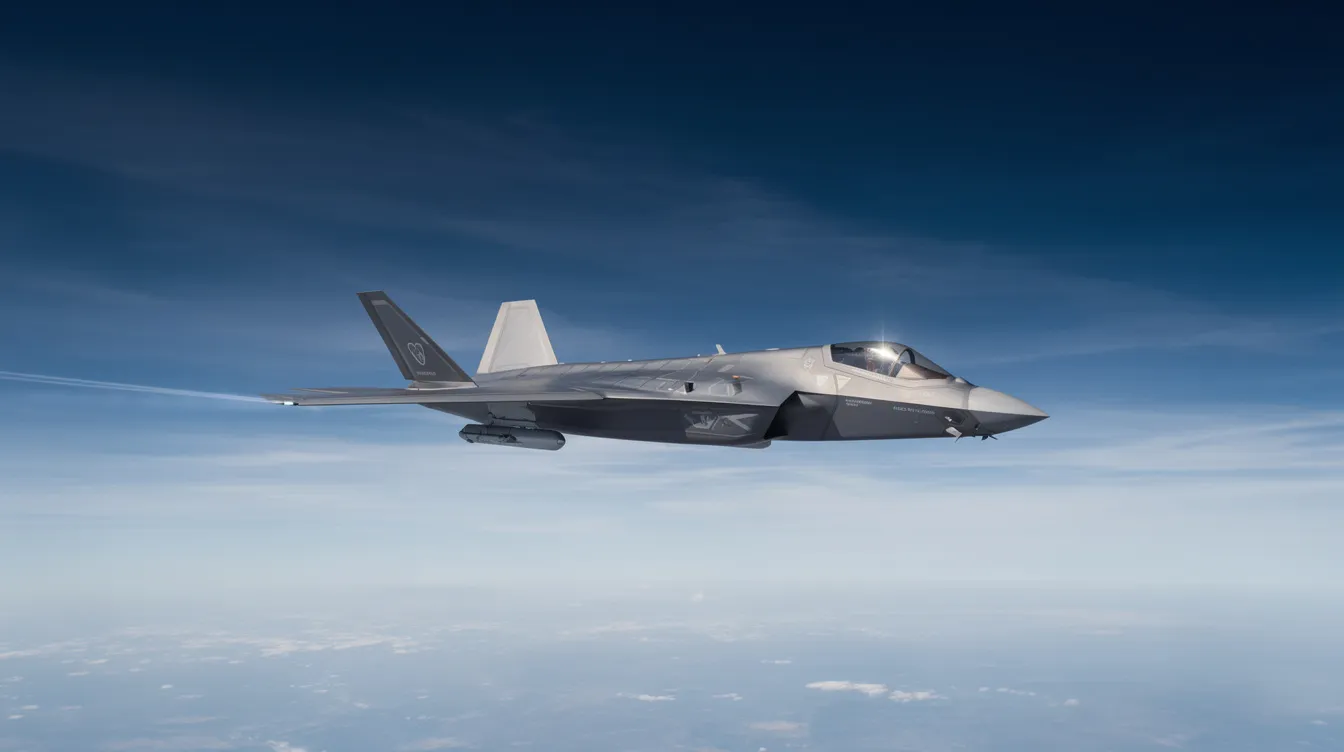
The question "what is the best fighter plane in the world" comes up in every defense forum, documentary, and barracks debate. The answer depends on the mission, the era, and the criteria used for judging. Here is a data-driven look at the aircraft that compete for the title.
Defense analysts rank the F-22 Raptor as the top air-superiority fighter in service today, based on its stealth, supercruise, and sensor fusion. It is the first 5th-generation fighter jet.
"Best" shifts with the mission: the F-35 Lightning II leads in multirole strike and allied interoperability; the Chengdu J-20 and Sukhoi Su-57 are emerging 5th-generation contenders from China and Russia.
Historic icons like the Supermarine Spitfire and Messerschmitt Bf 109 defined air superiority in World War II, while Cold War jets like the MiG-21 and F-4 Phantom II bridged the gap to modern stealth technology.
Modern fighter aviation features stealth, sensor fusion, network-centric warfare, and maneuverability as the core pillars that separate 5th-generation designs from earlier aircraft.
Although Jettly focuses on private jet charter rather than fighter jets, understanding how aircraft performance maps to specific missions helps travelers choose the right private aircraft class for their own trips.
No single fighter plane holds the title across every decade or role. Top-performing fighter jets are evaluated based on core technical and operational pillars: stealth, sensor fusion, weapons capacity, kinematic performance, combat radius, and cost. Defense analysts assess fighter performance by comparing capabilities across these criteria, then weighting them for the mission at hand. Stealth is measured by radar cross-section and infrared signature reduction; it allows a jet to detect and engage enemies before being seen.
Kinematic performance includes speed, acceleration, and sustained supercruise ability. Speed and agility are critical for performance during close-range engagements, while combat radius and endurance are vital for operational effectiveness in large areas. Payload capacity affects the number of weapons an aircraft can carry. Cost and readiness refer to maintenance costs and aircraft availability rates, just as travelers must account for acquisition and operating expenses when asking how much a private jet costs or using a private jet charter cost estimator.
Air-superiority fighters like the F-22 are built to dominate the skies in air-to-air combat. Multirole fighters like the F-35, Rafale, and Sukhoi Su-35 balance air-to-air and ground attack. Interceptors like the MiG-31 specialize in long-range, high-speed threat engagement. Light fighters like the Saab JAS 39 Gripen prioritize low operating cost and short-runway capability. Modern air combat increasingly relies on who detects whom first and electronic warfare, which is why network-centric warfare enhances real-time targeting data sharing among forces.
Cold War doctrines shaped aircraft around rapid bomber interception and nuclear delivery. The MiG-21, F-4 Phantom II, and MiG-31 all reflect those priorities. By contrast, 21st-century designs center on stealth and data-link integration. By most Western military assessments, the F-22 Raptor remains the benchmark for air-to-air dominance.
The F-22 Raptor is widely regarded by defense analysts and pilots as the most capable air-superiority fighter aircraft in service today. Sensor fusion merges data from multiple sources for a cohesive pilot picture, giving F-22 crews a first-shot, first-kill advantage in contested airspace. Stealth allows the Raptor to detect and engage enemies before being seen.
Developed by Lockheed Martin and Boeing under the Advanced Tactical Fighter program, the F-22 first flew in 1997 and entered service with the US Air Force in 2005. Production was capped at 187 operational aircraft because of high unit cost and shifting post-Cold War budget priorities.
The F-22 Raptor has a top speed of Mach 2 and can supercruise above Mach 1.5 without afterburner, extending range while keeping its infrared signature low. Two Pratt & Whitney F119 engines with thrust vectoring make it agile at high altitude. Sensor fusion enhances pilot situational awareness by combining radar, electronic warfare, and missile-warning data into a single tactical display, mirroring how the best private airplanes in 2025 integrate advanced avionics and performance for demanding missions.
In US Air Force exercises like Red Flag, F-22 kill ratios against 4th-generation fighters have been reported at double-digit margins. The Raptor has served in air policing and strike escort missions over Syria and the Middle East since 2014. For pure air-to-air combat, the F-22 remains the top fighter aircraft. Its limitations: a ban on export to allied countries, a small fleet, and life-cycle costs that led the Air Force to plan its replacement with the F-47 under the NGAD program.
Several 5th-generation and 4.5-generation fighter jets challenge the F-22 in different mission sets, particularly multirole strike and networked warfare. Fighter aircraft must integrate effectively with various military assets for optimal performance, and each design reflects a different philosophy.
|
Fighter |
Primary strength |
Notable detail |
|---|---|---|
|
F-22 Raptor |
Air superiority and stealth |
Mach 2 top speed; entered service in 2005 |
|
F-35 Lightning II |
Multirole missions and allied interoperability |
1,200-mile combat range; three variants |
|
Chengdu J-20 |
Long-range air combat |
Mach 2.5+ top speed; entered service in 2017 |
|
Sukhoi Su-57 |
Range and maneuverability |
2,174-mile combat range; adopted in 2019 |
|
F/A-18E/F Super Hornet |
Carrier-based multirole operations |
Mach 1.6 top speed |
The F-35 Lightning II entered service in 2015 with three variants: F-35A (conventional), F-35B (short takeoff/vertical landing), and F-35C (carrier-capable). The F-35 Lightning II has a combat range of 1,200 miles and excels in sensor fusion, ground strike, and interoperability across more than 20 nations. It trades some maneuverability for production scale and versatility.
The Chengdu J-20 entered service in 2017 as China's first operational 5th-generation fighter. The Chengdu J-20 has a top speed of Mach 2.5+ and is recognized for its long-range air combat capabilities. Western analysts remain uncertain about its true stealth performance and engine maturity.
The Sukhoi Su-57 was adopted by the Russian Air Force in 2019. The Sukhoi Su-57 has a combat range of 2,174 miles. It features super-maneuverability and internal weapons bays, but production numbers remain limited (roughly 30 aircraft), and its second-stage engines are still in development.
Key 4.5-generation competitors include the Eurofighter Typhoon (European service since 2003), the Dassault Rafale (French Air Force service since 2001, combat-proven in Libya and Mali), the Boeing F/A-18E/F Super Hornet (which has a top speed of Mach 1.6, serving the Navy since 1999), and the Sukhoi Su-35 (Russian Air Force since 2014). These aircraft carry powerful radars and modern missiles but lack true 5th-generation stealth.
While the F-22 may be the best contemporary fighter, several historic aircraft earned the title "best of their era" through battlefield impact and technological innovation.
The Supermarine Spitfire was crucial in the Battle of Britain. Developed in the 1930s with elliptical wings and Rolls-Royce Merlin engines, the Spitfire gave Britain resistance against the Luftwaffe in 1940. Its high maneuverability and climb rate made it a symbol of survival for the nation.
The Messerschmitt Bf 109 first flew in 1935 and became the most-produced fighter aircraft in history; over 33,000 Messerschmitt Bf 109 units were produced by 1945. Germany kept it competitive throughout World War II with engine and armament upgrades across multiple variants. It served on every European front and carried both machine guns and 20 mm cannons, making it heavily armed for its era.
Other standouts include the P-51 Mustang (long-range, escort capability), the Focke-Wulf Fw 190, and the Mitsubishi A6M Zero. Range, agility, and climb rate decided mid-20th-century air combat.
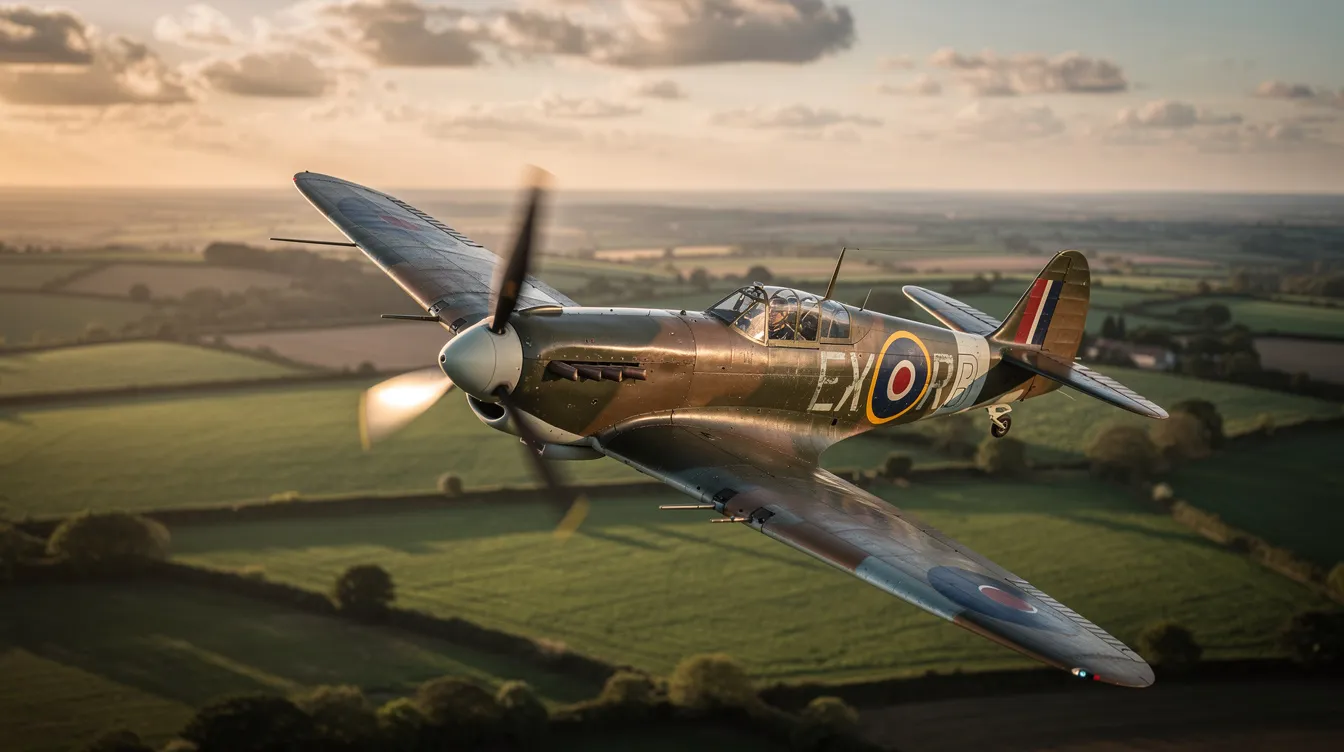
The transition from props to jets introduced supersonic flight and radar-guided missiles. The MiG-21 (simple, fast, widely exported) and F-4 Phantom II (multirole, heavily armed) defined Cold War generations and set the stage for modern fighter jets.
The Cold War transformed fighter aircraft from gun-armed jets into complex platforms built around radar, missiles, and interception roles.
The F-4 Phantom II served in the Vietnam War, entering US service in 1960. It flew air-to-air, ground attack, and reconnaissance missions across NATO and allied countries. Its multi-role flexibility influenced later designs like the F-15 Eagle and the F-16 Fighting Falcon.
The MiG-21 was widely exported to Eastern Bloc countries and Soviet Union allies after its first flight in 1955. It saw combat in Vietnam, the Six-Day War, and the Iran-Iraq conflict, earning a reputation for high speed and agility at low cost.
The MiG-31 Foxhound can reach speeds of Mach 2.83 and carries a Zaslon phased-array radar capable of tracking multiple targets. Developed in the 1970s for high-altitude bomber interception, it represents the interceptor philosophy at its peak. The Sukhoi Su-27 family (origin of the Su-30 and Su-35 line) focused on long-range air defense with super-maneuverability.
These Cold War platforms drove development in fly-by-wire control, composite materials, and missile technology. Without that competition, aircraft like the F-15, F-16, MiG-29, and ultimately the F-22 and F-35 would not exist.
Beyond the F-22, several fighter jets could claim "best in class" depending on the criteria.
The Saab JAS 39 Gripen is a lightweight, agile multirole fighter that entered Swedish service in the 1990s. Its low operating cost, short-runway capability, and strong export record (Brazil, Hungary, South Africa) make it a top value pick. The aircraft's operating cost affects fleet economics and overall effectiveness, and the Gripen scores well on that measure, much like budget-conscious owners compare options when evaluating the cheapest private aircraft or researching affordable, budget-friendly aircraft choices.
The Eurofighter Typhoon and Dassault Rafale are twin-engine European multirole fighters with combat records over Libya, Iraq, Afghanistan, and the Sahel. The Typhoon favors high-speed intercept; the Rafale shines in strike versatility and electronic warfare through its SPECTRA suite, serving the French Air Force in both land-based and carrier variants.
The F-15 Eagle and F-16 Fighting Falcon remain US Air Force workhorses. The F-15 has an undefeated air-to-air record across decades of service. The F-16 is the most widely operated fighter in the world, with variants developed for dozens of countries. Kinematics and speed can enhance a fighter's air combat performance, and both aircraft remain capable after continuous upgrades, much like how travelers must weigh range, efficiency, and comfort when finding the best cross-country plane for long journeys.
"Best" can mean most advanced (F-22), most versatile (F-35 or Rafale), most affordable to operate (Gripen), or most widely used (F-16), depending on a nation's needs and money—just as the best personal plane depends on an owner's specific mission profile and budget.
Fighter jets and private jets serve different purposes, but both rely on matching an aircraft's capabilities to a specific mission, whether you're comparing air forces, surveying the best private jet charter companies and providers, or assessing the best private plane manufacturers for a travel fleet.
Light jets and turboprops function like agile point-defense fighters: ideal for short hops under 1,000 miles. Midsize and super-midsize jets are multirole workhorses for regional or transcontinental trips. Heavy jets project range and comfort over long distances, similar to how long-range fighters cover large areas of operation. Jettly's private charter aircraft marketplace uses a broad inventory of aircraft types to let travelers choose the right tool for the job, similar to how a comprehensive list of charter airlines and private operators helps map options to specific missions.
Safety and maintenance standards matter just as much in private travel as they do in military aviation, especially given the expanding global fleet of private jets and emerging usage trends. Jettly works with certified third-party carriers that meet relevant regulatory requirements and offers structured jet card programs for frequent flyers, supported by tools like a jet card flight cost estimator and guides to overall jet card costs and NetJets card pricing, while also comparing favorably with established providers such as NetJets.
The F-22 is optimized for air superiority: better maneuverability, higher altitude performance, and supercruise. The F-35 carries more advanced sensors, supports a broader range of mission types (strike, reconnaissance, carrier operations), and operates across a larger allied network. Calling one "better" depends on whether the priority is air dominance or multirole affordability and interoperability.
The F-16 Fighting Falcon, MiG-21, and F-4 Phantom II each have multi-decade records across numerous conflicts. Combat record includes air-to-air victories, survivability, and adaptability through upgrades. Modern 5th-generation aircraft like the F-22 and F-35 have seen limited but growing combat use, mostly in precision strike and air policing rather than large-scale air battles.
Several programs are underway: the US Next Generation Air Dominance (NGAD) initiative (Boeing F-47, contract awarded 2025), the UK-Japan-Italy GCAP/Tempest project, and Europe's Future Combat Air System. Planned features include drone teaming, broadband stealth, and adaptive-cycle engines, with service entry targeted around the 2030s.
A fighter aircraft is built primarily for air-to-air combat: intercepting and shooting down other aircraft. Attack aircraft and bombers focus on striking ground or sea targets with heavier payloads. Many modern fighters are multirole and capable of both, blurring the old category lines. The same logic applies in private aviation: some jets favor short-runway performance while others prioritize long-range comfort, especially on international private jet flights where range and global access become critical.
Civilians cannot fly in frontline fighters like the F-22, but modern private jets feature digital cockpits, high-efficiency engines, and in-flight connectivity that reflect decades of aerospace development, with many of the top 10 private jets in the world and celebrity private jets showcasing technology and luxury on par with military platforms. Platforms like Jettly let travelers compare aircraft classes and choose the model whose performance profile matches their trip. Learn more and request an instant quote at https://www.jettly.com.
The F-22 Raptor is often considered the best fighter plane in the world for air superiority because it combines stealth, supercruise, maneuverability, and sensor fusion. But there is no single winner for every mission: the F-35 is built for multirole operations and allied interoperability, while aircraft such as the J-20, Su-57, Rafale, and Gripen offer different strengths.
The practical answer depends on what a country needs, what it can afford, and how effectively the aircraft works with other military assets. That same mission-first approach helps travelers compare private aircraft by range, cabin space, baggage capacity, and airport access. Jettly provides instant pricing and access to a global charter marketplace; flights are operated by properly certified third-party carriers. Explore aircraft options or request a quote at Jettly.
Share this post:
Jay Franco Serevilla
Nov 18, 2026
|
5
min read
Discover tips and trends in the industry.
5
min read
What Is the Best Fighter Plane in the World?
The best fighter plane in the world is often debated, with the F-22 Raptor frequently cited for its air superiority capabilities. However, the F-35 Lightning II excels in multirole operations, while emerging contenders like the J-20 and Su-57 showcase advanced technologies. Ultimately, the 'best' fighter depends on mission requirements and operational context.
Read More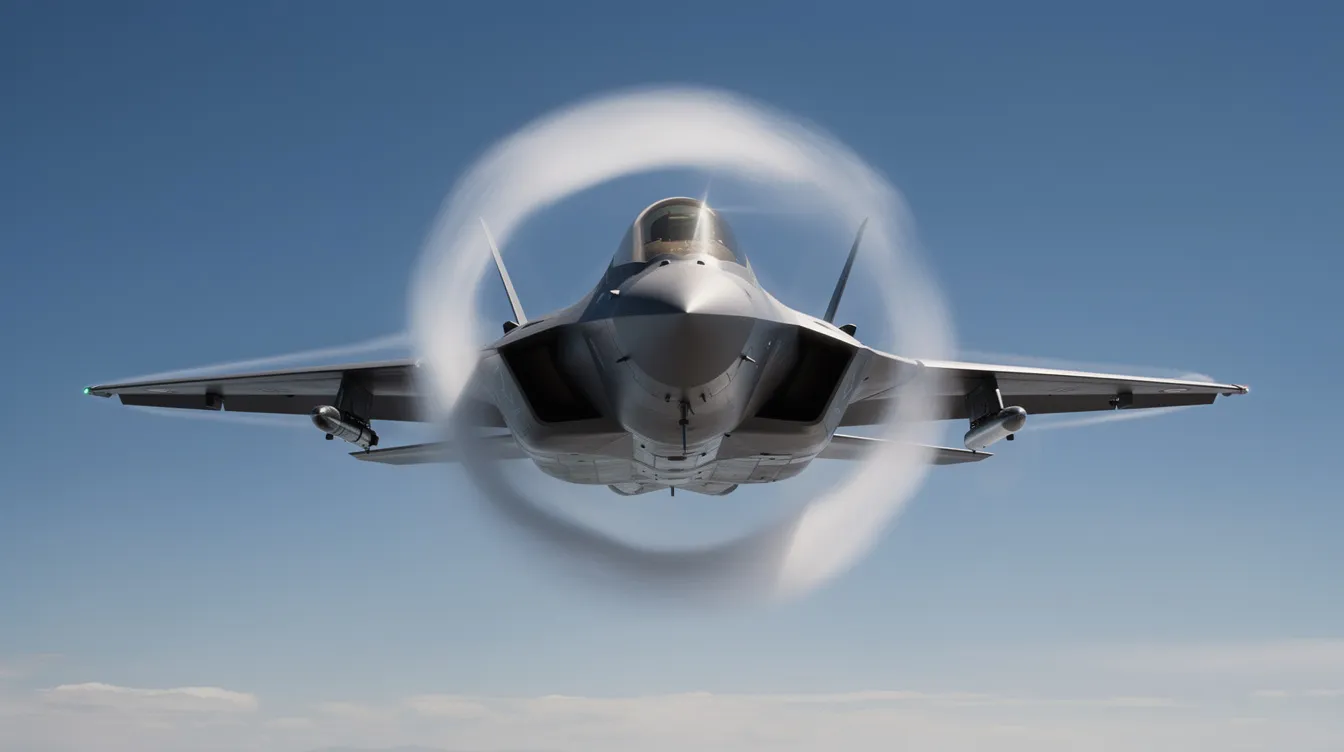
5
min read
How Fast Is Mach 10 Speed? (Top Gun: Maverick, Hypersonic Flight & Reality)
Mach 10 speed, approximately 7,670–7,826 mph, is firmly in the hypersonic realm, far beyond any crewed aircraft capabilities. While films like Top Gun: Maverick depict thrilling Mach 10 flights, no human has ever flown at this speed, with the current record being Mach 6.7. Real-world aviation prioritizes safety and efficiency over extreme speeds, focusing on practical travel solutions.
Read MoreStay updated with our latest insights and tips to elevate your journey with us.
MEMBERSHIPS AND ASSOCIATIONS



© 2026 Jettly Inc. All rights reserved.
Disclaimer: Jettly operates as a charter broker, offering access to a global digital jet charter marketplace. Jettly is not a direct air carrier and does not own or operate aircraft. All advertised flights are conducted by third-party air carriers that are fully licensed and hold the appropriate Part 135 or Part 121 certifications issued by the Federal Aviation Administration (FAA) or equivalent regulatory authorities under U.S. or foreign law. Jettly complies fully with the U.S. Department of Transportation's Part 295 and Part 298 Charter Broker regulations. Jettly does not carry additional liability insurance. Passengers are covered by aircraft operator insurance. TICO: 50023770


