



Login
Get Instant Pricing On 23,000+ Aircraft

>

A public charter flight sits in an interesting middle ground between flying commercially and flying private. It offers a smoother air travel experience than a standard airline ticket, but it doesn't hand over the keys to the entire aircraft the way a private jet charter does. This guide breaks down how public charters actually work, what they cost, and when it makes more sense to step up to a fully private flight.
A public charter flight is a pre-planned charter where a company sells individual seats to the public on a chartered aircraft. It differs from a traditional private jet because passengers share the cabin, and it differs from a commercial airline because it uses private terminals and smaller planes.
Public charter flights follow a published schedule and route but depart from private aviation terminals (FBOs), offering a faster, less crowded air travel experience than major airports.
These are shared flights - you buy a seat, not the entire aircraft. A private jet charter, by contrast, gives one group full control of the plane, schedule, and route.
Platforms like Jettly focus on on-demand charters and private jet charters, making them a strong alternative when travelers outgrow the fixed schedules and limited flexibility of public charter services.
Privacy is significantly reduced on shared private flights, and booking shared flights can restrict your travel schedule flexibility compared to chartering your own jet.
This article compares cost, comfort, flexibility, and safety across public charter, commercial, and fully private flight options.
A public charter flight is a non-scheduled flight selling individual seats to the public on a chartered aircraft. In the United States, these operations fall under DOT regulations (14 CFR Part 380), with the actual flying handled by FAA-certified Part 135 or Part 121 operators.
Public charter flights are arranged by charter operators hiring a direct air carrier to operate the flights. The charter marketer - sometimes called an indirect air carrier - plans routes, sets prices, and sells seats. The certificated airline flies the plane.
Typical aircraft include 30-seat Embraer ERJ-135 or ERJ-145 regional jets on US routes like Los Angeles to Las Vegas or Dallas to resort destinations. These flights depart from private terminals or FBOs rather than large commercial terminals.
Unlike a fully private jet charter, the schedule and route are fixed. Passengers share the cabin with other travelers outside their group. The model is sometimes marketed as "semi-private" or shared flights, blending elements of private aviation and commercial air travel.
At first glance, a public charter flight may look like a private flight with a lower price tag. In practice, the differences in flexibility, privacy, and cost structure are significant. Here is how the three main options compare:
|
Dimension |
Commercial Economy/First |
Public Charter Flight |
Private Jet Charter (via Jettly) |
|---|---|---|---|
|
Cost per seat |
Lowest (economy); high for first/business |
Mid-range ($350–$6,000 per seat) |
Highest total, but splits well for groups |
|
Schedule flexibility |
Fixed, many daily options |
Fixed, limited frequencies |
Fully flexible - you set departure time |
|
Airport access |
~500 major commercial airports |
Secondary airports, FBOs |
5,000+ airports globally |
|
Baggage |
Standard airline rules |
Stricter limits (smaller holds) |
More luggage flexibility than commercial flights |
|
Privacy |
Shared cabin, hundreds of passengers |
Shared cabin, ~30 passengers |
Entire aircraft for your group |
|
Aircraft |
Large airliners (737, A320+) |
Regional jets (ERJ-135, CRJ-200) |
Light jets, midsize, heavy, turboprops |
Private jet charter via platforms like Jettly is pay-per-flight with full aircraft control, whereas public charter is pay-per-seat with limited customization. This mirrors the broader private aviation ecosystem outlined in Jettly's guide to charter airlines and private flight options. A public charter sits between commercial and private on price and experience - more convenient than economy, less flexible than a whole aircraft charter.
Booking a public charter flight feels similar to buying an airline ticket, but the backend is a charter arrangement governed by specific consumer protection regulations.
Planning and scheduling: The charter company books aircraft capacity from an FAA-certified operator weeks or months in advance and files a public charter prospectus with the DOT. DOT regulations require public charter operators to maintain financial protections for traveler payments - typically through escrow accounts or surety bonds.
Booking: Customers buy seats online or through an app, select fixed departure dates and times, and receive confirmation. Payment is usually required at booking.
Day of travel: Public charters may require fewer pre-flight arrival times compared to commercial flights - often 20 to 45 minutes before departure. Passengers experience faster airport processing at private terminals for public charter flights. Private jet travel eliminates security lines and connection delays entirely, but public charters still offer a major improvement over commercial terminals.
Changes and cancellations: Passengers on public charter flights face stricter cancellation policies compared to major airlines. Refund rules, change fees, and schedule modification terms are outlined in the operator-participant contract and regulated under Part 380.
Public charter flights use a narrow range of fixed configurations, while private jet charter through Jettly spans 20,000+ unique aircraft, including turboprops and light jets.
Public charter aircraft typically include Embraer ERJ-135/145 or CRJ-200 jets configured with roughly 30 seats. Seat pitch is generally better than commercial economy, but cabin layouts are standardized. Baggage capacity is limited by smaller cargo holds and aircraft performance - shared flights can limit your luggage capacity compared to private charters.
Private aviation categories offer far more variety:
Light jets (Citation CJ3, Phenom 300): 4–7 passengers, ideal for regional trips
Midsize jets: coast-to-coast US flights with stand-up cabins
Heavy/long-range jets: international routes, full galley, sleeping space
Turboprops: short runway access, lower hourly rates
Aircraft choice directly affects the travel experience - noise levels, Wi-Fi availability, galley space for catering, and the ability to reconfigure seating for meetings or family groups. Jettly's marketplace lets travelers move beyond fixed-seat configurations to aircraft tailored to group size, luggage, and runway needs. Private jets offer customizable in-flight services and amenities that public charters simply cannot match.
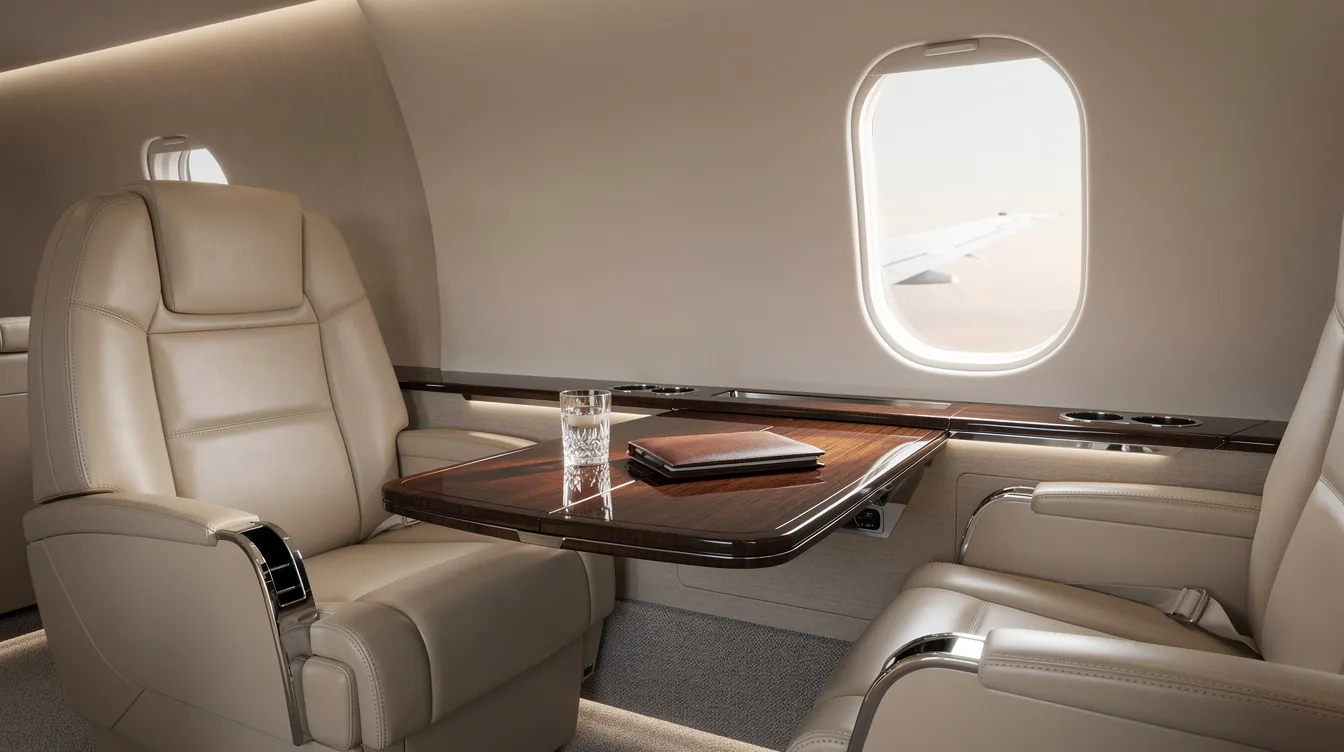
Public charters work best on short, high-demand leisure and business routes where enough travelers want a semi-private option. Public charters often operate seasonal or event-driven routes, adding capacity during peak periods like ski season or summer resort travel.
Popular route examples in 2025–2026 include Los Angeles to Las Vegas, New York to Miami, Dallas to Aspen, and intra-Florida or intra-Texas city pairs. Similar semi-private and private options are emerging on international routes as well, including corridors like Kolkata and the wider West Bengal region or New Delhi and northern India. Public charters can serve smaller or secondary airports often not served by commercial airlines, and public charter services can simplify travel by offering direct flights to niche destinations like island airports or mountain resort towns. Tools like Jettly's airport locator platform help travelers identify the closest practical airport for these routes.
Common use cases: Travelers weighing these scenarios often compare shared charter flights versus full private charters to find the right balance of cost and privacy.
Weekend leisure trips to resort towns
Event travel (sports events, festivals, holiday weekends)
Regional business hops where commercial schedules are inconvenient
When to "graduate" to private jet charter: Consider a family of six flying New York to Nantucket for a weekend. Six public charter seats at $1,100 each total $6,600. A light jet charter for the same route might run $5,000–$7,000 total, with full schedule control, more luggage space, and the ability to land at the closest airport to their destination. The private option becomes the better option as group size grows.
The pricing of public charters can be more expensive than commercial economy fares but cheaper than full private charters on a per-person basis. Public charter seat prices on popular US routes generally range from $350 to $1,200 per seat each way for short segments, climbing higher during peak periods or on premium routes.
Private jet charter costs range from $2,000 to $25,000 per hour depending on aircraft class:
Light jets start at around $2,500 per hour
Midsize jets typically cost between $4,000 and $7,000 per hour
Long-range jets can command rates from $10,000 to $15,000 per hour
Additional costs may include fuel surcharges and airport fees. For a detailed breakdown, Jettly's cost guide covers pricing by aircraft category.
Where the math shifts: A couple buying two public charter seats at $1,000 each spends $2,000 - far cheaper than chartering a light jet. But a group of eight paying $1,000 per seat each way ($8,000 total) is approaching the cost of chartering a light jet for 2–3 flight hours. At that point, the group gets full privacy, schedule control, and more space.
Savings strategies unique to private aviation include empty leg flights and other discounted empty leg options through Jettly, which occur when jets reposition without passengers. Empty leg flights can save up to 75% off standard rates, though availability of empty leg flights is often limited and fixed. These flights provide a cost-effective option for flexible travelers. Shared private flights may not always be cheaper than private charters once you factor in restrictions, but platforms that crowdsource private jet flights and empty seats can sometimes narrow the gap.
Experience - not just price - drives the choice between a public charter flight and a fully private jet charter.
Privacy: Public charter flights are shared flights with other passengers. Conversations, phone calls, and work are more exposed than on a private jet with only your group onboard. For executives, private jets save 40 or more hours monthly by eliminating terminal hassle, connection delays, and schedule constraints.
Schedule flexibility: Public charter departures are fixed. A private flight booked through Jettly can be timed to match a client's meeting schedule, connecting plans, or family needs.
Airport access: Semi-private services use secondary airports and private terminals, but private jet charters expand that further - private jets access over 5,000 airports compared to roughly 500 for commercial flights. That means landing closer to a final destination, whether it's a mountain town, island, or industrial site, including many that are only reachable on international private jet routes.
Service and customization: Public charters offer standardized snacks and seating. Private jet charter allows customized catering, cabin layouts, pet policies, and ground transportation integration, with services like Jettly Eats in-flight catering supporting bespoke menus. Private jets provide more luggage flexibility than commercial flights, and travelers control every detail of the trip.
Both public charter flights and private jet charters must be operated by licensed air carriers, but the marketing structures differ.
Public charter oversight: Public charter operators must follow DOT regulations under 14 CFR Part 380. Public charter flights are typically governed by specific consumer protection regulations, differing from standard airlines. The direct carrier must hold an FAA Part 135 or Part 121 certificate. Part 135 operators face stricter regulatory oversight than Part 91 operators, with mandated maintenance schedules, crew duty limits, and training requirements.
Private jet charter oversight: Flights arranged via brokers like Jettly are flown by FAA Part 135 operators with strict maintenance, crew training, and duty-time rules. Pilot training records are crucial for assessing safety standards.
Independent safety ratings: Travelers should look for third-party safety audits, which provide objective quality measurements for operators. ARGUS Platinum and Gold ratings validate operational safety standards. IS-BAO certification establishes international safety management protocols. Wyvern ratings (Wingman, Registered) add another layer of verification. For more on these programs, see Jettly's safety certifications guide.
Jettly is a digital charter broker connecting clients with vetted third-party carriers rather than operating aircraft directly.
As flying frequency increases, travelers often compare public charter subscriptions, jet card programs, and pay-as-you-go charters.
A jet card involves prepaid hours - often 25 to 50 or more - on a category of aircraft with fixed hourly rates, priority access, and sometimes guaranteed availability. Travelers can use tools like Jettly's jet card flight cost estimator to model these expenses in advance. Jet cards work well for frequent flyers but typically require multi-year contracts and large upfront deposits.
On-demand charters via Jettly represent the most flexible approach: no long-term commitments or jet card deposits, full aircraft chartered trip by trip, and instant pricing through the platform. You can book a private jet without a membership for on-demand charters, though structured private jet membership plans can make sense for some frequent flyers.
Rule-of-thumb guidance:
Under 15–20 flight hours per year? On-demand charters typically offer the best value and flexibility.
Frequent same-route semi-private travelers might compare per-seat public charter costs against group-based private jet costs.
Heavy travelers (50+ hours/year) may benefit from membership programs or jet card structures, and should also account for the long-term economics of private flying using resources like Jettly's guide on how much a private jet really costs.
Public charter flights fit predictable leisure routes. Private jet charter and jet cards serve broader, more varied travel patterns, with services like Jettly specializing in affordable private jet charter pricing for these custom itineraries.
Here is straightforward guidance on which option suits which situation.
Public charter flights are ideal when:
Traveling solo or as a couple on popular leisure routes
Budget is moderate, and schedule aligns with fixed departures
Luggage is limited, and the destination is served by existing public charter routes
Jettly's private jet charter is a better option when:
Business teams need same-day out-and-back trips
Families or groups of 5–10 are traveling together
The destination has no public charter service or requires a smaller airport
Tight timelines, same-day booking, or last-minute travel is needed - booking a private jet can be done with as little as four hours' notice
Cost example: Four executives flying New York to Miami. Four public charter seats at $1,100 each = $4,400. A light jet charter for the same route runs roughly $7,000–$11,000 one way. The public charter is cheaper here. But add two more travelers and luggage for a week-long trip, and the per-person cost of the private jet drops while the competitive advantage of full schedule control and airport flexibility grows. Test real pricing with Jettly's instant-quote tool.

All forms of air travel have environmental impacts, but aircraft type, load factor, and routing influence emissions per passenger.
Public charter flights can achieve relatively efficient emissions per seat when cabins are mostly full - sometimes comparable to or better than lightly loaded commercial regional jets. Fully private jet travel produces higher emissions per person but can be mitigated through efficient aircraft selection (modern light jets burn significantly less fuel than older heavy jets) and carbon offset programs.
Many private aviation operators and brokers, including those working with Jettly, offer carbon offsetting, route optimization, and, where available, sustainable aviation fuel (SAF) options. Environmentally aware travelers should consider both seat occupancy and aircraft efficiency when choosing between public charter flights and private jet charter.
Below are answers to common questions not fully covered in the sections above.
"Semi-private" is a marketing term often applied to public charter flights that sell individual seats on smaller jets using private terminals. The regulatory structure - DOT Part 380 in the US - is what defines these operations. What matters most to travelers is the practical experience: shared flights on a fixed schedule with a simplified, more private-style airport process.
In the US, security is typically handled through TSA-approved programs at private terminals, often with shorter lines and less intrusive processes than major commercial terminals. Baggage is still screened, and size and weight limits can be stricter than commercial airlines due to smaller baggage holds and aircraft performance limits.
Public charter flights generally do not earn traditional frequent-flyer miles with major airlines because tickets are not booked through standard airline reservation systems. Some semi-private brands offer their own loyalty credits or discounts, but these are separate from commercial airline programs.
Booking at least 2 to 4 weeks ahead is recommended for popular weekend routes, as seat inventory is limited compared to large commercial jets. For last-minute travel, on-demand charters through platforms like Jettly can often arrange a private jet within a few hours. Advance booking of 2 to 7 days is recommended for better pricing on private charters.
Public charter tickets are usually subject to that provider's change and refund policies, and switching products may require canceling and rebooking. The practical approach: price out a private jet charter through Jettly as soon as the group size increases, then compare the total cost and flexibility against keeping or modifying the original public charter seats.
Public charter flights blend aspects of commercial and private aviation by offering shared flights on fixed routes with a more streamlined travel experience. They work well for solo travelers and couples on popular leisure routes with affordable budgets.
Full private jet charter delivers maximum privacy, flexibility, and customization - particularly valuable for business travelers, families, and larger groups who need schedule control and access to smaller airports, along with a broad choice of private charter aircraft types to fit each mission.
Jettly serves as a digital private jet charter marketplace, giving travelers instant access to global aircraft, transparent pricing, and on-demand charters without long-term jet card commitments. No membership required, no multi-year contracts, and access to 20,000+ aircraft worldwide.
Ready to see how private aviation compares to your current travel options? Explore routes, compare aircraft from turboprops to light jets and large-cabin jets, or request a quote at https://www.jettly.com.
Share this post:
Jay Franco Serevilla
Nov 25, 2026
|
5
min read
Discover tips and trends in the industry.

5
min read
How Fast Does Air Force One Travel? A Practical Speed & Travel Guide
Air Force One, primarily the VC-25A, typically cruises at speeds of 575-580 mph, with a maximum speed of around 630 mph. Its travel time is influenced by factors like air traffic control priority and atmospheric conditions, making it competitive with commercial flights. The upcoming VC-25B is expected to maintain similar speeds while improving efficiency and technology.
Read More
5
min read
Small Commercial Planes: Guide to Smaller Aircraft in Modern Commercial Aviation
Small commercial planes play a crucial role in modern aviation, connecting remote communities and offering flexible travel options. This guide explores their types, advantages, and when to choose chartering over scheduled flights. Understanding these aircraft helps travelers make informed decisions about regional travel and cost-effective options.
Read MoreStay updated with our latest insights and tips to elevate your journey with us.
MEMBERSHIPS AND ASSOCIATIONS



© 2026 Jettly Inc. All rights reserved.
Disclaimer: Jettly operates as a charter broker, offering access to a global digital jet charter marketplace. Jettly is not a direct air carrier and does not own or operate aircraft. All advertised flights are conducted by third-party air carriers that are fully licensed and hold the appropriate Part 135 or Part 121 certifications issued by the Federal Aviation Administration (FAA) or equivalent regulatory authorities under U.S. or foreign law. Jettly complies fully with the U.S. Department of Transportation's Part 295 and Part 298 Charter Broker regulations. Jettly does not carry additional liability insurance. Passengers are covered by aircraft operator insurance. TICO: 50023770


