



Login
Get Instant Pricing On 23,000+ Aircraft

>
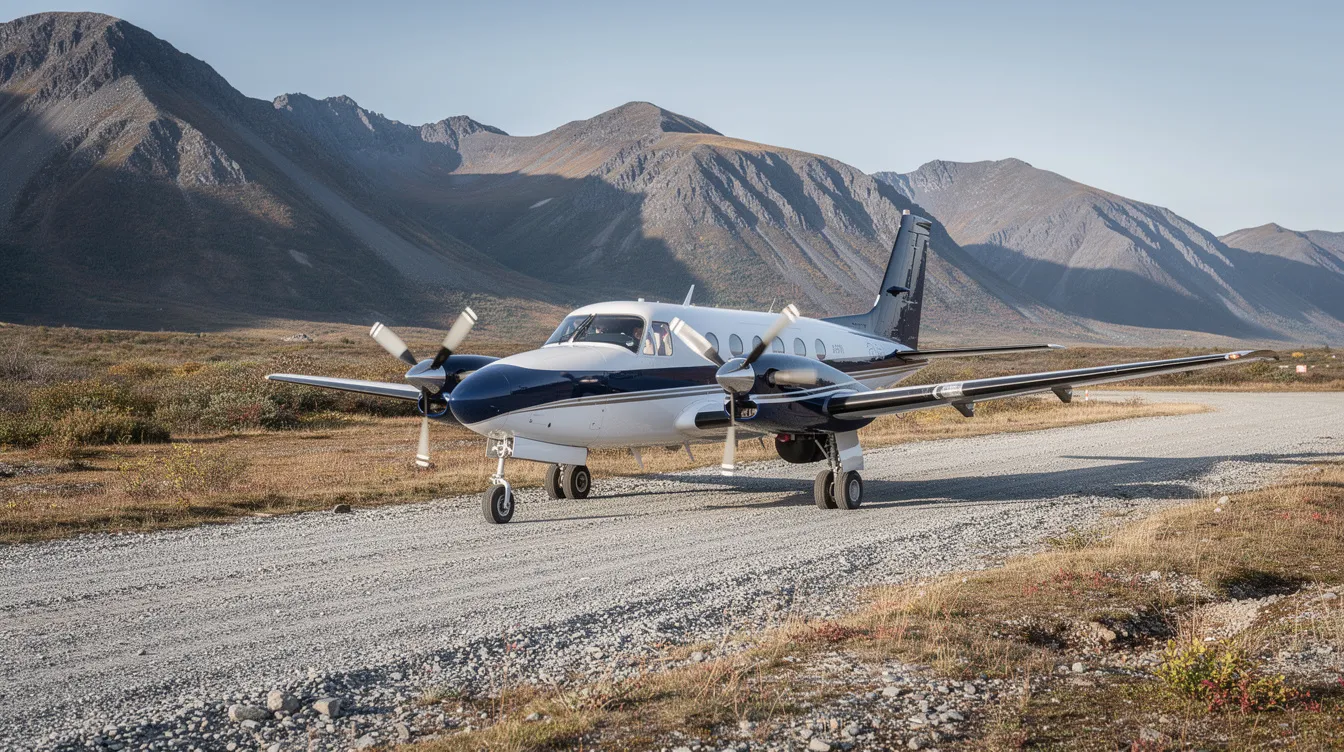
Small commercial planes sit in a category most travelers overlook. They are not the wide-body airliners crossing oceans, and they are not the ultralight aircraft circling flight schools on a Saturday morning. Instead, they fill the gap between regional airlines and private jets, connecting cities, islands, and remote communities that larger aircraft simply cannot reach. This guide breaks down how these smaller aircraft work, what they cost, and when chartering one through a platform like Jettly makes more sense than buying a seat on a scheduled flight.
This guide is for travelers, aviation enthusiasts, and anyone considering chartering or learning about small commercial planes. Understanding these aircraft helps travelers make informed choices about regional travel, cost, and convenience.
Small commercial planes typically seat 9 to 70 passengers and bridge the gap between personal light aircraft and large airliners in today's commercial aviation market.
These smaller aircraft offer lower operating costs, access to thousands of additional airports, and flexible scheduling on thin or remote routes.
Many small commercial planes—including the Cessna Caravan, Pilatus PC-12, Embraer ERJ-135, and DHC-6 Twin Otter—double as charter aircraft, which is where Jettly's digital marketplace connects travelers with certified operators.
Turboprops dominate short-haul efficiency, while small regional jets offer speed advantages on longer sectors.
Jettly's instant-quote tools let travelers compare these aircraft side by side before booking. Explore options later in this article or directly at jettly.com.
In commercial aviation, "small" is relative. A 50-seat regional jet looks tiny parked next to a Boeing 777, but it dwarfs a six-seat piston trainer. The practical definition most operators and regulators use centers on seat count, weight class, and certification type.
Commercial airplanes are categorized by fuselage width and passenger capacity. Aircraft are also classified into regional, narrow-body, and wide-body types. Narrow-body aircraft typically seat up to 200 passengers, while wide-body aircraft can carry 300 to over 400 passengers. Beyond those broad buckets, aircraft are categorized into four weight categories: light, medium, heavy, and super; the Airbus A380, for example, is classified as a "super" aircraft.
Small commercial planes fall squarely in the "regional" and lower end of these classifications:
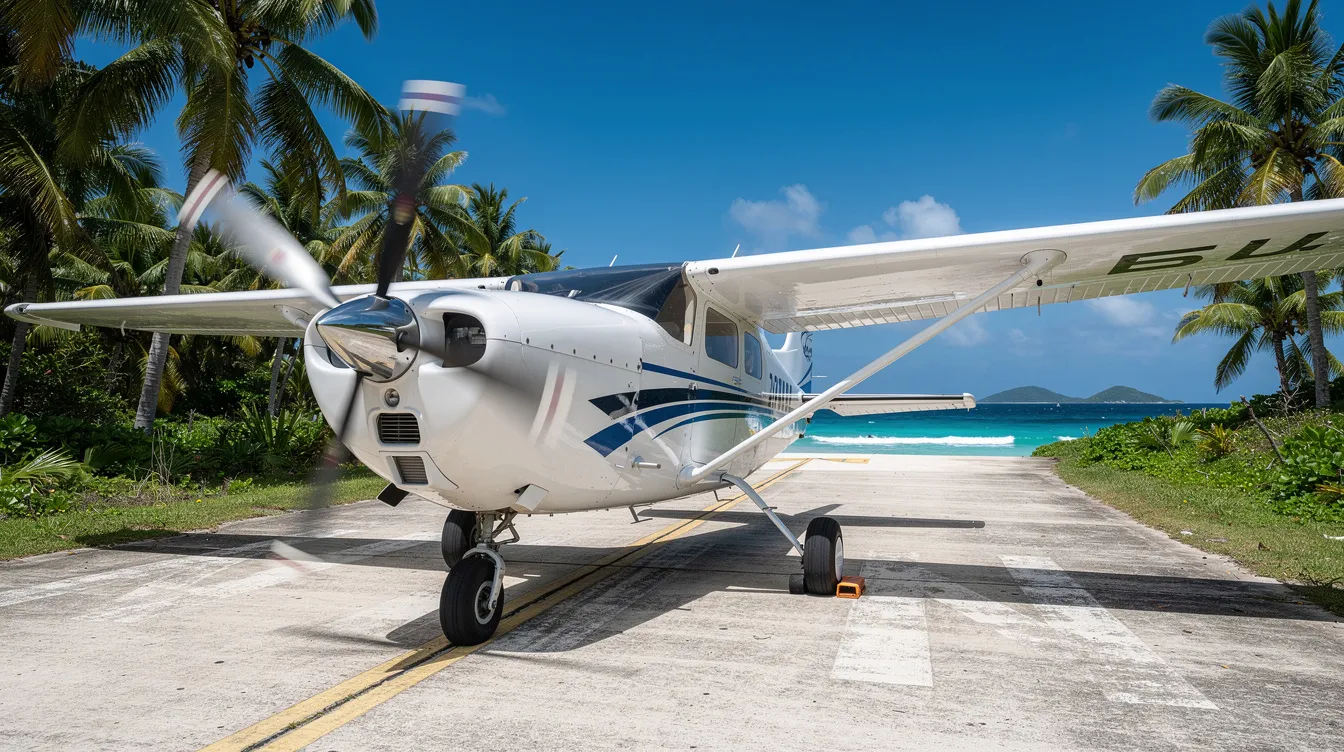
Piston aircraft: 4–8 seats, limited commercial use, common at flight schools and for personal flying. The Cessna 172 has a range of 800 miles on a full tank. The Beechcraft G36 Bonanza can seat six passengers comfortably with a range of just under 700 miles. The Icon A5 has a range of 320 miles.
Turboprops: Single- or twin-engine, 8–70 seats, certified for commercial operations under FAA Part 135 or EASA Air OPS. These are the backbone of small commercial aviation.
Small regional jets: Turbofan-powered, 30–70 seats, faster at altitude, used on scheduled and charter routes alike.
Small planes generally fill the operational gap between personal light aircraft and large airliners. As a charter broker, Jettly gives customers on-demand access to many of these commercially certified small aircraft—from turboprops to light jets and beyond.
The idea behind choosing a smaller aircraft is straightforward: match the plane to the mission, not the other way around. Here is where small commercial planes consistently win.
Time savings at smaller airports: Smaller regional airports typically have shorter TSA security lines and faster boarding processes. Private jets allow boarding in minutes at private terminals. Less crowded environments and quicker processing at smaller airports enhance the travel experience compared with congested major hubs.
Lower trip costs: Smaller aircraft usually have lower overall operating costs compared to larger planes. A single-engine turboprop can cost as little as $500–$2,000 per flight hour, far below the hourly rates of a heavy cabin jet, especially when you apply cost-saving strategies for affordable private jet flights.
Flexible scheduling: Smaller aircraft can operate more frequently than larger jets on lower-demand routes. Higher frequency of flights enables flexible scheduling for business and leisure travelers, especially when you use platforms that enable crowdsourced and shared private jet flights. Small commercial planes enhance regional travel speed and accessibility.
Direct routing: Small commercial aircraft reduce travel times by offering direct flights between regional destinations. Rather than connecting through a congested hub, a point-to-point charter cuts hours off the journey. Small planes offer greater airport access than larger jets, a benefit you can visualize with tools like Jettly's airport locator tool for private flights.
Privacy and control: When an aircraft is chartered privately through a platform like Jettly, passengers set the schedule, choose the airport, and control who boards. That is a jump from buying a single seat on a regional airline.
Fuel efficiency on short sectors: Turboprops burn less fuel per hour than jets on short hops. On routes under 500 miles, a turboprop can be both cheaper and more environmentally responsible than flying a regional jet.
For travelers comparing ownership, fractional programs, and charter, it helps to understand how these categories overlap with the most affordable private aircraft options across budgets.
Not all small commercial aircraft are alike. The right category depends on passenger count, runway length, range, and budget. This comparison offers a quick starting point; actual capacity and performance vary by aircraft configuration, payload, weather, and operator.
|
Aircraft category |
Typical capacity |
Common use |
Practical advantage |
|---|---|---|---|
|
Very light jet (VLJ) |
4–6 passengers |
Business shuttles and short leisure trips |
Jet speed for small groups |
|
Single-engine turboprop |
8–12 passengers |
Regional routes and remote destinations |
Short-field access and lower short-haul fuel burn |
|
Twin turboprop |
8–19 passengers |
Island, rural, and corporate travel |
Versatility, including some unprepared runways |
|
Small regional jet |
30–70 passengers |
Group charters and scheduled regional service |
Higher speed and more seats for larger groups |
Very light jets (VLJs): Aircraft like the Eclipse 550 and Embraer Phenom 100 carry 4–6 passengers in air-taxi and charter roles. The Eclipse 550 has a range of roughly 1,200 miles. The Embraer Phenom 100 has a range of 1,350 miles. These are the entry point into jet-speed travel, well suited for business shuttles and weekend leisure trips.
Single-engine turboprops: The Cessna 208 Caravan and Pilatus PC-12 carry 8–12 passengers commercially on short routes. They excel at accessing unpaved or short runways that jets cannot use.
Twin turboprops: The Beechcraft King Air 200/350, De Havilland Canada DHC-6 Twin Otter, and Beechcraft 1900 seat between 8 and 19 passengers. The Twin Otter is a STOL specialist; the King Air is a corporate workhorse.
Small regional jets: The Embraer ERJ-135/140 and Bombardier CRJ-200 straddle the line between small commercial and mainstream regional airline fleets, seating 37–50 passengers and cruising faster than turboprops; they frequently appear in the fleets of leading private and charter airlines worldwide.
For comparison, the Learjet 70 can achieve a range of over 2,200 miles, placing it in a different class entirely. Each category maps to specific Jettly charter use cases—from a six-seat light jet for a quick business hop to a 19-seat turboprop for a corporate team retreat.
Many of these workhorse turboprops sit alongside light and midsize jets within Jettly's broader private charter aircraft marketplace.
Turboprops remain the backbone of small commercial operations worldwide. Here are the models travelers and operators encounter most often.
Cessna 208 Caravan: Originally designed in the mid-1980s and still in production, the Caravan is configured for about 9 seats in commercial service (up to 14 with regulatory waivers). Cruise speed sits around 186 knots true airspeed, with a flight range of approximately 1,070 nautical miles. Take-off ground roll is roughly 1,160 feet—short enough for unpaved strips in Africa, Alaska, and the Caribbean.
Pilatus PC-12: First delivered in 1994, this pressurized single-engine turboprop carries up to 9 passengers at around 290 knots true airspeed. Long-range cruise with 4 passengers and reserves reaches about 1,803 nautical miles. The PC-12 can land over a 50-foot obstacle in roughly 2,170 feet, making it capable of operating at many smaller fields.
De Havilland Canada DHC-6 Twin Otter: In service since the late 1960s, the Twin Otter seats 18–20 passengers and is built for STOL operations. It handles runways under 3,000 feet, including unprepared surfaces, making it essential for island hopping in the Maldives and remote operations in the Canadian North.
Beechcraft 1900: A 19-seat twin turboprop that served as a commuter workhorse across North America and Europe from the 1980s through the 2000s. Some remain active in charter and freight operations, still proving reliable on regional routes.
Many of these aircraft types appear in Jettly's global marketplace as turboprop charter options rather than airline-branded regional planes.

For groups, one of the biggest decisions is whether to book every seat or share with others, making the choice between shared charter flights and full private charters especially relevant for small regional jets.
Small regional jets occupy a unique position. They are fast enough to compete with larger airliners on short routes, yet small enough to serve secondary cities and thin markets.
Embraer ERJ-135: Typically configured for about 37 seats, connecting secondary cities to major hubs. Many modern regional jets feature a seating configuration without middle seats, which improves passenger comfort on these narrower aircraft.
Bombardier CRJ-200: Around 50 seats, widely used on short-haul routes in North America and Europe since the 1990s. Over 1,700 aircraft in the 70-seat regional jet category alone operate in North America, illustrating the scale of this market.
Conversion to charter: Some former airline-configured regional jets have been converted into corporate shuttles or high-density private jets, available for charter through brokers like Jettly. These aircraft accommodate more seats than typical private jets while keeping cost per passenger lower for large groups.
Typical ranges: Most small regional jets cover 1,000–1,500 nautical miles efficiently, handling routes like New York to Miami or Toronto to Calgary without fuel stops.
The cabin feel differs from a standard private jet—narrower aisles, more seats—but for groups that need to move 20 or 30 people together, the economics are hard to beat.
Operating costs drive aircraft selection more than any other factor. Understanding where the money goes helps travelers and operators make smarter choices.
Cost drivers: Fuel burn per hour, crew salaries, maintenance checks (including engine reserves), landing and handling fees, insurance, and avionics overhaul schedules. Fixed costs like crew and insurance get spread across flight hours.
Turboprop range: A single-engine turboprop like the Cessna Caravan or PC-12 runs roughly $500–$2,000 per hour in variable operating costs. Larger turboprops such as the ATR-42/72 family reach approximately $9,900–$10,000 per flight hour when fixed costs are included.
Small regional jets: An ERJ-135ER in charter configuration typically costs around $4,300 per hour. Charter rates for regional turboprops with 19–68 seats range from about $5,500 to $12,000 per hour depending on model and route. Travelers comparing those numbers against membership options can also use Jettly's jet card flight cost estimator to understand how fixed-rate programs change the math. For detailed pricing, see Jettly's guide on how much it costs to charter a small plane.
Thin-route advantage: While cost per seat-mile on a full large jet can be low, small commercial planes win on routes where demand is limited. Short-haul flights often allow small aircraft to complete more revenue-generating legs per day, improving overall economics.
Airport savings: Smaller aircraft can reduce repositioning and airport-related fees by landing at closer regional airports, further improving the budget picture.
On Jettly, customers can compare different small aircraft to balance hourly rate, flight time, and total trip cost using the platform's charter cost estimator, then cross-check those numbers against broader guidance on how much it costs to rent a private jet.
Performance specs determine which aircraft can actually fly the route a traveler needs. Here is what the numbers look like across categories.
Cruise speeds: Turboprops typically cruise between 250 and 320 knots true airspeed. VLJs and small regional jets push 350–450 knots, cutting flight time on longer sectors.
Realistic ranges: The Cessna Caravan covers about 1,070 nautical miles. The Pilatus PC-12 stretches to roughly 1,800 nautical miles with 4 passengers and reserves. The ERJ-135 reaches approximately 1,750 nautical miles under standard conditions. For context outside the commercial space, the Cessna 172 has a range of 800 miles, illustrating how far even basic aircraft can travel.
Short-field access: The Twin Otter and certain STOL-optimized Caravans operate from runways under 3,000 feet, including unpaved surfaces. Private jets can use shorter runways, increasing destination options that scheduled airlines simply cannot serve.
Altitude capabilities: Many turboprops cruise in the mid-20,000-foot range, while small regional jets climb to 30,000–41,000 feet. Higher altitude means smoother rides, better weather avoidance, and improved fuel efficiency.
Matching performance to outcomes: On Jettly, faster jets serve travelers with tight schedules, while short-field turboprops open doors to hard-to-reach locations. The search starts with where you need to land, not which aircraft looks best on paper.
Cabin experience varies widely depending on whether the aircraft is configured for commuter service or private charter.
Commuter turboprops: Narrow aisles, simple seats, limited galley service. Passengers board quickly but trade comfort for access and cost. Business-configured versions swap high-density seating for club-style layouts with more legroom.
Noise and vibration: Turboprops are inherently louder than jets, though modern soundproofing in newer models has closed the gap considerably. Small jets offer a quieter cabin at cruise altitude.
Charter vs. scheduled seat: Chartering the entire aircraft through Jettly transforms the experience, and travelers can also buy a single seat on a private jet via shared and semi-private options. Private jets provide greater privacy compared to commercial flights. Private jets offer more personal space per passenger than commercial aircraft. Schedule, catering, and cabin layout become customizable.
Amenities: Wi-Fi is increasingly available on newer turboprops and small jets. Most aircraft above 9 seats include basic washrooms. Baggage capacity is more limited than on airliners—plan accordingly.
Less crowded airports: Less crowded environments and quicker processing at smaller airports enhance the travel experience. Private jets allow boarding in minutes at private terminals, skipping the crowds entirely, and there are now multiple ways to get a seat on a private jet easily without committing to full ownership.
Match cabin expectations to mission profile. A 90-minute hop to a ski resort does not demand a luxury heavy jet—a well-maintained turboprop gets the job done at a fraction of the cost.
Small commercial planes operate in every corner of the world, often in places where larger aircraft cannot go.
Island and remote-region operations: Twin Otters serve the Maldives and Caribbean archipelagos. Caravans fly African safari routes. PC-12s operate across the Canadian North and Alaskan bush. Regional aircraft provide essential connections for isolated communities and regions.
Commuter and feeder links: U.S. Essential Air Service routes, European regional connections, and Australian outback services all rely on small commercial aircraft. Small planes connect rural communities and improve access to essential services.
Short and unprepared runways: Smaller regional planes can access airports that cannot accommodate larger jets. Access to smaller airports allows small planes to operate at location-convenient airfields—grass strips, gravel runways, and high-altitude fields that larger jets avoid entirely.
Private charter destinations: Jettly customers frequently use small aircraft to reach ski destinations, island resorts, or remote project sites without scheduled service. Many of these flights are operated by certified Part 135 charter companies. Private jets can access thousands more airports than commercial airlines.
Regulatory and noise factors: Noise restrictions at certain airports can influence which small aircraft types are allowed to operate. Newer models with quieter engines and updated technology often have an advantage at noise-sensitive fields.
Size does not determine safety. Regulation, maintenance, and crew professionalism do.
Certification standards: Commercial operations fall under FAA Part 121 (scheduled airlines) or Part 135 (charter and commuter) in the U.S., and EASA Air OPS in Europe. These frameworks govern maintenance schedules, crew training, and operational procedures.
Single-engine commercial operations: Aircraft like the PC-12 and Caravan are approved for commercial passenger service in many regions under specific safety and performance criteria. Pilots flying these routes meet strict training requirements.
Advanced safety features: Modern small aircraft come equipped with terrain awareness and warning systems (TAWS), weather radar, autopilot, and in some newer models, autoland capability. De-icing systems on wings and propellers add another layer of security for operations in challenging weather.
Jettly's role: Jettly works with third-party operators who hold appropriate air operator certificates and safety accreditations. Jettly itself acts as a charter broker, not an airline; flights are operated by certified carriers and benchmarked alongside other top private jet charter companies.
The "bigger is safer" misconception: Fatality rates correlate more strongly with operator maintenance standards, regulatory oversight, and pilot training than with whether the aircraft is a turboprop or a jet. Many turboprops and small regional jets have decades-long safety records.
Jettly's platform aggregates thousands of small aircraft globally—turboprops, very light jets, and small regional jets—all operated by certified carriers. The booking process is designed to be straightforward and transparent, with clear explanations of affordable private jet charter pricing.
How it works: Enter your route and dates, receive instant pricing across different aircraft sizes, compare operating costs, and confirm the option that fits. Search charter flights directly through the platform.
Use cases: Corporate teams chartering a 19-seat turboprop for a retreat. Families using a PC-12 for vacation trips. Urgent medical or project-related travel where schedule flexibility matters. Private jet travelers enjoy tailored flight schedules based on needs. Private jets allow for tailored flight schedules and privacy.
Membership benefits: Frequent flyers can explore Jettly's membership programs and dedicated jet card programs for frequent private flyers to improve price predictability and reduce per-trip costs compared with ad-hoc charters.
Ready to explore your options? Request a quote at jettly.com.
Environmental awareness increasingly shapes aircraft selection decisions. Smaller aircraft are not automatically "greener," but the right match between aircraft and mission can reduce waste.
Fuel burn comparison: Turboprops burn significantly less fuel than regional jets on short-haul flights. On sectors under 500 miles, a Cessna Caravan or PC-12 uses a fraction of the fuel a regional jet would consume for the same distance.
Right-sizing the aircraft: On very short sectors, turboprops can be more efficient and better suited than regional jets, reducing total fuel use compared with oversizing the aircraft for a route that does not need it.
Newer engines and materials: The development of lighter airframe materials, optimized wing designs, and updated engines—such as those in the PC-12 PRO—continues to improve fuel efficiency across the category, a factor that also influences long-term private jet ownership and operating costs.
Carbon offsets and SAF: Travelers can consider route planning, load factors, and—where available—carbon offset programs and sustainable aviation fuel options offered by operators Jettly works with.
Honest trade-offs: Private and semi-private flights generally produce higher emissions per passenger than a full commercial airliner. But careful aircraft selection, efficient scheduling, and maximizing load factor can meaningfully reduce the impact.
Selecting the right small commercial plane comes down to matching the aircraft to your specific requirements—not picking the most recognizable model.
Start with passenger count and payload: How many people are flying, and how much baggage needs to board? A 6-seat VLJ handles a business trip; a 19-seat turboprop covers a corporate team.
Check runway and airport options: If the destination has a short or unpaved strip, a STOL-capable aircraft like a Caravan or Twin Otter is essential. Not every aircraft can land everywhere.
Balance cost and speed: For sub-500-mile trips, a slower but cheap turboprop often makes more sense than paying for jet speed you do not need. On longer sectors, a light jet or small regional jet saves time that may justify the higher cost per hour.
Use Jettly's tools: The platform lets travelers compare different small aircraft options side by side—turboprop charter rates, jet pricing, and total trip cost—before committing, and for frequent users, the jet card flight cost estimator adds another layer of budgeting insight.
Focus on the mission: The "best" small commercial plane is the one that aligns with route, budget, timing, and comfort needs. Not brand prestige. Not the most expensive production model. Just the right fit.
Ready to explore private travel on your terms? Compare aircraft and request a quote at jettly.com, evaluate Jettly as a flexible NetJets alternative, or plan a route-specific trip such as private jet charter in Kolkata, West Bengal.
While cabins are smaller and sometimes noisier, many turboprops and VLJs offer comfortable seating, climate control, and modern interiors—especially when configured for private charter rather than high-density commuter layouts. Newer models with improved soundproofing and club-style seating make a noticeable difference on flights under two hours. Comfort is more about configuration and maintenance than raw aircraft size.
Ranges vary by category. Basic commuter turboprops like the Cessna Caravan cover around 900–1,070 nautical miles. The Pilatus PC-12 extends to approximately 1,800 nautical miles with a reduced passenger load. Many small regional jets handle 1,000–1,700 nautical miles. Actual range depends on payload, weather, altitude, and required fuel reserves.
Yes. Using a broker like Jettly, travelers can charter entire small aircraft—whether a 6-seat turboprop or a 30-seat regional jet—for private use. The group sets its own schedule, route, and onboard preferences, subject to operational and regulatory limits. This is one of the clearest advantages over purchasing individual seats on a scheduled regional airline.
Commercially operated single-engine turboprops like the PC-12 and Caravan meet strict certification and maintenance standards under regulations such as FAA Part 135 and EASA Air OPS. These aircraft have strong safety records and are widely used across North America, Europe, and remote regions worldwide. Safety depends on the operator's maintenance program and crew training, not the number of engines.
Travelers comparing different providers, including major fractional operators like NetJets and similar private aviation leaders, often start by pricing a single on-demand charter. Visit jettly.com, enter your route and travel dates, and review instant quotes across different aircraft sizes.
The platform shows pricing for turboprops, light jets, and regional jets so travelers can compare options before committing. Jettly's team is also available to help finalize details, discuss membership benefits, or accommodate special requests—and content creators or travel advisors can even join Jettly's high-ticket affiliate program to earn commissions on referrals.
Small commercial planes connect regional destinations, serve communities beyond major airline networks, and give travelers more options for short-haul trips. The best aircraft depends on the route, passenger count, baggage, runway conditions, schedule, and budget.
Turboprops can be an efficient choice for shorter journeys, while small regional jets may suit larger groups or longer sectors. Compare small aircraft charter options to see how aircraft types align with different trips. For private charter, compare the full trip—not just the aircraft’s hourly rate.
Jettly’s digital marketplace provides access to aircraft options and instant pricing, helping travelers weigh convenience, airport access, and cost. Jettly is a charter broker; each flight is operated by a properly certified third-party carrier.
Ready to compare small commercial planes for your trip? Explore flight options or request a quote.
Share this post:
Jay Franco Serevilla
Nov 26, 2026
|
5
min read
Discover tips and trends in the industry.

5
min read
First Class Air Travel: What It Is, Who It Suits, and How It Compares to Private Jets
This guide explores the nuances of first-class air travel compared to private jet charters. It highlights the benefits of first class, including luxury amenities and priority services, while also discussing when private jets may offer better value, especially for groups. Factors like route length, traveler numbers, and privacy preferences are key in making the right choice.
Read More
5
min read
How Fast Does Air Force One Travel? A Practical Speed & Travel Guide
Air Force One, primarily the VC-25A, typically cruises at speeds of 575-580 mph, with a maximum speed of around 630 mph. Its travel time is influenced by factors like air traffic control priority and atmospheric conditions, making it competitive with commercial flights. The upcoming VC-25B is expected to maintain similar speeds while improving efficiency and technology.
Read MoreStay updated with our latest insights and tips to elevate your journey with us.
MEMBERSHIPS AND ASSOCIATIONS



© 2026 Jettly Inc. All rights reserved.
Disclaimer: Jettly operates as a charter broker, offering access to a global digital jet charter marketplace. Jettly is not a direct air carrier and does not own or operate aircraft. All advertised flights are conducted by third-party air carriers that are fully licensed and hold the appropriate Part 135 or Part 121 certifications issued by the Federal Aviation Administration (FAA) or equivalent regulatory authorities under U.S. or foreign law. Jettly complies fully with the U.S. Department of Transportation's Part 295 and Part 298 Charter Broker regulations. Jettly does not carry additional liability insurance. Passengers are covered by aircraft operator insurance. TICO: 50023770


