



Login
Get Instant Pricing On 23,000+ Aircraft

>
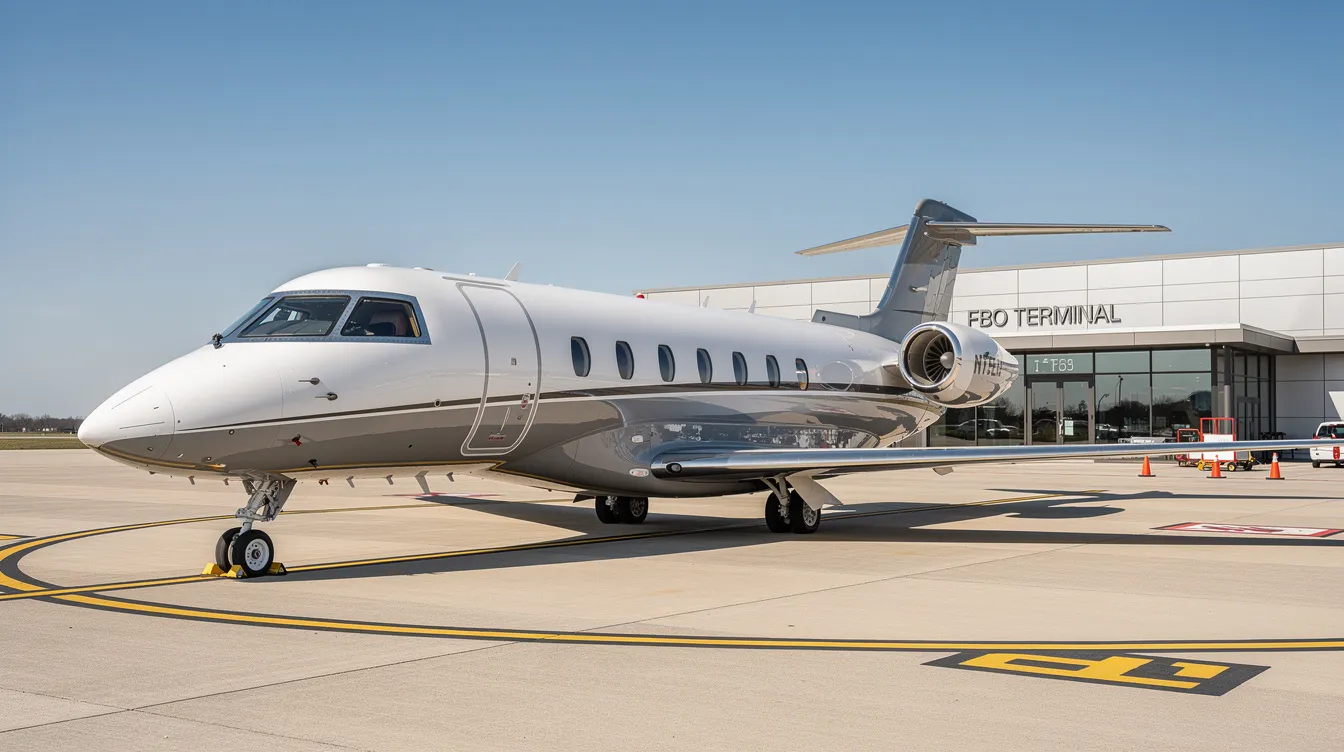
This guide explains what a private jet is, how private flights work, and why travelers choose this mode of travel. Whether you're new to private aviation or considering your first charter, you'll find practical information on jet types, booking, and the benefits of flying private.
A private jet is a business or general aviation aircraft chartered for on-demand, non-scheduled travel. Private jets can be rented as on-demand charters without ownership commitments. Unlike commercial air travel, where passengers purchase individual seats on fixed routes, a private flight means renting the entire aircraft—cabin, crew, and schedule included. For most people, flying private starts not with ownership but with a digital charter broker like Jettly, which connects travelers to certified operators and over 20,000 aircraft worldwide.
A private jet typically seats 4 to 19 passengers. Private jets can be rented as on-demand charters without ownership commitments, making private aviation accessible to a wider group of travelers.
There are different types of private jets—from light jets for short hops to heavy jets for intercontinental routes—each suited to specific needs in terms of range, seating, and cabin comfort.
Traveling on a private jet often results in significant time savings: skip lengthy layovers, avoid crowded boarding gates, and leave from smaller airports closer to the final destination.
Private jets can access over 5,000 airports, far more than commercial airlines serve, giving travelers control over their route and schedule.
Jettly is a digital charter broker offering instant pricing across aircraft types, membership options for frequent flyers, and a transparent booking experience.
A private jet is any business-class or general aviation aircraft used for charter travel, usually configured for 4 to 19 passengers. The term "private flight" means one group charters the whole aircraft rather than sharing cabin space with strangers.
Here is how the process typically works:
Request a quote — Enter origin, destination, and date on a platform like Jettly.
Compare aircraft — Review options across different types (light jets, mid-size jets, heavy jets) filtered by range, cabin features, and price.
Confirm and pay — Lock in the schedule and handle payment through the platform.
Depart from a private terminal (FBO) — Arrive 15 to 30 minutes before departure. No TSA-style lines or crowded gates.
Compared to commercial airlines, there are no connections, no lengthy layovers, and no rigid schedules. Some travelers first learn about private aviation through large fractional providers; understanding how NetJets operates as a private aviation leader offers helpful context before comparing on-demand charter. Jettly acts as a charter broker—it does not operate aircraft itself but connects travelers to vetted, properly certified third-party carriers.
Private jets are grouped by cabin size, range, and passenger capacity. Choosing the right category means matching the aircraft to the trip: how many people are flying, how far, and what level of comfort the mission requires. Resources that explain how many passengers different private jets can carry are especially useful here. For a deeper breakdown, check out Jettly's guide to private jet types and sizes.
|
Aircraft type |
Typical passenger capacity |
Typical range |
Best suited to |
|---|---|---|---|
|
Very light jet |
Up to 6 |
About 600–900 miles |
Short regional trips and small groups |
|
Light jet |
About 6–8 |
About 1,500 miles |
Regional business trips and leisure travel |
|
Mid-size jet |
7–9 |
About 2,000–3,000 miles |
Longer domestic or cross-country routes |
|
Super mid-size jet |
Varies by model |
Over 3,000 miles |
Nonstop transcontinental trips |
|
Heavy jet |
Up to 18 |
About 5,000–6,000 miles |
Long-haul trips and larger groups |
|
Ultra-long-range jet |
Varies by model |
Over 5,500 miles |
Intercontinental nonstop travel |
Actual passenger capacity and range vary by aircraft model, cabin configuration, baggage load, weather, and operating conditions. Confirm the specific aircraft and route capability when requesting a quote.
Very light jets seat up to six passengers and cover short routes of roughly 600 to 900 miles—think Los Angeles to Las Vegas or London to Geneva. Light jets seat up to 6–8 passengers with a typical range of 1,500 miles, making them a solid option for routes like New York to Miami or East Coast business shuttles.
Cabin features are compact: limited standing room, a basic refreshment center, and a small lavatory. Their smaller size, however, allows access to short runways and regional airports that commercial airlines cannot reach, reducing ground travel time.
Light jets are usually the most cost-effective jet category on an hourly basis for small groups, and their speed—cruising near 430 to 460 knots—still gets travelers to the destination fast.
Mid-size jets can seat seven to nine passengers with ranges around 2,000 to 3,000 miles, covering routes like Dallas to New York or London to Marrakesh. Super mid-size jets have a range of over 3,000 miles and can handle transcontinental flights such as New York to Los Angeles nonstop.
The perks improve noticeably: stand-up cabins, enclosed lavatories, larger galleys, quieter cabins with less noise, and more robust Wi-Fi. For many corporate teams planning coast-to-coast travel, these jets represent a practical balance between comfort and value. For those considering eventually owning an aircraft instead of chartering, a guide to choosing the best personal plane can clarify how these midsize and super-midsize jets compare with other options. Jettly's platform typically shows midsize and super-midsize options as mid-tier pricing, making trade-offs between class and cost transparent.
Heavy jets can accommodate up to 18 passengers with ranges reaching 5,000 to 6,000 miles—enough for New York to London or Los Angeles to Honolulu without stops, depending on the aircraft and operating conditions. Ultra-long-range jets can fly over 5,500 miles nonstop and serve routes like London to Los Angeles or New York to Tokyo. These aircraft often feature separate lounge, dining, and sleeping areas.
VIP airliners seat 20 or more, include full-size galleys and dedicated flight attendants, and serve heads of state, touring entertainers, and large corporate delegations attending major events. For international itineraries, it helps to understand how private jets fly internationally and what’s required around customs, permits, and route planning. Hourly rates sit at the top end, but for long-haul group travel, the per-person value can be compelling.
Turboprops are propeller-driven planes powered by turbine engines, usually seating 6 to 9 passengers. They handle short routes under 500 to 800 miles efficiently—regional hops, intra-state business travel, or reaching airfields with short or unpaved runways. Hourly charter rates tend to run lower than light jets, with slightly slower speed but comparable cabin comfort for brief flights.
Jettly's marketplace includes turboprops and helicopters alongside jets, so travelers can pick the most efficient aircraft type for each leg.
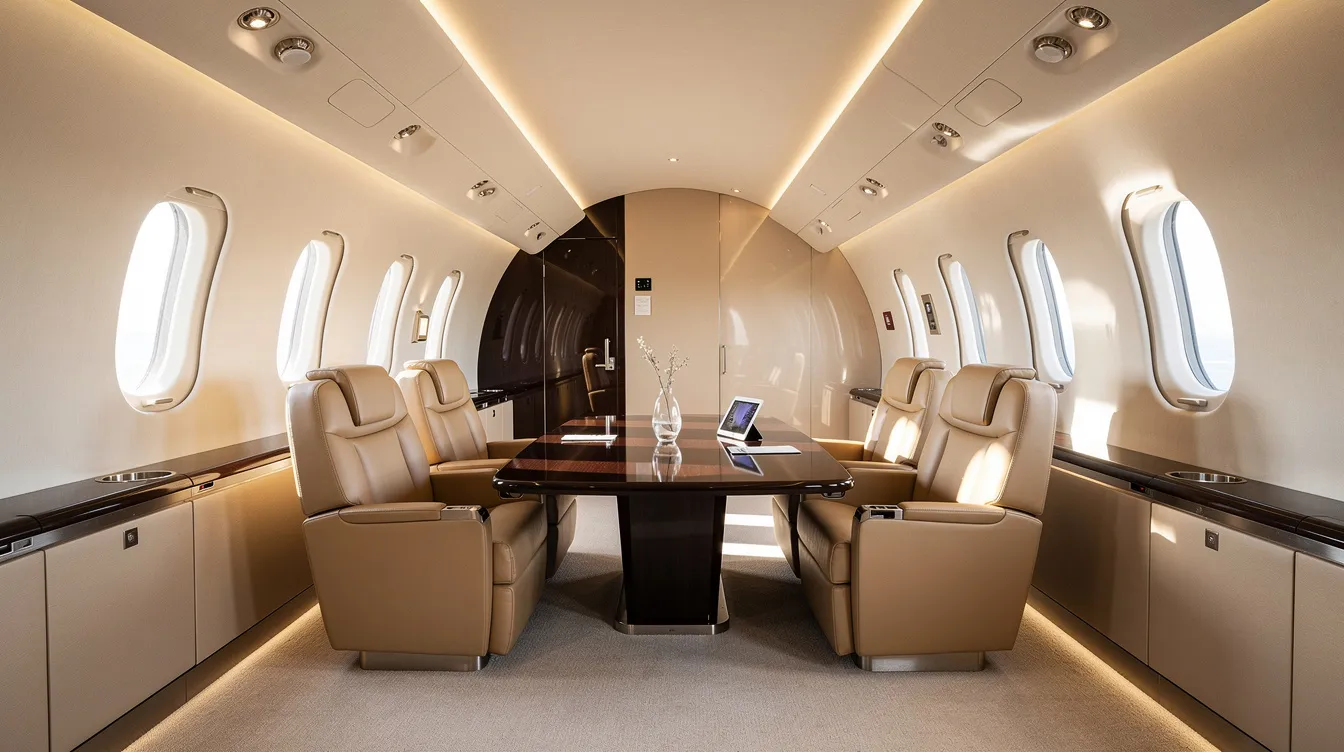
Cabin experience varies a lot between aircraft categories and should guide aircraft selection. Private jet travel typically involves fewer passengers for more personal space, and private jets offer custom interiors and tailored services for passengers, supported by a global ecosystem of private and charter airlines offering on-demand flights.
Seating — Club-style seating facing each other is standard. Heavy jets may add divans, enclosed suites, or bedrooms.
Catering — Ranges from snacks and beverages on smaller aircraft to multi-course meals with onboard attendants on heavy jets.
Connectivity — In-flight Wi-Fi, power outlets, and quiet cabins support productive working conditions during flights.
Cabin pressure — Many private jets can fly at higher altitudes than commercial airliners, and they maintain lower cabin altitudes (around 5,000 to 6,000 feet), reducing fatigue on arrival.
Private travel offers a personalized in-flight experience that commercial service simply cannot match. Before confirming a booking, Jettly encourages travelers to review cabin photos, floorplans, and amenity lists.
One thing drives most people toward private aviation: time. First-class requires arriving 2 to 3 hours before departure. Flying private reduces check-in time to 15 to 30 minutes. Private jet travel eliminates long TSA security queues and crowded boarding gates entirely.
Beyond the time savings:
Schedule control — Private jets provide complete scheduling flexibility for passengers. Set departure times around meetings, adjust itineraries at the last minute, and conduct multi-city trips in a single day. Private travel allows itinerary changes at the last minute, and flying private allows for last-minute passenger changes.
Privacy — Private jets offer greater privacy and comfort compared to commercial flights. The entire cabin belongs to one group, enabling confidential business discussions or relaxed leisure travel.
Airport access — Private jets can access over 5,000 airports, far more than the roughly 500 served by major airlines. Private aviation allows for direct point-to-point flights without layovers, cutting hours off complex itineraries and eliminating delays from commercial airline schedules, especially when you use tools like an airport locator for private jet charter to identify smaller, more convenient airfields.
Baggage — Private jet charters offer flexible baggage allowances. Sports gear, musical instruments, or product samples travel in the hold without the typical commercial restrictions, and flight-sharing platforms that crowdsource private jet flights and empty seats often highlight baggage rules clearly so travelers can plan accordingly.
Productivity — Quiet cabins, reliable connectivity, and arriving closer to the final destination via smaller regional airports mean less wasted time on the road. Travelers who don’t need an entire aircraft can explore how to buy a seat on a private jet or learn how to get a private jet seat easily through modern platforms to combine productivity with lower per-seat costs.
Whether the mission is business or a family vacation, private jets offer the ability to tailor every detail to the group's specific needs. Travelers evaluating providers can reference an overview of the best private jet charter companies and top luxury options to see how different brands approach service, safety, and pricing. Stories from first-time flyers often share the same theme: they did not expect the experience to be this efficient.
Travelers can quickly model potential trip budgets using a private jet charter cost estimator before requesting firm quotes.
Charter pricing starts with an hourly rate multiplied by flight time, with airport fees, repositioning costs, and taxes added on top. Travelers comparing options often look to a complete guide on how much it costs to rent a private jet or explore strategies for affordable private jet charter pricing to understand where savings are possible. The relative cost hierarchy runs from turboprops at the low end through light jets, midsize, super-midsize, and heavy or ultra-long-range jets at the top.
A few things worth knowing:
Empty leg flights — When an aircraft must reposition without paying passengers, brokers like Jettly list these legs at discounted rates, sometimes 40 to 70 percent off. Availability is unpredictable, but savings can be substantial, and Jettly’s dedicated page on empty leg flights showcases many of the best current deals.
Group economics — Chartering a private jet can be cost-effective for groups. In some cases, shared charter flights versus full private charters offer different value trade-offs depending on how many seats you need and how much privacy you want. Private jet travel can be cost-effective for groups of six or more compared with multiple last-minute first-class or business-class tickets, especially after factoring in time savings and ground transfers.
Jet cards — Jet cards allow users to purchase a block of flight hours at a fixed rate, offering more predictable pricing for frequent flyers. Before committing, you can use a jet card flight cost estimator to understand expected rates, and Jettly's jet card program is one option for travelers who want to lock in terms.
For a full breakdown, Jettly's guide on the real cost of flying private covers pricing across categories, and a broader look at how much a private jet really costs can help weigh ownership, leasing, and charter side by side. Use the platform's instant-pricing tools to compare aircraft types and nearby airports for the best value on each trip.
Jettly is a digital private jet charter marketplace connecting customers to over 20,000 aircraft worldwide and positioning itself as a flexible NetJets alternative for flying private. Booking a private jet can take 15 to 30 minutes from start to confirmation.
The basic flow:
Enter route and date on Jettly's search tool.
View instant pricing across different types of private jets.
Filter by size, range, cabin features, and amenities.
Submit for confirmation—flights are operated by vetted, certified third-party carriers complying with FAA, EASA, or equivalent regulations.
Membership options offer frequent flyers priority support, more predictable pricing, and reduced commissions, and Jettly’s range of private jet memberships is designed to fit different personal and business travel profiles. For travelers who care about environmental impact, selecting newer, more fuel-efficient aircraft or exploring carbon-offset options through modern platforms is becoming a standard part of the planning process.
Companies across industries—from tech to entertainment—use platforms like Jettly to handle travel logistics without the overhead of ownership. Whether booking for a July board retreat or a same-day hop to close a deal, the place to start is a quick check on available routes and aircraft.

No. Most people access private jets through charter services, paying only for the hours they fly via brokers like Jettly. Ownership and fractional shares involve long-term commitments with added costs for maintenance, crew, and hangar space; for some travelers, a detailed look at private jet lease costs and structures can clarify whether leasing makes more sense than buying. On-demand charter keeps things flexible and trip-based—add a flight when needed, skip it when not.
Many private flights can be arranged within 24 to 48 hours, and sometimes same-day for simple routes. Peak periods—holidays, major events like July Fourth weekends, or conference weeks—benefit from booking at least one to two weeks ahead to secure preferred aircraft and departure times.
Passengers still need valid government-issued IDs for domestic flights and passports plus any required visas for international travel. Passengers using private jets experience minimal check-in and security requirements, but identity and regulatory checks still apply, handled by the operator and airport staff.
Many private jets are pet-friendly, allowing animals in the cabin subject to operator policies and destination regulations. Inform the broker during the quote process about pets' size, number, and any specific needs so the right aircraft can be selected. Add this detail when you email or submit your request.
Visit Jettly's website and use the instant-quote tool. Enter your departure city, destination, dates, and passenger count to see a list of available aircraft with real-time pricing. From there, filter by jet type, review cabin details, and request support to plan your next private flight.
Ready to experience private travel on your terms? Explore flight options or request a quote at https://www.jettly.com.
A private jet is an aircraft chartered for flexible, point-to-point travel, with the cabin and schedule reserved for one group. The right option depends on passenger count, route length, baggage, airport access, and budget. From regional turboprops to ultra-long-range jets, comparing aircraft against the trip’s practical needs helps avoid paying for capacity you do not need. Learn more in Jettly’s guide to private jet types and sizes and explore its private jet charter cost estimator.
Jettly is a charter broker that helps travelers compare aircraft and request instant pricing through its global marketplace. Flights are operated by properly certified third-party carriers. For occasional trips, on-demand charter avoids ownership commitments; frequent flyers can also review membership options for more predictable pricing. Explore aircraft and booking details at https://www.jettly.com.
Ready to see what a private jet can offer for your itinerary? Explore flights or request a quote.
Share this post:
Jay Franco Serevilla
Nov 25, 2026
|
5
min read
Discover tips and trends in the industry.
5
min read
What Is Private Jet? A Practical Guide to Private Flights
A private jet is a chartered aircraft that provides on-demand travel for individuals or groups, offering flexibility and privacy. This guide covers the types of private jets, how to book them, and the benefits of flying privately, making it ideal for both newcomers and seasoned travelers. With platforms like Jettly, accessing over 20,000 aircraft worldwide has never been easier.
Read More
5
min read
Private Jet: How Many Seats Do You Really Need?
Choosing the right private jet begins with understanding how many seats you need. This guide outlines seating capacities across various jet categories, helping travelers select the ideal aircraft for their journey while avoiding unnecessary costs. From very light jets to VIP airliners, knowing your passenger count ensures comfort and efficiency.
Read MoreStay updated with our latest insights and tips to elevate your journey with us.
MEMBERSHIPS AND ASSOCIATIONS



© 2026 Jettly Inc. All rights reserved.
Disclaimer: Jettly operates as a charter broker, offering access to a global digital jet charter marketplace. Jettly is not a direct air carrier and does not own or operate aircraft. All advertised flights are conducted by third-party air carriers that are fully licensed and hold the appropriate Part 135 or Part 121 certifications issued by the Federal Aviation Administration (FAA) or equivalent regulatory authorities under U.S. or foreign law. Jettly complies fully with the U.S. Department of Transportation's Part 295 and Part 298 Charter Broker regulations. Jettly does not carry additional liability insurance. Passengers are covered by aircraft operator insurance. TICO: 50023770


