



Login
Get Instant Pricing On 23,000+ Aircraft

>
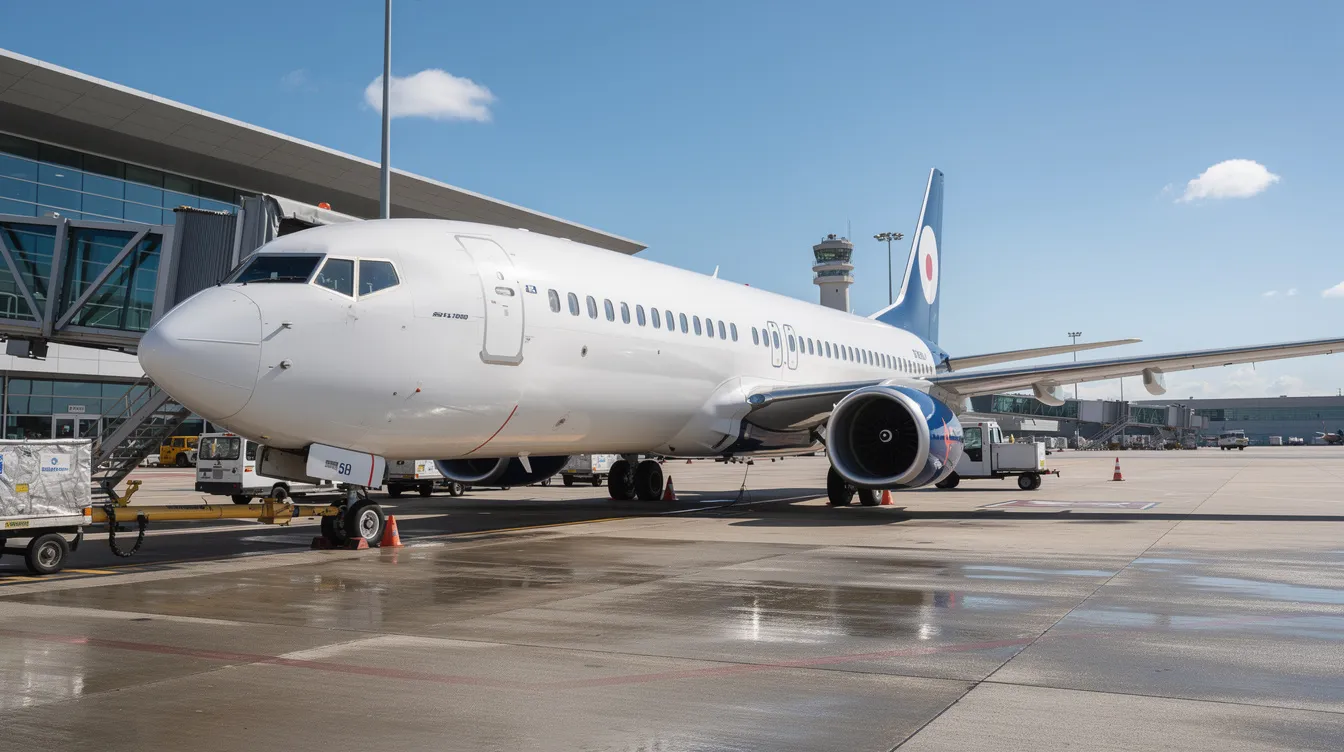
The Boeing 737-800 has a fatal accident rate of approximately 0.07 per million flights, placing it among the safest high-volume narrow-body jets in service. The Boeing 737- 800 crash rate reflects more than two decades of continuous operational data across millions of flights worldwide.
The Boeing 737-800 is part of the Next Generation (NG) family and does not feature the maneuvering characteristics augmentation system (MCAS) that contributed to the two fatal 737 MAX crashes: Ethiopian Airlines Flight 302 and Lion Air Flight 610.
Most aviation accidents involving the 737-800 stem from external factors: weather conditions, pilot error, bird strikes, and runway excursions. No systemic airframe design flaw comparable to the MCAS issue has been identified in the NG series.
Compared to the 737 MAX's early operational record (hull-loss-with-fatalities rate of approximately 0.27 per million departures), the 737-800's rate is markedly lower. Older 737 generations show even higher rates: the Original series logged approximately 1.75 hull losses per million departures.
For travelers who value choosing their own aircraft, operator, and schedule, private charter through platforms like Jettly offers an alternative. Jettly works exclusively with certified third-party operators and a broad selection of private charter aircraft that must meet or exceed commercial aviation safety standards.
In aviation, "crash rate" typically refers to fatal accidents per million flights (or departures). It measures how often an aircraft type is involved in an accident causing at least one fatality, normalized against the total number of flights completed. When travelers search for the Boeing 737- 800 crash rate, they are usually reacting to a recent headline about a Boeing aircraft incident or trying to compare the safety of different aircraft types before booking.
The Boeing 737-800's current fatal accident rate sits at approximately 0.07 per million flights. By any measure, that number is low. The 737-800 has completed millions of flights since entering service in the late 1990s, and the hull-loss rate for the entire 737 NG family is approximately 0.08 per million departures, according to Boeing's Statistical Summary of Commercial Jet Airplane Accidents.
The Boeing 737-800 is part of the Boeing 737 Next Generation family, a separate design generation from the Boeing 737 MAX series. Lion Air Flight 610 and Ethiopian Airlines Flight 302 involved the 737 MAX 8, not the 737-800. This distinction matters because the MCAS system linked to those crashes does not exist on NG aircraft.
This article is an informational guide for travelers comparing safety across commercial aircraft types. It also touches on how private jet charter, through digital platforms like Jettly, provides an alternative for those seeking more control over their travel experience.
The 737-800 is the most widely produced variant of the Boeing 737 NG family. The Boeing 737-800 first flew in 1997 and entered airline service shortly after. Over 8,000 units of the Boeing 737-800 have been built, making it one of the most manufactured commercial aircraft in history.
Key specifications:
Maximum capacity of 189 passengers (high-density single-class layout)
Typical seating: 162 to 189 passengers depending on airline configuration
Range: approximately 2,900 to 3,000 nautical miles
Primary use: short- to medium-haul routes
About 4,400 Boeing 737-800s are in use globally as of 2024-2025, operating hundreds of millions of flights across more than 180 airlines. The 737-800 benefits from decades of upgrades in avionics and engine reliability, with iterative improvements applied throughout its production run.
The type's maturity is an advantage for safety analysis. With over 25 years of service data, the 737-800's crash rate rests on a denominator so large that individual events have minimal effect on the overall rate. Newer aircraft types with fewer accumulated flights lack this statistical stability.
Aviation accident statistics rely on a standard metric: fatal accidents per million flights (or per million departures). One departure equals one flight from gate to gate. This approach normalizes risk across aircraft types that fly different volumes.
Three primary datasets underpin these calculations:
Boeing's Statistical Summary of Commercial Jet Airplane Accidents, updated annually and covering worldwide commercial jet operations from 1959 onward
The Aviation Safety Network, which catalogs individual accidents and hull losses
ICAO accident databases maintained by member states
Non-fatal incidents, including minor runway excursions, bird strikes without structural damage, and precautionary landings, are not counted in the "fatal crash rate." Even events that make headlines rarely meet the threshold for inclusion in hull-loss or fatal accident statistics.
Figures cited in this article reflect data updated to approximately 2024. Small numerical differences between sources are normal. Boeing's reports aggregate 737-600, -700, -800, and -900 variants together as the NG family. Because the 737-800 accounts for the vast majority of NG flights, the aggregate rate closely represents the -800 specifically.
As of 2024, the Boeing 737-800 has a fatal accident rate of approximately 0.07 per million flights. The hull-loss rate for the Boeing 737-800 is around 0.17 per million departures.
To translate: one fatal hull loss occurs roughly every 6 to 7 million flights for the NG group. If a traveler boarded a 737-800 every single day, they would need to fly for over 17,000 years before the statistical probability of encountering a fatal hull loss reached 1.0.
Boeing's data show 23 hull losses for the 737-600/-700/-800/-900 group combined, with 11 of those involving fatalities. The 737-800 has completed millions of flights in its operational history, giving it one of the largest denominators of any commercial aircraft type. The hull-loss rate per million departures for the entire 737 NG family is approximately 0.08 when measured as total hull losses (including those without fatalities).
Public perception after any single aviation accident tends to overweight the risk. A single crash generates weeks of media coverage, while the millions of uneventful flights that month receive none. The 737-800 has a strong safety record, comparable to the Airbus A320 family, its direct competitor in the single-aisle market.
The 737-800 does not feature the MCAS system present in the 737 MAX. That distinction is the single most important difference between the two types in terms of safety history. Boeing's MCAS system was linked to two fatal crashes: Lion Air Flight 610 crashed on October 29, 2018, killing all 189 people on board, and Ethiopian Airlines Flight 302 crashed on March 10, 2019, killing all 157 people on board. Both aircraft crashed shortly after takeoff. The Boeing 737-800 has a much stronger safety record than the 737 MAX series.
Here is how the fatal accident rates compare across 737 generations:
|
737 Generation |
Hull Loss per Million Departures |
Fatal Hull Loss per Million Departures |
|---|---|---|
|
Original (737-100/-200) |
~1.75 |
~0.87 |
|
Classic (737-300/-400/-500) |
~0.54 |
~0.26 |
|
NG (737-600/-700/-800/-900) |
~0.17 |
~0.07 to 0.16 |
|
MAX (737 MAX 7/8/9/10) |
~0.27 |
~0.27 |
737-800 vs. older 737 Classic models: The Classic series (737-300/-400/-500) logged a hull-loss rate of approximately 0.54 per million departures, more than three times the NG family's rate. The safety improvement between generations reflects advances in avionics, engine design, and cockpit automation.
737-800 vs. early operational record of the 737 MAX before its grounding: The MAX's fatal hull-loss rate of approximately 0.27 per million departures is inflated by two catastrophic accidents occurring within a fleet that had accumulated far fewer total flights than the NG series. As the MAX accumulates safe flights, this rate is expected to decline. But the starting point was worse than the NG family at any comparable stage.
737-800 vs. other modern Boeing narrow-body and wide-body aircraft (e.g., 757, 767, 787): The 757 has a hull-loss rate of approximately 0.21 per million departures. The 767 sits around 0.13 per million departures for total hull losses. The 787 Dreamliner has recorded no hull losses as of 2024. Each type has a different fleet size and operational profile, so direct comparisons require context.
The 737 MAX was grounded for 21 months after two crashes. During that period, regulators required a redesign of MCAS, updated flight crews on operating procedures, revised the flight manual, and mandated simulator training. The 737-800 continued flying throughout without a global grounding.

Accidents involving the 737-800 are typically attributed to external factors rather than design flaws. No systemic airframe deficiency comparable to the MAX's MCAS problem has been found in the NG family.
The most common categories include:
Approach and landing accidents: unstable approaches, excessive speed, failure to execute go-arounds
Runway excursions or overruns: wet or contaminated runways, inadequate runway length, tailwind components
Pilot error: deviation from standard operating procedures, poor crew resource management, failure to follow the flight manual
Severe turbulence and wind shear: in-flight upset events causing structural stress or loss of control
Bird strikes and engine failure: ingestion of birds during takeoff or landing, leading to precautionary or emergency landing
Controlled flight into terrain (CFIT): flying into terrain while under control, usually linked to navigation or awareness failures
The 737-800 has multiple redundant hydraulic, electrical, and flight control systems. A single component failure, such as a landing gear malfunction or partial engine failure, is designed to be survivable when flight crews follow established procedures, especially when operated under compliant Part 135 charter companies and equivalent regulatory regimes.
The Federal Aviation Administration (FAA), EASA, and local civil aviation authorities all maintain oversight of airline training, maintenance practices, and air traffic control procedures. The quality of that oversight varies by region, which is why the same aircraft type can have different safety outcomes in different operating environments. Test pilots and certification bodies evaluate aircraft handling under abnormal conditions before the type enters service, but real-world safety depends on how airlines implement operating procedures day to day.
Despite its low crash rate, the 737-800 has been involved in some high-profile aviation accidents. Each crash happened under specific circumstances, and investigations identified causes rooted in operational or environmental factors.
Jeju Air Flight 2216, South Korea (December 29, 2024)
A nearly new Boeing 737-800 operated by Jeju Air overran the runway at Muan International Airport in South Korea. All but two people on board died: 179 of the 181 passengers and crew lost their lives. Two crew members survived. This was the deadliest accident involving a 737-800 and the deadliest accident in South Korea's aviation history. Investigators are examining a suspected bird strike that may have caused engine failure, combined with the aircraft's approach toward a concrete barrier at the runway end. Among those who survived, one flight attendant and one other crew member were rescued from the wreckage. The crew evacuated under extraordinary circumstances. Emergency slides were not deployed due to the severity of the impact.
China Eastern Airlines Flight 5735 (March 21, 2022)
On March 21, 2022, a Boeing 737-800 crashed in China's Guangxi region. The aircraft, en route from Kunming to Guangzhou, entered a steep dive from cruising altitude. All 132 people on board died, including nine occupants in the cockpit and cabin crew area. The aircraft ran into mountainous terrain at high speed. Investigators found no pre-existing mechanical fault with the aircraft. This in-flight upset remains under investigation, with Chinese authorities examining cockpit voice recorder data. It was the first fatal accident involving a Chinese airline in over a decade.
Air India Express Flight 1344 (August 7, 2020)
An Air India Express Boeing 737-800 overran the runway at Kozhikode (Calicut) International Airport in India. The airport features a "tabletop" runway on an elevated plateau. Heavy rain, a tailwind component exceeding airline limits, and a touchdown well past the designated zone contributed to the crash. The aircraft broke into three pieces after sliding off the runway edge. Of the 190 passengers and crew, 21 board died, including both pilots. The remaining passengers and crew survived, many with minor injuries. Investigators cited the pilot's failure to execute a go-around and unstable approach conditions as primary causes. Four crew members in the cabin assisted with evacuation despite injuries. Five crew members were hospitalized. Six crew members were treated for cuts and bruises. Seven crew members provided statements to investigators.
Other incidents: Various 737-800 aircraft have experienced events at airports including LaGuardia Airport (runway excursions in adverse weather) and Portland International Airport (precautionary diversions). In one ferry flight incident, a 737-800 crew lost communication temporarily during repositioning, but the flight landed safely. Several incidents involved in-flight fire warnings that turned out to be sensor malfunctions; in each case, the aircraft continued to its destination or diverted without hull loss. At least one 737-800 caught fire on the ground due to a maintenance error during servicing, not an in-flight event. In another case, the aircraft crash-landed after an engine ingested debris on takeoff, but the board survived with no fatalities.
Each of these aviation accidents triggered investigations under ICAO Annex 13, leading to safety recommendations, training updates, or procedural changes at the airlines involved. The fatal events reinforced the importance of go-around discipline, weather limits compliance, and runway safety areas.

Bird strikes affect every commercial jet type, not just the Boeing 737. During takeoff and landing phases, aircraft are closest to the ground where bird populations concentrate. These phases are already statistically the most accident-prone in aviation safety studies.
Most bird strikes result in minor damage: dented leading edges, cracked windshields, or cosmetic panel damage. The aircraft continued to its destination or returned for inspection in the vast majority of cases. Fatal bird-strike-related hull losses are rare across all jet types.
The Jeju Air accident in South Korea (described above) is one case where a suspected bird strike may have contributed to engine failure and a fatal outcome. In a separate incident, a 737-800 operating for a U.S. carrier experienced dual bird ingestion shortly after takeoff, lost partial thrust, and executed an emergency landing at the departure airport. All passengers and crew deplaned safely. Air traffic control vectored the aircraft back for an immediate return.
Modern airports use bird control programs (habitat management, pyrotechnics, radar tracking), runway friction tests, and instrument landing systems to reduce these risks. Pilots receive specific training for rejected takeoffs and contaminated runways. Airlines conduct regular inspections of engine inlets and wing leading edges in regions with high bird activity, and travelers can use an airport locator tool to better understand which fields and facilities are available for their routes. The goal is to help every flight land safely, even when bird strikes occur.
Commercial aviation has become safer over every recent decade. Air travel is considered the safest mode of transportation globally, with approximately 0.01 deaths per 100 million miles traveled. No other form of mass transportation comes close to that rate.
Boeing aircraft have been involved in nearly 6,000 aviation accidents across the company's entire commercial jet history since 1959. Of those, 415 were fatal, resulting in over 9,000 deaths. Those numbers span more than six decades and dozens of aircraft types, from early 707s to modern 787s. The raw totals reflect the sheer scale of Boeing's fleet: hundreds of millions of flights over that period.
The phase of flight has more influence on accident risk than the specific narrow-body model. Approach and landing account for the majority of fatal events across all commercial jet types. A mature aircraft like the 737-800, with its well-understood handling characteristics and extensive pilot training infrastructure, performs no differently in this respect than its competitors, or from the considerations that go into finding the best cross-country plane for specific mission profiles.
Regulators continuously track accident data by aircraft model to identify trends. The 737-800 consistently ranks among the safest high-volume narrow-body types. Its safety record is comparable to the Airbus A320 family, which operates a similar number of flights worldwide.
Media coverage of the Boeing 737 MAX accidents reshaped public trust in "Boeing 737" aircraft as a category. Ethiopian Airlines Flight 302 and Lion Air Flight 610 generated sustained global attention. Many airline customers began requesting seat changes or rebooking when they discovered their flight was on a "737," without distinguishing between variants.
Ethiopian Airlines Flight 302 and Lion Air Flight 610 involved the 737 MAX 8, not the 737-800. The key design issue was the maneuvering characteristics augmentation system (MCAS), unique to the MAX. The 737-800 does not feature MCAS and was never subject to the same class of failure. After the Lion Air crash, many passengers confused the two types. The Alaska Airlines incident in January 2024 (a door plug blowout on a 737 MAX 9 that departed from Portland International Airport) further complicated public perception, even though that event also involved a MAX variant, not an NG aircraft.
The Federal Aviation Administration issued an emergency airworthiness directive for the 737 MAX following the crashes. The 737 MAX's global grounding lasted 21 months. Boeing faced criminal charges related to the 737 MAX crashes. Boeing paid over $2.5 billion for defrauding the FAA regarding MCAS certification. Boeing admitted the 737 MAX had an unsafe condition. Boeing promised to implement new safety and compliance procedures as part of its settlement. Boeing agreed to enhanced oversight by the DOJ. Boeing issued revised training requirements and software updates for the MAX fleet. A law firm representing families of Lion Air crash victims noted that the settlement did not resolve all civil claims.
Throughout this period, the 737-800 continued operating worldwide. Its accident rate did not change as a result of the MAX issues. Regulators reviewed procedures and training across multiple Boeing aircraft after the MAX grounding, but the 737-800 maintained its low accident rate and was never subject to a comparable global grounding.
The 737-800 remains a backbone aircraft for both full-service and low-cost carriers. Its economics and reliability keep it in demand even as newer types enter service.
Prominent operators include:
American Airlines (one of the largest U.S. 737-800 operators)
United Airlines (operates 737-800s alongside MAX variants on domestic routes)
Alaska Airlines (uses 737-800s on West Coast and transcontinental routes)
Ryanair (the world's largest 737-800 operator, with over 400 aircraft)
Qantas (uses 737-800s for Australian domestic services)
KLM and Turkish Airlines (European and intercontinental feeder routes)
A United Airlines flight on a 737-800 covers many of the same domestic routes as a MAX aircraft. For airline customers, the experience is nearly identical in terms of cabin layout and service.
Airline operational discipline, maintenance practices, and route profiles influence an individual carrier's safety performance more than the aircraft model itself. Two airlines operating the same 737-800 type can have different safety outcomes based on training culture, regulatory environment, and fleet age management.
Airlines periodically retire older 737-800s as they receive Boeing 737 MAX or Airbus A320neo deliveries. But many NG aircraft are expected to remain in service through the early 2030s given their good safety and economic track record.
Airline flights on Boeing 737-800s are statistically safe. The numbers confirm this. But some travelers prefer private aviation for specific trips, driven by factors beyond raw crash statistics: schedule control, airport choice, privacy, and the ability to select an operator.
Flying on a full 737-800 means scheduled routes, fixed departure times, hub connections, security lines, and boarding procedures at major airports. Chartering a smaller private jet through a digital broker like Jettly means custom routing, access to smaller airports closer to final destinations, and departure times set by the traveler, with tools such as a private jet charter cost estimator helping travelers understand pricing before they book.
Private jet passengers often perceive greater control over their travel environment. They can review operator certifications, ask about aircraft age and maintenance history, and choose specific aircraft types. Both commercial and charter operators must meet strict regulatory standards, but the charter passenger has more direct input into the selection process, especially when comparing options across a broad list of charter airlines and private operators.
Private jets used via platforms like Jettly are operated by third-party carriers holding appropriate certifications (Part 135 in the U.S. or local equivalents). These operators comply with maintenance and crew training regulations comparable to those governing commercial airlines. For more detail on how private jet safety certifications work, Jettly provides resources for first-time charter clients, many of which are also explained within its flexible private jet memberships for frequent flyers.
Jettly is a private jet charter marketplace, not an airline. The platform connects travelers with a global network of certified operators and over 20,000 aircraft. Jettly does not operate flights directly; every flight is conducted by a third-party carrier with appropriate regulatory approval, positioning it as a flexible NetJets alternative for flying private.
Safety criteria that matter to Jettly users include, much like when evaluating the best private jet charter companies more broadly:
Operator certification status (FAA Part 135, EASA AOC, or equivalent)
Maintenance standards and inspection history
Crew experience and training records
Third-party safety audits (ARGUS, Wyvern Wingman, IS-BAO) where available
For those unfamiliar with these programs, Jettly's guide to private jet safety ratings explains what each audit standard covers.
While the Boeing 737-800 is primarily a commercial airliner, charter clients on Jettly typically book light jets, midsize jets, heavy jets, turboprops, or VIP-configured airliners depending on group size and mission profile. Some travelers further reduce per-seat costs by using crowdsourced and shared private jet flights to fill empty seats. The strong safety record of the 737-800 serves as a baseline indication of what modern jet engineering and regulatory oversight can achieve. Private charter passengers benefit from the same generation of engine, avionics, and airframe technology.

The choice between commercial and private is situational. Route structure, schedule flexibility, group size, and privacy needs drive the decision more than raw crash rate statistics.
A business team comparing a commercial Boeing 737-800 flight on a busy trunk route vs. a midsize or super-midsize private jet for same-day out-and-back meetings. The commercial option is cheaper per seat but involves check-in, security, potential delays, and connections. The private jet departs on the team's schedule from an executive terminal, with no TSA line and direct routing. For a team of six to eight, the per-person cost gap narrows when accounting for hotel nights saved and productive hours gained.
A family weighing a vacation on a scheduled 737-800 vs. a private charter that can depart from a closer regional airport. The scheduled flight may require a two-hour drive to a hub airport, plus early arrival for check-in. A private charter from a local field eliminates that overhead. With children and luggage, the door-to-door time difference can exceed three hours each way, and families may even consider shared charter flights versus full charters to balance privacy with budget.
Jettly's platform provides instant pricing and aircraft comparison, so travelers can evaluate the tradeoff before committing. Its detailed overview of affordable private jet charter costs also helps travelers understand how aircraft type and route length influence pricing. For larger groups or sports teams, chartering a heavy jet or VIP airliner through brokered solutions combines the capacity of a 737-class aircraft with private scheduling and tailored onboard services.
The Boeing 737-800's crash rate is consistent with the broader trend of improving aviation safety worldwide. For the average passenger, the risk of a fatal accident on a 737-800 is so low that other travel decisions (which airline, which route, what time of year) have more practical impact on overall trip quality and safety.
Travelers should focus on airline safety culture, on-time performance, and route convenience when choosing a 737-800 flight. The aircraft type itself is not a meaningful differentiator among modern narrow-body jets with mature safety records.
For those who want to verify what aircraft model is scheduled for their flight, most airline booking pages display equipment type. Flight-tracking apps like Flightradar24 also show the specific aircraft registration and model. This allows passengers to distinguish between a 737-800 and a 737 MAX flight if they have a preference.
Travelers who want more control over aircraft selection and scheduling can use Jettly's marketplace to choose from thousands of aircraft with transparent details up front, from turboprops to heavy jets.
The 737-800 and the Boeing 737 MAX are different generations with different flight control architectures. The 737-800 does not use MCAS, the system linked to the Lion Air Flight 610 and Ethiopian Airlines Flight 302 crashes. The 737-800's fatal accident rate (approximately 0.07 per million flights) is lower than the MAX's early operational rate (approximately 0.27 per million departures).
Since 2020-2021, the 737 MAX has been recertified with design and training changes mandated by regulators. As the MAX fleet accumulates safe flights, its per-million rate will decline. But public perception remains more cautious toward the MAX. The 737-800 has not faced a comparable design controversy or global grounding at any point in its service history.
Approximately 4,400 Boeing 737-800s are in active airline service globally as of the mid-2020s. They are operated by over 180 airlines across six continents.
Retirements and fleet updates (including 737 MAX deliveries and Airbus A320neo orders) will gradually reduce the number of active 737-800s. But their economic performance and structural durability mean many are expected to remain in service through the early 2030s or beyond, particularly with low-cost carriers that have invested in NG-specific infrastructure and training.
There has been no global grounding of the Boeing 737-800 comparable to the 21-month worldwide grounding of the Boeing 737 MAX following Lion Air Flight 610 and Ethiopian Airlines Flight 302.
Individual 737-800 aircraft or small groups can be temporarily grounded for inspections, airworthiness directive compliance, or local regulatory actions. This is normal fleet management. After the China Eastern Flight 5735 accident in March 2022, Chinese authorities temporarily paused some 737-800 operations for safety reviews, but no worldwide grounding was imposed.
Bird strikes are common across all jet types. The FAA records thousands of bird strike reports annually in the U.S. alone. The vast majority result in minor damage or no damage at all. Fatal bird-strike-related hull losses on any jet type are rare.
Pilots train for rejected takeoffs and engine-out procedures specifically to handle bird strike scenarios. The 737-800's CFM56 engines are certified to withstand ingestion of birds up to a specified size. When bird strikes do cause operational disruption, the typical outcome is a precautionary return to the departure airport or diversion to the nearest suitable field.
Practical steps include:
Review airline safety records through organizations like the Aviation Safety Network or IATA's audit programs (IOSA)
Check the aircraft type during booking; most airline websites display the equipment for each flight
Choose direct flights when possible to minimize takeoff and landing exposure
Fly with carriers that maintain strong regulatory oversight (FAA, EASA, or equivalent)
Avoid unnecessary connections through airports with challenging weather or terrain conditions
Travelers wanting more direct control over aircraft selection, operators, and schedule can explore private charter options. Jettly's platform allows users to compare aircraft categories, review operator details, and request instant quotes at jettly.com, using strategies such as getting a seat on a private jet easily through memberships, empty legs, or shared flights.
The Boeing 737- 800 crash rate is very low, making it one of the safest high-volume commercial jet types in service. Its fatal accident rate of approximately 0.07 per million flights reflects a mature design, decades of operational refinement, and a fleet that has completed millions of flights without a systemic design controversy.
Three points stand out from the data. First, the 737-800 and the 737 MAX are different aircraft with different flight control systems and different safety histories. Second, most 737-800 accidents trace back to external factors: weather, pilot error, bird strikes, and runway conditions. Third, commercial aviation safety has improved steadily across every decade, with the 737-800 contributing to that trend rather than detracting from it.
For travelers flying commercially, the 737-800 is a sound choice backed by robust data. For those seeking additional flexibility, control over aircraft selection, and tailored scheduling, private charter provides an alternative built on the same regulatory framework, including options to rent a private Boeing 737-800 for charter on select high-capacity routes.
Ready to customize how you travel beyond the commercial 737-800 network? Explore private flight options or request an instant quote at https://www.jettly.com.
Share this post:
Jay Franco Serevilla
Nov 18, 2026
|
5
min read
Discover tips and trends in the industry.
5
min read
How Much Does a Pilot Make a Year? (2027 Guide to Airline Pilot Salaries)
In 2027, airline pilot salaries range from approximately $85,000 for entry-level regional pilots to over $450,000 for senior captains at major airlines. Factors such as rank, aircraft type, and employer significantly influence earnings, with additional compensation often including bonuses and profit sharing. This guide provides a comprehensive breakdown of pilot salaries, pay structures, and career progression.
Read More
5
min read
Fuel for Jet Engine: Types, Specifications, and What Matters for Private Jet Travel
Choosing the right jet fuel is crucial for private jet travel, impacting range, cost, and safety. This guide explains the main types of jet fuel, their specifications, and how they influence charter flights. Understanding these factors helps travelers make informed decisions when booking through platforms like Jettly.
Read MoreStay updated with our latest insights and tips to elevate your journey with us.
MEMBERSHIPS AND ASSOCIATIONS



© 2026 Jettly Inc. All rights reserved.
Disclaimer: Jettly operates as a charter broker, offering access to a global digital jet charter marketplace. Jettly is not a direct air carrier and does not own or operate aircraft. All advertised flights are conducted by third-party air carriers that are fully licensed and hold the appropriate Part 135 or Part 121 certifications issued by the Federal Aviation Administration (FAA) or equivalent regulatory authorities under U.S. or foreign law. Jettly complies fully with the U.S. Department of Transportation's Part 295 and Part 298 Charter Broker regulations. Jettly does not carry additional liability insurance. Passengers are covered by aircraft operator insurance. TICO: 50023770


