



Login
Get Instant Pricing On 23,000+ Aircraft

>
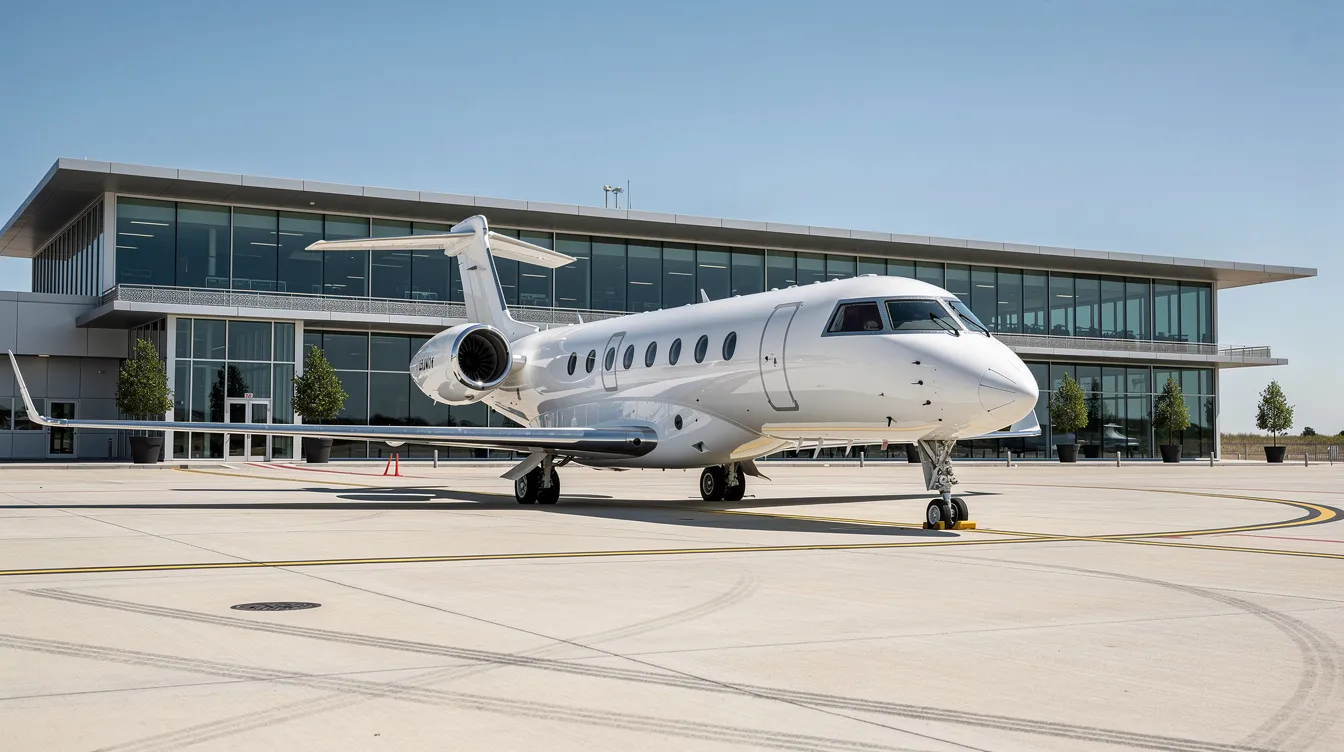
Understanding how a private jet works is simpler than most people assume. For first-time private flyers, business travelers, and anyone curious about private aviation, understanding the process helps you make informed travel decisions and maximize the benefits of flying private. This guide explains every stage of private jet travel-from booking and boarding to what happens inside the cabin at 45,000 feet-and shows how Jettly's digital marketplace makes the entire journey accessible without ownership or long-term contracts.
Private jet charter allows hiring an entire aircraft for travel. That means passengers choose the schedule, the airports, and who flies with them. There are no shared cabins, no strangers, and no rigid airline timetables to work around.
Flying privately streamlines the whole travel day. Passengers typically arrive 15 to 30 minutes before departure, use private terminals known as fixed base operators (FBOs), and skip the lines, layovers, and boarding groups that define commercial travel. Private jet flights save 50% to 70% in total travel time compared to commercial flights, and private jets maintain a 95% on-time performance rate.
Different aircraft categories shape what a trip looks like. Turboprops handle short hops to smaller airports. Light jets cover regional routes for small groups. Mid-size jets and super mid-size jets add cabin space and range. Long-range jets and ultra-long-range jets handle intercontinental missions. Jettly helps match each trip to the right aircraft based on passenger count, route, and budget.
Jettly is a digital charter broker-not an operator-providing access to over 20,000 unique aircraft worldwide. The platform offers instant pricing, transparent quotes, and membership options, so travelers can move from education to action without ownership commitments. Digital booking allows instant pricing and flight arrangements for any route.
Ready to see what your next trip might cost? Check live options or get an instant quote at any time through Jettly's platform.
Private jet charter allows hiring an entire aircraft for travel.
A private jet charter is hiring an entire private aircraft-plus crew, fuel, and basic services-for a specific trip, on a schedule built around the passenger instead of the airline. The departure time, the airports, and the passenger list are all determined by the customer.
Charter brokers like Jettly sit between travelers and licensed business aviation operators. The broker sources the aircraft, presents pricing, manages the charter agreement, and coordinates logistics. The operator-the company that holds the aviation certificate and employs the pilots-handles the actual flight. This separation means travelers get access to thousands of aircraft without dealing directly with individual charter companies.
When people fly private through charter, they are typically flying under commercial regulations such as FAA Part 135 in the United States or equivalent EASA rules in Europe. These frameworks require stricter pilot qualifications, maintenance programs, and operational oversight than owner-only flying under Part 91. Private jets can access over 5,000 airports worldwide-compared to roughly 500 served by commercial airlines-which is a core reason travelers choose this option.
A single booking covers the aircraft, crew, fuel, basic catering, and standard ground handling at the FBO. Extras like premium catering, de-icing, special ground transportation, overnight crew lodging, or international permits may appear as additional fees on the final invoice.
Here is a quick example: a business group wants a mid-size jet from Teterboro (New Jersey) to Miami, departing at 9 a.m. and returning the same afternoon. The broker presents aircraft options matched to that route; quotes include round-trip flight time, landing fees, and handling at each field. The group picks the best fit, signs the agreement, and the crew, aircraft, and FBO access are confirmed.
The process starts when a customer enters the desired departure and arrival airports, travel dates, and passenger count into Jettly's platform. Within moments, the system returns an instant quote across aircraft types-light jets, mid-size jets, super mid-size jets, and heavier options-showing estimated flight time, hourly rates, and fees for each.
Once the customer selects a preferred option, a charter agreement is signed. This document details the operator, aircraft tail number, inclusions, payment structure, and cancellation policy. Payment timelines vary: some trips require a deposit at booking with the balance due 24 to 72 hours before departure, while last-minute charters may require immediate full payment.
Jettly then coordinates with the operator to confirm aircraft and crew availability, secure airport slots if needed, finalize FBO arrangements, and verify regulatory compliance. Passenger names, catering preferences, and special requests-pets, medical equipment, child seats, dietary needs-are collected and passed to the operator before the flight.
Urgent trips can be arranged same day. In major U.S. markets, booking windows of 4 to 8 hours are typical, and in some cases an aircraft can be ready within 2 to 3 hours if one is already positioned nearby and the crew meets rest requirements.
Compare arriving at a crowded airline terminal-long security lines, gate changes, boarding groups-with pulling up to a quiet private jet terminal where staff greets passengers by name. That contrast defines the private flight experience.
Most private jet flights depart from FBOs such as Teterboro in New Jersey, Van Nuys in Los Angeles, or dedicated business aviation terminals at major airports. Private jets often use smaller regional airports and private terminals, which means less congestion and faster airport procedures, and tools like Jettly's airport locator help travelers find convenient departure and arrival points. Fixed-base operators provide efficient ground handling for private jets, covering everything from fueling to luggage loading.
Passengers arrive 15 to 30 minutes before departure, though timing can vary based on airport requirements, so travelers should confirm the recommendation in their itinerary. Private aviation terminals handle security quickly, and private staff verify IDs, check travel documents, and screen luggage in a controlled, low-traffic area with no long queues. Ground operations include pre-flight checks, fueling, and passenger services, all handled while travelers wait in the FBO lounge.
At many smaller airports, passengers can park steps from the terminal or even drive directly to the aircraft. Once paperwork and safety checks are complete, travelers walk from the lounge to the jet, meet the pilots, and take off as soon as everyone is on board and cleared.

The onboard experience on a private jet is quiet, flexible, and centered on a private jet service tailored to passenger preferences-not just about plush seats. The cabin environment is shaped by the aircraft category, the operator, and what travelers request in advance.
Cabin layouts differ by aircraft size, and understanding how many passengers a private jet can carry helps match group size to the right cabin configuration. Light jets typically offer club seating configurations, a small galley, and a compact lavatory-suitable for small groups on flights up to about three hours. Mid-size jets provide more room, an enclosed lavatory, and taller cabin ceilings. Long-range jets and heavy jets can include separate lounge areas, dining zones, and sleeping quarters with lie-flat beds for longer flights.
Personalized service is standard. Crew greets passengers by name, stocks preferred drinks and snacks, and times meals around meetings or rest. Custom catering options are available based on passenger preferences, and lighting and temperature adjust to individual taste. The Environmental Control System keeps cabin pressure comfortable at high altitudes, with cabin pressurization in private jets aimed at an altitude equivalent of 3,000 to 6,000 feet-noticeably more comfortable than most commercial airlines.
Many private aircraft offer wi fi, HDMI inputs for presentations, and streaming or onboard entertainment libraries, though availability varies by operator and region. Modern private jets utilize integrated digital avionics systems, while autopilot systems maintain altitude and heading automatically, letting pilots focus on safety while passengers work or rest. The Flight Management System automates navigation and fuel optimization throughout the entire journey.
Private jets typically operate at altitudes between 41,000 and 51,000 feet-above most commercial traffic and weather-resulting in smoother flights. Whether the goal is a confidential boardroom meeting, a mobile office, or uninterrupted sleep on a transatlantic leg, the cabin adapts.
Charter flights are run by licensed operators under strict national and international aviation rules governing pilots, aircraft maintenance, and daily operations. Safety management includes routine inspections and compliance with aviation regulations at every level.
In the United States, charter flights operate under FAA Part 135, which requires higher pilot qualifications, defined crew rest and duty periods, recurrent simulator training, and more rigorous maintenance programs than Part 91 (owner-only) operations. Travelers who want to understand how Part 135 charter companies work can look more closely at the operators behind each flight. Fractional ownership operations may be regulated by FAA Part 91 or Part 135, depending on the structure. Crew management handles pilot training and regulatory compliance across all certified operators, and operational restrictions such as crew duty limits, airport opening hours, and slot constraints can still affect schedules.
Pilots on business aviation charter flights typically hold commercial or Airline Transport Pilot certificates, undergo recurring instrument proficiency checks, and maintain current medical clearances. Private jets incorporate advanced safety systems including weather radar and collision avoidance technology, adding layers of protection beyond pilot skill alone.
Third-party safety audits from organizations like ARGUS, WYVERN, and IS-BAO give travelers an independent measure of operator quality. Brokers like Jettly screen operators for compliance and typically list only those meeting recognized safety standards.
Private jets require continuous maintenance to ensure safety and performance. Aircraft undergo scheduled inspections based on hours flown, takeoff-and-landing cycles, and calendar limits. If any required inspection is overdue, the aircraft cannot legally fly. This framework is what gives private aviation its 95% on-time performance rate-mechanical surprises are caught before they cause delays.
Aircraft selection shapes range, comfort, runway access, luggage capacity, and charter cost. Here is a breakdown of the major categories that Jettly's platform displays side by side, so customers can weigh trade-offs for each trip. For a deeper dive, see private jet types and sizes and explore Jettly's private charter aircraft to compare specific models.
|
Category |
Passengers |
Range (nm) |
Cruise Speed |
Hourly Rate (USD) |
|---|---|---|---|---|
|
Very light jets |
6–7 |
~1,100–1,550 |
~350–400 kts |
$2,400–$4,200 |
|
Light jets |
6–8 |
~1,953 |
~420–450 kts |
$3,000–$5,000 |
|
Midsize jets |
up to 9 |
~2,540 |
~430–460 kts |
$4,500–$8,000 |
|
Super midsize jets |
10–11 |
~3,420 |
~450–480 kts |
$6,500–$10,000+ |
|
Heavy jets / Long-range jets |
12–19 |
~6,500 |
~470–510 kts |
$8,000–$18,000+ |
Very light jets work well for short two-hour hops where jet performance is needed, but a smaller aircraft keeps costs down. Light jets usually accommodate 6 to 8 passengers over approximately 1,953 nautical miles, making them ideal for routes like Los Angeles to Las Vegas or New York to Miami.
Midsize jets can carry 9 passengers over 2,540 nautical miles with more seating configuration options, an enclosed lavatory, and better luggage capacity-great for a Chicago-to-New York run. Super mid size jets typically accommodate 10 to 11 passengers over 3,420 nautical miles, handling transcontinental U.S. flights nonstop.
Heavy jets can accommodate 12 to 19 passengers over 6,500 nautical miles, with full standing cabins, sleeping quarters, and separate work zones. A brand-new heavy jet can cost upwards of $65 million, which is why chartering makes financial sense for most aircraft in this class. For perspective, charter prices range from $1,800 to $18,000 per flight hour across all categories, and a full breakdown of how much a private jet costs shows how ownership, leasing, and charter compare.
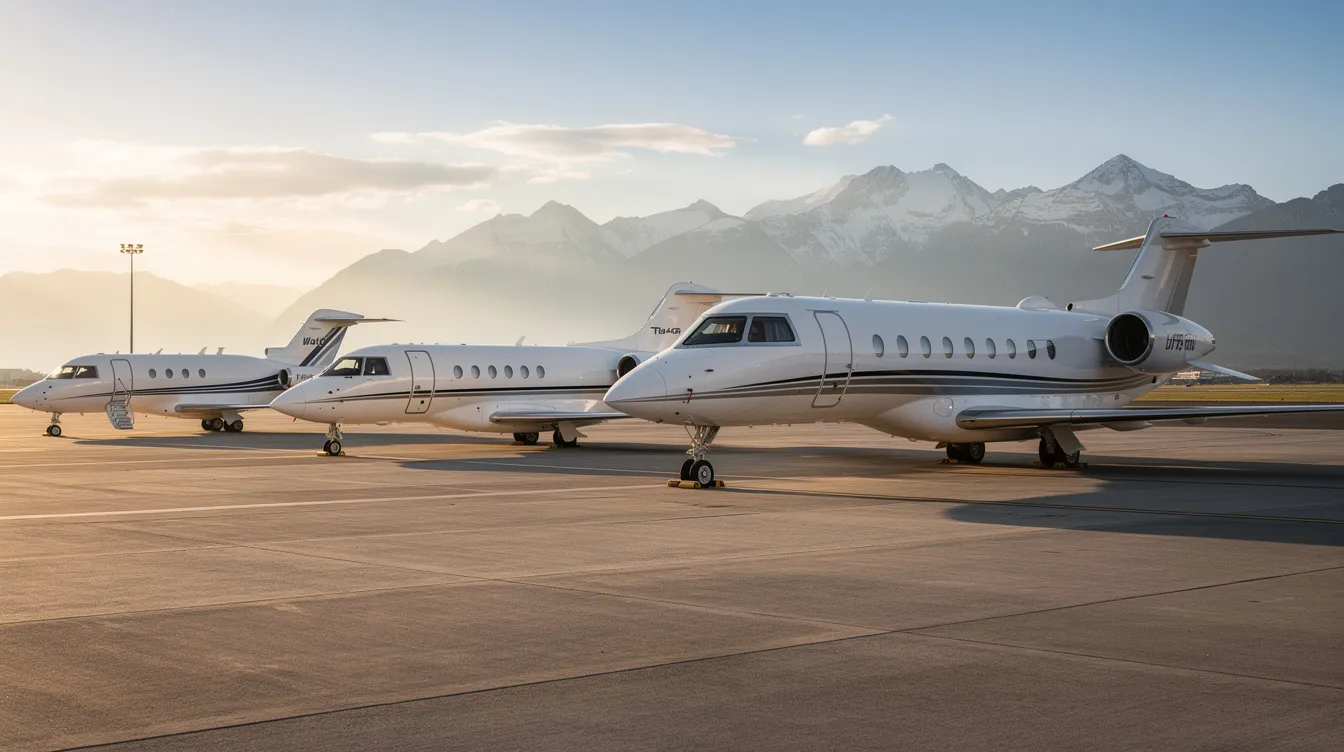
How a private jet works in practice is closely tied to how far it can fly between fuel stops and at what cruise speed. Aerodynamic wings generate lift, while private jets use high-bypass turbofan engines-or turbojet engines on some models-for forward thrust. Flaps and slats increase lift during takeoff and landing, and retractable landing gear reduces aerodynamic drag during cruise. Hydraulic systems operate critical functions like landing gear and flight control surfaces. Wing fuel tanks help balance the aircraft and reduce structural stress.
Great-circle distance, cruise speed, and expected winds determine airborne flight time. Taxi, climb, descent, and possible tech stops add to the total. Here are some common routes with typical times:
New York to Miami: approximately 2.5 to 3 hours in a mid-size jet
London to Nice: around 2 hours in a light jet
Los Angeles to San Francisco: about 1 hour in a light jet
Private jets often bypass major airport delays by using regional airports closer to the final destination, cutting door-to-door travel time significantly. That can also reduce post-landing ground transport compared with arriving at a major hub farther from the final stop. With access to over 5,000 airports worldwide, runway length requirements are met at thousands of fields that commercial airlines never serve.
Jettly's flight time tools pull in aircraft performance data to estimate both time and cost for each requested route-so travelers see real numbers before committing, whether it is a regional hop or a dedicated private jet charter in Kolkata.
Chartering a private jet costs more than a commercial ticket, but the cost per person can be reasonable for groups compared with first or business class-especially when factoring in time saved.
Typical hourly charter rate bands in USD, and broader guides to how much to rent a private jet, help travelers budget realistically:
Turboprops: around $1,800–$3,000 per flight hour
Light jets: about $3,000 to $5,000 per flight hour
Midsize jets: $4,500–$8,000
Super mid-size jets: $6,500–$10,000+
Heavy jets and ultra-long-range jets: $8,000–$18,000+
Charter quotes factor in estimated flight time, repositioning (moving the aircraft to your departure point), minimum flight hours per day, possible overnight fees, airport and handling charges, taxes, and any additional fees for catering or permits.
Here is an example: a 2-hour each-way light jet trip totals 4 flight hours. At a mid-range rate of $4,000 per hour, that is $16,000 for flight time alone. Adding repositioning, FBO handling, and taxes, the door-to-door quote might land between $20,000 and $25,000.
Rather than relying on generic averages, travelers can use Jettly's charter cost estimator or the dedicated jet card flight cost estimator to see live pricing for specific dates, routes, and passenger counts.
Not all private aviation models carry the same costs or commitments. The right choice depends on how often someone flies and how much predictability they need.
Pay-per-trip charter is the most flexible entry point. There are no long-term contracts, no capital outlay, and no asset obligations. Travelers pay for each flight as needed-ideal for first-time private flyers or occasional trips. This is the model Jettly focuses on.
Membership and jet cards let customers prepay for blocks of flight hours or deposit funds in exchange for fixed or capped hourly rates and priority access. These programs suit frequent flyers who want cost predictability without owning anything, and dedicated jet card programs layer on perks like catering and concierge service. For a detailed comparison, see fractional ownership vs jet card vs charter.
Fractional ownership means buying a share- say, 1/16 or 1/8-of a specific aircraft, and resources on fractional jet ownership pros and cons can clarify whether this structure fits your flying pattern. Fractional ownership requires an upfront fee of $650,000 for a share, plus monthly expenses for fractional ownership that can reach about $8,000, on top of hourly operating costs for each flight. It suits heavy users willing to commit for several years, and many turn to established providers such as NetJets, the industry leader in fractional aviation.
Jettly, as a digital marketplace, offers both on-demand and private jet memberships but does not sell aircraft or shares, positioning itself as a NetJets alternative focused on flexibility and cost control. That makes the platform attractive for travelers who prefer flexibility over asset ownership.
Travelers can either contact individual charter companies or use a broker that aggregates many operators on one platform. Each path has trade-offs.
A broker like Jettly provides access to a global pool of over 20,000 unique aircraft. Customers compare light jets, mid-size jets, and long-range jets on one screen, with transparent pricing from multiple operators, much like browsing a curated catalog of private charter aircraft. That breadth is difficult to replicate by calling a single operator with a limited fleet.
Jettly is a charter broker, not an air carrier. All private jet flights are operated by properly certified third-party operators meeting FAA, EASA, or equivalent regulatory standards, placing it alongside many of the prominent providers in the broader charter airlines and private aviation landscape. The platform simplifies repeat trips, stores passenger preferences-catering, pets, preferred FBOs-and provides personalized service through human support when needed.
Concrete use cases where a platform helps: multi-leg business aviation tours where switching cities daily, last-minute family holidays with extra luggage, or comparing different aircraft categories for the same route to balance comfort and budget.
For first-time private flyers used to commercial airlines, the process is straightforward and guided. There is no need to memorize complex airport procedures-the broker and FBO staff handle the details.
Preparation is minimal: keep passports and visas ready for international routes, share passenger names and dates of birth early, and advise the broker about pets, medical conditions, or oversized luggage. There are no standard airline-style baggage allowances, but weight and volume limits still apply-especially on smaller aircraft like very light jets and light jets with compact baggage holds. Soft bags generally fit better than rigid suitcases.
Travelers should communicate food preferences, dietary needs, and any special onboard requests-children's snacks, baby seats, work equipment-at least 24 to 48 hours before departure. The earlier the request, the better the operator can prepare, especially when they are buying a seat on a private jet, using flight-sharing options to get a seat easily, or crowdsourcing a private jet flight and sharing empty seats.
On the day, passengers follow instructions to the FBO, arrive 15 to 30 minutes before departure, and the ground and cabin teams guide them through every step from lounge to aircraft for a smoother, lower-stress travel experience.
Private aircraft produce higher CO₂ emissions per passenger than most commercial airline seats, especially when flying with only a few people on board. A 2024 study found roughly 15.62 million tons of CO₂ from approximately 6.47 million hours of private jet flight time in 2023.
Aircraft choice and route planning directly affect environmental impact. Turboprops and efficient light jets on shorter sectors burn less fuel than deploying a heavy jet for the same distance. Matching the mission to an appropriately sized smaller aircraft is one of the simplest ways to reduce waste.
Evolving practices include carbon offset programs, use of sustainable aviation fuel where available, and optimizing flight time and routing to cut unnecessary fuel burn. A marketplace like Jettly can help by matching missions to the right aircraft and by helping customers find empty leg flights-repositioning flights that would otherwise fly without passengers-reducing both cost and per-trip emissions, while broader guides to affordable private jet charter highlight additional ways to keep budgets and emissions in check.
Travelers who care about sustainability should ask about offset options and aircraft efficiency when requesting quotes, so they can balance convenience with environmental considerations.
Security and immigration checks still apply on private aircraft, but they are handled at private terminals (FBOs) with far less waiting and fewer passengers. Staff verify IDs, luggage, and travel documents in a controlled area, and screening equipment may be used depending on the country and airport. Domestic or internal Schengen flights can feel almost seamless, while international routes still require passports and any necessary visas.
Most private flyers are asked to arrive 15 to 30 minutes before scheduled departure-far later than typical airline check-in times. Some larger or high-security airports may advise slightly earlier arrival, especially for international trips with customs and immigration formalities. Passengers should confirm the recommended arrival time in their final itinerary from Jettly or the operator.
Many charter operators allow cats and dogs in the cabin on private jets, which is a major reason pet owners prefer flying private over commercial airlines. Rules depend on the operator, route, and destination country-vaccination, microchip, and quarantine requirements vary, particularly for places like the UK or Australia. Passengers should disclose pet details when requesting a quote so the broker can select pet-friendly aircraft and ensure compliance.
One of the main advantages of flying private is flexibility. Departure times can often be moved within the same day, subject to crew duty limits and airport opening hours. Changing the destination or time after confirmation may incur additional costs for extra flight time, repositioning, or overnighting the aircraft and crew. Travelers should contact their Jettly representative as soon as possible when plans change to secure new slots and minimize fees.
Not every private aircraft has wi fi. Older or smaller light jets and turboprops are less likely to offer connectivity, though it is increasingly common in mid-size and long-range jets. In-flight internet may be billed by the operator on a flat-fee or usage basis, or included on some higher-end aircraft. Passengers who need connectivity for work should specify this requirement when booking so Jettly can prioritize suitable aircraft options.
Private jet travel works by putting the passenger in control of the schedule, the airports, and the aircraft category. From booking through a digital platform to arriving at a quiet FBO and boarding within minutes, every step is designed around the traveler-not the airline. Certified operators handle the flying under strict aviation rules, while brokers handle the sourcing and logistics.
Flying private is about time savings-50% to 70% over commercial flights-flexibility, privacy, and personalized service. Whether the trip is a same-day business run or an overnight transatlantic crossing, the fundamentals stay the same.
Jettly's role as a digital charter broker is to simplify aircraft selection, provide transparent pricing, and give access to a wide range of private aircraft without ownership or long-term contracts.
Ready to experience private travel on your terms? Compare aircraft, use tools like the airport locator, explore how renting a plane works in practice, check typical flight times for your preferred routes, or request an instant quote at https://www.jettly.com.
Share this post:
Jay Franco Serevilla
Nov 25, 2026
|
5
min read
Discover tips and trends in the industry.
5
min read
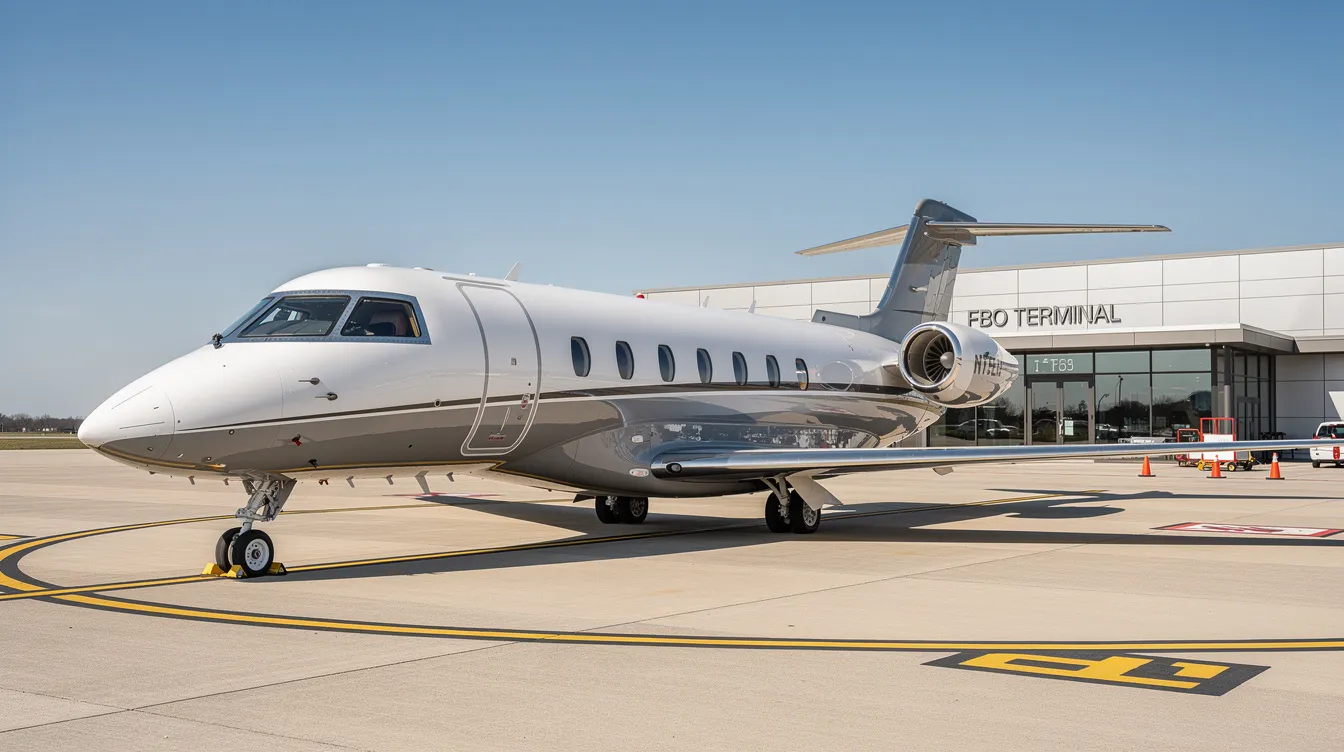
What Is Private Jet? A Practical Guide to Private Flights
A private jet is a chartered aircraft that provides on-demand travel for individuals or groups, offering flexibility and privacy. This guide covers the types of private jets, how to book them, and the benefits of flying privately, making it ideal for both newcomers and seasoned travelers. With platforms like Jettly, accessing over 20,000 aircraft worldwide has never been easier.
Read More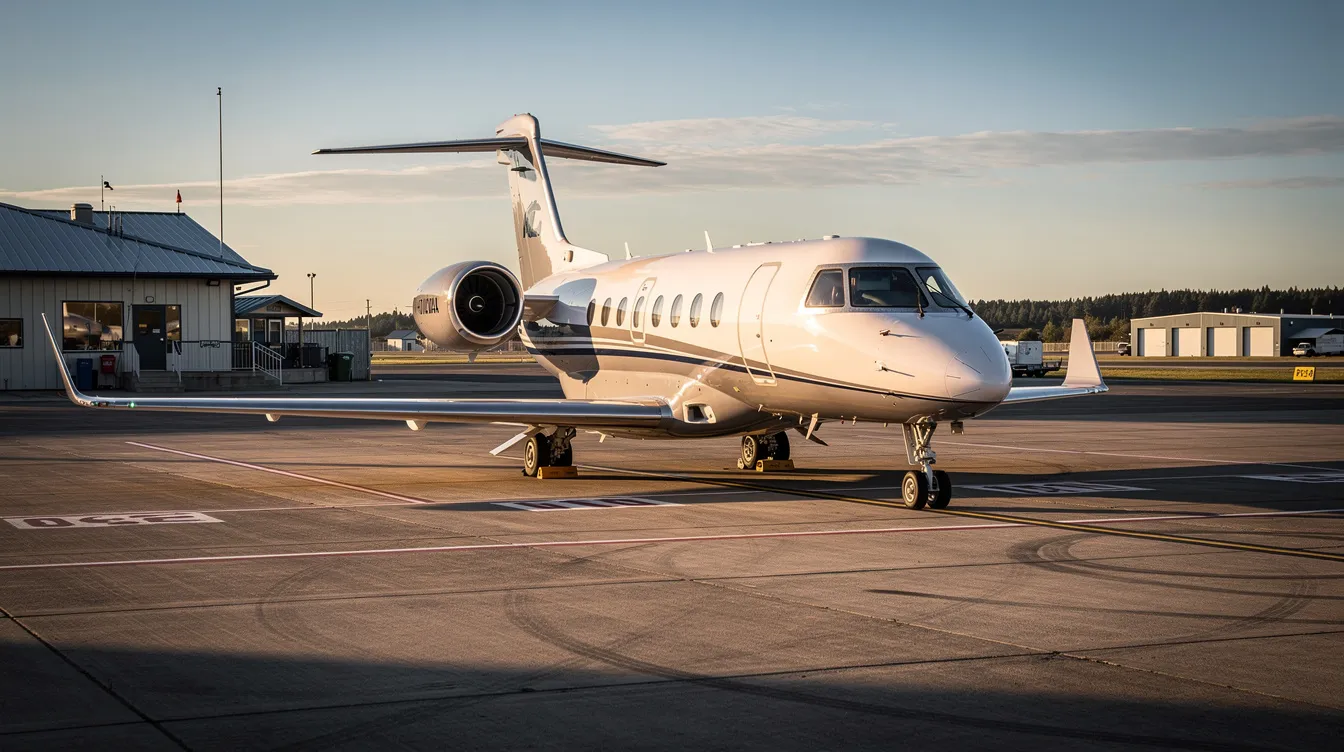
5
min read
Private Jet: How Many Seats Do You Really Need?
Choosing the right private jet begins with understanding how many seats you need. This guide outlines seating capacities across various jet categories, helping travelers select the ideal aircraft for their journey while avoiding unnecessary costs. From very light jets to VIP airliners, knowing your passenger count ensures comfort and efficiency.
Read MoreStay updated with our latest insights and tips to elevate your journey with us.
MEMBERSHIPS AND ASSOCIATIONS



© 2026 Jettly Inc. All rights reserved.
Disclaimer: Jettly operates as a charter broker, offering access to a global digital jet charter marketplace. Jettly is not a direct air carrier and does not own or operate aircraft. All advertised flights are conducted by third-party air carriers that are fully licensed and hold the appropriate Part 135 or Part 121 certifications issued by the Federal Aviation Administration (FAA) or equivalent regulatory authorities under U.S. or foreign law. Jettly complies fully with the U.S. Department of Transportation's Part 295 and Part 298 Charter Broker regulations. Jettly does not carry additional liability insurance. Passengers are covered by aircraft operator insurance. TICO: 50023770


