



Login
Get Instant Pricing On 23,000+ Aircraft

>
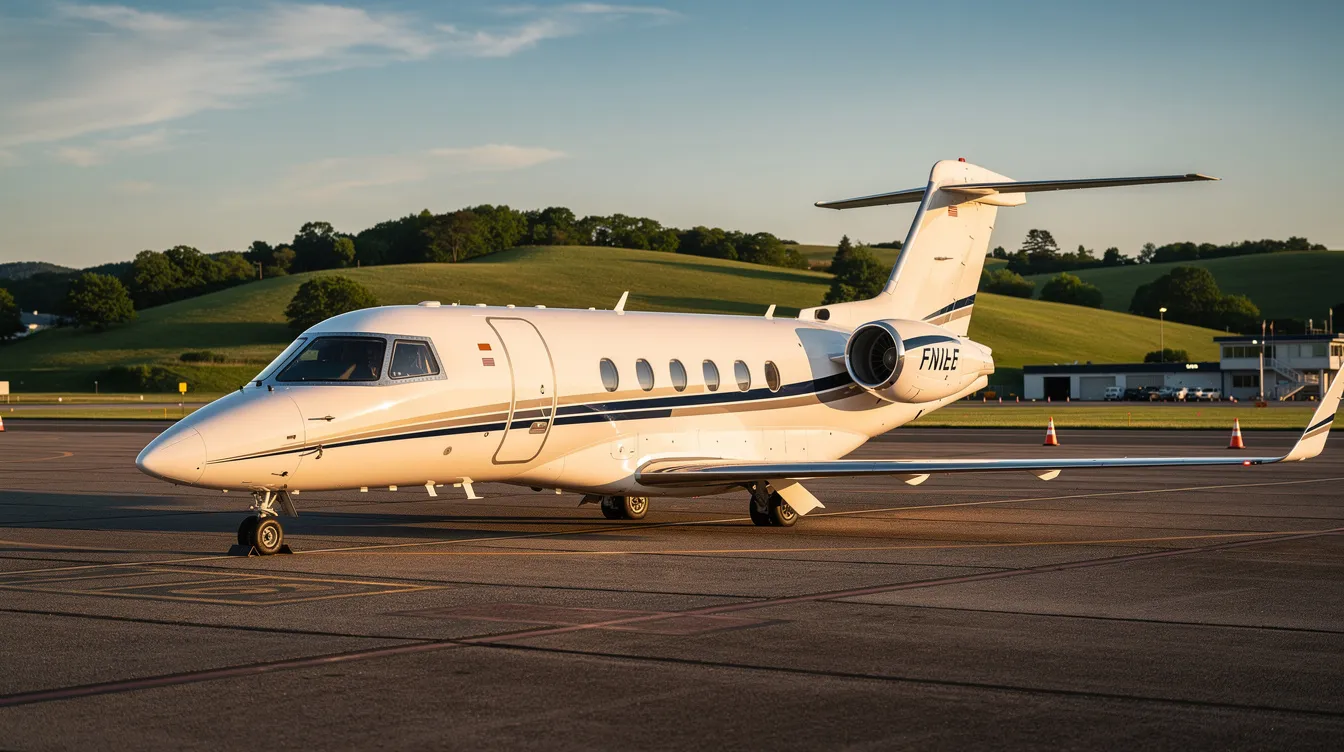
Single pilot jets are jet aircraft that regulators like the FAA and EASA have certified for operation by one qualified pilot. These aircraft sit at the intersection of personal aviation and business travel, offering speed and flexibility without the crew overhead of larger jets. Whether flown by owner pilots or staffed by professional crews on charter flights, they have become a common sight in the skies over regional airports across the world.
Single pilot jets are certified to be flown safely by one qualified pilot, and they occupy a growing segment of the private aviation industry. Very light jets and light jets, including the Cirrus Vision Jet, HondaJet Elite II, Eclipse 550, and Cessna Citation M2, all carry single-pilot certification under specific conditions.
Single pilot jets lower operating costs and expand access to smaller airports, making them attractive for both owner pilots and charter customers who book through digital brokers like Jettly.
These aircraft typically seat 5 to 8 passengers, cruise between 300 and 420 knots, and cover ranges from 600 to over 1,500 nautical miles.
Jettly is a private jet charter marketplace (not an operator) that arranges single-pilot-capable aircraft through FAA- and EASA-certified carriers with professional crews.
Readers can compare light jets, very light jets, and turboprops in real time and request instant quotes at https://www.jettly.com.
A single pilot jet is a jet aircraft whose type certificate from regulators allows flight with only one pilot, provided that pilot holds the required ratings and the aircraft meets specific equipment standards. Most single pilot jets fall into the light jet or very light jet category, though the term refers strictly to crew requirement, not engine count or aircraft size.
Small jets can be legally flown by a single pilot when certification supports it. Single-pilot jets are common among business aviation and private aviation sectors, where scheduling speed and cost control matter.
Typical specs for these aircraft:
Passenger capacity: usually 5 to 8 seats
Range: 600 to 1,600 nautical miles (some models stretch further)
Cruise speed: 300 to 420 knots true airspeed
Cabin: club-style seating, compact lavatory options, limited cargo space
The difference between "single pilot certified" and "single engine" is critical. The Cirrus Vision Jet is both a single-engine jet and a single-pilot certified aircraft. The HondaJet Elite II is twin-engine but also certified for single-pilot operation. Engine count and crew count are independent specifications.
Charter flights arranged through platforms like Jettly almost always use two professional pilots for commercial operations, even when the aircraft is single-pilot capable. This reflects operator standard operating procedures, insurance requirements, and the added safety margin of a second crew member, and it mirrors the safety-focused standards you see on a wide range of private charter aircraft types.
The FAA certifies most single-pilot jets under 14 CFR Part 23, which governs smaller aircraft. Regulators evaluate cockpit design, automation, systems redundancy, and pilot workload before granting single-pilot approval on a type certificate. Regulatory authorities oversee both the certification and the operational parameters of single-pilot jets at every stage.
Private jet charter operators must comply with FAA Part 135 regulations, which impose stricter crew training, maintenance, and documentation standards than private (Part 91) flying. FAA-certified operators undergo third-party safety audits to verify compliance.
Key cockpit features that make single-pilot operation feasible:
Unique technologies such as autopilot and glass cockpits reduce workload to manageable levels for one pilot
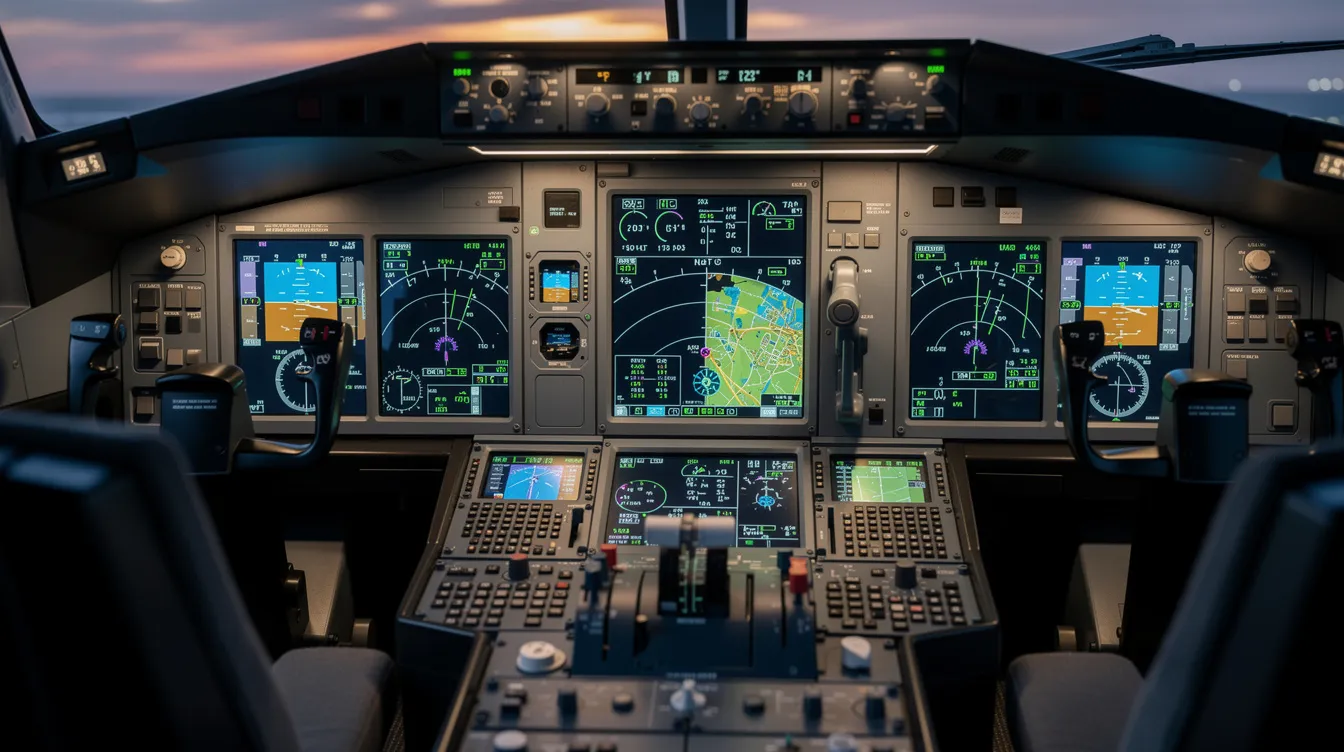
Single-pilot jets often feature compact glass cockpits with Garmin G3000 or G1000 NXi integrated avionics
Flight envelope protection (angle-of-attack limits, overspeed warnings) catches errors before they escalate
Single-pilot jets often rely on enhanced automation to assist pilots during flights, including autothrottle and synthetic vision
Pilots flying single-pilot jets must handle navigation, communication, and emergency management alone. This means pilots conducting single-pilot operations need specific ratings and ongoing training, including type-specific recurrent courses. Aircraft must be designed to minimize workload for single-pilot operations through simplified checklists, integrated systems, and intuitive displays.
Single-pilot jets do not provide the same level of safety redundancy as multi-pilot operations. That gap is narrowed by advanced automation but not eliminated, which is why operating single-pilot jets requires managing a higher cognitive workload.
Charter operators working with Jettly are FAA- or equivalent-certified and follow strict maintenance and crew training standards, often staffing two pilots even on single-pilot-certified aircraft.
"Single pilot" refers to crew requirement. "Single engine" refers to the number of engines on the jet aircraft. These are separate design decisions with different implications for cost, redundancy, and performance.
The Cirrus Vision Jet is a single-engine, single-pilot very light jet. It burns less fuel per hour and has lower maintenance costs than twin-engine alternatives, but it has only one powerplant. The HondaJet Elite II and Eclipse 550 are both twin-engine jets certified for single-pilot operation. Two engines add redundancy (the aircraft can fly on one engine if the other fails) but increase fuel burn, parts costs, and complexity.
Practical use cases that illustrate when each configuration fits:
Owner pilots stepping up from piston aircraft often choose the Vision Jet for its simplicity, parachute system, and low operating cost on regional trips under 800 nm.
Business travelers chartering for speed on routes like New York to Miami prefer twin-engine light jets (HondaJet, Citation M2) for their faster cruise speed and longer range.
Flights over remote terrain or water favor twin-engine jets for the added safety margin of engine redundancy.
Cost-sensitive short hops (Los Angeles to Las Vegas, Toronto to Montreal) can be well served by either configuration, depending on passenger count and luggage.
Very light jets and light jets are the two primary categories where single-pilot certification is most common. They differ by max takeoff weight, passenger capacity, and range. Very light jets and light business jets often operate with single-pilot certification because their cockpit automation and airframe design support it.
Very light jets have a maximum takeoff weight typically under 10,000 pounds, seat 4 to 6 passengers, and cover ranges around 700 to 1,300 nm. The Cirrus Vision Jet and Eclipse 550 fall into this category.
Light jets push higher, with max takeoff weights up to roughly 18,000 pounds. Small jets typically have a maximum takeoff weight under 20,000 pounds, seat 6 to 8, and cover ranges from 1,000 to 3,000 nautical miles depending on the model. The HondaJet Elite II and Citation M2 Gen3 are examples.
|
Spec |
Very Light Jets |
Light Jets |
|---|---|---|
|
Seats |
4-6 |
6-8 |
|
Range (NBAA IFR) |
700-1,300 nm |
1,200-2,000+ nm |
|
Cruise Speed |
300-380 KTAS |
380-430 KTAS |
|
Typical MTOW |
Under 10,000 lb |
10,000-18,000 lb |
|
Single-Pilot Capable |
Yes (most models) |
Yes (many models) |
|
Best Route Fit |
NY-DC, LA-Vegas, Paris-Geneva |
NY-Miami, London-Rome, LA-Denver |
Both classes can access regional airports that larger jet categories cannot use, saving travel time compared with commercial airline connections. For a broader comparison across all private jet sizes and an overview of leading operators and service models, see this guide to charter airlines and private aviation options and Private Jet Types and Sizes.
The Cirrus Vision Jet SF50 is the smallest private jet currently in production and the only single-engine jet in production. Cirrus Aircraft introduced it in December 2016, and the latest G3 version continues to be one of the best-selling jets by unit count in the light jet market.
The Vision Jet is designed for solo pilots. Key specifications:
Engine: single Williams FJ33 turbofan
Cruise speed: approximately 305 to 317 knots
Range: about 1,275 nautical miles max
Takeoff distance: roughly 1,910 feet
Cabin: seats up to 5 adults plus 2 children; cabin height around 4 feet 1 inch, width about 5 feet 1 inch
Baggage: limited space; soft bags recommended
The Cirrus Vision Jet features a whole-airframe parachute system called the Cirrus Airframe Parachute System (CAPS). If a pilot encounters an unrecoverable situation, CAPS deploys a parachute attached to the whole aircraft, bringing it to the ground under canopy. Cirrus reports that CAPS has saved more than 290 lives across the Cirrus fleet.
The Cirrus Vision Jet also includes an emergency auto-land system called Safe Return. If the pilot becomes incapacitated, a passenger can press a single button, and the aircraft autonomously selects the nearest suitable airport, flies an approach, and lands. This cutting-edge technology reflects a broader trend in cockpit automation across personal aviation.
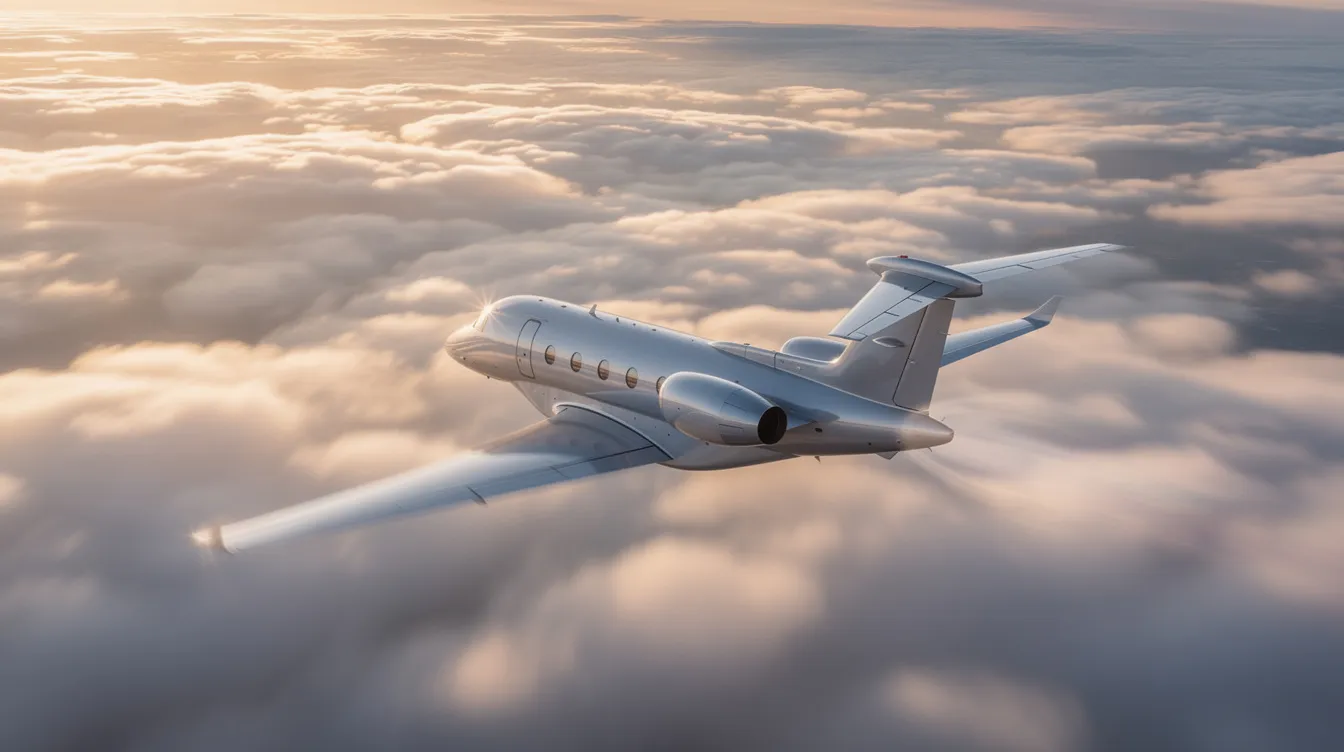
Travelers using Jettly might encounter the Vision Jet on shorter regional or family flights. The comfortable cabin works well for 4 adults on trips under 900 nm, though the compact lavatory and limited baggage space mean it is best suited to trips where passengers pack light.
Several other single-pilot-capable business jets appear frequently in charter fleets. Here are the models that many travelers and many pilots encounter most often.
HondaJet Elite II: This twin-engine jet uses an over-the-wing engine mount design that reduces cabin noise and frees up interior space. The HondaJet is optimized for single-pilot operation with Garmin G3000 avionics and, as of 2026, FAA-certified Emergency Autoland. The HondaJet Elite II has a range of 1,547 nautical miles, cruises above 420 knots, and seats 4 to 6 passengers. Its composite airframe keeps weight low while maintaining structural strength. Learn more about HondaJet pricing and charter options.
Eclipse 550: The evolution of the Eclipse 500, this very light twin jet cruises around 360 to 375 knots with a range of about 1,125 nm. The Eclipse 550 is designed for high-altitude cruising efficiency, operating at up to 41,000 feet where fuel burn drops and air traffic thins out. It seats up to 6 and was built from the ground up for single-pilot flight with dual-redundant avionics.
Cessna Citation M2 Gen3: A light jet with twin FJ44 engines, cruising around 404 knots with a range up to roughly 1,550 nm. The Gen3 version adds autothrottles, Emergency Autoland, and improved cabin connectivity. Expected to enter service around 2027, it is a natural fit for the charter fleets serving business travel routes.
Embraer Phenom 100EX: An entry-level light jet seating 4 to 7 passengers with cruise speeds around 380 to 400 knots and range near 1,100 to 1,200 nm. The Phenom 100EX includes an enclosed rear lavatory, a feature that sets it apart from some of the smallest private jets in its category.
Many of these aircraft are certified single pilot, but in commercial charter operations, operators frequently staff two pilots based on company policy, insurance requirements, and route complexity.
The performance factors that matter most to travelers are cruise speed, range under realistic conditions, runway length needed, and cabin comfort.
Small jets can operate from shorter runways, accessing regional airports that larger jet categories cannot reach. This means less ground transportation time between the airport and the final destination. Private jet travel can bypass major airport security lines, saving additional hours on each trip.
Range and route matching:
Very light jets like the Vision Jet or Eclipse 550 fit trips of 300 to 900 nm well: Toronto to New York, Paris to Geneva, Chicago to Nashville.
Larger light jets (HondaJet, Citation M2) stretch to 1,200 to 1,600 nm without refueling: New York to Miami, London to Rome, Los Angeles to Denver.
Cabin dimensions: Most of these jets have a cabin height of roughly 4 to 5 feet and a width of about 5 feet. That means passengers sit comfortably but cannot stand upright in the smallest models. Space for cargo is limited, especially in very light jets. A larger jet in the midsize category offers standing room but at a higher cost.
Modern light jets increasingly include in-flight Wi-Fi, power outlets, quiet cabins for laptop work, and basic catering arranged through the charter platform. These amenities support productive business travel even on flights under two hours.
Single-pilot operation is ideal for experienced pilots and business travelers who value speed and flexibility. Single-pilot jets allow for greater scheduling flexibility for owners and operators, cutting out the coordination overhead of multi-crew staffing. Single-pilot jets enhance operational efficiency and flexibility for a range of mission types.
Typical missions:
Same-day business travel: Two executives fly New York to Boston and back in a light jet, completing meetings and returning the same evening. A commercial itinerary for the same trip would consume an entire day once security, connections, and delays are factored in.
Regional family vacations: A family of four flies Los Angeles to Phoenix in a very light jet for a weekend trip, arriving at a smaller airport minutes from their hotel.
Remote destination access: A super versatile jet like the Pilatus PC-24 can operate from shorter runways and even unpaved runways near ski resorts or remote country locations, connecting travelers to places commercial aviation does not service.
Medical or urgent transport: A specific trip where timing is critical and commercial schedules cannot accommodate the need.

Charter clients rely on professional crews but still benefit from the economics and airport access of these aircraft. Jettly's search filters, airport locator, and instant-quote tools help match each trip type to the right aircraft size and range.
Single-pilot jets typically have lower operating costs compared to multi-pilot aircraft. Lower fuel burn (single or small twin engines), reduced crew overhead, and simpler maintenance all contribute to the gap.
Approximate hourly charter cost ranges:
|
Category |
Hourly Cost (USD) |
|---|---|
|
Very Light Jets (Vision Jet, Eclipse 550) |
$2,000-$3,000 |
|
Light Jets (HondaJet, Citation M2) |
$3,000-$4,500 |
These figures vary by region, aircraft age, and specific trip parameters.
Ownership vs. charter:
Ownership requires capital outlay (a new Vision Jet lists around $2-4 million; a HondaJet Elite II around $6.9 million), plus ongoing costs for hangar, insurance, training, maintenance reserves, and regulatory compliance.
Charter offers a pay-per-trip model. Chartering via Jettly avoids fixed ownership costs and long-term obligations, making it practical for occasional business travel or seasonal leisure trips. Travelers looking to lower their spend further can also explore crowdsourced and shared-seat private jet flights on select routes. For detailed cost breakdowns, see Private Jet Charter Cost in 2026.
Empty leg flights are often available at reduced prices. These flights occur when jets return empty after dropping off passengers, and travelers can book discounted empty leg flights through charter platforms like Jettly. Empty leg flights can make private jet travel more affordable, providing access to private jets without ownership costs.
Consider total trip cost per traveler, including saved hotel nights, reduced layovers, and productivity gains, rather than comparing the hourly aircraft rate alone against a commercial ticket; resources that explain how private jet charter pricing works and ways to reduce costs can help frame that comparison.
Jettly is a global private jet charter marketplace. Jettly offers access to over 20,000 aircraft, including light jets, very light jets, turboprops, and helicopters.
Booking flow:
Step 1: Enter route, dates, and passenger count into Jettly's online platform. Instant pricing is available through Jettly's platform for a range of aircraft options.
Step 2: Filter results by aircraft class (very light jet, light jet, turboprop) and compare cabin layouts, range, and baggage capacity.
Step 3: Review operator credentials and aircraft photos, then confirm the flight with transparent, upfront pricing. Digital booking allows travelers to choose preferred airports, including smaller regional fields.
Step 4: Coordinate extras like in-flight catering, Wi-Fi preferences, and ground transportation pickup.
For a step-by-step walkthrough, see How to Book a Private Jet.
Jettly is a charter broker, not a direct air carrier. All flights are performed by properly certified third-party operators. These operators may choose to staff two pilots for safety and service, even on single-pilot certified aircraft. Private jet membership plans with Jettly complement on-demand options and are available depending on annual flight hours and budgeting preferences.
Single pilot jets sit at the leading edge of aviation technology. Advanced avionics (Garmin G3000, G1000 NXi) optimize flight paths and reduce fuel burn through GPS-precise routing. Whole-airframe parachutes and autoland systems reduce risk in ways that were unavailable even a decade ago.
Composite airframes on models like the HondaJet and Vision Jet reduce weight compared to traditional aluminum construction, improving fuel efficiency. Efficient turbofan engines in this category burn less fuel per hour than the engines on any larger jet.
On sustainability: smaller light jets and very light jets burn less fuel per trip than midsize or heavy jets. Charter operators increasingly offer carbon offset programs, and sustainable aviation fuel (SAF) is becoming available on select routes. Using right-sized aircraft through platforms like Jettly, rather than defaulting to a larger jet with empty seats, is both cost-conscious and reduces fuel waste per passenger mile.
Define the mission first. Distance, number of passengers, luggage volume, and schedule flexibility each point toward a different aircraft.
Decision factors:
Distance: 300 to 600 nm hops favor very light jets. Legs of 1,200 to 1,600 nm require light jets with longer range.
Passenger count: Couples or solo travelers fit any VLJ. Teams of 6 to 7 with bags and equipment need a light jet with more space and seats.
Airport access: Need for short, narrow, or unpaved runways favors aircraft like the PC-24 or certain turboprop models.
Cabin expectations: Standing cabin height, enclosed lavatory, Wi-Fi, and workspace matter more on flights over 90 minutes.
|
Category |
Best For |
Example Aircraft |
|---|---|---|
|
Short-hop VLJ |
Trips under 800 nm, 2-4 passengers |
Vision Jet, Eclipse 550 |
|
Regional light jet |
800-1,600 nm, 4-7 passengers |
HondaJet, Citation M2 |
|
Super versatile jet |
Short/rough runways, remote access |
Pilatus PC-24 |
Run sample routes through Jettly's charter cost estimator to compare actual aircraft options side by side before committing to a specific trip, and consider whether a jet card program with fixed hourly rates aligns with your expected flight frequency.
These FAQs address practical questions about cost, safety, and booking for first-time private jet users and frequent flyers considering single pilot-capable aircraft.
While many very light jets and light jets carry single-pilot certification, commercial charter operators under Part 135 frequently use two pilots for added safety and workload sharing. Whether one or two pilots staff the flight deck depends on operator policies, route complexity, weather conditions, and passenger requirements. Jettly can confirm the planned crew setup during the quoting process. Owner pilots flying under private (Part 91) rules may legally operate solo in certified aircraft, but that is a separate context from commercial charter booked through a brokerage.
Very light jets typically accommodate small roller bags and soft duffels for 3 to 4 passengers. Larger light jets handle 6 to 7 passengers with standard carry-ons and a few oversized items like golf bags or ski equipment. Aircraft like the HondaJet and Phenom 100EX have dedicated external baggage compartments, while the Cirrus Vision Jet has more limited internal space and works best with soft-sided luggage. Jettly's booking interface and support team confirm baggage limits for each aircraft before a trip is locked in.
Many modern light jets offer quiet cabins, power outlets, fold-out tables, and in-flight Wi-Fi suitable for email and light VPN use. Very light jets have more limited space than midsize jets but still allow laptop work, phone calls, and quick meetings on flights of 1 to 2 hours. Clients can request Wi-Fi and workspace preferences through Jettly so the platform matches them with an appropriate aircraft and operator.
Aircraft like the Cirrus Vision Jet, HondaJet, and Citation M2 go through rigorous certification processes and carry advanced avionics, weather radar, and in some cases whole-airframe parachutes or autoland systems. Charter flights booked via Jettly are operated by licensed commercial pilots under strict maintenance and safety regimes, often with two pilots even when the jet is single-pilot certified. Many companies rely on these jets for weekly regional trips because they offer a strong balance of performance, safety, and cost.
Chartering is the simplest path. Travelers can book a trip on a Cirrus Vision Jet, HondaJet, or similar model through Jettly to experience the cabin, performance, and airport access firsthand. Starting with a short regional route of 300 to 500 nm gives a realistic impression of comfort, baggage capacity, and the boarding process. Some prospective owners fly several different light jets over a few months via charter before deciding which model fits their unique needs and long-term flying patterns or evaluating Jettly as a flexible alternative to NetJets-style fractional ownership.
Single pilot jets, from very light jets like the Cirrus Vision Jet and Eclipse 550 to light jets like the HondaJet and Citation M2, have reshaped how individuals and companies approach small jet aircraft and regional business travel. These aircraft bring advanced safety systems, lower operating costs, and access to shorter runways and smaller airports that larger jets cannot reach.
While these aircraft are engineered to be flown by a single qualified pilot, charter flights typically use professional multi-pilot crews, delivering strong safety alongside the cost and flexibility advantages of the category.
Define the mission. Compare aircraft classes. Then use Jettly's instant-quote platform to see real aircraft options, pricing, and operators for your trip.
Ready to experience private travel on your terms? Explore flight options or request a quote at https://www.jettly.com.
Share this post:
Jay Franco Serevilla
Nov 25, 2026
|
5
min read
Discover tips and trends in the industry.
5
min read
What Is Private Jet? A Practical Guide to Private Flights
A private jet is a chartered aircraft that provides on-demand travel for individuals or groups, offering flexibility and privacy. This guide covers the types of private jets, how to book them, and the benefits of flying privately, making it ideal for both newcomers and seasoned travelers. With platforms like Jettly, accessing over 20,000 aircraft worldwide has never been easier.
Read More
5
min read
Private Jet: How Many Seats Do You Really Need?
Choosing the right private jet begins with understanding how many seats you need. This guide outlines seating capacities across various jet categories, helping travelers select the ideal aircraft for their journey while avoiding unnecessary costs. From very light jets to VIP airliners, knowing your passenger count ensures comfort and efficiency.
Read MoreStay updated with our latest insights and tips to elevate your journey with us.
MEMBERSHIPS AND ASSOCIATIONS



© 2026 Jettly Inc. All rights reserved.
Disclaimer: Jettly operates as a charter broker, offering access to a global digital jet charter marketplace. Jettly is not a direct air carrier and does not own or operate aircraft. All advertised flights are conducted by third-party air carriers that are fully licensed and hold the appropriate Part 135 or Part 121 certifications issued by the Federal Aviation Administration (FAA) or equivalent regulatory authorities under U.S. or foreign law. Jettly complies fully with the U.S. Department of Transportation's Part 295 and Part 298 Charter Broker regulations. Jettly does not carry additional liability insurance. Passengers are covered by aircraft operator insurance. TICO: 50023770


